Coyote-mint
Monardella villosa
Last reviewed: September 2026
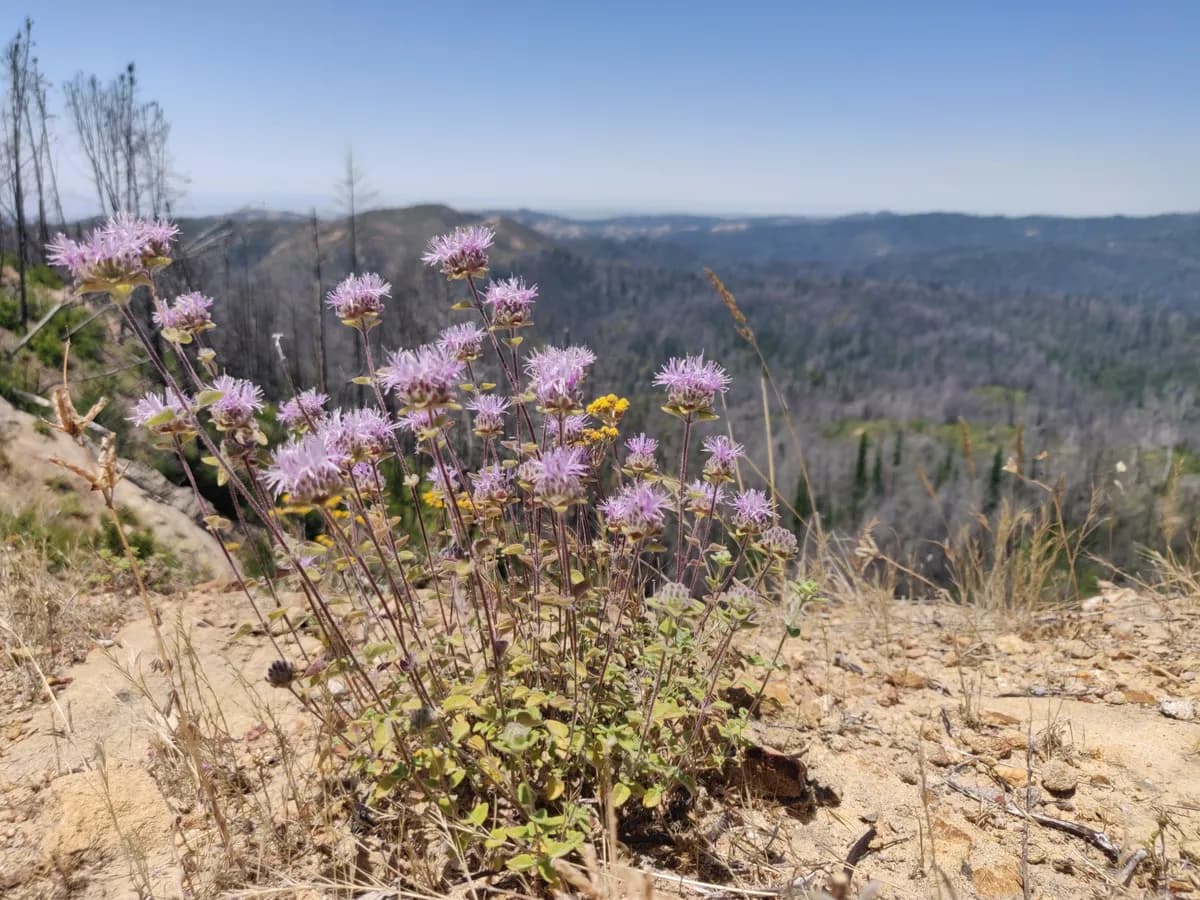
Coyote-mint is a low-growing, aromatic subshrub that blooms from May through August with lavender to pink flower clusters. It thrives in dry, well-drained soil under full sun to light shade.
Coyote-mint (Monardella villosa) is not flagged as toxic to dogs or cats by Plants For A Future (PFAF) (opens in new tab) (last reviewed 2026-05-21). This verdict does not come from the ASPCA. If your pet shows symptoms after eating any plant, call the ASPCA at (888) 426-4435.
Light
full sun
Water
low
Size
12"–24" H × 12"–24" W
Bloom
May, Jun, Jul, Aug
Native to
CA
Pollinators
bees, butterflies, hummingbirds
Before you buy
Your city may pay you to plant this
Cities and water utilities offer rebates for replacing lawn with native and water-wise plants. We track 459 programs across 44 states, each with a link to the provider and the date we last checked it.
Find rebates in your areaPicture natives in your own yard
Upload a photo of your yard and Patch Vision shows a rendering of it planted with natives for your region, like Coyote-mint.


Browse plants for this ecoregion
Monardella villosa is a compact, aromatic shrub with rounded clusters of lavender to purple flowers atop woody stems. It blooms throughout summer, releasing a pleasant minty fragrance when touched or brushed against. Its small size makes it ideal for borders and rock gardens.
Growing Coyote-mint
Grow Coyote-mint in full sun and low water. Mature plants reach 12 to 24 inches tall and spread 12 to 24 inches wide. Expect low maintenance to keep it looking intentional in a front yard.
How to care for Coyote-mint, by region
How to care for Coyote-mint where it is actually grown: year-round basics plus what to do each season, region by region, with the sources for each.
Care guidance last updated: October 2026
Central California Foothills and Coastal Mountains (includes San Francisco, CA)
Year-round
Coyote mint likes sun and well-drained soil and needs little water once settled in.
- Give it full sun or partial shade.
- It does best in well-drained soil and handles a variety of soil types.
- Light pruning keeps it looking neat.
- It handles cold down to about 15 degrees F.
Fall
In fall, keep things simple and keep the soil well drained.
- Light pruning keeps the plant neat.
- Good drainage matters most for this plant.
Winter
Winter cold is not a problem for coyote mint in the Bay Area.
- It tolerates cold down to about 15 degrees F.
- Good drainage matters most, so avoid soggy spots.
Spring
In spring, focus on a sunny spot with well-drained soil.
- Pick a spot with full sun, or partial shade at most.
- Well-drained soil is best, and clay or sand are both fine.
- It likes to stay lightly trimmed to look neat.
Summer
Summer is bloom time, and a little extra water can help the flowers.
- It blooms in summer with pink or lavender flowers.
- Once settled in, water no more than about twice a month.
- Bloom and leaf quality improve with some summer water, especially inland.
- The flowers draw bees and butterflies.
Sources: Calscape: Monardella villosa, Las Pilitas: Monardella villosa
Southern California/Northern Baja Coast (includes Los Angeles, CA)
Year-round
Coyote mint is a small, mounding, fragrant subshrub native to California's coastal chaparral and coastal sage scrub, with a documented range that runs along the Coast Ranges from the Bay Area south through the Central Coast into Orange County, just north of the Los Angeles basin. It is not a local native in Los Angeles itself, but it is a very close regional fit for the same coastal sage scrub and chaparral conditions and is one of the best small pollinator plants you can grow here.
- Give it full sun to light part shade. Full sun tends to bring the most flowers and the most butterfly visits.
- Plant in well drained soil. It tolerates sand, clay, and even serpentine soils as long as drainage is decent.
- It is drought tolerant once established, but a little occasional deep watering through summer, no more than a couple times a month, keeps the foliage and bloom looking their best in a Los Angeles yard.
- Its minty, gray green foliage and summer flowers are excellent for pollinators, supporting dozens of documented native bee and butterfly species, including monarchs and pale swallowtails.
It stays low and mounding, usually around 2 feet tall by 3 feet wide, so it works well as a tidy, front of bed planting near a walkway without much shaping.
Fall
Fall is planting season for coyote mint in Los Angeles, letting new plants root in before winter rains and next summer's heat.
- Plant new coyote mint in fall so roots establish during the cooler, wetter months ahead.
- After its main summer bloom fades, cut the plant back lightly to keep it neat and to encourage a fuller shape next season.
- Ease off supplemental water as fall rains, when they come, start doing the work for you.
- This is a good time to take stem cuttings if you want to propagate more plants for other parts of the yard.
Winter
Winter is a quiet, low maintenance season for coyote mint in Los Angeles. The plant rests through the cooler, wetter months and needs little from you beyond normal rainfall.
- Let winter rain supply the water. Established plants rarely need any supplemental irrigation this time of year.
- Foliage may thin out or look a bit ragged in the cold, but the plant typically stays evergreen to semi evergreen through a mild Los Angeles winter.
- Hold off on major pruning until after the coldest weeks pass, since fresh cuts are more vulnerable to an occasional cold snap.
- Check drainage around the base after heavy rain. Standing water is more of a risk to this plant than winter cold.
Spring
Spring brings fresh growth and sets up coyote mint for its main summer bloom in Los Angeles.
- New leafy growth picks up as days warm. This is a good time for a light shaping prune if the plant looks leggy from winter.
- Keep watering modest. Established plants do not need frequent irrigation even as they green up.
- Watch for early bees and butterflies starting to visit as the first flower buds form toward late spring.
- If you started cuttings in fall, spring is a reasonable time to move rooted starts to their permanent spot.
Summer
Summer is coyote mint's main bloom season in Los Angeles, and also the season where watering choices matter most for keeping it looking good without overdoing it.
- Expect the lavender to pink flower show to peak in summer, drawing bees and butterflies including monarchs and pale swallowtails.
- If you supplement water, keep it light, at most a couple of deep waterings a month, and make sure drainage is excellent. This plant is more likely to struggle from soggy summer soil than from dryness.
- Cut spent flower stalks back after bloom finishes to keep the mound tidy and to encourage a second flush of growth.
- Crush a leaf and check the minty scent as a quick health check. Strong fragrance is a sign the plant is happy, while a faded scent can mean it is stressed from too much or too little water.
Deadheading after the summer bloom keeps the mound looking tended rather than tired heading into fall.
Sources: Calscape, Monardella villosa (Coyote Mint) plant profile (range, care, pollinator counts), Calflora, Monardella villosa ssp. villosa county observation records, Las Pilitas Nursery, Monardella villosa (Coyote Mint) care notes
In an HOA neighborhood
Coyote-mint is an HOA-friendly choice. Maintenance level: low. Tidiness: 3 out of 5.
Works well in: front yard, foundation, mid zone.
- Can look slightly unkempt during non-blooming periods
- May need light pruning to maintain tidy appearance
Wildlife value
Coyote mint is a valuable pollinator plant, attracting native bees, butterflies, and hummingbirds during its extended summer bloom period.
Common questions
- When does Coyote-mint bloom?
- Coyote-mint typically flowers from May through August, producing rounded clusters of lavender to pink blooms on aromatic gray-green foliage.
- How much water does Coyote-mint need?
- This plant is adapted to low water conditions once established. It grows best in well-drained soil and should not be watered frequently, especially during summer dormancy.
- What kind of light does Coyote-mint prefer?
- Coyote-mint does well in full sun along the coast and in cooler areas, but appreciates some afternoon shade in hotter inland gardens.
- What pollinators visit Coyote-mint?
- Bees, butterflies, and hummingbirds are frequently seen visiting the flowers of Coyote-mint during its summer bloom period.
- Is Coyote-mint toxic to dogs?
- Coyote-mint is not flagged as toxic to dogs by Plants For A Future (PFAF). This verdict does not come from the ASPCA.
- Is Coyote-mint toxic to cats?
- Coyote-mint is not flagged as toxic to cats by Plants For A Future (PFAF). This verdict does not come from the ASPCA.
- Is Coyote-mint HOA-friendly?
- Coyote-mint is generally an HOA-friendly choice in the right placement, with low maintenance.
These answers were drafted with an AI model from this plant's data. Verify care details with a local expert.
Native range data from vouchered herbarium specimen records and regional native plant society lists. Pollinator and host plant associations compiled from GBIF, iNaturalist, and published ecological literature.
If something looks wrong
Common plant problems, and what to check first
These come up on almost any plant. Each guide lists the likely causes in the order they are worth ruling out, with one thing to check before you act on any of them, and links to the source it came from.
- It is dying right after planting
- Leaves turning yellow
- Wilting even though I watered it
- Brown crispy leaf tips
- Bugs on the plant
Ready to grow Coyote-mint? Add it to your garden in Pollinator Patch to track it and get season-by-season care guidance.