Desert Marigold
Baileya multiradiata
Last reviewed: September 2026
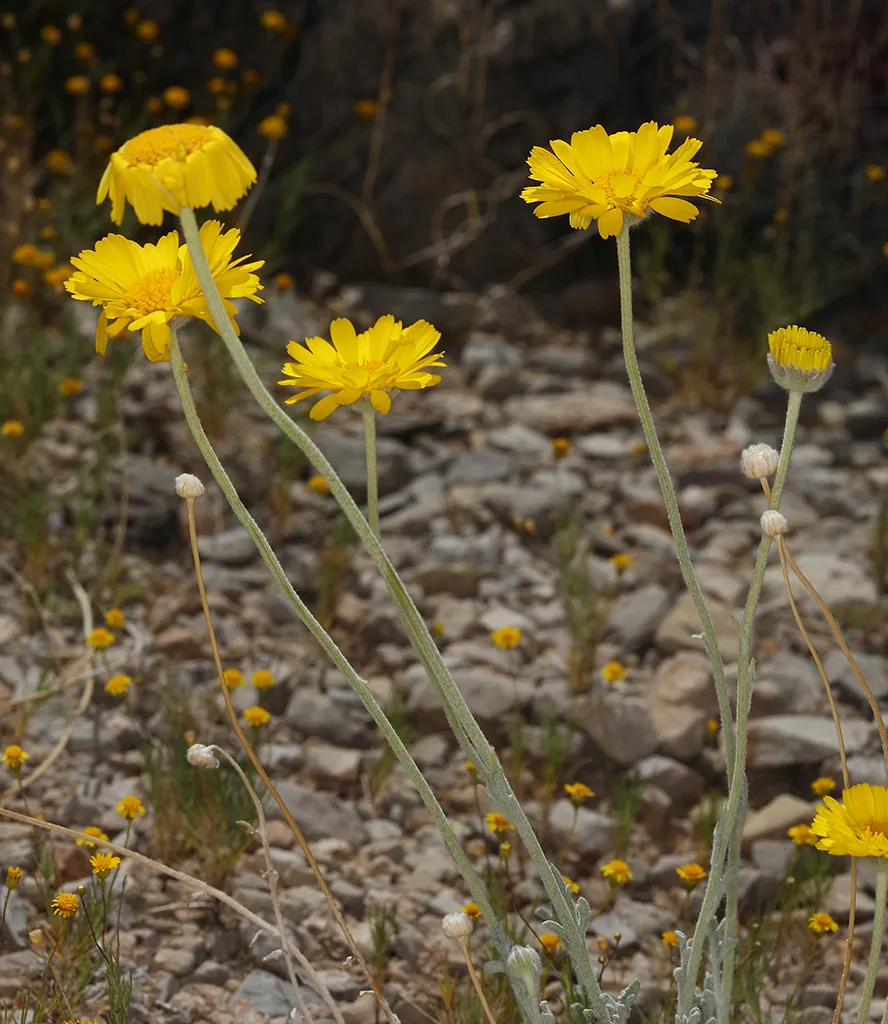
Desert Marigold produces bright yellow daisy-like flowers from March through November and thrives in hot, dry, sunny sites with very little supplemental water once established.
Toxicity unknown
Desert Marigold (Baileya multiradiata) is not listed by the ASPCA Animal Poison Control Center (opens in new tab) or the other sources we check, so we have no verdict for it either way. Absence from those lists is not a clearance. If your pet shows symptoms after eating any plant, call the ASPCA at (888) 426-4435.
Light
part sun
Water
low
Size
12"–24" H × 6"–12" W
Bloom
Mar, Apr, May, Jun, Jul, Aug, Sep, Oct, Nov
Native to
AZ, CA, NM, NV and 2 more states
Pollinators
butterflies, bees, nectar insects
Before you buy
Your city may pay you to plant this
Cities and water utilities offer rebates for replacing lawn with native and water-wise plants. We track 452 programs across 44 states, each with a link to the provider and the date we last checked it.
Find rebates in your areaBrowse plants for this ecoregion
Desert Marigold produces cheerful bright yellow daisy-like flowers nearly year-round on compact, low-growing plants. This drought-tolerant perennial thrives in hot, dry conditions and requires minimal water once established. The silvery-green foliage provides a nice backdrop for the abundant blooms that attract pollinators from spring through fall.
Growing Desert Marigold
Grow Desert Marigold in part sun and low water. Mature plants reach 12 to 24 inches tall and spread 6 to 12 inches wide. Expect low maintenance to keep it looking intentional in a front yard.
How to care for Desert Marigold, by region
How to care for Desert Marigold where it is actually grown: year-round basics plus what to do each season, region by region, with the sources for each.
Care guidance last updated: July 2026
Sonoran Basin and Range (includes Phoenix, AZ)
Year-round
Desert Marigold is a short-lived Sonoran wildflower that throws bright yellow daisies for most of the year on almost no care. In the Phoenix low desert it wants full sun, fast-draining gravelly soil, and to be left alone once it is rooted in.
- Give it part to full sun and a spot with fast-draining decomposed-granite or caliche soil, which is exactly what most Phoenix front yards already have.
- Water deep and infrequent once established, a slow soak every couple of weeks in cool months and never a daily sprinkle, because overwatering is the number one killer here.
- Top the bed with 2 to 3 inches of decomposed-granite or gravel mulch, not wood bark, which looks out of place and traps the wrong kind of moisture in the desert.
- Skip fertilizer entirely, desert natives like this one resent rich soil and get floppy and short-lived when fed.
Fall
Fall is the prime season for Desert Marigold in Phoenix, cooler weather brings a fresh flush of yellow and this is the best time to plant. New plants set now root through the mild winter and are ready before next summer.
- Plant in October or November so roots establish through the mild winter, this fall window is the single best time to add Desert Marigold.
- Set new plants in fast-draining decomposed-granite soil and water them in with a deep soak, then space follow-up watering to every couple of weeks.
- Cut back leggy or spent plants now to reshape them, they respond well to a fall tidy and will reflush.
- Space plants about 12 to 18 inches apart so each stays rounded and self-supporting rather than flopping into a walkway.
Fall planting and a cut-back with clean spacing away from walkways keeps the bed reading as intentional, low-risk desert landscaping, the look most Phoenix HOAs expect, which helps avoid a violation letter over overgrowth crowding a path.
Winter
Winter in the Phoenix core is a mild cool growing season, not a true dormancy, and Desert Marigold often keeps some bloom going. It is frost-hardy here and needs very little from you beyond restraint on water.
- Water only lightly and infrequently, a deep soak roughly once a month is enough with the gentle winter rains helping out.
- Leave established plants uncovered, Desert Marigold is frost-hardy in the Phoenix core and does not need protection on normal cold nights.
- Keep the decomposed-granite mulch pulled slightly back from the crown so the base stays dry and does not rot in cool damp soil.
- Do not fertilize or heavily prune in winter, just tidy any obviously dead stalks and let the plant coast.
Spring
Spring is peak bloom for Desert Marigold in Phoenix, with a solid flush of yellow flowers as things warm up. This is a light secondary time to plant and the moment to start easing off water before the heat arrives.
- Enjoy the March through May bloom peak and pinch or snip spent flower stalks to keep new buds coming and the plant looking neat.
- If you plant this spring, get it in early (March) so roots settle before real heat, and treat fall as the stronger planting window.
- Start tapering the last winter waterings as days warm, a deep soak every 2 to 3 weeks is plenty in spring.
- Do not feed to push more bloom, richer soil shortens this plant's life instead of helping it.
Snipping spent stalks and keeping a tidy decomposed-granite bed reads as intentional, cared-for xeriscape, which is the expected HOA-friendly Phoenix front-yard look and helps avoid a violation letter over a bed that looks weedy or unkept.
Summer
Summer is the stress season in Phoenix, not the growing peak, and Desert Marigold can slow down or look ragged in the worst heat. The big danger now is overwatering, especially once the monsoon rains start.
- In the dry brutal June foresummer, give an occasional deep soak in the plant's first summer or two while roots are still shallow, then back off.
- Once the monsoon arrives in July, let the rain do the watering and do not add irrigation on top of a downpour, soggy soil rots the roots.
- Deadhead tired flower stalks through summer to keep the plant tidy and encourage a rebloom when the monsoon cools things slightly.
- Never plant Desert Marigold in the May to July heat, new plants cannot establish and usually die, wait for fall.
A quick summer deadhead and raking the gravel keeps the bed looking deliberate through the season it is most likely to look scruffy, which reads as intentional xeriscape and heads off an HOA note about an untidy front yard.
Sources: Arizona-Sonora Desert Museum, Baileya multiradiata (Desert Marigold) plant profile, Sonoran Desert native, Lady Bird Johnson Wildflower Center, Baileya multiradiata native range and growing conditions, Desert Botanical Garden, Baileya multiradiata desert wildflower bloom and care notes, Phoenix, University of Arizona Cooperative Extension, low-desert wildflower care and irrigation guidance, University of Arizona Cooperative Extension, low-desert summer and monsoon overwatering guidance, University of Arizona Cooperative Extension, low-desert fall planting calendar
Want these tasks as reminders timed to your yard? Pollinator Patch turns this guidance into a season-by-season care plan for the plants you actually grow.
In an HOA neighborhood
Desert Marigold is an HOA-friendly choice. Maintenance level: low. Tidiness: 4 out of 5.
Works well in: front yard, foundation, street edge, mid zone.
Wildlife value
Excellent pollinator plant that attracts butterflies, bees, and other nectar-feeding insects with its long blooming season. The abundant flowers provide a reliable nectar source for nearly nine months of the year.
Common questions
- How much sun does Desert Marigold need?
- Desert Marigold grows best in full sun to part sun. It tends to get leggy and bloom less in shadier spots.
- How often should I water Desert Marigold?
- Once established, Desert Marigold needs very little water and does best in fast-draining soil. Overwatering or poor drainage often leads to root rot.
- When is Desert Marigold in bloom?
- Desert Marigold typically flowers from March into November, with especially heavy bloom in spring and again after summer rains.
- What pollinators does Desert Marigold attract?
- The flowers draw a range of nectar-seeking insects, including various bees and butterflies, making it a useful addition to a pollinator garden.
- Is Desert Marigold HOA-friendly?
- Desert Marigold is generally an HOA-friendly choice in the right placement, with low maintenance.
These answers were drafted with an AI model from this plant's data. Verify care details with a local expert.
Native range data from the World Checklist of Vascular Plants (Kew). Pollinator and host plant associations compiled from GBIF, iNaturalist, and published ecological literature.
If something looks wrong
Common plant problems, and what to check first
These come up on almost any plant. Each guide lists the likely causes in the order they are worth ruling out, with one thing to check before you act on any of them, and links to the source it came from.
- It is dying right after planting
- Leaves turning yellow
- Wilting even though I watered it
- Brown crispy leaf tips
- Bugs on the plant
Ready to grow Desert Marigold? Add it to your garden in Pollinator Patch to track it and get season-by-season care guidance.
Planning a bed around it? Start a free plan with this plant
Not sure where to start? Take the 2-minute yard quiz