Downy Lobelia
Lobelia puberula
Last reviewed: September 2026
Downy Lobelia is toxic to dogs and cats.
Listed as toxic by the NC State Extension Gardener Plant Toolbox (opens in new tab) (last reviewed 2026-08-20). If your pet has been exposed, call the ASPCA Animal Poison Control Center at (888) 426-4435and your veterinarian's emergency line.
Pollinator Patch flags toxic plants so you can choose a pet-safe native alternative for your yard.
Light
full sun
Water
medium
Size
36"–48" H × 12"–24" W
Bloom
Jun, Jul, Aug, Sep, Oct, Nov
Native to
AL, AR, DE, FL and 18 more states
Pollinators
butterflies, bees, hummingbirds, nectar insects
Before you buy
Your city may pay you to plant this
Cities and water utilities offer rebates for replacing lawn with native and water-wise plants. We track 452 programs across 44 states, each with a link to the provider and the date we last checked it.
Find rebates in your areaBrowse plants for this ecoregion
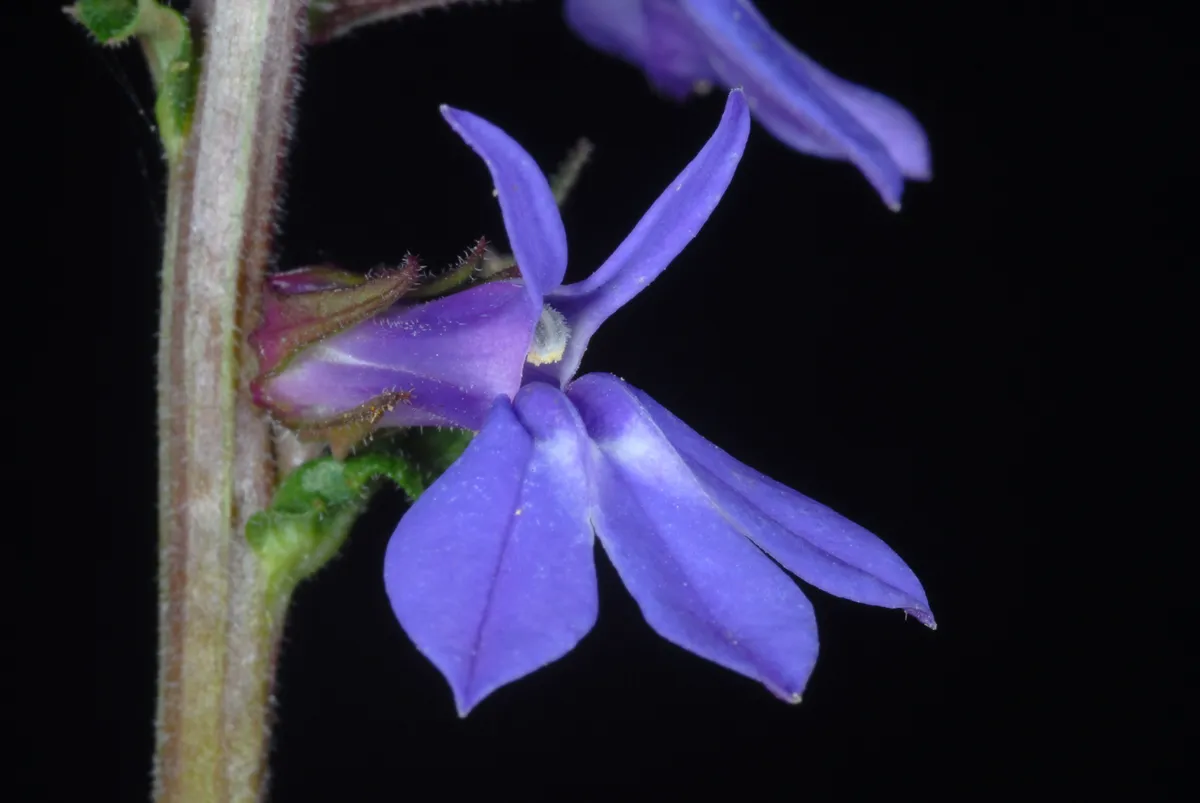
Downy Lobelia is a tall native perennial that produces spikes of blue to purple flowers from summer through late fall. This upright plant offers an extended bloom period and attracts a variety of pollinators while maintaining a relatively neat garden appearance.
How to care for Downy Lobelia, by region
How to care for Downy Lobelia where it is actually grown: year-round basics plus what to do each season, region by region, with the sources for each.
Care guidance last updated: September 2026
Mississippi Valley Loess Plains (includes Memphis, TN)
Year-round
Downy lobelia is a native Mid-South wildflower that does well in Memphis yards with moist soil and a spot in full sun to part shade.
- Give it full sun to partial shade, at least a few hours of direct light a day, for the strongest flower spikes.
- Keep the soil consistently moist. This plant is naturally found along wet ditches and pond edges, so it does not like to dry out for long.
- Expect a clump 2 to 4 feet tall with upright flower spikes, so give it room at the back or middle of a bed.
- It tolerates the clay soils common around Memphis as long as drainage is not swampy year round.
- This is a straightforward, low-drama native for a rain garden, low spot, or the edge of a border where other plants stay too dry.
Tall purple spikes in a defined bed or border read as an intentional planting, which is the kind of HOA-friendly look that keeps a native wildflower from being mistaken for a weed.
Fall
Fall is peak bloom season for downy lobelia around Memphis, with blue purple spikes lasting into October before frost.
- Expect the main bloom from August into October, right through the warm early part of a Memphis fall.
- Leave spent flower spikes in place through fall. They set seed that helps the clump fill in over time and feeds late-season pollinators.
- Memphis typically sees its first frost in mid to late November, so this plant will keep flowering later into the year than many summer bloomers.
- This is native to Tennessee and the wider Mid-South, so it is naturally in sync with the local fall bloom window rather than needing special timing.
A late-blooming native spike keeps a bed looking alive after summer annuals fade, which reads as deliberate seasonal planning rather than a neglected corner.
Winter
Downy lobelia dies back to a low basal rosette for winter in the Memphis area and needs little attention until spring.
- Memphis sits in USDA hardiness zone 8a, with mild winters that this Tennessee native plant is well adapted to.
- The top growth dies back after frost. Leave the basal rosette of leaves in place rather than cutting the whole plant down, since that rosette is how it overwinters.
- A light mulch layer helps even out soil moisture through winter without smothering the rosette.
- As a genus, Lobelia species including this one contain lobeline and related alkaloids that peer-reviewed research documents as toxic if eaten in quantity, so it is worth keeping pets from grazing on the dormant rosette the same as you would in the growing season.
A neat mulched bed over the winter rosette keeps the dormant planting looking intentional instead of bare.
Spring
In the Memphis area, spring is when downy lobelia sends up new growth from its basal rosette after the last frost.
- Memphis usually clears its last frost by mid to late March, so new leafy growth from the base is normal starting around then.
- This is the best window to divide an established clump or move a plant to a moister spot before the heat of summer arrives.
- Keep the ground moist as growth resumes. A dry spring stretch will slow the plant down more than a dry summer one will.
- Skip fertilizer. This wildflower is adapted to average to wet native soils and does not need feeding to perform well.
A tidy edge and a layer of mulch around the emerging clump keep the bed looking cared for while the plant is still low and leafy.
Summer
Memphis summers are hot and humid, so downy lobelia needs steady moisture through July and August to build up to its late-season bloom.
- Water during dry stretches. This plant is naturally found in consistently damp ground and will wilt and stall in a hot, dry Memphis summer if it dries out.
- Afternoon shade helps in the hottest part of summer, especially in a spot with reflected heat from pavement or a south facing wall.
- Flower spikes are forming now, so this is not the time to cut the plant back.
- Watch for tall stems leaning after a summer thunderstorm. A light stake or nearby companion planting can help keep spikes upright.
Grouping several plants together keeps the tall stems from looking sparse or leggy if one or two lean after a storm.
Sources: Lady Bird Johnson Wildflower Center, Native Plant Database: Lobelia puberula, NC State Extension Gardener Plant Toolbox: Lobelia puberula, Zheng et al., "Beyond Alkaloids: Novel Bioactive Natural Products From Lobelia Species," Frontiers in Pharmacology (2021)
Want these tasks as reminders timed to your yard? Pollinator Patch turns this guidance into a season-by-season care plan for the plants you actually grow.
In an HOA neighborhood
Downy Lobelia is an HOA-friendly choice. Maintenance level: low. Tidiness: 3 out of 5.
Works well in: mid zone, backyard only.
- May flop without support
- Best in less formal zones
Wildlife value
Excellent pollinator plant that attracts butterflies, bees, hummingbirds, and other nectar-seeking insects. The long flowering season from June through November provides sustained food sources when many other plants have finished blooming.
Common questions
- How much sun does Downy Lobelia need?
- Downy Lobelia grows best in full sun conditions.
- When does Downy Lobelia bloom?
- Downy Lobelia blooms in June, July, August, September, October, and November.
- Where is Downy Lobelia native?
- Downy Lobelia (Lobelia puberula) is native to AL, AR, DE, FL and 18 more states, per vouchered herbarium specimen records and regional native plant society lists.
- Is Downy Lobelia toxic to dogs?
- Yes. Downy Lobelia is listed as toxic to dogs by the NC State Extension Gardener Plant Toolbox (aspca.org). If your pet has been exposed, call the ASPCA Animal Poison Control Center at (888) 426-4435.
- Is Downy Lobelia toxic to cats?
- Yes. Downy Lobelia is listed as toxic to cats by the NC State Extension Gardener Plant Toolbox (aspca.org). If your cat has been exposed, call the ASPCA Animal Poison Control Center at (888) 426-4435.
- What pollinators does Downy Lobelia attract?
- Downy Lobelia draws butterflies, bees, hummingbirds, and nectar insects.
- Is Downy Lobelia HOA-friendly?
- Downy Lobelia is generally an HOA-friendly choice in the right placement, with low maintenance.
Native range data from vouchered herbarium specimen records and regional native plant society lists. Pollinator and host plant associations compiled from GBIF, iNaturalist, and published ecological literature.
If something looks wrong
Common plant problems, and what to check first
These come up on almost any plant. Each guide lists the likely causes in the order they are worth ruling out, with one thing to check before you act on any of them, and links to the source it came from.
- It is dying right after planting
- Leaves turning yellow
- Wilting even though I watered it
- Brown crispy leaf tips
- Bugs on the plant
Pollinator Patch flags toxic plants like Downy Lobelia and shows pet-safe natives for your ecoregion instead.
Planning a bed around it? Start a free plan with this plant
Not sure where to start? Take the 2-minute yard quiz