Dull Meadow-pitcher
Rhexia mariana
Last reviewed: September 2026
Rhexia mariana, or Dull Meadow-pitcher, blooms from July through September with pink, four-petaled flowers in wet meadows, ditches and pine savannas across the eastern and southern United States.
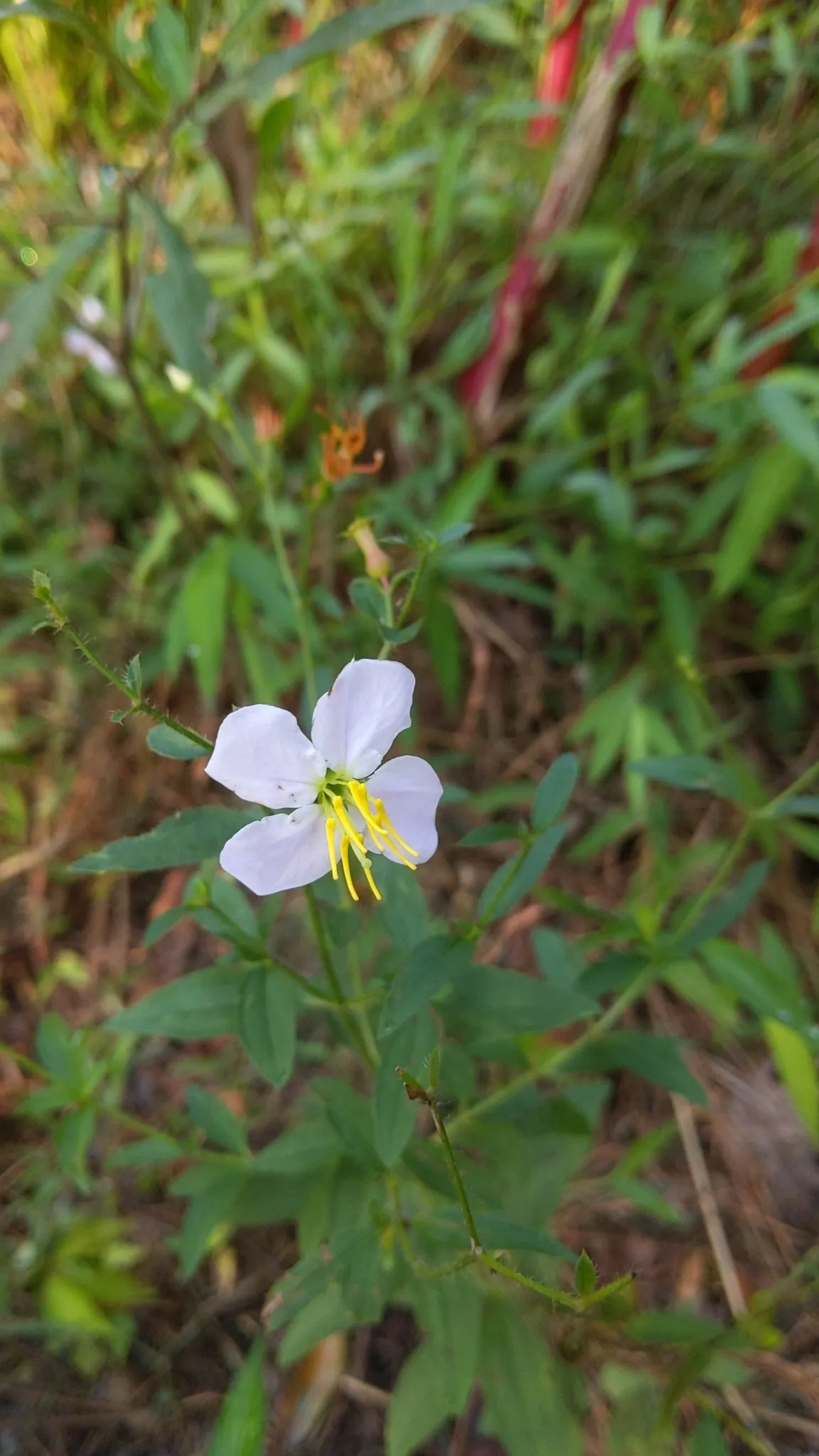
Toxicity unknown
Dull Meadow-pitcher (Rhexia mariana) is not listed by the ASPCA Animal Poison Control Center (opens in new tab) or the other sources we check, so we have no verdict for it either way. Absence from those lists is not a clearance. If your pet shows symptoms after eating any plant, call the ASPCA at (888) 426-4435.
Light
full sun
Water
medium
Size
12"–24" H × 12"–18" W
Bloom
Jul, Aug, Sep
Native to
AL, AR, DE, FL and 21 more states
Pollinators
bees, butterflies
Before you buy
Your city may pay you to plant this
Cities and water utilities offer rebates for replacing lawn with native and water-wise plants. We track 459 programs across 44 states, each with a link to the provider and the date we last checked it.
Find rebates in your areaPicture natives in your own yard
Upload a photo of your yard and Patch Vision shows a rendering of it planted with natives for your region, like Dull Meadow-pitcher.


Browse plants for this ecoregion
Rhexia mariana is a compact native wildflower that produces bright pink, four-petaled flowers from July through September. This low-growing perennial forms neat clumps and thrives in sunny locations with average moisture. The plant goes dormant in winter, returning each spring with fresh green foliage.
Growing Dull Meadow-pitcher
Grow Dull Meadow-pitcher in full sun and medium water. Mature plants reach 12 to 24 inches tall and spread 12 to 18 inches wide. Expect low maintenance to keep it looking intentional in a front yard.
How to care for Dull Meadow-pitcher, by region
How to care for Dull Meadow-pitcher where it is actually grown: year-round basics plus what to do each season, region by region, with the sources for each.
Care guidance last updated: September 2026
Ouachita Mountains (includes Hot Springs, AR)
Year-round
Maryland meadowbeauty is a native wetland-edge wildflower for the moist, low spots common around Hot Springs and the Ouachita Mountains, not a plant for average dry garden soil.
- Native to Arkansas and much of the eastern and southern US in wet meadows and ditches, per the U.S. Fish and Wildlife Service.
- Needs consistently moist to wet, acidic soil, a rain garden, pond edge, or naturally damp low spot suits it.
- Grows 1 to 3 feet tall with pink to white flowers from June through August.
- Spreads by rhizomes in a favorably wet spot, forming a patch over time.
- Bees that can buzz-pollinate the flowers are the main pollinators.
- Struggles and often dies out in ordinary dry garden beds, match the site to the plant before planting.
Keeping it inside a defined rain garden or pond-edge bed, rather than a random wet spot in the lawn, reads as intentional rather than a boggy patch.
Fall
Fall brings the growing season to a close, with the plant setting seed and starting to die back as Hot Springs cools toward its average first frost in late October.
- Seed pods form after flowering finishes in late summer, leave them to mature and self-sow.
- Foliage starts to yellow and die back as days shorten and temperatures cool.
- Skip cutting back yet, the dying top growth still feeds the rhizomes.
- Fine to leave it through Hot Springs' first frost near late October, this perennial dies back naturally every year.
- A good time to check whether the wet site held up through the season and adjust before next spring if it did not.
Winter
Maryland meadowbeauty dies back completely to the rhizomes for winter and needs no care beyond an end-of-season cleanup during Hot Springs' mild, wet winters.
- Top growth dies back to the ground after frost, cut back dead stems anytime over winter.
- Rhizomes overwinter fine in Hot Springs' Zone 7b to 8a climate, no mulch or protection needed.
- Keep the site from drying out even in winter, it is still a wetland species.
- A mild winter thaw bringing up early growth is usually not harmful.
- A good season to plan or expand a rain garden bed for next year.
Spring
Spring growth starts once soil around Hot Springs warms after the last frost, and this is the season to confirm the planting site actually stays wet enough for it.
- New shoots emerge from the rhizomes after Hot Springs' last frost, typically late March to early April.
- Confirm the planting site is still holding moisture this time of year, a spot that dries out by June is the wrong site for this plant.
- Divide and move rhizomes now if relocating the patch.
- Skip fertilizer, wetland soils are usually fertile enough on their own.
- Slower growth during a cool, wet spring is normal.
Summer
Summer is bloom season for Maryland meadowbeauty, and Hot Springs' hot, humid weather suits it fine as long as the roots stay wet.
- Flowers open June through August, each bloom lasting only a day, with new ones opening continuously.
- Keep the site consistently moist, this matters most during Hot Springs' hottest, driest stretches in July and August.
- Do not let a wet-site planting dry out even briefly during a summer dry spell, wilting sets it back.
- Bees do most of the pollinating, buzzing the flowers to release pollen.
- No regular pest problems show up in a properly wet site.
Sources: Maryland Meadowbeauty, U.S. Fish and Wildlife Service, Rhexia mariana, Lady Bird Johnson Wildflower Center Native Plant Database
In an HOA neighborhood
Dull Meadow-pitcher takes more care to keep looking intentional in a front yard. Maintenance level: low. Consider it for backyard or mid-zone beds rather than the street edge.
Works well in: backyard only.
- Unfamiliar wildflower appearance may be seen as weedy
- Dies back completely in winter leaving bare spots
- Common name includes 'meadow' which suggests wild informal look
Wildlife value
The showy pink blooms attract native bees and butterflies during the summer months. This native plant provides important nectar sources when many other flowers have finished blooming.
Common questions
- When does Rhexia mariana bloom?
- Dull Meadow-pitcher typically flowers from July through September, producing pink blossoms that open for a single day before fading.
- What kind of soil moisture does this plant need?
- It grows best in consistently moist to wet soils, such as those found in low meadows, roadside ditches and seasonally flooded pine flatwoods, though it can tolerate average garden moisture as well.
- How much sun does Dull Meadow-pitcher require?
- Full sun produces the most flowers, but this forb also performs well in partial sun or light shade, especially in warmer climates.
- What pollinators visit Rhexia mariana flowers?
- Bees are the primary pollinators, buzz-pollinating the flowers to release pollen, and butterflies also visit for nectar during the summer bloom period.
- Is Rhexia mariana a good choice for a rain garden or wet meadow planting?
- Yes, its preference for damp to wet soils and its summer bloom period make it well suited to rain gardens, pond margins and low-lying meadow plantings.
- Is Dull Meadow-pitcher HOA-friendly?
- Dull Meadow-pitcher takes more care to look intentional in a front yard. Consider it for backyard or mid-zone beds rather than the street edge.
These answers were drafted with an AI model from this plant's data. Verify care details with a local expert.
Native range data from the World Checklist of Vascular Plants (Kew). Pollinator and host plant associations compiled from GBIF, iNaturalist, and published ecological literature.
If something looks wrong
Common plant problems, and what to check first
These come up on almost any plant. Each guide lists the likely causes in the order they are worth ruling out, with one thing to check before you act on any of them, and links to the source it came from.
- It is dying right after planting
- Leaves turning yellow
- Wilting even though I watered it
- Brown crispy leaf tips
- Bugs on the plant
Ready to grow Dull Meadow-pitcher? Add it to your garden in Pollinator Patch to track it and get season-by-season care guidance.