Esperanza
Tecoma stans
Last reviewed: September 2026
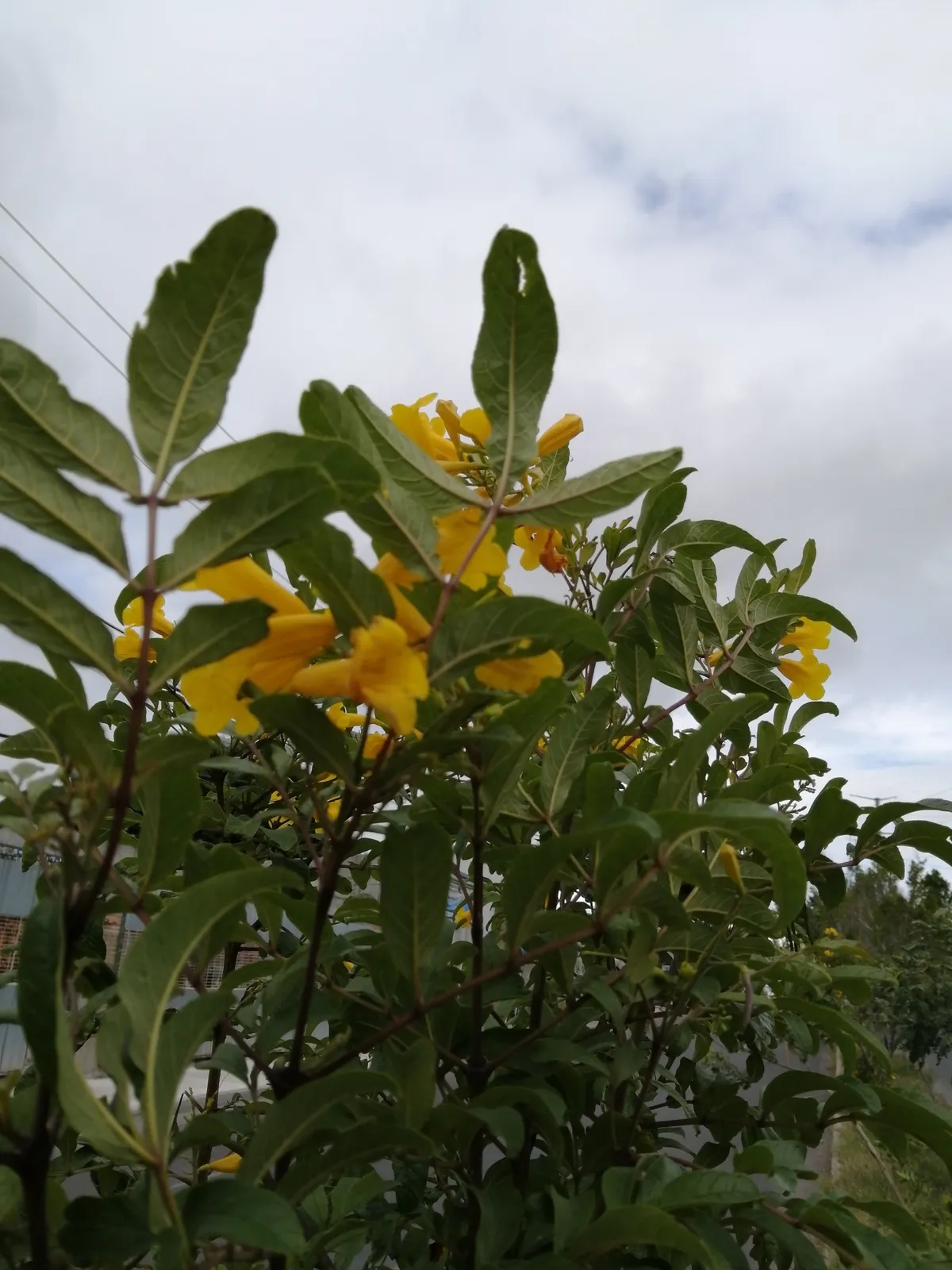
Tecoma stans is a fast growing shrub suited to hot, sunny, low water landscapes in the Southwest and Gulf Coast, producing yellow trumpet shaped flowers from March through November.
Toxicity unknown
Esperanza (Tecoma stans) is not listed by the ASPCA Animal Poison Control Center (opens in new tab) or the other sources we check, so we have no verdict for it either way. Absence from those lists is not a clearance. If your pet shows symptoms after eating any plant, call the ASPCA at (888) 426-4435.
The USDA PLANTS Database (opens in new tab) does not flag Esperanza as toxic to livestock.
Light
full sun
Water
low
Size
48"–96" H × 36"–60" W
Bloom
Mar, Apr, May, Jun, Jul, Aug, Sep, Oct, Nov
Native to
AZ, FL, NM, TX
Pollinators
butterflies, moths, hummingbirds
Before you buy
Your city may pay you to plant this
Cities and water utilities offer rebates for replacing lawn with native and water-wise plants. We track 452 programs across 44 states, each with a link to the provider and the date we last checked it.
Find rebates in your areaBrowse plants for this ecoregion
Esperanza is a cheerful shrub that produces bright yellow trumpet-shaped flowers almost year-round in Texas. This drought-tolerant native grows into a rounded bush that provides reliable color with minimal water requirements.
Growing Esperanza
Grow Esperanza in full sun and low water. Mature plants reach 48 to 96 inches tall and spread 36 to 60 inches wide. Expect low maintenance to keep it looking intentional in a front yard.
How to care for Esperanza, by region
How to care for Esperanza where it is actually grown: year-round basics plus what to do each season, region by region, with the sources for each.
Care guidance last updated: September 2026
Chihuahuan Deserts (includes El Paso)
Year-round
The West Texas form of esperanza, Tecoma stans var. angustata, is a genuinely native Trans-Pecos shrub built for desert grassland and rocky slopes, shorter and hardier than the tropical nursery varieties.
- Trans-Pecos esperanza is native to Chihuahuan Desert grasslands, oak woodlands, and rocky slopes across the Big Bend and Stockton Plateau area, and the local variety, Tecoma stans var. angustata, is naturally shorter and more cold and drought tolerant than the more tropical forms sold elsewhere (Texas A&M AgriLife Extension, aggie-hort.tamu.edu).
- It needs full sun and sharply drained, rocky or caliche soil, conditions that match Trans-Pecos terrain closely, and it does not tolerate soggy ground (Lady Bird Johnson Wildflower Center, wildflower.org).
- The tubular yellow flowers draw hummingbirds and native bees, including carpenter bees and the Sonoran bumble bee documented visiting Tecoma stans populations in the mountains south of Tucson, similar habitat to the desert sky-island ranges of the Trans-Pecos.
- Tecoma stans is not on the ASPCA's toxic plant list for dogs or cats (ASPCA Animal Poison Control Center, aspca.org/pet-care).
Fall
Let esperanza keep blooming into fall in the Trans-Pecos, but start preparing the crown for the region's early, hard freezes.
- Bloom continues from summer until frost, and in the Trans-Pecos that first hard freeze can arrive earlier than in South Texas, so enjoy the flowers but watch the forecast (Native Plant Society of Texas, npsot.org).
- Skip fertilizing in fall, new soft growth pushed late in the season is the most likely to be damaged by an early cold snap.
- Do not prune back before winter, dead or browning growth left in place helps insulate the crown for the freezes ahead.
- Mulching the root zone before the first hard freeze gives the roots extra protection, this matters more here than in milder South Texas.
Winter
Expect freeze dieback most winters in the Trans-Pecos, the native var. angustata form is built to resprout from the roots after this happens.
- Much of the Trans-Pecos sits at or below the zone 8b to 9a range where esperanza reliably freezes back to the ground in a hard winter, colder than the milder Edwards Plateau or South Texas parts of its range (Garden Design, gardendesign.com).
- Mulch the crown several inches deep before the first hard freeze, this insulation is what lets the roots survive even when all top growth is killed.
- Leave freeze-killed stems standing through winter rather than cutting them back, removing them strips away the crown's natural insulation before the coldest nights hit.
- A plant that looks completely dead by midwinter is very often alive at the root crown and will resprout in spring once soil temperatures rise.
A fully freeze-killed-looking esperanza is common and expected here through winter, a tidy mulch ring around the base helps it read as intentional rather than abandoned to an HOA drive-by.
Spring
Wait for confirmed new growth low on the stems before pruning back winter damage on Trans-Pecos esperanza.
- Trans-Pecos winters regularly bring hard freezes, so it's common for this shrub to die back partway or fully to the ground here, more so than in warmer South Texas.
- Texas A&M AgriLife Extension recommends waiting until new leaves appear at the base before cutting anything back, the dead upper growth insulates the crown until the last freeze risk passes (Texas A&M AgriLife Extension, agrilifeextension.tamu.edu).
- Once regrowth is clear, cut dead wood back to green tissue or to the ground if the whole plant froze down.
- The native var. angustata form regrows vigorously from the roots even after a hard freeze, so a bare-looking plant in early spring is not necessarily lost.
A stand of bare stems after a Trans-Pecos winter can look dead to a passerby, a mulch ring or small marker helps signal it's a known dieback pattern, not neglect.
Summer
Once established, Trans-Pecos esperanza handles the region's intense heat and low rainfall with ease and blooms through the hottest months.
- The native West Texas variety is more drought tolerant than tropical nursery forms and matches the Chihuahuan Desert's low rainfall and high summer heat well (Texas A&M AgriLife Extension, aggie-hort.tamu.edu).
- Deep, infrequent watering during the driest summer stretches is enough for an established plant, frequent shallow watering encourages root problems in this climate.
- Full sun and reflected heat off rock or gravel are fine here, this plant does not need afternoon shade even in Trans-Pecos summer heat.
- Deadheading is optional but can help maintain a tidier bloom flush through the summer.
Sources: Esperanza (Tecoma stans) - Aggie Horticulture newsletter, Tecoma stans (Yellow bells) - Native Plant Database, ASPCA Toxic and Non-Toxic Plant List - Dogs, Tecoma stans - Native Plant Society of Texas, Esperanza Plants - How to Grow Tecoma Stans, After the Winter Storm: Texas A&M AgriLife Extension Shares Expert Guidance on How to Care for Freeze-Damaged Plants
Cross Timbers (includes Fort Worth, TX)
Year-round
Esperanza is a fast growing Texas shrub with large yellow trumpet flowers that bloom nearly the whole growing season. In North Texas it wants full sun and, once its roots are established, very little supplemental water.
- Give it full sun, at least 6 to 8 hours of direct light a day, for the fullest bloom.
- Water deeply once or twice a week through the first summer to establish the roots, then cut back to occasional deep watering during dry spells since it is a low water plant once settled in.
- Space it 4 to 6 feet from walkways, fences, and other shrubs. It typically reaches 4 to 8 feet tall and nearly as wide.
- It is native to South Texas and Mexico but is not documented as naturally occurring in this part of the Cross Timbers, so treat it as a well adapted regional choice rather than a true local native here.
- Deadhead spent flower clusters through the growing season to keep new blooms coming.
Esperanza grows in an open, somewhat irregular shape rather than a tidy rounded form, so it reads best in a bed with a clean mulched edge or paired with a lower, neater plant in front rather than standing alone against a bare wall.
Fall
Esperanza keeps blooming into fall right up until the first freeze, which typically lands around mid November in North Texas. Established plants need little care beyond continued deadheading and holding off on heavy pruning as frost nears.
- Flowering continues through October and often into November until the first hard freeze.
- Stop deadheading and pruning by mid October so the plant is not pushing tender new growth right before a freeze.
- Hold off on fall fertilizing. Feeding this late encourages soft new growth that freezes back easily.
- The plant's caterpillar host relationship with the plebeian sphinx moth means any chewed leaves you see in fall are likely feeding a caterpillar rather than a pest problem worth spraying.
- After the first freeze blackens the leaves, leave the dead top growth standing over winter rather than cutting it back. It insulates the crown, and can be cleaned up in late winter once new growth shows where it is coming from.
Frost blackened foliage left standing through the fall for winter protection can read as neglected from the street. Keeping the bed edge clean and mulched around it helps it read as an intentional wait for spring instead.
Winter
Esperanza is not reliably cold hardy through a full North Texas winter. In a hard freeze the top growth often dies back to the ground, and the plant regrows from its base the following spring as long as the roots were already established.
- In a typical winter with only short, mild freezes, expect some leaf drop and stem dieback, but the plant may stay mostly intact.
- In a severe Arctic outbreak, expect the top growth to freeze back to the ground. Do not assume the shrub is dead until you check for green tissue at the base in spring.
- Leave frozen, blackened stems standing through winter rather than cutting them back. They insulate the crown from further cold.
- Do not fertilize or prune in winter. Both push tender growth that a late freeze can kill.
- Plants that have been in the ground for two or more growing seasons recover more reliably from a hard freeze than a shrub planted that same fall.
A shrub that has died back to bare, blackened stems for winter can look dead or abandoned from the curb. Keeping the surrounding bed edged and mulched, and adding a small marker or nearby evergreen planting, helps it read as dormant rather than neglected.
Spring
Spring, after the mid March last frost, is the best time to plant Esperanza in North Texas. Established plants leaf out and begin their long bloom season this month.
- Plant new Esperanza after mid March once the frost risk has passed.
- If the plant froze back to the ground over winter, wait for new growth to appear at the base before pruning away the dead winter wood.
- Water a newly planted shrub two to three times a week for the first six to eight weeks so roots establish before summer heat arrives.
- Work compost into the soil at planting time. The sandier, faster draining Cross Timbers soils west of the metro dry out quicker than heavier clay and benefit from the extra organic matter.
- The first yellow trumpet flowers typically open in April and continue from here through the growing season.
A shrub cut back hard after winter dieback can look bare and twiggy for several weeks in spring. A fresh mulch layer and a clean bed edge signal an intentional planting in progress rather than a neglected corner.
Summer
Summer heat is when Esperanza does its best blooming, but the July and August dry stretch is the season that kills newly planted shrubs, so a first year plant still needs regular water.
- An established shrub in its second summer or later needs little to no supplemental water beyond an occasional deep soak during an extended dry spell.
- A shrub planted this spring still needs a deep watering once or twice a week through July and August. Skipping water during its first run of 100 degree days is the most common way these plants die.
- Deadhead spent flower clusters every couple of weeks to keep the shrub blooming instead of putting energy into seed pods.
- Watch for spider mites or whiteflies in prolonged dry heat. A strong spray of water on the underside of the leaves usually knocks them back.
- Keep 2 to 3 inches of mulch around the base, held a few inches off the stems, to slow moisture loss from the sandier Cross Timbers soil.
Peak summer bloom is this shrub's showiest curb appeal window. Keeping the spent flower clusters deadheaded and the bed edges trimmed keeps that display reading as cared for rather than overgrown.
Sources: Tecoma stans, North Carolina Extension Gardener Plant Toolbox, Tecoma stans (Yellow bells), Lady Bird Johnson Wildflower Center Native Plant Database, Plebeian Sphinx, Paratrea plebeja, Butterflies and Moths of North America
Edwards Plateau (includes San Antonio)
Year-round
Esperanza is a fast-growing native shrub for the Edwards Plateau that blooms nearly nonstop from late spring through frost and shrugs off Hill Country heat, alkaline soil, and drought once established.
- Esperanza wants full sun and fast-draining, rocky or limestone soil, the exact conditions of Edwards Plateau caliche, and struggles in heavy clay that holds water (Lady Bird Johnson Wildflower Center, wildflower.org).
- It is native to the south and western parts of Texas, and Hill Country populations sit right at the northern edge of its range, which is why the Wildflower Center in Austin grows it as a straddling Edwards Plateau and Blackland Prairie native (Native Plant Society of Texas, npsot.org).
- The trumpet-shaped yellow flowers are a favorite nectar stop for hummingbirds, carpenter bees, and bumble bees, and the Xerces Society lists it on regional pollinator plant guides for the southern plains and southwest for its long bloom season (Xerces Society, xerces.org).
- Tecoma stans is not on the ASPCA's toxic plant list for dogs or cats (ASPCA Animal Poison Control Center, aspca.org/pet-care).
Fall
Esperanza keeps blooming right up to the first hard freeze, so let it run instead of cutting it back early.
- Bloom continues from early summer until the first frost, so fall is often the showiest stretch of the year for this shrub (Native Plant Society of Texas, npsot.org).
- Skip fertilizer in fall, since pushing tender new growth right before a freeze makes cold damage worse.
- Hold off on any pruning now. Cutting back before winter removes the insulating dead growth that protects the crown from freeze damage.
- A layer of mulch over the root zone before the first freeze gives the crown extra protection if temperatures drop into the teens.
Esperanza in full bloom into October and November reads as an intentional, well-tended bed right when most neighboring yards are going dormant.
Winter
Freeze dieback to the ground is normal for esperanza in the Hill Country, mulch the crown and leave the browned stems alone until spring.
- Esperanza is reliably perennial in USDA zones 9b to 11, and most of the Edwards Plateau sits at the cold edge of that range, so expect the plant to freeze back to the roots in a hard winter (Garden Design, gardendesign.com).
- Mulch a few inches deep over the root crown before the coldest nights hit, that insulation is what lets the plant resprout from the roots even after a freeze that kills all the top growth.
- Do not prune the dead-looking stems in winter, they act as extra insulation for the crown until new growth confirms it's safe to cut.
- A plant that looks completely dead by January is very often just dormant at the roots and will resprout once soil warms in spring.
Bare, freeze-browned esperanza can look neglected to an HOA committee doing a winter drive-by, a small sign or a tidy mulch ring around the base helps it read as maintained, not abandoned.
Spring
Wait until you see new green growth low on the stems before cutting back any winter-browned esperanza wood.
- Hill Country winters can freeze esperanza to the ground even in a mild year, so don't assume it's dead just because the top growth is brown.
- Texas A&M AgriLife Extension recommends waiting until new growth appears at the base before pruning, since the dead upper stems actually insulate the crown from one more late freeze (Texas A&M AgriLife Extension, agrilifeextension.tamu.edu).
- Once new leaves show, cut all dead wood back to where it's green, or to the ground if the whole plant froze down.
- New spring growth is fast, so a plant that looks like a stump in March can be three feet tall again by June.
Winter dieback can leave esperanza looking like bare sticks well into spring, which reads as dead to neighbors, a quick note or a low edging line helps signal it's intentional.
Summer
Summer is peak esperanza, expect nonstop yellow trumpet blooms through the Hill Country heat with almost no supplemental water once it's established.
- Established esperanza is heat and drought tolerant and thrives in the kind of full-sun, rocky conditions that stress most other Hill Country shrubs (Lady Bird Johnson Wildflower Center, wildflower.org).
- Deep, infrequent watering during extended dry spells keeps bloom going, but soggy soil is the one thing that reliably kills it, so skip watering after rain.
- Deadheading spent flower clusters isn't required but can encourage a flush of new blooms during the hottest months.
- Watch for the tecoma leaf tier moth, which rolls leaves together with webbing, it's mostly cosmetic and rarely needs treatment on an established plant.
Sources: Tecoma stans (Yellow bells) - Native Plant Database, Tecoma stans - Native Plant Society of Texas, Xerces Society Pollinator-Friendly Plant Lists, ASPCA Toxic and Non-Toxic Plant List - Dogs, After the Winter Storm: Texas A&M AgriLife Extension Shares Expert Guidance on How to Care for Freeze-Damaged Plants, The Tecoma Leaf-Tier - Blooming Deserts garden blog (community tip)
Madrean Archipelago (includes Tucson, AZ)
Year-round
Esperanza is a Madrean Archipelago native, right at home on the dry rocky slopes and desert grasslands around Tucson's sky islands.
- This shrub is native to southeastern Arizona's sky island region, found on dry gravelly slopes from about 3,000 to 5,000 feet, per the Southwest Desert Flora regional guide and the University of Arizona Campus Arboretum.
- It wants full sun and fast-draining soil. Once it's established, let the soil dry out between waterings, since soggy soil leads to root rot.
- It blooms on new growth from late spring through fall, so hard pruning happens in late winter, not mid-season, or you cut off the flower buds.
- It dies back in freezes below about 25 degrees F but regrows from the base once the weather warms, so don't assume a frozen plant is dead.
- Feed lightly, an all-purpose slow-release fertilizer at planting time is usually enough. Heavy fertilizing just pushes leafy growth instead of flowers.
Fall
Fall is the tail end of bloom season, and the point where you start thinking about protecting the plant from the first freeze.
- Flowering continues into fall until the first real cold snap, so there's no need to cut the plant back early just because summer is ending.
- Stop fertilizing by early fall. New tender growth pushed late in the year is the growth most likely to get burned by an early frost.
- Watch the forecast for the first hard freeze. If a hard freeze is coming and the plant is young or newly installed, a frost cloth over it for the night can prevent dieback.
- Don't prune preemptively in fall. It's better to wait and see exactly which stems froze back once winter passes, so you're not cutting off wood that survived.
Fall bloom carries the shrub's curb appeal into cooler months, right when a lot of other flowering plants are winding down.
Winter
Winter is when this shrub goes dormant and often freezes back to the ground, which is normal here, not a sign it died.
- It's hardy to about 25 degrees F. A harder freeze will kill the top growth back to the ground, but the roots usually survive and it regrows once spring warms up.
- Leave the frozen, brown stems in place over winter rather than cutting them back right away. They help insulate the crown from further cold.
- Cut back on watering in winter since the plant is dormant and not actively growing, and wet soil in cold weather raises the risk of root rot.
- If a hard freeze is forecast and the plant is young, covering it overnight with a frost cloth can reduce how far it dies back.
A yard with a frozen, cut-back Tecoma stans in winter can look bare or dead to a passerby. It's worth a quick note to neighbors or the board that it's dormant, not dying, if that's a concern.
Spring
Spring is cleanup time after any winter freeze damage, before the new flush of growth and flowers takes off.
- Once the last hard freeze has passed, prune out any dead or frost blackened stems back to live wood. Waiting until you see new green growth makes it easy to tell what's actually dead.
- Trim back leggy stems by about a third at the same time to keep the shrub bushy rather than sparse and top heavy.
- New leaves and the first flower flush usually show up as the weather warms into the 70s and 80s. This is the plant's biggest curb appeal push of the year.
- Hold off on heavy fertilizer here. A light feed after pruning is plenty, since Tecoma stans blooms best on a bit of drought stress, not rich soil.
Spring pruning of freeze-damaged wood keeps the shrub looking tidy right as it heads into its main bloom period, which matters if a board is watching for a neat front yard.
Summer
Summer is peak bloom and peak heat, so watering rhythm matters more than anything else this season.
- This is the main flowering season, with bright yellow trumpet clusters continuing nonstop through the monsoon and into fall in Tucson's heat.
- Water deeply but let the soil dry out between waterings. Overwatering in summer heat is the most common way to lose this plant to root rot.
- Deadhead spent flower clusters and trim off seed pods through summer. It keeps the shrub tidy and encourages another round of blooms.
- Skip fertilizer during the hottest stretch of summer. If growth looks pale or thin, a light feed every month or two is enough.
Sources: Tecoma stans, Yellow Trumpet Bush - Southwest Desert Flora (community tip), Tecoma stans - Find Trees & Learn, UA Campus Arboretum, USDA PLANTS Database, Tecoma stans, Yellow Bells Esperanza, Sierra Vista Growers, Arizona Yellow Bells, AMWUA, Esperanza Plants - How to Grow Tecoma Stans, Garden Design (community tip)
Northeastern Coastal Zone (includes New York, NY)
Year-round
Tecoma stans, sold as esperanza or yellow bells, is a warm-climate shrub that cannot survive a New York winter in the ground. Around New York the only way to keep it is in a large pot, outside for the warm months and brought indoors before frost. Think of it as a summer patio plant that spends winter as a houseplant.
- Grow it in a large pot, at least 18 inches wide and deep, with drainage holes and a light, fast-draining potting mix, never heavy garden soil.
- Give it the sunniest spot you have all summer. It wants full, direct sun to bloom.
- Watering: let the top inch or two of soil dry, then water until it runs out the bottom. In a pot it dries faster than in the ground, so check often in summer heat.
- Common mistake: leaving it out too late in fall. Cold, damp weather even above freezing invites rot, so bring it in on time and do not overwater indoors.
Fall
Fall near New York is the critical move-indoors season. This plant cannot take frost, so timing the return inside matters most now. Bring it in before the first cold nights, not after.
- Move the pot indoors by early to mid October, before nights drop toward frost. Cold, damp fall weather causes rot even before a hard freeze.
- Check the plant for pests and hose it off before it comes inside so you do not bring bugs into the house.
- Once indoors, cut back on water and stop feeding. The plant slows down for winter and needs much less.
Winter
Winter near New York means the plant lives inside as a resting houseplant. It will not bloom much and may drop some leaves. The goal is just to keep it alive and dry-ish until spring.
- Keep it in the brightest spot you have, ideally a south-facing window, and keep it above about 45 degrees indoors.
- Water sparingly. Let the soil dry well between drinks. Overwatering a resting plant in winter is the fastest way to rot the roots.
- Expect some leaf drop and no real growth. Do not fertilize until spring. Leggy stems can be trimmed back when you move it out again.
Spring
Spring near New York means getting the potted plant ready to go back outside, but not too early. Nights stay cold well into spring here, so wait until frost is truly done before it lives outdoors again.
- Keep it indoors in a bright window until nights are reliably above the mid 40s, usually mid to late May in the New York area.
- Move it outside gradually over a week or so, starting in part shade, so the leaves do not scorch after a winter indoors.
- Refresh the top inch of potting mix or give a light balanced feeding as new growth starts, and prune any leggy winter stems to shape it.
Summer
Summer is the good season near New York. Outside in full sun and warmth, the potted plant will bloom. Keep it watered and deadheaded and it will reward you through the warm months.
- Water often. A sunny pot in summer can dry out every day or two, so check the soil and water when the top inch feels dry.
- Feed lightly every few weeks with a balanced fertilizer during active growth to keep flowers coming.
- Pinch off spent flower clusters and seed pods to encourage more blooms instead of seed.
Sources: Missouri Botanical Garden Plant Finder Tecoma stans
Southern Texas Plains (includes McAllen)
Year-round
Esperanza is native to South Texas brushland and is one of the toughest, longest-blooming shrubs for the Rio Grande Valley's heat, caliche soil, and drought.
- Esperanza grows naturally in South Texas thorn scrub and desert grassland habitat, and this is the core of its native Texas range along with adjacent Mexico (Native Plant Society of Texas, npsot.org).
- It wants full sun and fast-draining, rocky, sandy, or loam soil and does not tolerate wet feet, which fits the well-drained caliche common across the South Texas Plains (Lady Bird Johnson Wildflower Center, wildflower.org).
- Flowers open nearly year-round in the Valley's mild winters and draw carpenter bees, bumble bees, and hummingbirds, and the Xerces Society includes it on regional pollinator plant lists for its nectar value (Xerces Society, xerces.org).
- Tecoma stans is not on the ASPCA's toxic plant list for dogs or cats (ASPCA Animal Poison Control Center, aspca.org/pet-care).
Fall
Fall is often the peak flower show for esperanza in South Texas, since bloom keeps going right up until the rare frost.
- Esperanza blooms from early summer until the first frost, and in the Valley that means flowers can persist well into November or later in a mild year (Native Plant Society of Texas, npsot.org).
- Skip fertilizing in fall, pushing soft new growth right before any cold snap makes that growth more vulnerable.
- Hold off on pruning now, even in a mild-winter region, since an unexpected hard freeze can still hit South Texas and any dead growth left in place helps protect the crown.
- This is a good time to check drainage around the base before winter rains arrive, standing water is the more common threat here than cold.
Esperanza still blooming bright yellow into November stands out against neighboring yards going dormant, a strong seasonal curb-appeal moment.
Winter
Most winters in the Rio Grande Valley are mild enough that esperanza stays woody, but an occasional hard freeze can still knock it back to the ground.
- The Valley mostly falls in USDA zone 9b to 10, where esperanza is reliably perennial and usually keeps its branch structure through winter (Garden Design, gardendesign.com).
- In the rare hard freeze, mulch the root crown a few inches deep for insulation, that's what lets the plant resprout from the roots even if the top growth is killed.
- Leave any freeze-browned stems in place through winter rather than cutting them back, they help shield the crown from a second cold snap.
- A plant that looks fully dead after a hard freeze event is usually still alive at the roots and will resprout once temperatures warm.
Spring
South Texas winters are usually mild enough that esperanza keeps its woody structure, so spring pruning here is mostly shaping, not freeze recovery.
- In zone 9b to 10 conditions typical of the Rio Grande Valley, esperanza grows as a true woody perennial shrub with little to no freeze dieback most years (Garden Design, gardendesign.com).
- Prune lightly in early spring to shape the plant and remove any tips that did brown back in a cold snap.
- A light feeding as new growth starts helps fuel the long bloom season ahead, but skip heavy fertilizer on an already vigorous plant.
- Check for any freeze damage from a hard cold snap before assuming the whole plant needs to be cut back, most South Texas plants only lose the outer tips.
Summer
Esperanza handles South Texas Plains summer heat with ease and blooms nonstop as long as drainage stays sharp.
- This is a Texas SuperStar plant recognized specifically for handling extreme heat and drought once its roots are established (Texas A&M AgriLife Extension, travis-tx.tamu.edu).
- Deep, infrequent watering during long dry stretches keeps flowers coming, overwatering in heavy or poorly drained soil is the more common problem in summer than underwatering.
- Watch for the tecoma leaf tier moth, whose caterpillars roll leaves together with silk webbing during wet monsoon-season stretches, it's usually cosmetic on an established shrub.
- Deadheading spent blooms is optional but can tidy up the plant and encourage another flush of flowers.
Sources: Tecoma stans - Native Plant Society of Texas, Tecoma stans (Yellow bells) - Native Plant Database, Xerces Society Pollinator-Friendly Plant Lists, ASPCA Toxic and Non-Toxic Plant List - Dogs, Texas Superstar - Gold Star Esperanza, The Tecoma Leaf-Tier - Blooming Deserts garden blog (community tip)
Texas Blackland Prairies (includes Dallas, TX)
Year-round
Tecoma stans, often sold as esperanza or yellow bells, grows fast in the Dallas heat and blooms yellow trumpets all summer. Around Dallas it is at the cold edge of where it survives outside, so treat it as a shrub that often dies back to the ground in a hard winter and returns from the roots. Give it full sun, sharp drainage, and steady summer water while it is young, then back off.
- Establishment: water a new plant deeply about twice a week for the first summer so the roots reach down, then taper off.
- Watering once established: soak deeply every 10 to 14 days in dry stretches. It handles drought but blooms better with an occasional deep drink.
- Mulch: keep 2 to 3 inches of mulch over the roots, pulled back a couple inches from the stems, to hold summer moisture and protect the crown in a cold snap.
- Common mistake: planting in soggy or heavy clay that stays wet. Wet feet in winter rots the crown faster than cold alone, so pick a spot that drains.
Fall
Fall around Dallas is about helping the plant harden off for winter, not pushing new tender growth. Stop feeding, ease back on water as it cools, and let the roots prepare for the cold.
- Stop fertilizing by early fall so you are not forcing soft new growth that a first frost will kill.
- Ease off watering as temperatures drop. The plant slows down and needs much less.
- Leave the main pruning for spring. Cutting hard in fall removes the top growth that helps shelter the crown through winter.
Winter
Winter in Dallas is the risky season for this plant. It goes dormant when temperatures fall below the upper 20s and can freeze to the ground in a hard cold snap. The goal is to protect the crown and roots so it comes back.
- Pile an extra few inches of mulch over the root zone before the first hard freeze to insulate the crown.
- Expect the top to brown and die back after a freeze. That is normal. Do not rush to cut it, the dead stems add a little cold protection.
- In an unusually cold winter a young plant may not return, so a small backup in a pot moved to shelter is worth it if you want to be sure.
Leaving the frost-killed stems standing until spring is normal for this plant, but a light tidy of anything flopping into walks or the curb keeps the winter yard looking intentional rather than neglected.
Spring
Spring in Dallas is when you find out if the plant made it. Wait until the danger of frost has passed, usually mid to late March, then cut back the winter-killed stems to see where live green wood or fresh shoots start.
- Wait to prune until you see new growth or the weather has settled, then cut dead stems back to living wood or to a few inches above the ground if it froze back fully.
- Scratch a stem with your thumbnail. Green underneath means live wood to keep, brown and dry means cut it off.
- Once new shoots appear, a light feeding of balanced fertilizer gets it moving for the season.
A clean early-spring cutback of the dead winter stems reads as intentional care to neighbors and helps you avoid a violation letter for a plant that looks abandoned before it leafs out.
Summer
Summer is peak bloom in the Dallas heat. This is the season it earns its spot, so keep it deadheaded and watered enough to keep the flowers coming through the hottest stretch.
- Snip off the long seed pods and spent flower clusters through summer to push more blooms instead of seed.
- In a long dry, hot spell soak it deeply every week to 10 days. Wilting in afternoon that recovers by morning is normal and not a reason to overwater.
- It loves the heat, so no shade or babying needed once established. Just keep the water steady enough for flowering.
Regular summer deadheading keeps the shrub tidy and covered in flowers rather than dangling brown pods, which reads as a cared-for front-yard plant.
Sources: Missouri Botanical Garden Plant Finder Tecoma stans
Western Gulf Coastal Plain (includes Houston, TX)
Year-round
Esperanza is a fast-growing, heat-loving flowering shrub native to Texas that blooms nearly nonstop from spring through fall in full sun.
- Plant in full sun to part shade for the best bloom
- Give it well-drained soil, it tolerates rocky, limestone, sandy, or loam soils but dislikes soggy roots
- Water weekly, letting the soil dry between waterings once established
- Deadhead spent flowers and seed pods to keep it blooming and bushy
- Expect a rounded shrub 3 to 6 feet tall, taller in a mild year
Its bright yellow trumpet flowers and rounded shrub form work well as an HOA-friendly flowering foundation planting, just keep up with deadheading so it does not sprawl.
Fall
Esperanza keeps blooming into fall in the Houston area, with flowers continuing until the first real cold snap.
- Keep deadheading through fall to extend the bloom season
- Cut back on watering frequency as temperatures cool
- Avoid heavy pruning in fall, growth stimulated late in the season is more vulnerable to an early freeze
- Let seed pods stay on toward the end of fall if you want to collect seed
Winter
Houston's winters are usually mild enough that established Esperanza survives with only partial dieback, but a hard freeze can knock it back to the ground.
- Do not prune back frost-damaged growth right away, dead stems help insulate the crown through more cold snaps
- Wait until spring regrowth appears before cutting back winter damage
- Established, in-ground plants generally come back through Houston's zone 9a to 9b winters, though a hard freeze can still kill them to the ground
- Skip watering during winter dormancy
Spring
Spring is recovery and regrowth season for Esperanza in Houston, since most winters bring at least some dieback. New growth from the base signals it is time to prune away winter damage.
- Wait until new growth appears at the base before cutting back any winter-damaged stems
- Cut dead wood back to living tissue, or to the ground if the whole plant died back
- Resume weekly watering as new growth picks up
- Blooming typically restarts by late spring
Summer
Summer is when Esperanza is at its best in Houston, blooming heavily through the heat and humidity with minimal fuss.
- Water weekly during dry stretches, letting soil dry out between waterings
- Deadhead spent pods regularly to keep flowers coming
- Skip extra fertilizer in fertile Houston soils, too much feeds leaves rather than blooms
- Prune lightly to shape and control size if it is getting leggy
Want these tasks as reminders timed to your yard? Pollinator Patch turns this guidance into a season-by-season care plan for the plants you actually grow.
In an HOA neighborhood
Esperanza takes more care to keep looking intentional in a front yard. Maintenance level: low. Consider it for backyard or mid-zone beds rather than the street edge.
Works well in: backyard only.
- Height exceeds typical HOA-friendly range
Wildlife value
The abundant yellow blooms attract butterflies, moths, and hummingbirds throughout the growing season. Its long flowering period makes it a valuable nectar source from spring through fall.
Common questions
- When does Tecoma stans bloom?
- Tecoma stans typically flowers from March through November, with the heaviest bloom during the warmer summer months.
- What pollinators does Tecoma stans attract?
- The tubular yellow flowers draw butterflies, moths, and hummingbirds, which feed on the nectar.
- How much water does Tecoma stans need?
- This shrub is low water once established and handles dry, well drained soil, though it tolerates occasional deeper watering.
- How much sun does Tecoma stans need to flower well?
- It flowers best in full sun and can still perform in part sun, but blooming slows in shadier spots.
- What kind of plant is Tecoma stans?
- Tecoma stans grows as a multi stemmed shrub, often becoming leggy and open with age unless pruned.
- Is Esperanza toxic to livestock?
- The USDA PLANTS Database does not flag Esperanza as toxic to livestock.
- Is Esperanza HOA-friendly?
- Esperanza takes more care to look intentional in a front yard. Consider it for backyard or mid-zone beds rather than the street edge.
These answers were drafted with an AI model from this plant's data. Verify care details with a local expert.
Native range data from vouchered herbarium specimen records and regional native plant society lists. Pollinator and host plant associations compiled from GBIF, iNaturalist, and published ecological literature.
If something looks wrong
Common plant problems, and what to check first
These come up on almost any plant. Each guide lists the likely causes in the order they are worth ruling out, with one thing to check before you act on any of them, and links to the source it came from.
- It is dying right after planting
- Leaves turning yellow
- Wilting even though I watered it
- Brown crispy leaf tips
- Bugs on the plant
Ready to grow Esperanza? Add it to your garden in Pollinator Patch to track it and get season-by-season care guidance.
Planning a bed around it? Start a free plan with this plant
Not sure where to start? Take the 2-minute yard quiz