Giant Wild Rye
Leymus condensatus
Last reviewed: September 2026
Leymus condensatus, giant wild rye, is a clumping perennial grass with gray-blue foliage that blooms from May through July and does well in full sun with low water once established.
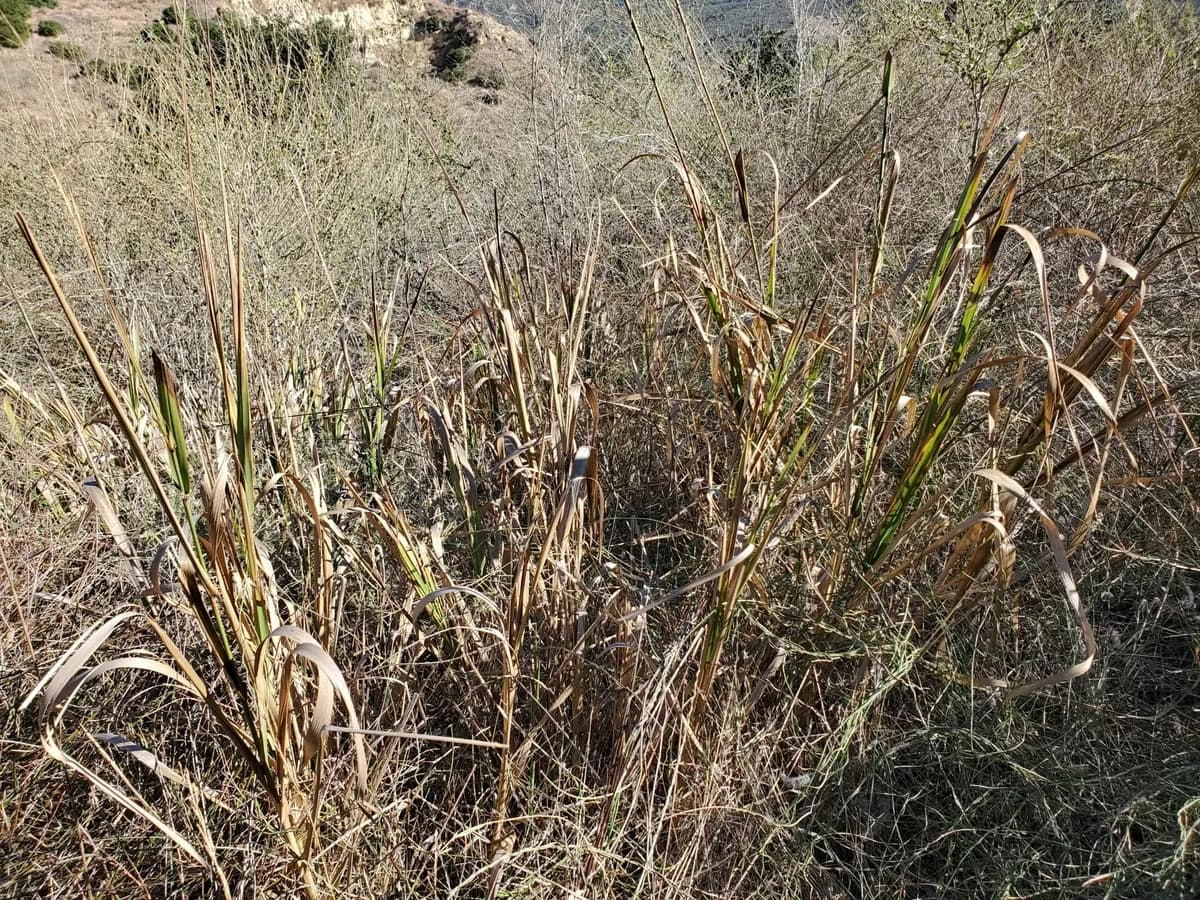
Giant Wild Rye (Leymus condensatus) is not flagged as toxic to dogs or cats by Plants For A Future (PFAF) (opens in new tab) (last reviewed 2026-05-21). This verdict does not come from the ASPCA. If your pet shows symptoms after eating any plant, call the ASPCA at (888) 426-4435.
The USDA PLANTS Database (opens in new tab) does not flag Giant Wild Rye as toxic to livestock.
Light
full sun
Water
low
Size
24"–72" H × 12"–36" W
Bloom
May, Jun, Jul
Native to
CA
Before you buy
Your city may pay you to plant this
Cities and water utilities offer rebates for replacing lawn with native and water-wise plants. We track 459 programs across 44 states, each with a link to the provider and the date we last checked it.
Find rebates in your areaPicture natives in your own yard
Upload a photo of your yard and Patch Vision shows a rendering of it planted with natives for your region, like Giant Wild Rye.


Browse plants for this ecoregion
Leymus condensatus (Canyon Prince Wild Rye) is a striking ornamental native grass with blue-green foliage that grows in fountain-like clumps. It provides excellent structure and movement in landscapes while requiring minimal water once established.
Growing Giant Wild Rye
Grow Giant Wild Rye in full sun and low water. Mature plants reach 24 to 72 inches tall and spread 12 to 36 inches wide. Expect moderate maintenance to keep it looking intentional in a front yard.
How to care for Giant Wild Rye, by region
How to care for Giant Wild Rye where it is actually grown: year-round basics plus what to do each season, region by region, with the sources for each.
Care guidance last updated: October 2026
Central Basin and Range (includes Salt Lake City, UT)
Year-round
Year-round care for giant wild rye around Salt Lake City, UT: full sun, adaptable soil, and very little water once established.
- It needs full sun.
- It tolerates sand and clay with fast, medium, or slow drainage.
- Once established, water about once a month at most in summer.
- It grows 3 to 6 feet tall and 2 to 8 feet wide in a fountain form.
- It can be cut back to the ground in summer if it becomes floppy.
- Remove rhizomes to control its spread.
- Calscape lists cold tolerance only to 15 F, so treat it as a trial plant where winters are colder than that.
A clean bed edge and a hard cutback when it flops keep it reading as a planned screen or backdrop.
Coast Range (includes Eureka, CA)
Year-round
Giant Wild Rye is an easygoing evergreen bunchgrass that mostly takes care of itself once it settles in.
- Give it full sun and let the soil dry out between waterings. Once it is established, water about once a month at most, this grass does not like wet feet.
- It handles sandy, clay, or rocky soil just fine and does not need fertilizer or amended soil to do well.
- It grows in a clump and spreads slowly by underground roots. If you want to keep it contained, pull or cut any new shoots that pop up outside the main clump.
- This grass is a host plant for a wide range of native butterflies and moths, and its seeds feed birds, so leaving some seed heads up through the year helps local wildlife.
- It stays green all year, so there is no big dormant season to plan around.
Fall
Fall is when Humboldt County's rains start returning, and it is a good time to groom the grass before winter.
- Rain typically picks back up around October or November, so you can usually stop hand watering once the wet season starts.
- Trim off dry or ragged blades and old flower stalks now if the clump looks rough after summer.
- Fall is also a fine time to divide an overgrown clump or plant new starts, since the returning rain does a lot of the watering for you.
- Leave some seed heads standing if you can. Birds use them into the cooler months.
Trimming back dry growth now keeps the yard looking intentional and tended through the wet winter months, which is what shows most from the street.
Winter
Eureka winters are mild and wet, and this evergreen grass mostly just sits through it looking green.
- Humboldt County rarely sees hard freezes right on the coast, and this grass tolerates cold down to about 15 degrees Fahrenheit, so frost damage is unlikely in a typical Eureka winter.
- Winter is the rainy season here, so skip supplemental watering unless there is an unusually dry stretch.
- Make sure the spot drains well. Heavy winter rain sitting around the roots is more likely to cause problems than any cold snap.
- Because it stays evergreen, there is no big winter dieback to clean up, just occasional grooming if wind or rain knocks foliage around.
Spring
Spring is when this grass pushes new growth and sends up its seed stalks.
- New blades come in through spring, and the seed heads usually show up around April.
- If Eureka has a dry stretch early in the year, a little extra water helps, but do not overdo it. This grass would rather stay on the dry side.
- Spring is a good time to divide a crowded clump or move a start to a new spot if you want more coverage.
- Watch for any new shoots coming up outside the main clump from underground roots, and pull those now while they are small if you want to keep the grass contained.
Summer
Eureka summers stay cool and foggy, so this grass needs less water here than it would further inland.
- The coastal fog keeps things mild and damp through summer, so an established plant often gets by on little or no extra water beyond what the fog and any leftover spring rain provide.
- If you do water, keep it light. Too much summer water is the most common reason this grass flops over and looks messy.
- If a clump gets floppy or ragged, cutting it back close to the ground lets it come back fuller and neater.
- This grass is deer resistant, which is worth knowing in yards near open Humboldt hillsides where deer browse is common.
Sources: Calscape: Elymus condensatus (Giant Wildrye) care and wildlife profile, Las Pilitas Nursery: Elymus condensatus, Giant Wild Rye, Lady Bird Johnson Wildflower Center: Leymus condensatus (Giant wildrye)
Mojave Basin and Range (includes Victorville, CA)
Year-round
Year-round care for giant wild rye around Victorville, CA: full sun, adaptable soil, and very little water once established.
- It needs full sun.
- It tolerates sand and clay with fast, medium, or slow drainage.
- Once established, water about once a month at most in summer.
- It grows 3 to 6 feet tall and 2 to 8 feet wide in a fountain form.
- It can be cut back to the ground in summer if it becomes floppy.
- Remove rhizomes to control its spread.
A clean bed edge and a hard cutback when it flops keep it reading as a planned screen or backdrop.
Southern California/Northern Baja Coast (includes Los Angeles, CA)
Year-round
Giant wild rye is a big, silvery blue clumping grass native to Southern California's chaparral and coastal sage scrub, and a reliable, drought tolerant choice for Los Angeles gardens.
- Full sun to light shade, and it tolerates a range of soils once established.
- Very drought tolerant once rooted in, though a deep watering every few weeks helps it look its best through a hot summer.
- Spreads by underground rhizomes, give it room or plant it where spreading is welcome, such as a slope or background planting.
- Cut the whole clump back hard, to a few inches, in late winter to refresh new growth.
- Reaches three to six feet tall and wide, useful as a backdrop or informal screen.
- Not on the ASPCA toxic plant list for dogs or cats.
A clipped edge or defined bed line around this grass keeps its bold, spreading habit reading as an intentional accent rather than an overgrown patch.
Fall
Fall is a good season to plant or divide giant wild rye as rain returns to the Los Angeles basin.
- Plant new starts now so roots establish with the help of fall rain.
- Divide crowded clumps and replant the divisions elsewhere in the garden.
- Watering needs drop off as rain becomes more regular.
- This is also a good time to install a root barrier if you want to contain its spread.
Winter
Giant wild rye stays blue green through the mild Los Angeles winter and needs little care beyond rainfall.
- Winter rain typically covers all of this grass's water needs.
- Trim only damaged or dead blades, save the hard cutback for late winter or early spring.
- No frost protection is needed in a typical LA basin winter.
- Watch for slug or snail damage on fresh new blades during wet winter weeks.
Spring
Late winter into early spring is the time to cut giant wild rye back hard before its main growth flush.
- Cut the clump down to a few inches before new spring growth starts.
- New blue gray blades push up quickly once cut back.
- No fertilizer needed, this grass thrives in lean soil.
- Space new plants three to four feet apart to leave room for its spreading habit.
Summer
Giant wild rye handles the dry Los Angeles summer well once it is established, needing only occasional deep watering.
- Water deeply every three to four weeks in hot inland gardens, less often near the coast.
- Watch the spreading rhizomes if the grass is planted in a small or contained bed.
- The silvery blue color holds up through summer heat with minimal care.
- It stays evergreen through summer here, unlike some California native grasses that go summer dormant.
Sources: Calscape: Giant Wildrye (Elymus condensatus), ASPCA Toxic and Non-Toxic Plant List, Dogs, Las Pilitas Nursery: Elymus condensatus, Giant Wild Rye
In an HOA neighborhood
Giant Wild Rye is an HOA-friendly choice. Maintenance level: moderate. Tidiness: 3 out of 5.
Works well in: front yard, foundation, street edge, mid zone.
- Can appear untidy if not occasionally trimmed
- May self-seed in favorable conditions
- Winter appearance less attractive without maintenance
Wildlife value
This grass provides valuable nesting material for birds and shelter for small wildlife. Its seeds offer food for birds and small mammals.
Common questions
- How much water does giant wild rye need?
- Giant wild rye is a low-water grass once its root system is established. In garden settings it can handle occasional summer irrigation, but it does not require regular watering and tends to decline if kept consistently wet.
- When does giant wild rye bloom?
- Giant wild rye typically flowers from May through July, producing tall narrow seed spikes above the clumping foliage.
- What growing conditions suit giant wild rye best?
- This grass grows best in full sun to light shade on well-drained soil. It is often used in coastal scrub, grassland, and dune plantings in California, and it tolerates sandy or rocky ground.
- Does giant wild rye stay green year round?
- Giant wild rye keeps its gray-blue foliage for most of the year, making it useful as a structural grass in gardens even outside its main bloom period.
- Is Giant Wild Rye toxic to dogs?
- Giant Wild Rye is not flagged as toxic to dogs by Plants For A Future (PFAF). This verdict does not come from the ASPCA.
- Is Giant Wild Rye toxic to cats?
- Giant Wild Rye is not flagged as toxic to cats by Plants For A Future (PFAF). This verdict does not come from the ASPCA.
- Is Giant Wild Rye toxic to livestock?
- The USDA PLANTS Database does not flag Giant Wild Rye as toxic to livestock.
- Is Giant Wild Rye HOA-friendly?
- Giant Wild Rye is generally an HOA-friendly choice in the right placement, with moderate maintenance.
These answers were drafted with an AI model from this plant's data. Verify care details with a local expert.
Native range data from vouchered herbarium specimen records and regional native plant society lists. Pollinator and host plant associations compiled from GBIF, iNaturalist, and published ecological literature.
If something looks wrong
Common plant problems, and what to check first
These come up on almost any plant. Each guide lists the likely causes in the order they are worth ruling out, with one thing to check before you act on any of them, and links to the source it came from.
- It is dying right after planting
- Leaves turning yellow
- Wilting even though I watered it
- Brown crispy leaf tips
- Bugs on the plant
Ready to grow Giant Wild Rye? Add it to your garden in Pollinator Patch to track it and get season-by-season care guidance.