Horrid Thistle
Cirsium horridulum
Last reviewed: June 2026
Toxicity unknown
Horrid Thistle (Cirsium horridulum) is not listed by the ASPCA Animal Poison Control Center (opens in new tab) or the other sources we check, so we have no verdict for it either way. Absence from those lists is not a clearance. If your pet shows symptoms after eating any plant, call the ASPCA at (888) 426-4435.
Light
full sun
Water
medium
Size
12"–48" H × 12"–24" W
Bloom
Jun, Jul, Aug
Native to
AL, AR, CT, DE and 18 more states
Pollinators
bees, butterflies, beetles
Before you buy
Your city may pay you to plant this
Cities and water utilities offer rebates for replacing lawn with native and water-wise plants. We track 459 programs across 44 states, each with a link to the provider and the date we last checked it.
Find rebates in your areaPicture natives in your own yard
Upload a photo of your yard and Patch Vision shows a rendering of it planted with natives for your region, like Horrid Thistle.


Browse plants for this ecoregion
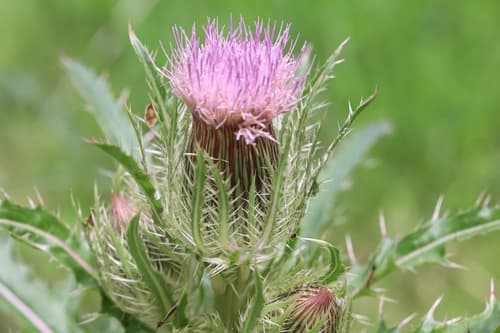
Horrid thistle is a spiny native wildflower that produces showy yellow, pink, or purple blooms from summer into early fall. This robust perennial forms clumps of deeply lobed, thorny leaves and can reach up to 4 feet tall when flowering. The plant attracts numerous pollinators but requires careful placement due to its aggressive spines.
How to care for Horrid Thistle, by region
How to care for Horrid Thistle where it is actually grown: year-round basics plus what to do each season, region by region, with the sources for each.
Care guidance last updated: August 2026
Texas Blackland Prairies (includes Dallas, TX)
Year-round
Horrid thistle, also called bristle or yellow thistle, is genuinely native to the Blackland Prairies region around Dallas. It is a spiny, low maintenance plant that real pollinators depend on, but its size and spines mean placement matters.
- It likes full sun to light shade and drains well in sandy, loamy, or clay soil, and once it settles in it handles Dallas summer dry spells with just medium supplemental water.
- It flowers once and then dies back. Some populations are described as a short lived perennial, but in Texas it more often behaves like a winter annual or biennial, forming a low spiny rosette first and sending up a tall flowering stalk the next season.
- Bees, beetles, and butterflies use the flowers for nectar, and it is a documented host plant for the Painted Lady butterfly, so it does real work for local pollinators even while it looks rough.
- It belongs in a Texas native bed for the Dallas area per the Lady Bird Johnson Wildflower Center's range data for this plant. It just needs a spot away from foot traffic.
Because it is very spiny and can self-seed into nearby lawns and beds, most HOA-conscious gardeners keep it back from front walkways, mailboxes, and shared property lines rather than up against them.
Fall
By fall, most flowering stems have finished blooming and start to die back naturally since this plant flowers once and then is done. New seedlings may also show up now if it self-seeded over summer.
- Dying stems after bloom are normal, not a sign of disease or poor care.
- Consider leaving the dead stems standing at 12 to 24 inches instead of cutting them to the ground. Native bees use hollow stems like this for nesting over the following months.
- Decide now whether to let any self-sown seedlings stay for next year or thin them out. This species can spread into nearby lawn or bed areas if left unchecked.
Winter
Winter is the quiet season. Plants that germinated in fall sit as a low, ground hugging spiny rosette and put energy into roots rather than top growth.
- There is little to do. Skip fertilizer and only water during an unusually dry, mild winter stretch.
- This is a good time to walk the yard and decide where any rosettes should stay, since the plant is still low and compact now but will grow tall and spiny by spring.
- If old dead stems from last year are still standing, it is fine to leave them through the rest of winter before cutting them back.
Spring
Spring is bolt season. The low spiny rosette that sat quiet over winter sends up a tall flowering stalk, and the first blooms usually open by May in the Dallas area.
- Let it bolt on its own. It does not need fertilizer, and normal spring rain is enough water for it.
- The spines get more obvious as the stem stretches upward, so plan on gloves or a long handled tool if you need to work near it this time of year.
- Watch for the first pink to yellow flower heads opening from around May, which is when bees, beetles, and butterflies start visiting.
Summer
Summer is peak bloom, running from around May into August, when horrid thistle is doing the most for local pollinators before it sets seed and finishes its life cycle.
- Expect steady visits from bees, beetles, and butterflies through the bloom window. This is the payoff season for keeping the plant around.
- Once flower heads fade they turn into fluffy wind blown seed heads. If you want to limit how far it spreads, cut spent heads off before they open rather than after.
- It handles Dallas summer heat and dry stretches well once established, so extra watering usually is not needed beyond an occasional deep soak in a real drought.
Sources: Lady Bird Johnson Wildflower Center - Native Plant Database (Cirsium horridulum), NC State Extension Gardener Plant Toolbox - Cirsium horridulum, Texas A&M AgriLife Extension - Aggie Turf: Horrible Thistle
In an HOA neighborhood
Horrid Thistle takes more care to keep looking intentional in a front yard. Maintenance level: low. Consider it for backyard or mid-zone beds rather than the street edge.
Works well in: backyard only.
- Very spiny and can appear aggressive or weedy
- Name includes 'horrid' which creates negative perception
- May self-seed aggressively in some conditions
Wildlife value
This thistle is exceptionally valuable for pollinators, attracting native bees, butterflies, and beneficial beetles to its nectar-rich flowers. The seeds also provide food for goldfinches and other songbirds in late summer and fall.
Common questions
- How much sun does Horrid Thistle need?
- Horrid Thistle grows best in full sun conditions.
- When does Horrid Thistle bloom?
- Horrid Thistle blooms in June, July, and August.
- Where is Horrid Thistle native?
- Horrid Thistle (Cirsium horridulum) is native to AL, AR, CT, DE and 18 more states, per vouchered herbarium specimen records and regional native plant society lists.
- What pollinators does Horrid Thistle attract?
- Horrid Thistle draws bees, butterflies, and beetles.
- Is Horrid Thistle HOA-friendly?
- Horrid Thistle takes more care to look intentional in a front yard. Consider it for backyard or mid-zone beds rather than the street edge.
Native range data from vouchered herbarium specimen records and regional native plant society lists. Pollinator and host plant associations compiled from GBIF, iNaturalist, and published ecological literature.
If something looks wrong
Common plant problems, and what to check first
These come up on almost any plant. Each guide lists the likely causes in the order they are worth ruling out, with one thing to check before you act on any of them, and links to the source it came from.
- It is dying right after planting
- Leaves turning yellow
- Wilting even though I watered it
- Brown crispy leaf tips
- Bugs on the plant
Ready to grow Horrid Thistle? Add it to your garden in Pollinator Patch to track it and get season-by-season care guidance.