Hubricht's bluestar
Amsonia hubrichtii
Last reviewed: September 2026
Amsonia hubrichtii produces clusters of pale blue star shaped flowers in April and May and later turns a bright gold in fall. It grows well in full sun on open, well drained sites and handles medium to low soil moisture once established.
Toxicity unknown
Hubricht's bluestar (Amsonia hubrichtii) is not listed by the ASPCA Animal Poison Control Center (opens in new tab) or the other sources we check, so we have no verdict for it either way. Absence from those lists is not a clearance. If your pet shows symptoms after eating any plant, call the ASPCA at (888) 426-4435.
Light
full sun
Water
medium
Size
24"–36" H × 24"–36" W
Bloom
Apr, May
Native to
AR, OK
Pollinators
carpenter bees, butterflies, hummingbird moths
Before you buy
Your city may pay you to plant this
Cities and water utilities offer rebates for replacing lawn with native and water-wise plants. We track 458 programs across 44 states, each with a link to the provider and the date we last checked it.
Find rebates in your areaBrowse plants for this ecoregion
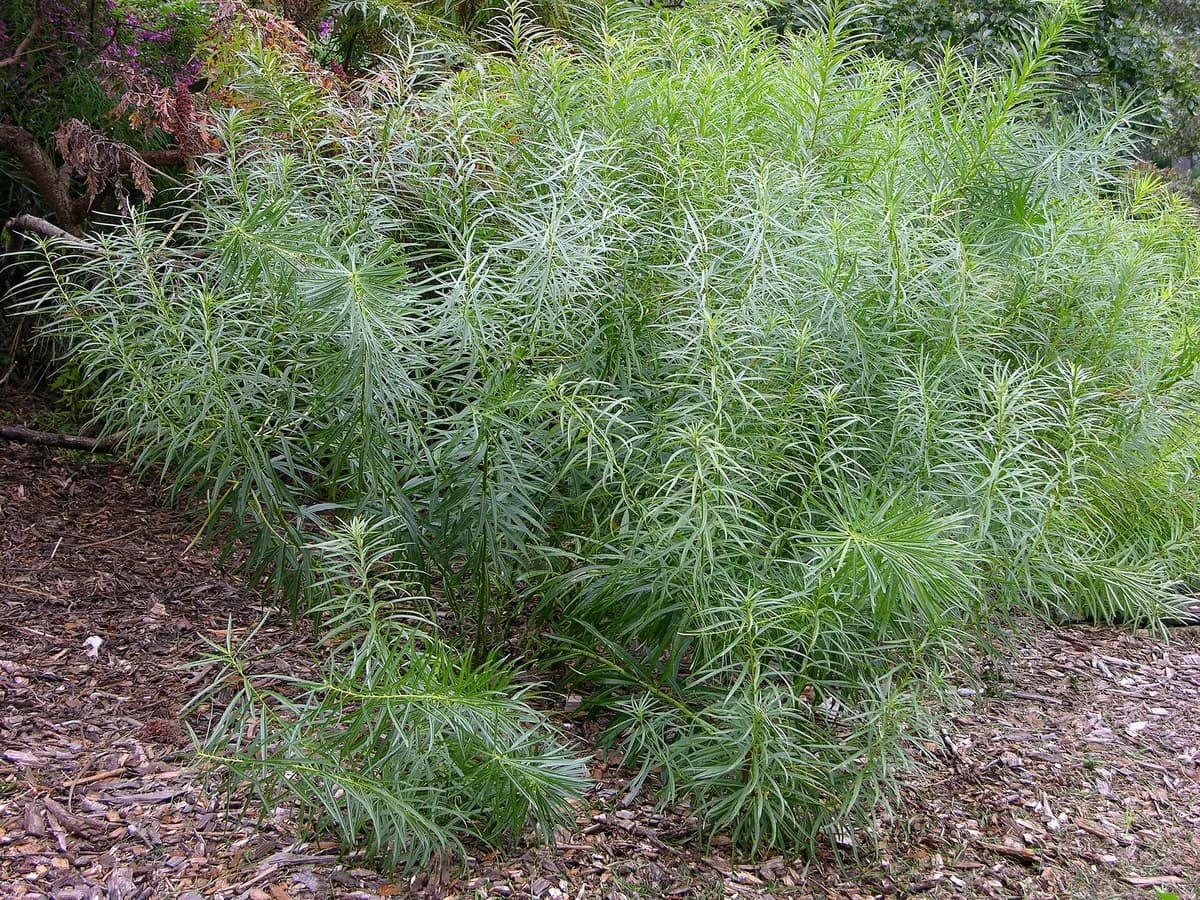
A rounded mound of extremely fine thread-like leaves topped in spring with clusters of soft steel-blue star flowers. The foliage turns a uniform brilliant gold in fall and holds its shape all season without staking.
Growing Hubricht's bluestar
Grow Hubricht's bluestar in full sun and medium water. Mature plants reach 24 to 36 inches tall and spread 24 to 36 inches wide.
How to care for Hubricht's bluestar, by region
How to care for Hubricht's bluestar where it is actually grown: year-round basics plus what to do each season, region by region, with the sources for each.
Care guidance last updated: September 2026
Atlantic Coastal Pine Barrens (includes Riverhead, NY)
Year-round
Hubricht's Bluestar is a tough, long-lived perennial known for feathery foliage and brilliant gold fall color. It is native to Arkansas and Oklahoma, not to New York or Long Island, but it is winter hardy well into USDA zone 5 and grows well in Long Island's zone 7 climate.
- Not native to New York. This plant's wild range is limited to Arkansas and Oklahoma.
- Cold hardy from USDA zone 4 through zone 8, so Long Island's zone 7 winters are well within its comfort range.
- Grows best in full sun to part shade and average, well-drained soil.
- Deer and rabbits generally leave it alone.
- Once established it handles dry spells well and needs little extra water.
Fall
Fall is when Hubricht's Bluestar earns its reputation, the fine foliage turns a brilliant gold that holds for weeks.
- Full sun brings out the strongest, most even gold color in the foliage.
- No pruning is needed in fall, let the color show and the foliage stand.
- The seed pods that follow the spring flowers are not a concern, they are just part of the look.
- This is one of the most reliable fall color perennials for a Long Island bed.
Winter
Winter is not a concern for this plant on Long Island, it is fully hardy here and only needs a cleanup decision once it goes dormant.
- Long Island's zone 7 winters are much milder than what this plant tolerates further north, so no winter protection is needed.
- The dried stems can be left standing for winter structure or cut back for a cleaner look, either is fine for the plant.
- If cutting back, do it in late fall or winter before new growth starts in spring.
- No mulching or wrapping is necessary for this species in this climate.
Cutting the dried stems to the ground in late fall keeps the bed looking tidy through winter for an HOA-conscious front yard.
Spring
In spring the clump wakes up slowly, then sends up powdery blue, star shaped flowers in late spring.
- New shoots emerge later than many other perennials, so do not assume a spring dormant clump has died.
- Plant new starts in full sun for the sturdiest habit and the best fall color later on.
- Powdery blue flowers open in late spring and last longer with a bit of afternoon shade.
- Spring is a good time to divide an overgrown clump if you want more plants.
Summer
After flowering finishes, a simple summer cutback keeps the mound tidy and helps it hold up through Long Island's humid summer.
- Cut the stems back by about a third to a half after the flowers fade to keep the plant fuller and less likely to flop open.
- It tolerates summer heat and humidity well once established.
- Deer and rabbits generally pass it by.
- Established plants handle dry stretches fine, water only during an extended drought.
The after bloom cutback keeps this perennial low and rounded, which reads as neat from the street.
Sources: Lady Bird Johnson Wildflower Center: Amsonia hubrichtii native range and growing conditions, Chicago Botanic Garden Plant Finder: Amsonia hubrichtii hardiness zone and care, Mt. Cuba Center: Amsonia Trial for the Mid-Atlantic Region, hubrichtii results, Missouri Botanical Garden Plant Finder: Amsonia hubrichtii bloom time and light needs
Ouachita Mountains (includes Hot Springs, AR)
Year-round
Hubricht's bluestar is a tough, feathery-leaved perennial that's native to the Ouachita Mountains of Arkansas and Oklahoma, so a Hot Springs garden sits right in its natural home ground.
- Give it full sun for the best flowering and the brightest gold fall color. It also grows well in part shade, just with fewer flowers.
- Plant it in average, well-drained soil. It isn't picky about soil richness and doesn't want to sit in standing water.
- Expect a rounded clump about 2 to 3 feet tall and 2 to 3 feet wide at maturity. Space new plants roughly 2 to 3 feet apart to give the mound room to fill in.
- Powdery blue, star-shaped flowers open in mid to late spring, then the fine, thread-like foliage carries the plant through summer before turning bright gold in fall.
- This species is native to the Ouachita Mountains of Arkansas and Oklahoma, the same region as Hot Springs, so it's a strong regional fit rather than an import.
- Once it's established, usually by its second year in the ground, it handles heat and dry spells well and rarely needs fertilizer or extra water.
Fall
Fall is this plant's showpiece season, when the fine foliage turns a bright, consistent gold.
- Foliage turns bright gold in fall, usually the best ornamental display of the year for this plant.
- The gold color shows up strongest in full sun. Plants grown in part shade tend to color more unevenly.
- No pruning is required for plant health in fall. Many gardeners leave the gold foliage standing into late fall to enjoy the color, then cut the whole clump back near the ground once it fades.
- Every 4 to 5 years, fall is a good time to divide a clump if the center has thinned out and it isn't filling in as densely as it used to.
- A fall cutback once the gold fades leaves a clean, low bed instead of collapsed brown stalks heading into winter.
Cutting the clump back once its gold color fades gives a front bed a tidy, HOA-friendly look heading into the off season, instead of leftover brown stalks.
Winter
Hubricht's bluestar is fully dormant in winter and dies back to the ground, which is normal, not a sign of trouble.
- This is an herbaceous perennial, so it disappears completely above ground in winter. An empty patch where it was growing is expected, not a problem.
- Hot Springs sits in USDA Hardiness Zone 8a, comfortably within this plant's roughly Zone 4 to 9 range, so ordinary winter cold isn't a concern for an established planting.
- If you didn't cut the stems back in fall, do it in late winter before new growth starts, trimming the whole clump down to a few inches above the ground.
- A light layer of mulch around the crown helps a first winter planting get established. Plants that have been in the ground a full year or more don't need winter protection.
- Keeping the bed cut back over winter keeps the planting looking tidy and intentional through the dormant months, rather than a stand of collapsed stems.
A tidy late-winter cutback gives a front-yard planting an HOA-friendly appearance during the off season, instead of a stand of dead stems.
Spring
Spring is bloom season for Hubricht's bluestar, with clusters of powdery blue flowers opening as the days warm.
- New stems emerge from the ground in early to mid spring as soil temperatures rise.
- Clusters of small, star-shaped, powdery blue flowers open in mid to late spring at the tips of the new stems.
- Full sun gives the fullest bloom. In part shade it will still flower, just a bit less densely.
- Water new spring plantings regularly while the roots are getting established. Clumps that have been in the ground a year or more usually get by on spring rainfall alone.
- No pruning is needed in spring beyond snipping off any stems that were damaged over winter.
Summer
Through the Hot Springs heat, this plant carries fine, feathery green foliage and mostly takes care of itself once it's rooted in.
- Flowers fade by early summer, but the soft, needle-like foliage stays attractive right through the season's heat and humidity.
- If you want a tighter, more rounded shape, trim the stems back by about a third to a half right after bloom in early summer. Skip this step if you like the plant's natural airy form.
- When you trim it back, the cut stems ooze a milky white fluid. That's just how this plant reacts to a fresh cut, nothing to be concerned about.
- Established plants tolerate summer heat and dry stretches well and usually don't need supplemental watering once they're rooted in.
- Full sun keeps the stems upright through summer. In too much shade the clump can get floppy and open up in the middle.
A post-bloom trim keeps the mound tidy and rounded through the rest of the growing season, which reads as intentional and HOA-conscious in a front bed.
Sources: Lady Bird Johnson Wildflower Center, Amsonia hubrichtii plant profile, USDA PLANTS Database, Amsonia hubrichtii classification, Missouri Botanical Garden Plant Finder, Amsonia hubrichtii, PlantMaps, Hot Springs Arkansas hardiness zones (community tip), Mt. Cuba Center, Amsonia trial results for hubrichtii, Garden Design, growing guide for Amsonia (community tip)
Wildlife value
Spring flowers feed early butterflies and hummingbird moths; the dense fine foliage shelters small invertebrates.
Common questions
- When does Amsonia hubrichtii bloom?
- Amsonia hubrichtii flowers in April and May, producing clusters of soft blue, star shaped blooms atop feathery foliage.
- What pollinators visit Amsonia hubrichtii?
- Carpenter bees, butterflies, and hummingbird moths commonly visit the flowers of Amsonia hubrichtii for nectar.
- How much water does Amsonia hubrichtii need?
- This plant does best with medium moisture but tolerates drier conditions once its root system is established, making it useful in beds that get uneven watering.
- Does Amsonia hubrichtii have fall interest?
- Yes. After its spring bloom period, the thread like foliage turns a warm golden yellow in autumn before the plant goes dormant for winter.
- What light conditions suit Amsonia hubrichtii best?
- Full sun produces the sturdiest stems and best flowering, though the plant also tolerates part sun and part shade with slightly looser, more open growth.
These answers were drafted with an AI model from this plant's data. Verify care details with a local expert.
Native range data from the World Checklist of Vascular Plants (Kew). Pollinator and host plant associations compiled from GBIF, iNaturalist, and published ecological literature.
If something looks wrong
Common plant problems, and what to check first
These come up on almost any plant. Each guide lists the likely causes in the order they are worth ruling out, with one thing to check before you act on any of them, and links to the source it came from.
- It is dying right after planting
- Leaves turning yellow
- Wilting even though I watered it
- Brown crispy leaf tips
- Bugs on the plant
Ready to grow Hubricht's bluestar? Add it to your garden in Pollinator Patch to track it and get season-by-season care guidance.