Joshua-tree
Yucca brevifolia
Last reviewed: October 2026
Joshua-tree (Yucca brevifolia) is a perennial tree native to CA, NV. It blooms in March and April. The flowers draw yucca moths.
Toxicity unknown
Joshua-tree (Yucca brevifolia) is not listed by the ASPCA Animal Poison Control Center (opens in new tab) or the other sources we check, so we have no verdict for it either way. Absence from those lists is not a clearance. If your pet shows symptoms after eating any plant, call the ASPCA at (888) 426-4435.
Light
full sun
Water
low
Size
180"–480" H × 120"–240" W
Bloom
Mar, Apr
Native to
CA, NV
Pollinators
yucca moths
Before you buy
Your city may pay you to plant this
Cities and water utilities offer rebates for replacing lawn with native and water-wise plants. We track 459 programs across 44 states, each with a link to the provider and the date we last checked it.
Find rebates in your areaPicture natives in your own yard
Upload a photo of your yard and Patch Vision shows a rendering of it planted with natives for your region, like Joshua-tree.


Browse plants for this ecoregion
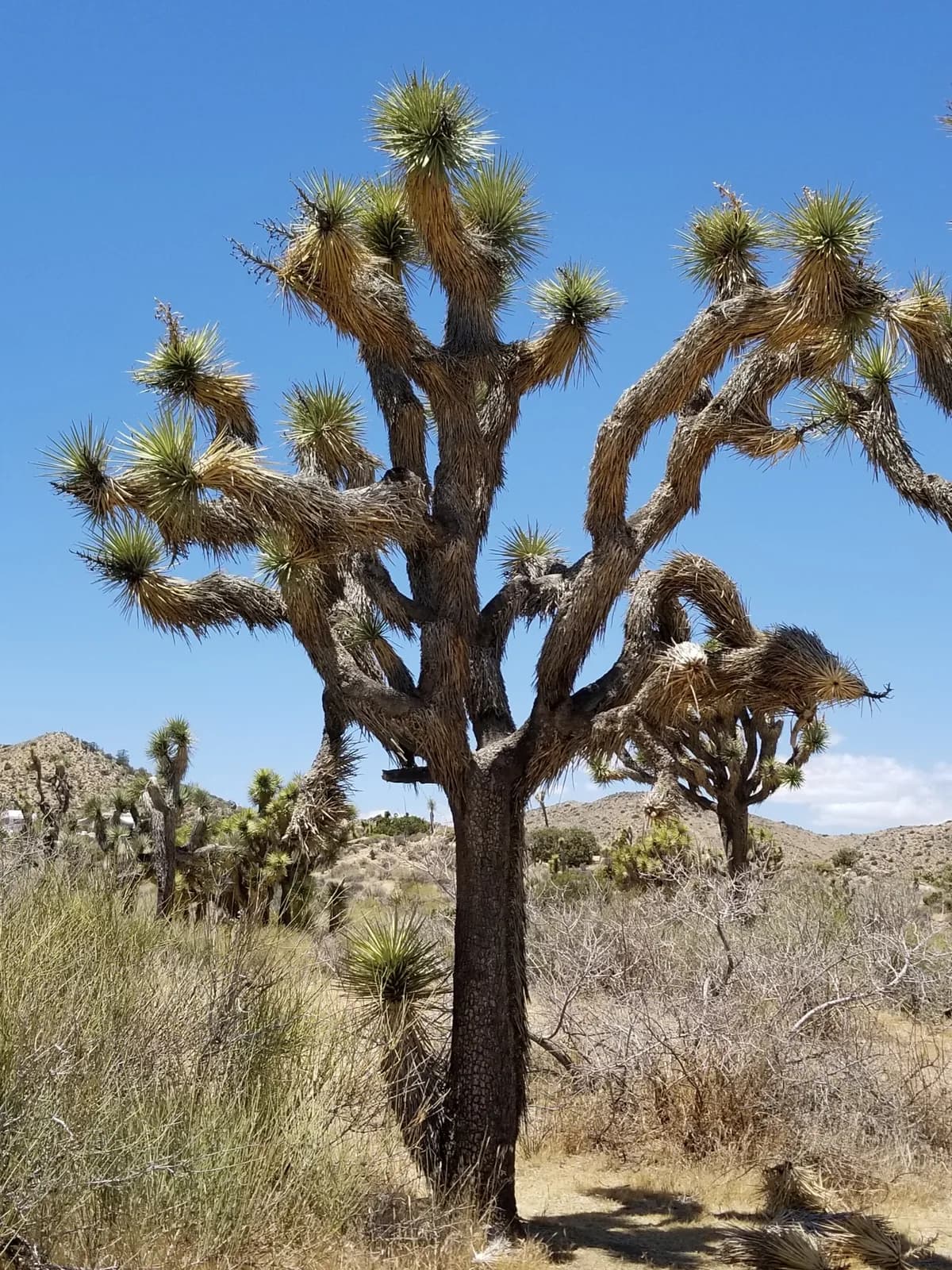
A large, tree-like yucca with thick, branching arms tipped in rosettes of stiff, spine-tipped leaves, producing a distinctive, sculptural silhouette. Grows extremely slowly in arid desert habitat, tolerating extreme heat, cold, and drought.
Growing Joshua-tree
Grow Joshua-tree in full sun and low water. Mature plants reach 180 to 480 inches tall and spread 120 to 240 inches wide.
How to care for Joshua-tree, by region
How to care for Joshua-tree where it is actually grown: year-round basics plus what to do each season, region by region, with the sources for each.
Care guidance last updated: August 2026
Willamette Valley (includes Portland, OR)
Year-round
Joshua tree only grows wild in the Mojave Desert, not Oregon, and the one thing that kills it in Portland is wet soil, not cold.
- This plant is not native to Oregon. In the wild it only grows in the Mojave Desert of southeast California, southern Nevada, northwest Arizona, and southwest Utah, with a small pocket in northern Sonora, Mexico.
- In its home range it survives on roughly 3 to 14 inches of rain a year, and very little of that falls in summer. That is a fraction of what Portland gets, so treat this as a plant you are working against the local climate for, not with.
- Cold is not the danger here. This species is rated hardy well below Portland's winter lows. What actually kills it in wet regions is standing water sitting around the roots and crown through the cold, rainy months.
- Give it the driest, sunniest, best drained spot in the yard. A raised bed or slope with coarse sand and gravel mixed in beats flat native Portland soil, which tends to hold water.
- Yucca, the genus this plant belongs to, is mildly toxic to dogs and cats if chewed or eaten, mainly causing vomiting. The leaf tips are also sharp enough to cause a poke injury, so keep that in mind if pets or kids use the yard.
Fall
Stop watering once the fall rains return and use the last dry weeks to shore up drainage before the wet season hits full force.
- Cut off any supplemental water as soon as the fall rains settle in. From here through winter this plant should get no extra water at all.
- This is a good window to double check drainage one more time. A fix made now has months to settle before the heaviest winter rain arrives.
- If you want a tidy look near the street heading into winter, trim off only fully dead or brown leaf tips at the base. Leave healthy leaves alone since they protect the growing point in the center of the plant.
- If your plant is still young or small, this is the time to set up a simple rain cover or shelter over the base for the wettest months ahead. A young plant is more vulnerable to crown rot than an established one.
A quick trim of dead leaf tips before winter keeps the front-yard look neat without touching the healthy growth the plant needs.
Winter
Winter is the highest risk season for this plant in Portland because wet cold rots the roots and crown in a way dry cold never would.
- This species handles cold fine on its own, its native range sees winter lows near 10 degrees Fahrenheit or colder, but that hardiness only holds up when the soil is dry. Wet plus cold together is what actually kills it here.
- If the plant is young or small, keep a simple rain cover or clear shelter over just the base through the wettest, coldest months. That single step is often the difference between it surviving the winter or not.
- Keep mulch away from direct contact with the trunk. Wet mulch pressed against the base holds moisture right where this plant can least tolerate it.
- Yucca, the genus this plant belongs to, is mildly toxic to dogs and cats if eaten, mostly causing vomiting. Keep that in mind if a pet spends more time close to the house near it during the wet months.
Spring
Spring is Portland's wettest stretch coming out of winter, so the job is protecting the roots, not feeding new growth.
- Do not start watering just because other plants in the yard are waking up. This species stays drought tolerant year round and wants to stay dry until real summer heat shows up.
- Check the base of the trunk and the crown for soft, mushy, or discolored patches. That is the earliest sign of the root and crown rot that is the main way this plant dies outside the desert.
- If the planting spot floods or stays soggy after spring rain, fix it now. Add coarse gravel, build up the bed, or move the plant before the growing season really starts.
- Leave any leaf tips that browned over winter alone for now. Wait until you see clear new growth before cleaning anything up, since cutting into a plant that is already stressed from a wet winter can make things worse.
Summer
Summer is the closest Portland comes to this plant's native desert conditions, so this is its best season if you let it dry out.
- Dry Portland summer heat is about as close as this plant gets to home here. Water only during an actual stretch of dry weather, and let the soil dry out completely in between.
- If it shares an irrigation zone with lawn or other beds, it is almost certainly getting watered too often. A hand watered spot on its own schedule works better than an automatic zone built for other plants.
- Give it full sun all day. In a shadier part of the yard it grows slower and stays more prone to the rot problems that show up in wetter seasons.
- This is a slow growing species even under good conditions, so do not expect a lot of visible height gain in one summer. Slow growth here is normal, not a sign of a problem.
Sources: Lady Bird Johnson Wildflower Center, Native Plant Database: Yucca brevifolia, USDA Forest Service, Fire Effects Information System: Yucca brevifolia, Yucca jaegeriana, ASPCA, Toxic and Non-Toxic Plants: Yucca, Gardening Know How, Joshua Tree Information (community tip)
Wildlife value
Host plant for yucca moth.
The tree exists in an obligate mutualism with the yucca moth, which is its sole pollinator and whose larvae in turn feed only on Joshua tree seeds, and the trunk cavities provide nesting sites for desert birds.
Common questions
- How much sun does Joshua-tree need?
- Joshua-tree grows best in full sun conditions.
- When does Joshua-tree bloom?
- Joshua-tree blooms in March and April.
- Where is Joshua-tree native?
- Joshua-tree (Yucca brevifolia) is native to CA, NV, per vouchered herbarium specimen records and regional native plant society lists.
- What butterflies or moths does Joshua-tree host?
- Joshua-tree is a larval host plant for yucca moth.
Native range data from vouchered herbarium specimen records and regional native plant society lists. Pollinator and host plant associations compiled from GBIF, iNaturalist, and published ecological literature.
If something looks wrong
Common plant problems, and what to check first
These come up on almost any plant. Each guide lists the likely causes in the order they are worth ruling out, with one thing to check before you act on any of them, and links to the source it came from.
- It is dying right after planting
- Leaves turning yellow
- Wilting even though I watered it
- Brown crispy leaf tips
- Bugs on the plant
Ready to grow Joshua-tree? Add it to your garden in Pollinator Patch to track it and get season-by-season care guidance.