Lindheimer's Senna
Senna lindheimeriana
Last reviewed: September 2026
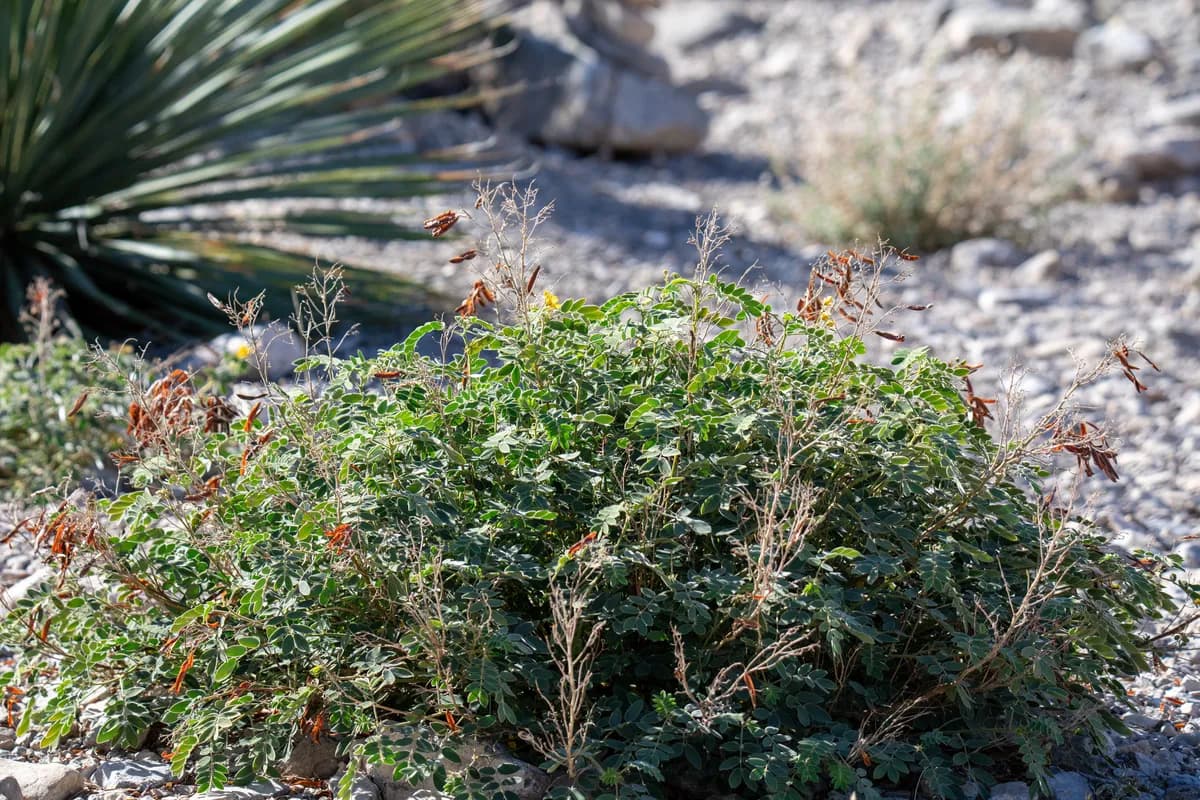
Lindheimer's senna is a full sun shrub that tolerates low water and blooms with yellow flowers from June through November, thriving in the hot, dry climates of the Southwest.
Toxicity unknown
Lindheimer's Senna (Senna lindheimeriana) is not listed by the ASPCA Animal Poison Control Center (opens in new tab) or the other sources we check, so we have no verdict for it either way. Absence from those lists is not a clearance. If your pet shows symptoms after eating any plant, call the ASPCA at (888) 426-4435.
Light
full sun
Water
low
Size
36"–72" H × 6"–12" W
Bloom
Jun, Jul, Aug, Sep, Oct, Nov
Native to
AZ, NM, TX
Pollinators
butterflies, bees, nectar insects
Before you buy
Your city may pay you to plant this
Cities and water utilities offer rebates for replacing lawn with native and water-wise plants. We track 452 programs across 44 states, each with a link to the provider and the date we last checked it.
Find rebates in your areaBrowse plants for this ecoregion
Lindheimer's Senna is a tall, narrow shrub that produces bright yellow flowers from summer through fall. This drought-tolerant native forms an upright column, making it useful as a vertical accent in the landscape. The plant goes dormant in winter, losing its leaves until spring growth returns.
Growing Lindheimer's Senna
Grow Lindheimer's Senna in full sun and low water. Mature plants reach 36 to 72 inches tall and spread 6 to 12 inches wide. Expect low maintenance to keep it looking intentional in a front yard.
How to care for Lindheimer's Senna, by region
How to care for Lindheimer's Senna where it is actually grown: year-round basics plus what to do each season, region by region, with the sources for each.
Care guidance last updated: September 2026
Cross Timbers (includes Fort Worth, TX)
Year-round
Lindheimer's senna is a small Texas native shrub grown for its late-summer yellow flowers and its role as a butterfly host plant. It wants full sun, well-drained soil, and no fertilizer.
- Plant in full sun; part shade cuts down on flowering and makes the 3 to 6 foot frame lankier and floppier.
- In heavy black clay, plant high on a slight mound or amend with expanded shale or compost for drainage; in the sandier soils west of the metro it drains faster but will need water more often through the first summer.
- Water deeply about once a week through the first growing season, then cut back to occasional deep watering once established, since this is a low-water plant.
- Skip fertilizer. Rich soil pushes soft, floppy growth instead of flowers.
- This plant is not on the ASPCA toxic plant list for dogs, cats, or horses, and it also serves as a caterpillar host plant, so expect some chewed leaves in return for butterflies.
Fall
Fall is peak bloom for Lindheimer's senna and the season it earns its keep as a butterfly host plant, so some chewed leaves are part of the deal.
- Blooms peak from September through November, with seed pods forming behind spent flowers.
- Sleepy Orange and Cloudless Sulphur butterflies lay eggs on this plant, so caterpillar damage to the leaves in fall is expected, not a pest problem to treat.
- Leave the seed pods on the plant instead of deadheading; they feed birds through winter.
- Fall is a gentler season than midsummer to plant one, since North Texas autumns are milder on new roots than a July planting.
Some chewed leaves in fall are a sign the plant is doing its butterfly-host job. A small marker nearby explaining that can head off a 'this looks unkempt' comment from a neighbor.
Winter
Lindheimer's senna is deciduous and usually dies back to the ground after a North Texas winter freeze. Bare, twiggy stems are normal, not a dead plant.
- Expect the plant to drop its leaves and go dormant after the first hard freeze, typically from mid November onward.
- Once a hard freeze has knocked it back and you are sure the cold snap has passed, cut the dead stems down to a few inches above the ground.
- If you are not sure whether a stem is dead or just dormant, wait until new growth appears at the base in spring before pruning.
- A severe Arctic outbreak can kill the top growth to the ground; established plants usually resprout from the base by late spring.
A cut-back, dormant shrub can look like bare dead sticks in a front bed through winter. A layer of mulch and a small marker nearby reads as an intentional dormant planting rather than neglect.
Spring
Spring is the planting window for Lindheimer's senna in North Texas. A newly planted shrub spends its first spring building roots before it fills out.
- Plant new nursery starts after the last frost (mid March) once the soil has warmed.
- Water new plants every 3 to 4 days for the first month to help roots establish before summer heat arrives.
- Space plants 3 to 4 feet apart; a mature shrub spreads to roughly a foot or two wide but benefits from airflow.
- If a hard freeze cut the plant back over winter, wait for new growth at the base before pruning out dead wood, usually by mid to late April.
Summer
Summer is when Lindheimer's senna starts blooming, and also when North Texas heat is hardest on anything planted recently. Established plants shrug off the heat; first-year plants need help.
- Watch for the first yellow flowers starting in June, continuing into fall.
- Water first-year plants deeply about once a week through the 100F-plus stretch of July and August; established plants (2 or more years in the ground) usually only need water if the soil stays dry for several weeks.
- Do not fertilize. Summer stress on this species is more often overwatering than underwatering.
- A dusty, matte look on the gray-green leaves in the hottest weeks is normal for this plant, not a sign it is dying.
A full, well-shaped shrub covered in bright yellow blooms through the hottest part of summer reads as an intentional flowering specimen, not an overgrown or neglected patch.
Sources: Lady Bird Johnson Wildflower Center, Senna lindheimeriana, ASPCA Toxic and Non-Toxic Plants, letter S, Native Plant Society of Texas, Senna lindheimeriana (community tip)
Texas Blackland Prairies (includes Dallas, TX)
Year-round
Lindheimer's senna is a small Texas native shrub grown for its late-summer yellow flowers and its role as a butterfly host plant. It wants full sun, well-drained soil, and no fertilizer.
- Plant in full sun; part shade cuts down on flowering and makes the 3 to 6 foot frame lankier and floppier.
- In heavy black clay, plant high on a slight mound or amend with expanded shale or compost for drainage; in the sandier soils west of the metro it drains faster but will need water more often through the first summer.
- Water deeply about once a week through the first growing season, then cut back to occasional deep watering once established, since this is a low-water plant.
- Skip fertilizer. Rich soil pushes soft, floppy growth instead of flowers.
- This plant is not on the ASPCA toxic plant list for dogs, cats, or horses, and it also serves as a caterpillar host plant, so expect some chewed leaves in return for butterflies.
Fall
Fall is peak bloom for Lindheimer's senna and the season it earns its keep as a butterfly host plant, so some chewed leaves are part of the deal.
- Blooms peak from September through November, with seed pods forming behind spent flowers.
- Sleepy Orange and Cloudless Sulphur butterflies lay eggs on this plant, so caterpillar damage to the leaves in fall is expected, not a pest problem to treat.
- Leave the seed pods on the plant instead of deadheading; they feed birds through winter.
- Fall is a gentler season than midsummer to plant one, since North Texas autumns are milder on new roots than a July planting.
Some chewed leaves in fall are a sign the plant is doing its butterfly-host job. A small marker nearby explaining that can head off a 'this looks unkempt' comment from a neighbor.
Winter
Lindheimer's senna is deciduous and usually dies back to the ground after a North Texas winter freeze. Bare, twiggy stems are normal, not a dead plant.
- Expect the plant to drop its leaves and go dormant after the first hard freeze, typically from mid November onward.
- Once a hard freeze has knocked it back and you are sure the cold snap has passed, cut the dead stems down to a few inches above the ground.
- If you are not sure whether a stem is dead or just dormant, wait until new growth appears at the base in spring before pruning.
- A severe Arctic outbreak can kill the top growth to the ground; established plants usually resprout from the base by late spring.
A cut-back, dormant shrub can look like bare dead sticks in a front bed through winter. A layer of mulch and a small marker nearby reads as an intentional dormant planting rather than neglect.
Spring
Spring is the planting window for Lindheimer's senna in North Texas. A newly planted shrub spends its first spring building roots before it fills out.
- Plant new nursery starts after the last frost (mid March) once the soil has warmed.
- Water new plants every 3 to 4 days for the first month to help roots establish before summer heat arrives.
- Space plants 3 to 4 feet apart; a mature shrub spreads to roughly a foot or two wide but benefits from airflow.
- If a hard freeze cut the plant back over winter, wait for new growth at the base before pruning out dead wood, usually by mid to late April.
Summer
Summer is when Lindheimer's senna starts blooming, and also when North Texas heat is hardest on anything planted recently. Established plants shrug off the heat; first-year plants need help.
- Watch for the first yellow flowers starting in June, continuing into fall.
- Water first-year plants deeply about once a week through the 100F-plus stretch of July and August; established plants (2 or more years in the ground) usually only need water if the soil stays dry for several weeks.
- Do not fertilize. Summer stress on this species is more often overwatering than underwatering.
- A dusty, matte look on the gray-green leaves in the hottest weeks is normal for this plant, not a sign it is dying.
A full, well-shaped shrub covered in bright yellow blooms through the hottest part of summer reads as an intentional flowering specimen, not an overgrown or neglected patch.
Sources: Lady Bird Johnson Wildflower Center, Senna lindheimeriana, ASPCA Toxic and Non-Toxic Plants, letter S, Native Plant Society of Texas, Senna lindheimeriana (community tip)
Western Gulf Coastal Plain (includes Houston, TX)
Year-round
Lindheimer's senna is a shrub native to central and west Texas that stays mostly quiet through spring and summer, then puts on a show of yellow flowers in late summer and fall.
- Plant in full sun to part shade
- Give it dry, well-drained soil, it prefers rocky, limestone-based, or sandy soils over Houston's dense clay
- Water sparingly once established, it is a low-water plant
- Deer mostly leave it alone, making it a reasonably low-maintenance choice
- Expect a bushy, spreading deciduous shrub up to 6 feet tall
Its bushy form and fall bloom of bright yellow flowers give it seasonal curb appeal, an HOA-conscious choice for a sunny bed that does not need constant grooming.
Fall
Fall is when Lindheimer's senna earns its keep, covered in spikes of bright yellow flowers that draw butterflies and later feed birds through its seed pods.
- Enjoy the bloom, flowers typically run August through October in Texas
- Leave spent flower spikes in place afterward, the seeds are a food source for birds
- Watering needs stay low even during fall bloom
- Skip pruning until the plant goes dormant for winter
Winter
Lindheimer's senna is deciduous and drops its leaves for winter, and Houston's mild winters mean it usually returns reliably from the same woody framework.
- Expect leaf drop and dormancy after the first cold snaps
- Hold off on hard pruning until late winter, right before new growth starts
- No watering needed while dormant
- A hard freeze can kill stems back further than usual, wait for spring to see how much regrowth returns before cutting
Spring
Spring is a quiet growing season for Lindheimer's senna, with leaves filling out well before the fall bloom.
- Prune out any winter-damaged wood once new leaves appear
- Water lightly to help new growth establish, then taper off
- No fertilizer needed, this plant is adapted to lean, dry soils
- It stays green and leafy through spring without flowering yet
Summer
Through the heat of a Houston summer, Lindheimer's senna needs very little water and mostly just builds toward its fall bloom.
- Water only during extended dry spells, it tolerates heat and drought well once established
- Avoid heavy clay pockets that stay wet, this plant is bred for fast-draining soil
- Leave the foliage alone if you see chewed leaves, it is a larval host plant for Sleepy Orange and Cloudless Sulphur butterflies
- No pruning needed mid-summer, buds are forming for the fall show
Sources: Lady Bird Johnson Wildflower Center - Senna lindheimeriana
Want these tasks as reminders timed to your yard? Pollinator Patch turns this guidance into a season-by-season care plan for the plants you actually grow.
In an HOA neighborhood
Lindheimer's Senna takes more care to keep looking intentional in a front yard. Maintenance level: low. Consider it for backyard or mid-zone beds rather than the street edge.
Works well in: backyard only.
- Height exceeds typical HOA-friendly range
Wildlife value
The abundant yellow blooms attract butterflies, bees, and other nectar-seeking insects throughout the long flowering season. This plant serves as a host for sulphur butterfly caterpillars.
Common questions
- When does Lindheimer's senna bloom?
- Lindheimer's senna typically flowers from June through November, producing clusters of yellow blossoms through the hottest months of summer and into fall.
- How much water does Lindheimer's senna need?
- This shrub is adapted to low water conditions once established and does well in dry, well-drained soils typical of arid and semi-arid landscapes.
- What kind of light does Lindheimer's senna need?
- It grows best in full sun and can also tolerate part sun locations, making it suitable for open, exposed sites.
- What pollinators visit Lindheimer's senna?
- The flowers attract butterflies, bees, and other nectar-seeking insects during the summer and fall bloom period.
- Is Lindheimer's Senna HOA-friendly?
- Lindheimer's Senna takes more care to look intentional in a front yard. Consider it for backyard or mid-zone beds rather than the street edge.
These answers were drafted with an AI model from this plant's data. Verify care details with a local expert.
Native range data from vouchered herbarium specimen records and regional native plant society lists. Pollinator and host plant associations compiled from GBIF, iNaturalist, and published ecological literature.
If something looks wrong
Common plant problems, and what to check first
These come up on almost any plant. Each guide lists the likely causes in the order they are worth ruling out, with one thing to check before you act on any of them, and links to the source it came from.
- It is dying right after planting
- Leaves turning yellow
- Wilting even though I watered it
- Brown crispy leaf tips
- Bugs on the plant
Ready to grow Lindheimer's Senna? Add it to your garden in Pollinator Patch to track it and get season-by-season care guidance.
Planning a bed around it? Start a free plan with this plant
Not sure where to start? Take the 2-minute yard quiz