Hoary Tansyaster
Machaeranthera canescens
Last reviewed: July 2026
Light
full sun
Water
low
Size
6"–24" H × 6"–18" W
Bloom
Jul, Aug, Sep
Native to
CA, CO, ID, KS and 9 more states
Pollinators
bees, butterflies
Browse plants for this ecoregion
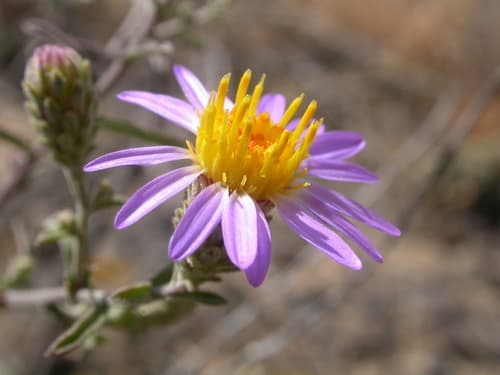
Hoary tansyaster is a low-growing annual wildflower with silvery-gray foliage and bright purple daisy-like flowers. It blooms from July through September and thrives in sunny, dry conditions with minimal water needs. This compact plant works well as a seasonal color accent in xeriscaped areas.
In an HOA neighborhood
Hoary Tansyaster takes more care to keep looking intentional in a front yard. Maintenance level: low. Consider it for backyard or mid-zone beds rather than the street edge.
Works well in: backyard only.
- Annual lifecycle means gaps in coverage
- Can appear weedy or wild to conservative neighbors
- May self-seed unpredictably
Wildlife value
The cheerful purple blooms attract bees and butterflies during late summer months. As an annual wildflower, it provides important nectar sources when many other plants are finishing their bloom cycles.
Common questions
- How much sun does Hoary Tansyaster need?
- Hoary Tansyaster grows best in full sun conditions.
- When does Hoary Tansyaster bloom?
- Hoary Tansyaster blooms in July, August, and September.
- Where is Hoary Tansyaster native?
- Hoary Tansyaster (Machaeranthera canescens) is native to CA, CO, ID, KS and 9 more states, per the USDA PLANTS Database and regional native plant society lists.
- What pollinators does Hoary Tansyaster attract?
- Hoary Tansyaster draws bees and butterflies.
- Is Hoary Tansyaster HOA-friendly?
- Hoary Tansyaster takes more care to look intentional in a front yard. Consider it for backyard or mid-zone beds rather than the street edge.
Native range data from the USDA PLANTS Database and regional native plant society lists. Pollinator and host plant associations compiled from GBIF, iNaturalist, and published ecological literature.
Ready to grow Hoary Tansyaster? Add it to your garden in Pollinator Patch to track it and get season-by-season care guidance.
Not sure where to start? Take the 2-minute yard quiz