Mexican Feathergrass
Nassella tenuissima
Last reviewed: August 2026
Nassella tenuissima is a fine-bladed ornamental grass that thrives in full sun with low water needs, producing airy golden seed heads from June through August in warm, dry regions like Texas and New Mexico.
Toxicity unknown
Mexican Feathergrass (Nassella tenuissima) is not listed by the ASPCA Animal Poison Control Center (opens in new tab) or the other sources we check, so we have no verdict for it either way. Absence from those lists is not a clearance. If your pet shows symptoms after eating any plant, call the ASPCA at (888) 426-4435.
Light
full sun
Water
low
Size
12"–36" H × 12"–36" W
Bloom
Jun, Jul, Aug
Native to
CA, CO, NM, TX
Before you buy
Your city may pay you to plant this
Cities and water utilities offer rebates for replacing lawn with native and water-wise plants. We track 452 programs across 44 states, each with a link to the provider and the date we last checked it.
Find rebates in your areaBrowse plants for this ecoregion
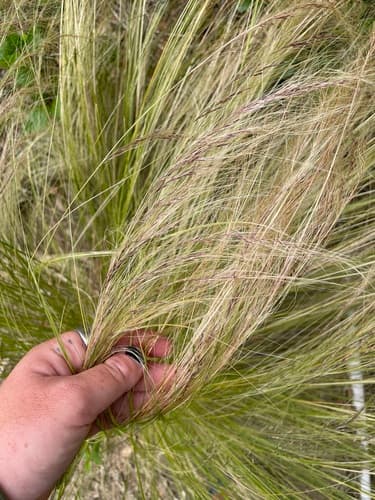
Mexican Feathergrass is an elegant ornamental grass with ultra-fine, silvery-green foliage that creates a soft, billowing texture in the landscape. During summer, it produces delicate, hair-like seed plumes that catch the light beautifully and sway gracefully in the breeze. This drought-tolerant grass goes dormant in winter, turning golden-tan before being cut back in late winter.
Growing Mexican Feathergrass
Grow Mexican Feathergrass in full sun and low water. Mature plants reach 12 to 36 inches tall and spread 12 to 36 inches wide. Expect low maintenance to keep it looking intentional in a front yard.
How to care for Mexican Feathergrass, by region
How to care for Mexican Feathergrass where it is actually grown: year-round basics plus what to do each season, region by region, with the sources for each.
Care guidance last updated: September 2026
Cross Timbers (includes Fort Worth, TX)
Year-round
Mexican feathergrass is a small, fine-textured ornamental grass that forms a soft, fountain-shaped clump and moves in the slightest breeze. It is drought tolerant once established and reads as a neat, deliberate accent rather than an overgrown patch, which is part of why nurseries in North Texas stock it for front yards.
- Give it full sun to light afternoon shade and soil that drains well; it struggles in soil that stays wet.
- Expect a mature clump around 1 to 2 feet tall and wide, so space plants roughly 18 to 24 inches apart.
- This species is native to the mountains of far west Texas and south into Mexico, not to the North Texas area, so treat it as a well adapted ornamental rather than a local native.
- It reseeds readily. Watch new seedlings around the parent clump each year and pull the ones you do not want before they establish.
Fall
Fall is a light-maintenance season for this grass. The main job is managing the seed it drops rather than the plant itself.
- The silvery seed heads that formed over summer will be dropping seed through fall; if you do not want volunteer seedlings, cut and remove the seed heads before they fully dry and shatter.
- This is a good time to pull any unwanted seedlings that sprouted around the clump over the growing season, while the soil is easier to work.
- No fertilizer is needed. This grass performs best in lean soil and heavy feeding tends to make it floppy.
- Hold off on any major cutback until late winter; the standing foliage is fine to leave through fall.
Deadheading the seed heads before they scatter keeps the bed looking tidy and controlled going into winter, which reads as intentional upkeep rather than a plant left to go to seed.
Winter
North Texas winters are mild enough that this grass usually keeps its pale, straw-colored foliage right through the season, which is part of its winter appeal.
- Leave the foliage standing through winter for texture in the bed; do not cut it back yet.
- During a hard Arctic freeze, foliage may brown or flatten. Leave it in place until late winter rather than cutting right after the freeze; it protects the crown and you will not know how much regrowth is coming until then.
- Save the hard cutback (down to 3 to 4 inches) for late February into early March, just before new growth starts.
- No winter watering is needed unless the ground has gone weeks without any rain and stays unusually dry.
The pale, upright winter foliage reads as a deliberate ornamental grass rather than dead growth, so there is usually no need to cut it back early for appearance's sake.
Spring
Spring is the best time to plant this grass in North Texas and also the time to clean up last year's growth before new blades come in.
- Plant after the last frost (mid March in North Texas) once soil has warmed.
- Comb or shear back old foliage to about 3 to 4 inches before new growth emerges, ideally by late February to early March.
- In the heavy black clay soils of the Blackland Prairies, set the crown slightly high or on a low mound so it is not sitting in standing water after spring rain; in the sandier soils of the Cross Timbers to the west it drains faster on its own but will need more frequent watering to get established.
- Water a new planting two to three times a week for the first several weeks, then taper off as roots establish.
A hard shearing in late winter or early spring can look bare for a couple weeks; mention to neighbors it is a normal seasonal cutback, not dead grass, if anyone asks.
Summer
Once established this grass shrugs off North Texas heat and needs very little supplemental water, but a plant in its first summer still needs regular attention.
- A first-summer planting still needs deep watering roughly once a week during the July and August stretch of 100F-plus days.
- An established clump (its second summer on) usually only needs watering during extended dry spells; overwatering in heavy clay is more likely to hurt it than underwatering.
- Do not pile mulch against the crown; this grass prefers to stay on the dry side and heavy mulch can trap moisture and rot it.
- It may go dormant and look thin or straw colored during the hottest, driest stretch. That is normal and it typically greens back up once temperatures ease.
Sources: Lady Bird Johnson Wildflower Center - Nassella tenuissima, Missouri Botanical Garden Plant Finder - Nassella tenuissima, Denton County Master Gardener Association - Mexican Feather Grass
Edwards Plateau (includes San Antonio, TX)
Year-round
Mexican feather grass is a fine textured, low water ornamental grass that is grown across Texas even though its true native ground is farther west.
- Give this grass full sun and soil that drains fast. Wet feet or thick mulch can rot the crown.
- Water about once a week when the soil is dry. More than that causes problems in San Antonio's clay and caliche soils.
- The plant's true home is the mountains of far West Texas and New Mexico, not the Edwards Plateau, but it grows well here as an adapted landscape plant.
- It drops a lot of seed and will pop up as volunteer seedlings nearby, so expect some weeding if you do not want it to spread.
- It is not on the ASPCA toxic plant list for cats or dogs. The seed heads do have sharp little bristles that can irritate a mouth, skin, or eyes if chewed or handled roughly.
Fall
Fall is mostly a hands off season, with an optional step if self seeding bothers you.
- The seed heads left over from summer turn a warm tan gold color and stay attractive into fall.
- This grass sheds a lot of seed. If you would rather it not spread into nearby beds or lawn, snip off the spent seed heads before they drop instead of waiting for spring cutback.
- Do not shear the whole clump back now. Save the hard cutback for early spring. Removing the foliage in fall takes away winter texture and can expose the crown to cold.
Snipping spent seed heads in fall keeps the bed looking neat without losing the grass's winter shape.
Winter
Winter is a rest period. Leave the clump standing and skip the shears until spring.
- Let the tan, dormant foliage stand through winter. It holds its shape and gives some shelter to overwintering insects.
- The plant is dormant and drought tolerant, so it usually does not need supplemental water in winter unless San Antonio has an unusually dry warm spell.
- This species is not native to the Edwards Plateau. Its true native range is the mountains of far West Texas, so a hard freeze here can hit it harder than it would in its home range. Some winter dieback in a cold year is normal, and any dead material can be sheared out at the regular early spring cutback.
Leaving the tan winter clump standing reads as an intentional planting rather than a bare gap in the bed.
Spring
Spring is cutback time, right as the clump starts pushing new growth.
- Shear the whole clump back hard in early spring, right before or as new green blades appear. Waiting too long into the growing season can nick fresh growth and leave it looking ragged.
- New blades usually green up within a few weeks of cutting back once nights warm.
- If you want to move or split a crowded clump, spring is a good time to dig and divide it while it is entering active growth.
- Hold off on extra watering right after cutback. The plant does not need more than its usual once a week schedule even while it regrows.
A hard spring shearing keeps the clump low and tidy right when neighbors start noticing yards again.
Summer
Summer brings the bloom and the toughest test of this grass's drought tolerance.
- Silvery white seed heads show up from June through September.
- Keep watering to about once a week during dry stretches. This grass does not want more than that.
- In severe heat the clump can go dormant and look thin or straw colored for a while. That is normal and it usually greens back up once temperatures ease.
- Resist the urge to water more when it looks stressed. Extra water in San Antonio's summer heat and clay soil is more likely to rot the crown than help the plant.
Sources: Lady Bird Johnson Wildflower Center Native Plant Database, ASPCA Toxic and Non-Toxic Plants: Cats, ASPCA Toxic and Non-Toxic Plants: Dogs, Denton County Master Gardener Association Plant Guide
Texas Blackland Prairies (includes Dallas, TX)
Year-round
Mexican feathergrass is a small, fine-textured ornamental grass that forms a soft, fountain-shaped clump and moves in the slightest breeze. It is drought tolerant once established and reads as a neat, deliberate accent rather than an overgrown patch, which is part of why nurseries in North Texas stock it for front yards.
- Give it full sun to light afternoon shade and soil that drains well; it struggles in soil that stays wet.
- Expect a mature clump around 1 to 2 feet tall and wide, so space plants roughly 18 to 24 inches apart.
- This species is native to the mountains of far west Texas and south into Mexico, not to the North Texas area, so treat it as a well adapted ornamental rather than a local native.
- It reseeds readily. Watch new seedlings around the parent clump each year and pull the ones you do not want before they establish.
Fall
Fall is a light-maintenance season for this grass. The main job is managing the seed it drops rather than the plant itself.
- The silvery seed heads that formed over summer will be dropping seed through fall; if you do not want volunteer seedlings, cut and remove the seed heads before they fully dry and shatter.
- This is a good time to pull any unwanted seedlings that sprouted around the clump over the growing season, while the soil is easier to work.
- No fertilizer is needed. This grass performs best in lean soil and heavy feeding tends to make it floppy.
- Hold off on any major cutback until late winter; the standing foliage is fine to leave through fall.
Deadheading the seed heads before they scatter keeps the bed looking tidy and controlled going into winter, which reads as intentional upkeep rather than a plant left to go to seed.
Winter
North Texas winters are mild enough that this grass usually keeps its pale, straw-colored foliage right through the season, which is part of its winter appeal.
- Leave the foliage standing through winter for texture in the bed; do not cut it back yet.
- During a hard Arctic freeze, foliage may brown or flatten. Leave it in place until late winter rather than cutting right after the freeze; it protects the crown and you will not know how much regrowth is coming until then.
- Save the hard cutback (down to 3 to 4 inches) for late February into early March, just before new growth starts.
- No winter watering is needed unless the ground has gone weeks without any rain and stays unusually dry.
The pale, upright winter foliage reads as a deliberate ornamental grass rather than dead growth, so there is usually no need to cut it back early for appearance's sake.
Spring
Spring is the best time to plant this grass in North Texas and also the time to clean up last year's growth before new blades come in.
- Plant after the last frost (mid March in North Texas) once soil has warmed.
- Comb or shear back old foliage to about 3 to 4 inches before new growth emerges, ideally by late February to early March.
- In the heavy black clay soils of the Blackland Prairies, set the crown slightly high or on a low mound so it is not sitting in standing water after spring rain; in the sandier soils of the Cross Timbers to the west it drains faster on its own but will need more frequent watering to get established.
- Water a new planting two to three times a week for the first several weeks, then taper off as roots establish.
A hard shearing in late winter or early spring can look bare for a couple weeks; mention to neighbors it is a normal seasonal cutback, not dead grass, if anyone asks.
Summer
Once established this grass shrugs off North Texas heat and needs very little supplemental water, but a plant in its first summer still needs regular attention.
- A first-summer planting still needs deep watering roughly once a week during the July and August stretch of 100F-plus days.
- An established clump (its second summer on) usually only needs watering during extended dry spells; overwatering in heavy clay is more likely to hurt it than underwatering.
- Do not pile mulch against the crown; this grass prefers to stay on the dry side and heavy mulch can trap moisture and rot it.
- It may go dormant and look thin or straw colored during the hottest, driest stretch. That is normal and it typically greens back up once temperatures ease.
Sources: Lady Bird Johnson Wildflower Center - Nassella tenuissima, Missouri Botanical Garden Plant Finder - Nassella tenuissima, Denton County Master Gardener Association - Mexican Feather Grass
Want these tasks as reminders timed to your yard? Pollinator Patch turns this guidance into a season-by-season care plan for the plants you actually grow.
In an HOA neighborhood
Mexican Feathergrass is an HOA-friendly choice. Maintenance level: low. Tidiness: 3 out of 5.
Works well in: front yard, mid zone.
- Cut back in late winter
Wildlife value
The fine seed heads provide food for small songbirds like finches and sparrows. While not a major pollinator plant, it offers shelter and nesting material for small birds and beneficial insects.
Common questions
- How much sun does Mexican feathergrass need?
- It grows best in full sun and can tolerate some part sun, particularly in hot climates where a bit of afternoon shade reduces stress on the foliage.
- How much water does Mexican feathergrass require?
- Once established it is drought tolerant and does well with low water, needing extra irrigation only during long dry spells or in its first growing season.
- When does Mexican feathergrass bloom?
- It typically produces its feathery seed heads from June through August.
- Does Mexican feathergrass attract pollinators?
- No specific pollinator relationships have been documented for this grass.
- Is Mexican Feathergrass HOA-friendly?
- Mexican Feathergrass is generally an HOA-friendly choice in the right placement, with low maintenance.
These answers were drafted with an AI model from this plant's data. Verify care details with a local expert.
Native range data from vouchered herbarium specimen records and regional native plant society lists. Pollinator and host plant associations compiled from GBIF, iNaturalist, and published ecological literature.
If something looks wrong
Common plant problems, and what to check first
These come up on almost any plant. Each guide lists the likely causes in the order they are worth ruling out, with one thing to check before you act on any of them, and links to the source it came from.
- It is dying right after planting
- Leaves turning yellow
- Wilting even though I watered it
- Brown crispy leaf tips
- Bugs on the plant
Ready to grow Mexican Feathergrass? Add it to your garden in Pollinator Patch to track it and get season-by-season care guidance.
Planning a bed around it? Start a free plan with this plant
Not sure where to start? Take the 2-minute yard quiz