Grape-hyacinth
Muscari neglectum
Last reviewed: October 2026
Toxicity unknown
Grape-hyacinth (Muscari neglectum) is not listed by the ASPCA Animal Poison Control Center (opens in new tab) or the other sources we check, so we have no verdict for it either way. Absence from those lists is not a clearance. If your pet shows symptoms after eating any plant, call the ASPCA at (888) 426-4435.
Light
part shade
Water
medium
Size
4"–10" H × 3"–6" W
Bloom
Apr, May
Pollinators
bees, flies
Native alternatives to Grape-hyacinth
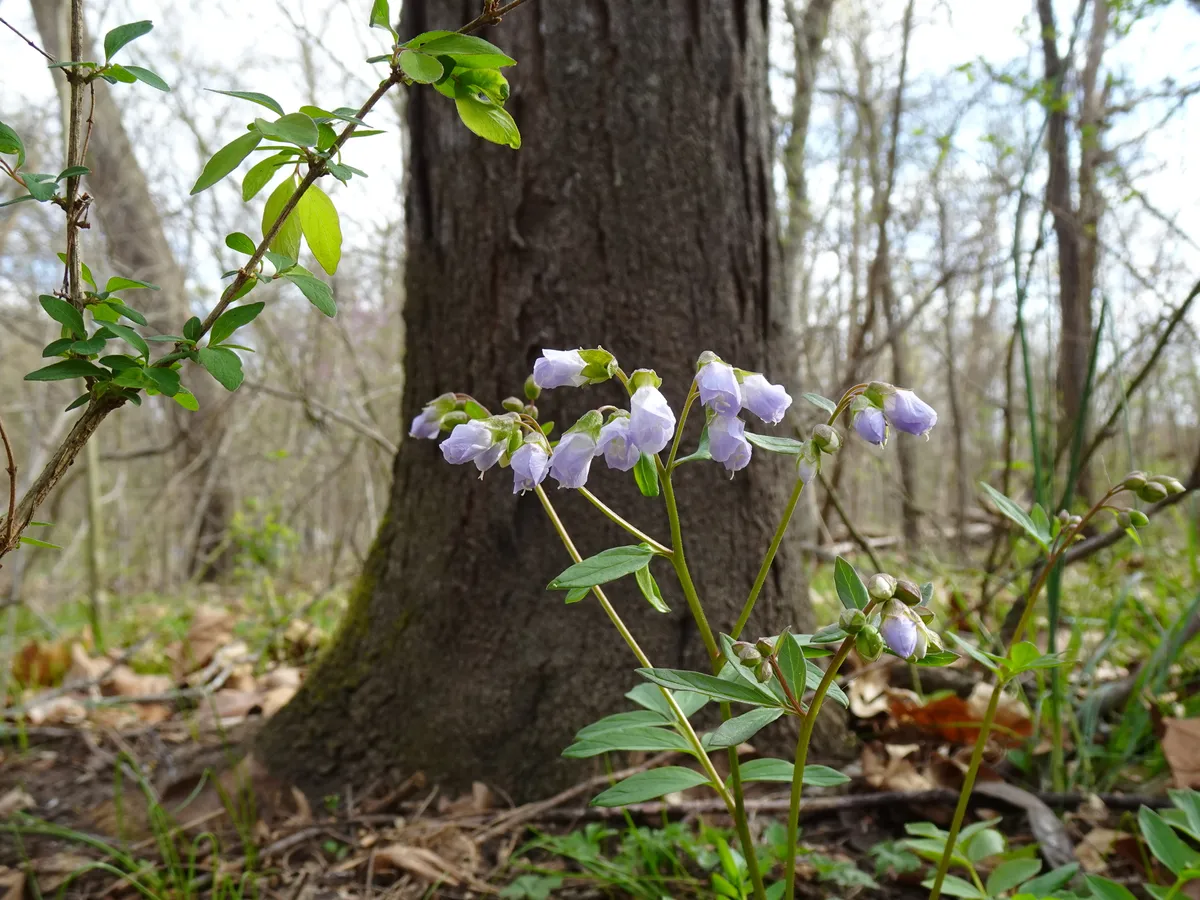
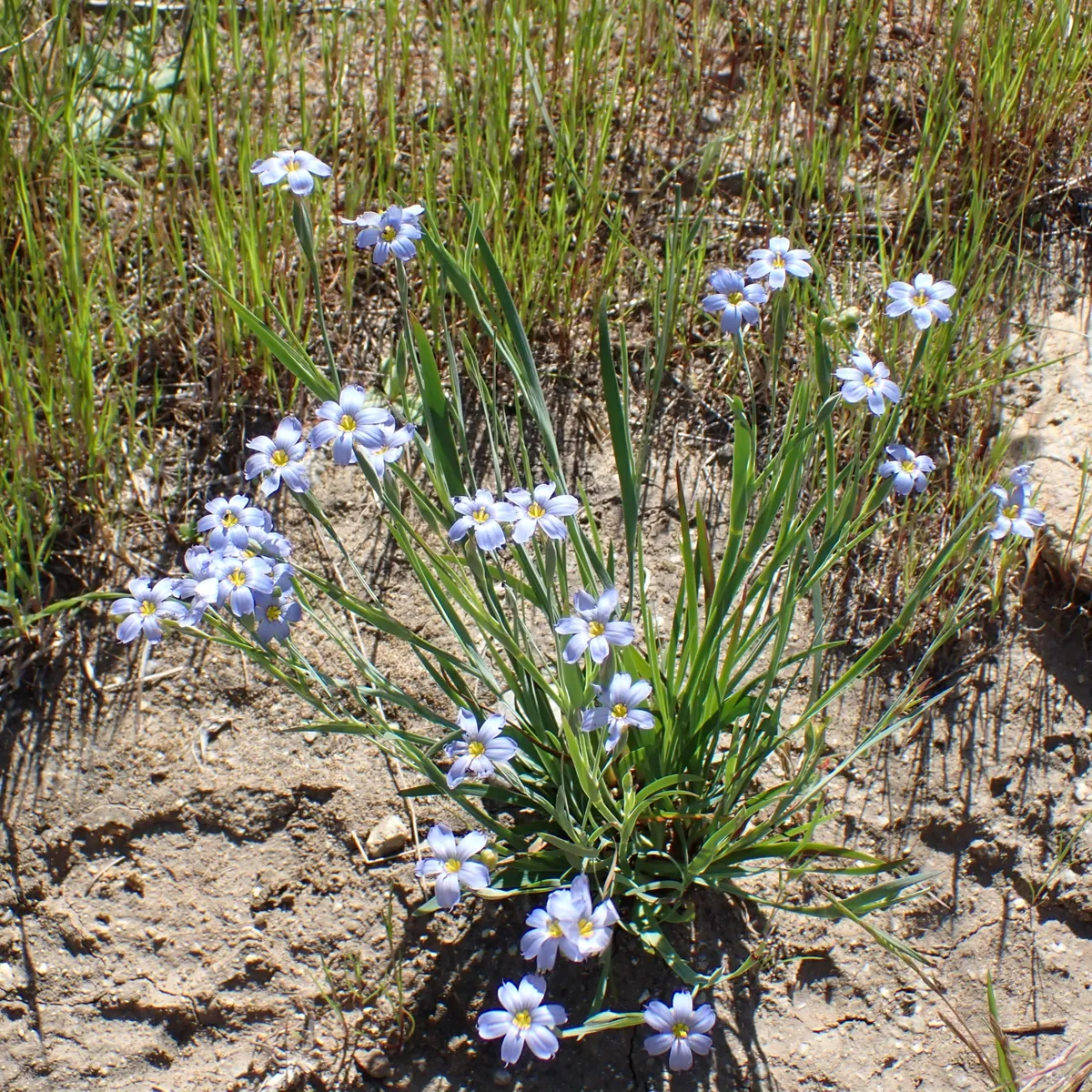
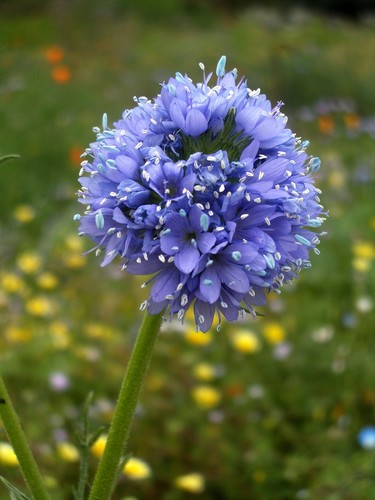
Grape-hyacinth is not native to the United States. These natives fill a similar role in a planting, matched on bloom season, bloom color and mature size.
Before you buy
Your city may pay you to plant this
Cities and water utilities offer rebates for replacing lawn with native and water-wise plants. We track 459 programs across 44 states, each with a link to the provider and the date we last checked it.
Find rebates in your areaPicture natives in your own yard
Wondering what could grow where Grape-hyacinth is now? Upload a photo of the spot and Patch Vision shows a rendering of it replanted with natives for your region.


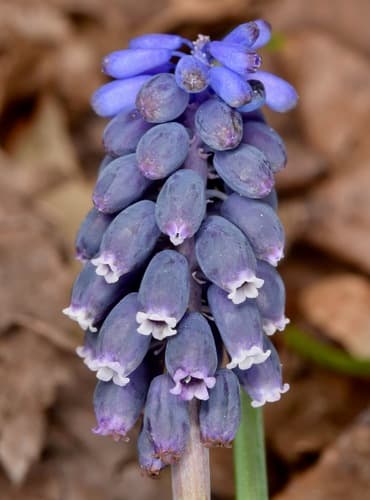
Grape-hyacinth produces clusters of small, deep blue flowers resembling tiny grapes on short stems in early spring. This compact bulb naturalizes easily and provides early season color when few other plants are blooming. The narrow, grass-like foliage emerges in fall and dies back by summer.
How to care for Grape-hyacinth, by region
How to care for Grape-hyacinth where it is actually grown: year-round basics plus what to do each season, region by region, with the sources for each.
Care guidance last updated: September 2026
Eastern Corn Belt Plains (includes Columbus, OH)
Year-round
Grape hyacinth is a small spring bulb that comes back every year with little care. It likes full sun to part shade and soil that drains well. It also spreads on its own over time by seed and small bulb offsets, so a few plants can turn into a bigger patch in a few years.
- Plant bulbs about 2 to 3 inches deep and 2 to 3 inches apart in fall.
- Give it full sun to part shade and soil that drains well.
- Keep the soil moist while it is actively growing in spring, then cut back on water once the leaves start to fade.
- It spreads on its own by seed and small bulbs, so watch nearby beds and the lawn edge if you want to keep it contained.
Fall
Fall is planting season for grape hyacinth bulbs in Columbus. Get them in the ground before the soil freezes, generally by mid to late October, so roots have time to establish before winter.
- Plant new bulbs about 2 to 3 inches deep and 2 to 3 inches apart, ideally by mid to late October in the Columbus area.
- Choose a spot with full sun to part shade and soil that drains well.
- Water the bed after planting to help the bulbs settle in.
- Established bulbs and any foliage that has already emerged for the season need no extra care yet.
Winter
Grape hyacinth bulbs handle a Columbus winter without help. They are hardy well past this area's cold, so no mulching or covering is needed for the dormant bulbs underground.
- The bulbs stay dormant underground and do not need water or fertilizer over winter.
- No mulch or winter cover is needed since this bulb tolerates much colder zones than Columbus.
- Leaves that emerged in fall may look ragged after a hard freeze, but the bulb underneath is fine.
- Avoid walking on or compacting the planting area while the ground is frozen.
If ragged winter foliage is poking up in a front bed, a light trim of the damaged tips keeps the spot looking intentional without disturbing the bulb below.
Spring
In Columbus, grape hyacinth usually flowers from March into April, sending up small spikes of blue flowers before most other bulbs are done. It is cold hardy, so a late frost typically will not hurt it.
- Expect flower spikes to show up in March or early April in the Columbus area.
- Keep the soil moist while the leaves and flowers are actively growing.
- Let the flowers fade on their own, there is no need to deadhead for the plant's health.
- A late spring frost is usually not a problem since this bulb is hardy well into colder zones than Columbus.
A tidy, edged clump of blooming grape hyacinth by the front walk reads as an intentional planting, which is easier on HOA-conscious neighbors than scattered blooms in the lawn.
Summer
By early summer the leaves turn yellow and die back in Columbus, and the bulb goes dormant underground for the rest of the summer. There is nothing to plant or water at this point, just let the foliage finish on its own.
- Let the yellowing leaves die back naturally instead of cutting them early, since the bulb is still pulling energy from them.
- Cut back on watering once the foliage starts to fade, since the dormant bulb does not need it.
- The plant will be dormant and out of sight above ground for most of the summer.
- No fertilizer or other care is needed while it is dormant.
Fading, yellowing leaves in a front bed can look neglected for a few weeks. Tucking the bulbs behind later-blooming perennials keeps the spot looking tended while the foliage finishes.
Sources: NC State Extension Gardener Plant Toolbox: Muscari atlanticum (Starch Grape Hyacinth, syn. Muscari neglectum), Go Botany (Native Plant Trust): Muscari neglectum (Starch Grape-hyacinth), Invasive Plant Atlas of the United States: Muscari neglectum
In an HOA neighborhood
Grape-hyacinth takes more care to keep looking intentional in a front yard. Maintenance level: low. Consider it for backyard or mid-zone beds rather than the street edge.
Works well in: front yard, foundation, mid zone.
- Foliage can look messy as it yellows and dies back in late spring
- May spread aggressively in ideal conditions
Wildlife value
Blooms provide nectar for early-season bees and flies when few other flowers are available. The early timing makes it especially valuable for emerging pollinators in spring.
Common questions
- How much sun does Grape-hyacinth need?
- Grape-hyacinth grows best in part shade conditions.
- When does Grape-hyacinth bloom?
- Grape-hyacinth blooms in April and May.
- What pollinators does Grape-hyacinth attract?
- Grape-hyacinth draws bees and flies.
- Is Grape-hyacinth HOA-friendly?
- Grape-hyacinth takes more care to look intentional in a front yard. Consider it for backyard or mid-zone beds rather than the street edge.
Pollinator and host plant associations compiled from GBIF, iNaturalist, and published ecological literature.
If something looks wrong
Common plant problems, and what to check first
These come up on almost any plant. Each guide lists the likely causes in the order they are worth ruling out, with one thing to check before you act on any of them, and links to the source it came from.
- It is dying right after planting
- Leaves turning yellow
- Wilting even though I watered it
- Brown crispy leaf tips
- Bugs on the plant
Ready to grow Grape-hyacinth? Add it to your garden in Pollinator Patch to track it and get season-by-season care guidance.