Western Blue-eyed Grass
Sisyrinchium bellum
Last reviewed: September 2026
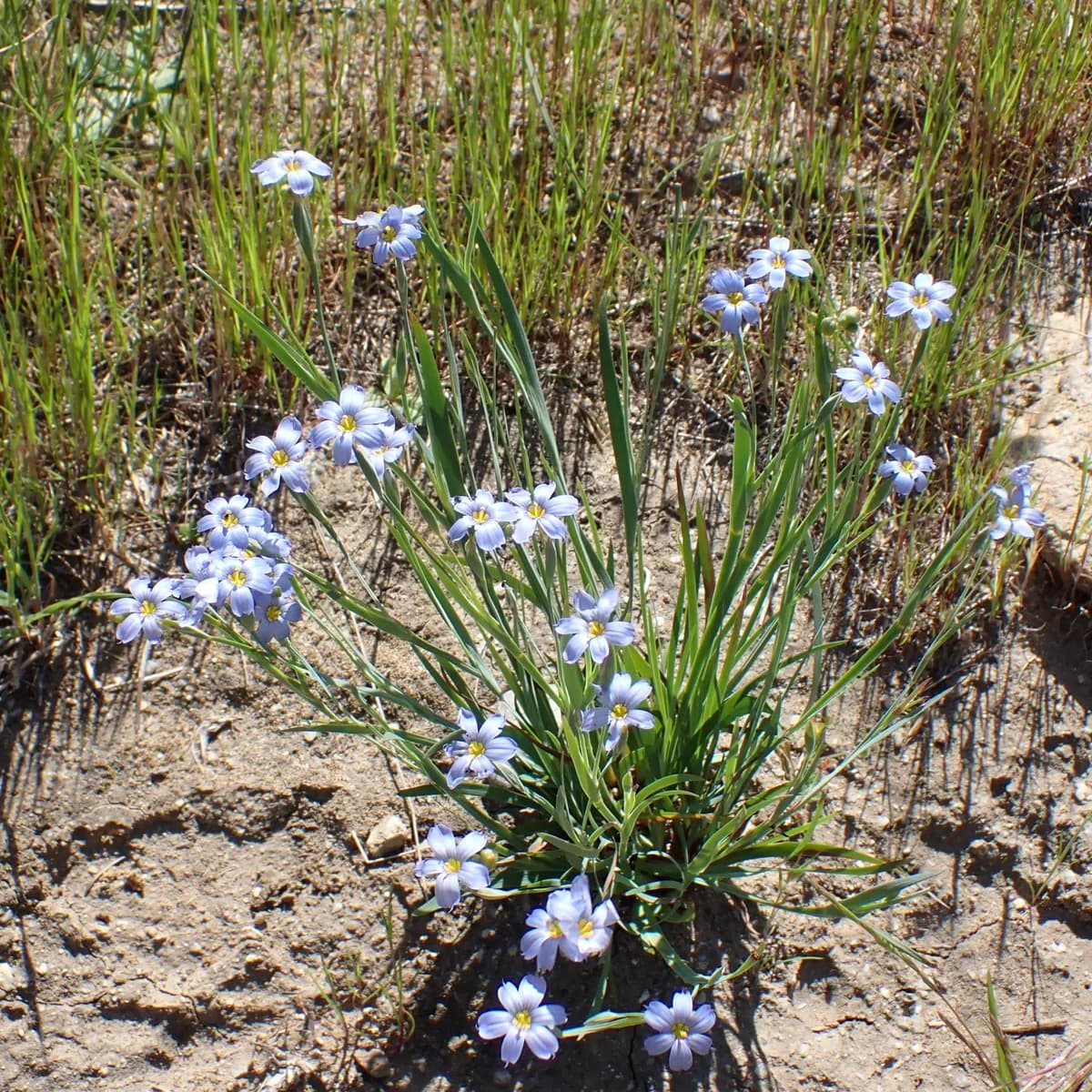
Sisyrinchium bellum is a low-growing forb with grassy foliage and blue-purple flowers that bloom from March through June. It thrives in full sun with low water once established, making it a good fit for dry grassland and coastal garden settings.
Western Blue-eyed Grass (Sisyrinchium bellum) is not flagged as toxic to dogs or cats by Plants For A Future (PFAF) (opens in new tab) (last reviewed 2026-05-21). This verdict does not come from the ASPCA. If your pet shows symptoms after eating any plant, call the ASPCA at (888) 426-4435.
Light
full sun
Water
low
Size
6"–12" H × 6"–12" W
Bloom
Mar, Apr, May, Jun
Native to
CA, OR
Pollinators
bees, butterflies
Before you buy
Your city may pay you to plant this
Cities and water utilities offer rebates for replacing lawn with native and water-wise plants. We track 459 programs across 44 states, each with a link to the provider and the date we last checked it.
Find rebates in your areaPicture natives in your own yard
Upload a photo of your yard and Patch Vision shows a rendering of it planted with natives for your region, like Western Blue-eyed Grass.


Browse plants for this ecoregion
Blue-eyed grass is a charming native perennial with grass-like foliage and delicate blue flowers in spring. Despite its name, it's actually a member of the iris family, forming neat clumps that work well in borders or rock gardens.
Growing Western Blue-eyed Grass
Grow Western Blue-eyed Grass in full sun and low water. Mature plants reach 6 to 12 inches tall and spread 6 to 12 inches wide. Expect low maintenance to keep it looking intentional in a front yard.
How to care for Western Blue-eyed Grass, by region
How to care for Western Blue-eyed Grass where it is actually grown: year-round basics plus what to do each season, region by region, with the sources for each.
Care guidance last updated: September 2026
Central California Foothills and Coastal Mountains (includes San Francisco, CA)
Year-round
Western Blue-eyed Grass is a true California native that fits the San Francisco Bay Area's wet winter, dry summer pattern, and it goes dormant after its spring bloom rather than dying.
- Native to California, including the San Francisco Bay Area, according to Calscape and the Lady Bird Johnson Wildflower Center, so it is well matched to local rainfall and soil timing
- Despite the common name it is not a true grass. It is in the iris family and produces small star shaped blue to purple flowers about an inch across
- Give it full sun to part shade and soil that stays evenly moist over winter and spring, then let it dry out in summer, which matches its natural rhythm in this climate
- After it finishes blooming it browns and dies back to the ground for summer. That is normal seasonal dormancy, not a dead plant, and it returns on its own with fall and winter rain
- It is not on the ASPCA toxic plant list for dogs or cats, based on a direct check of the ASPCA plant database
Fall
Fall is when Bay Area rains typically return and the plant resumes growth, and it is also the best window for planting new starts or dividing clumps.
- Fresh green grasslike foliage typically returns once fall rains begin, ending the summer dormant look
- Fall through early winter is the recommended planting window for California natives in the Bay Area, since rain helps new roots establish before summer heat returns, per UC Master Gardener guidance for Alameda County
- If dividing an established clump, fall works well since the plant is breaking dormancy and can settle in before its active winter and spring growth
- New plantings or divisions still need supplemental water between rain events until established, even though the species is drought tolerant once mature
Winter
Winter is active growth season in the Bay Area, with the plant green and low growing ahead of its spring bloom.
- Winter rains typically provide enough moisture on their own. Check the soil during dry spells and water if it is not staying damp
- The plant is moderately cold hardy, tolerating temperatures down to about 20 degrees Fahrenheit, well below typical Bay Area winter lows
- Foliage stays low and grasslike through winter, generally under a foot tall
- No pruning is needed in winter. Save any cutback for after it finishes blooming and goes summer dormant
The compact, grasslike winter foliage reads as tidy groundcover rather than a bare patch, useful near sidewalks and front beds.
Spring
Spring is bloom season in the Bay Area, so keep soil consistently moist and deadhead if you want a tidier look and possibly a longer bloom window.
- Peak bloom in the Bay Area runs roughly March through May, with flowering able to start as early as January and continue into early summer
- Keep soil evenly moist through spring while it is flowering. This is its highest water need period of the year
- Deadheading is optional since the plant drops spent blooms on its own, but removing them can encourage additional flowering
- Early spring is a workable backup planting window if fall planting was missed, but plan on extra watering through the first summer to help new roots establish
Trimming spent flower stalks during peak bloom keeps the front bed looking tended rather than shaggy.
Summer
Summer is dormancy season. The clump browns and can be cut back, and watering should taper off, this is normal and not a sign the plant died.
- By early to mid summer the foliage yellows, browns, and dies back to the ground as part of the plant's natural dry season dormancy, not disease or death
- Cut the dead foliage back to near ground level once it has fully browned, which tidies the bed and helps limit excess reseeding since the plant self sows readily
- Reduce watering significantly during dormancy. Established plants tolerate summer dryness well, though occasional deep watering can keep it looking fuller through a hot Bay Area summer if desired
- Do not dig up or discard the dormant clump. The rhizomes below ground are still alive and will resprout once fall rain returns
Cutting the browned foliage back to the ground once it fully dies back keeps the bed from reading as neglected through summer.
Sources: Calscape: Sisyrinchium bellum (Western Blue-eyed Grass), Lady Bird Johnson Wildflower Center: Sisyrinchium bellum, ASPCA Toxic and Non-Toxic Plants, letter B, UC Master Gardener Program of Alameda County: Planting California Natives, Fall/Winter, Theodore Payne Foundation Native Plant Database: Sisyrinchium bellum, California Flora Nursery: Sisyrinchium bellum
Central California Valley (includes Sacramento, CA)
Year-round
Western Blue-eyed Grass is a small clumping perennial in the iris family that puts up grassy leaves and star-shaped blue-purple flowers in spring, then rests underground through the hot dry Central Valley summer. Treat it like a winter-wet, summer-dry native and it comes back on its own each year.
- Plant it in fall (October or November) in the Sacramento area so winter rains settle its roots before the first hot summer.
- Give it full sun to a little afternoon shade, and in the heavy valley clay set the crown on a slight mound so water drains away from the base.
- Water deeply but not often through the first summer only, then wean it off so an established clump gets little to no summer water.
- It is a bee and butterfly plant, so skip pesticides near it and let a few flowers go to seed to fill in the patch.
Fall
Fall is the prime planting season. When the first rains arrive in October or November, the soil cools and this is the moment to set out new clumps or divide old ones so roots establish before summer.
- Plant new clumps in October or November, timed to the first Sacramento rains, so winter moisture settles the roots naturally.
- In the heavy valley clay, plant on a slight mound and loosen the planting hole so water drains and the crown never sits wet.
- Divide crowded older clumps now, replanting the vigorous outer pieces at the same depth they grew before.
- Hold off on heavy watering and let the arriving rains take over, adding water only if the first rains are late and the soil is dry.
New fall plantings look sparse, so space clumps on a clear grid and edge the bed so the front yard reads as a deliberate planting from day one rather than a bare patch.
Winter
Winter is the quiet growing season. Cool Sacramento rain and fog wake the grassy leaves and the clump greens up and roots in, getting ready for the spring bloom. The rain does almost all the work.
- Let winter rain do the watering, since November through February usually delivers all the moisture the clump needs.
- Expect fresh green blades to appear and the clump to fill out during the mild, foggy weather, which is normal winter growth.
- Do not add supplemental water in a wet stretch, because soggy clay in cold weather rots the crown.
- Leave the plant alone through light frosts, which it shrugs off in the Central Valley without protection.
Green winter clumps read as tidy and cared-for, so a clean bed edge now keeps the front yard looking intentional and HOA-friendly right through to the spring flush.
Spring
Spring is the show. Fall-planted clumps send up blue-purple flowers from March into June while the soil is still damp from winter rain. This is the easiest season, mostly just enjoy and taper water.
- Let winter and early-spring rain do the watering, and only add a deep soak if a March or April dry spell drags on.
- As Sacramento warms into May, taper off any supplemental water so the plant can start its natural slide toward summer rest.
- Pull spring weeds by hand around the clumps so they do not crowd the low grassy foliage or steal the last of the soil moisture.
- Leave a few spent flower stalks in place if you want the patch to reseed and thicken for next spring.
To keep a spring patch reading as intentional and avoid a violation letter, edge the bed cleanly and pull tall weeds around the low clumps so it looks like a planted border, not a forgotten strip.
Summer
Summer is the rest season. In the bone-dry Sacramento heat the flowers finish, the grassy leaves fade back, and an established clump wants little to no water. Watering it now is the fastest way to kill it.
- Do not water an established clump through June to September, since summer irrigation on a summer-dormant native is the number-one local killer through crown and root rot.
- Expect the leaves to yellow, brown, and shrink back, which is normal dormancy and not death, so leave the crown in the ground.
- Only a brand-new fall planting gets its rare deep drink in this first summer, and even then keep the crown dry and drainage sharp.
- Skip fertilizer and heavy mulch over the crown, which trap moisture the resting plant does not want in the heat.
A summer-dormant patch can look brown and dead to an HOA, so clip the fully spent stalks and keep a crisp bed edge and defined spacing so the rest of the meadow reads as intentional low-water landscaping.
Sources: Calscape, California Native Plant Society, Sisyrinchium bellum profile, Las Pilitas Nursery, Sisyrinchium bellum horticultural notes, UC Master Gardeners, planting California natives with the fall rains, UC Davis Arboretum, Arboretum All-Stars, Sisyrinchium bellum
Coast Range (includes Eureka, CA)
Year-round
Western blue-eyed grass is a small native iris relative from coastal Northern California, and Eureka's cool, foggy climate is very close to where it grows in the wild.
- Calscape and Calflora both list this plant across the north coast, including habitats like coastal prairie and redwood forest understory that match the Eureka area.
- It likes full sun right on the coast, but a little afternoon shade is fine if your yard sits somewhere warmer or more sheltered.
- Plant it in soil that drains but still holds a bit of moisture, ideally loamy soil, though it also tolerates sandy or clay soil.
- It stays small, under about a foot tall, and grows in tidy clumps, so it works well along a path edge or the front of a planting bed.
- Once established, it needs very little extra water here since Eureka's wet climate does most of the work for you.
Fall
Fall in Eureka brings the rain back, and that is usually what wakes this plant back up from its summer rest.
- New leaf growth often starts again in fall as the rains return, even though it will not flower again until spring.
- Established plants in this climate generally do not need fertilizer.
- If you left the dried summer foliage in place, fall is a good time to clear it out before fresh growth comes in.
- This is also a fine second window to divide crowded clumps if you did not get to it in spring.
Clearing out old dried foliage before new growth appears keeps a front yard bed HOA-friendly heading into fall.
Winter
Winter in Eureka is mild and wet, and this plant handles the cool, rainy season without much fuss.
- Eureka rarely sees hard freezes, and this plant tolerates cold well, so winter cold is not usually a concern here.
- Established plants typically do not need any supplemental watering in winter since regional rainfall covers it.
- Try not to walk on or work the soil around the plant right after heavy rain, since compacted wet soil can encourage root rot.
- The plant may look a little sparse or ragged in the depths of winter. That is normal, and it fills back in as spring approaches.
Spring
Spring is when this plant flowers in Eureka, with small purple-blue blooms opening as the days lengthen.
- Flowers typically open in spring and can keep going into early summer in Eureka's cool climate.
- Local spring rain usually covers its water needs, so extra watering by hand is not normally necessary.
- If a clump has gotten crowded over the years, spring is a good time to dig it up, split it into smaller pieces, and replant them.
- Trimming off spent flower stalks after blooming is optional. It will not hurt the plant if you skip it.
Trimming spent flower stalks keeps a front bed looking tidy and HOA-conscious, though it is optional for the plant itself.
Summer
Summer is a rest period for this plant in Eureka. It naturally dies back after flowering and slows way down.
- After it blooms, the leaves will yellow and die back. This is normal dormancy, not a sign of a problem.
- Eureka's summers are cool and dry with a lot of fog, so established plants usually get by on the moisture already in the soil.
- If you want it to stay a bit greener through summer, a deep watering once or twice a month is plenty. Watering more than that in this area's naturally damp soil can invite root rot.
- Once the dried foliage has fully browned, you can cut it back to the ground to tidy up the bed, or leave it if you prefer a more natural look.
Cutting back the browned summer foliage is an easy way to keep a front-facing bed HOA-friendly.
Sources: Calscape - Blue-eyed Grass (Sisyrinchium bellum), Calflora - Sisyrinchium bellum taxon record, Las Pilitas Nursery - Sisyrinchium bellum, Blue-Eyed Grass, National Weather Service - Eureka climate and forecasts
Mojave Basin and Range (includes Victorville, CA)
Year-round
Western blue-eyed grass can be grown in a Victorville yard, but the high desert's hot, dry summers and cold winters are a lot harsher than the mild coastal climate this plant is usually grown in, so plan on giving it more help here.
- Give it afternoon shade if you can. Victorville's intense summer sun and very dry air are tougher on this plant than the coastal conditions it is more commonly grown in.
- Plant it in soil that holds a little moisture. If your yard's soil is sandy and fast draining, which is common in the high desert, working in some compost will help.
- It stays small, under about a foot tall, in tidy clumps, so tucking it among taller desert-tolerant plants that can offer some afternoon shade works well.
- Expect to water it noticeably more often than a coastal California guide would suggest, since Victorville gets only a few inches of rain a year and summer heat dries soil out fast.
- A layer of mulch around the base helps hold moisture and softens the big swing between hot days and cool desert nights.
Fall
Fall brings relief from the worst of the desert heat, and this plant should start showing new growth again as temperatures cool.
- As daytime highs drop from the summer's high nineties into a milder range, watch for fresh leaf growth resuming at the base of the plant.
- Keep up regular deep watering through early fall until temperatures cool further, since the ground here still dries out fast.
- Fall is a reasonable time to clear away fully dried summer foliage and clean up the bed before winter.
- Hold off on fertilizing. Established plants in this climate generally do not need it, and this species is a light feeder to begin with.
Clearing out dried summer foliage in fall keeps a front yard bed looking HOA-friendly going into the cooler months.
Winter
Winter in Victorville brings real cold, with regular frost and nighttime lows that can drop into the twenties, so this plant needs more winter protection here than it would on the coast.
- This area sees roughly forty nights a year below freezing, mostly from December through February, well past what this plant would experience in its usual coastal range.
- A layer of mulch over the root zone helps buffer the soil from repeated freeze and thaw cycles common in the high desert.
- Cut back on watering in winter, since the plant is not actively growing much and cold, soggy soil raises the risk of root rot.
- Occasional light frost damage to leaf tips is common here and is mostly cosmetic. The plant should resume growth as things warm in spring.
Spring
Spring is bloom time for this plant, and it is also the easiest season to grow it in Victorville before summer heat sets in.
- Flowers open in spring, and the mild spring temperatures here are closer to what this plant prefers than the hot summer months.
- This is a good time to plant new starts or divide an established clump, while the weather is still cool enough for roots to settle in.
- Watering once a week is usually enough in spring here, tapering off if a rainy stretch comes through.
- Trimming spent flower stalks after blooming is optional and mainly a tidiness choice.
Trimming spent flower stalks after bloom is a simple way to keep a front bed HOA-conscious, though the plant does not need it.
Summer
Summer is the hardest season for this plant in Victorville, with average highs near 97 degrees and very little rain.
- The plant will likely die back and go dormant earlier and more completely here than it would in a coastal garden, since it is reacting to real heat stress, not just its usual seasonal rest.
- Water more deeply and more often than you would for most low water native plants. Aim for a deep soak roughly once a week during the hottest stretch, adjusting for how fast your soil dries.
- Afternoon shade from a nearby shrub, wall, or shade cloth will reduce stress during the hottest weeks.
- If the foliage fully browns and dies back, that is the plant protecting itself from the heat. You can leave the dried leaves in place as extra soil cover, or trim them once they are fully dead.
Trimming the browned, dead summer foliage once it has fully dried out keeps a front-facing bed HOA-friendly.
Sources: Calscape - Blue-eyed Grass (Sisyrinchium bellum), National Weather Service - Victorville climate summary, Las Pilitas Nursery - Sisyrinchium bellum, Blue-Eyed Grass
Southern California/Northern Baja Coast (includes Los Angeles, CA)
Year-round
Blue-eyed grass is a small, grassy-looking California native with cheerful blue-purple flowers each spring, and it mostly cares for itself once it settles in.
- It's a California native, so it already knows how to handle our wet winters and dry summers.
- Give it full sun close to the coast, or part shade in hotter inland parts of Los Angeles.
- Plant it in soil that holds a little moisture but drains well. It tolerates almost any soil type.
- It grows in low grassy clumps under a foot tall, blooms January through July, then dies back and rests through summer. That dormancy is normal, not a problem.
Fall
Cooler weather and the first rains wake blue-eyed grass back up, with new grassy blades emerging from the base.
- Resume regular watering once new growth appears, matching it to any early rain Los Angeles gets.
- Fall is a good time to divide crowded clumps or move self-sown seedlings to a new spot.
- If you saved seed from spring, fall is a fine time to sow it.
- New leaves may look sparse at first. That's expected as it comes out of dormancy, not a sign of stress.
Winter
Winter rain keeps blue-eyed grass green and growing, and it can even start blooming early in a mild Los Angeles winter.
- In a normal rain year, established plants usually need little to no extra watering through winter.
- Watch for the first flower buds as early as January in a mild year, since bloom season runs January through July.
- Frost is rarely an issue in Los Angeles. It's noted as hardy down to about 20 degrees Fahrenheit.
- Winter is a good time to plant new nursery starts, giving roots a season to establish before summer dormancy.
Spring
Spring is blue-eyed grass's main show, with small blue-purple flowers opening while the plant is actively growing.
- Keep the soil lightly moist through spring since this is blue-eyed grass's main growing and blooming stretch.
- Water a bit more often if spring stays dry, especially in hotter inland parts of Los Angeles.
- Trim off spent flower stalks as they fade to keep the clump looking neat.
- Leave a few seed heads in place if you want new plants to fill in on their own next year.
Regular deadheading through spring keeps a front-yard planting looking cared for while it's in full bloom.
Summer
By early summer the leaves yellow and die back to the ground. That's normal dormancy, not the plant dying.
- Let the foliage yellow and dry out completely. This dormancy is normal, not a sign of a dying plant.
- Cut way back on watering since it wants to stay mostly dry during its summer rest.
- Once the dried leaves are fully brown, cut them down to the ground for a tidier bed.
- Mark the spot since there won't be much to see above ground for a couple of months.
Removing the dried, dormant foliage once it browns keeps the bed from looking neglected over summer.
Willamette Valley (includes Portland, OR)
Year-round
Despite the name, this is not a grass. It is a small member of the iris family, and knowing that changes how you treat it. Its native range runs from Oregon south into Baja California, and it is one of the species used in Willamette Valley upland prairie and wet prairie plantings, so it belongs here in Portland. Expect a tidy 6 to 12 inch fan of flat leaves, then violet blue flowers with yellow centers from roughly March into June. The part that surprises people is what happens next: after bloom it browns out and goes dormant for the summer, dying back close to the ground. In our climate the real risk is not summer drought and not winter cold, it is winter wet in heavy clay, so drainage decides whether this plant lives for years or rots in its second February. Plant it in full sun to light shade on a slight mound or a slope, and give it a soil that drains.
- Treat it as an iris relative, not a grass, and never mow or shear it like turf.
- Plant on a slight mound, a berm, or a slope so winter water moves away from the crown.
- Loosen heavy clay and mix in coarse grit or compost before planting.
- Full sun gives the most flowers, light afternoon shade is fine.
- Plan for a summer gap in the planting, because the foliage disappears after bloom.
- Skip fertilizer entirely, it is a prairie plant and rich feeding makes it floppy.
Fall
Fall is your work window in Portland. As the rains return in October and November the plant breaks dormancy and pushes fresh leaves, and that is the moment to plant, move, or divide it. The clump spreads by rhizomes, so lift it, pull it into pieces with a few fans each, and replant at the same depth. Do this as the soil moistens up, not in the dry heat of August, and the divisions root in over winter with no help from you. This is also the season to fix drainage before the wet really lands: if water pools where your clump sits, raise the bed, add a mound, or move the plant somewhere with slope. Clip off any remaining brown summer foliage so the fresh growth shows.
- Divide and replant clumps in October or November as the rains return, not in summer heat.
- Lift the clump, split the rhizomes into pieces with several leaf fans each, replant at the same depth.
- Plant new plants in fall so winter rain establishes them for free.
- Fix any spot where water stands, by mounding, adding grit, or relocating the plant.
- Cut away leftover brown summer leaves once new green fans appear.
- Keep slug patrol going, fall is their other peak season and new fans are the target.
Trimming the dead summer foliage once new growth appears is what makes the fall bed read as intentional rather than untended, which is the difference a board notices.
Winter
Cold is not the problem here. Portland sits in zone 8b and this plant handles our winters without protection. What kills it is standing water in heavy clay, because the rhizomes rot when the crown sits wet for weeks and we get most of our 36 to 43 inches of rain between November and March. So winter care is mostly about water leaving, not water arriving. Add nothing to the irrigation, turn off any automatic zone that hits the bed, and walk out during a hard rain to see where puddles form. Leaves usually persist through winter in our mild, damp conditions, so you should see green fans rather than a bare spot. If a clump comes through winter mushy at the base, that is a drainage diagnosis, and the fix is a mound or a new location in fall, not a fungicide.
- Give zero supplemental water, and shut off any drip or spray zone covering the bed.
- Walk the yard during a heavy rain and note where water stands near the crown.
- Keep mulch thin and pulled back from the crown so it does not hold moisture against the base.
- Do not cover or wrap the plant, our winter cold is not the threat.
- Expect green leaf fans through most of the winter in a mild year.
- If the base turns soft or mushy, plan a mound or a better drained spot for next fall.
Spring
Spring is the whole show. New leaf fans push up while the ground is still cool and wet, and flowers follow from around March into June. Cool wet Portland springs mean a slow start, so do not panic if your clump looks sluggish in March while everything else is waking up. Slugs are the one pest worth watching, because they are most active in our wet spring and they will chew tender new fans down to stubs. Check under nearby leaves and mulch twice a week in early spring and hand pick, or use a bait product and read the label carefully if you have pets or kids in the yard. You should not need to water at all in a normal Portland spring, and you should not fertilize.
- Pull winter debris and matted leaves off the crown so new fans get light and air.
- Scout for slugs twice a week from March, checking under rocks, mulch, and neighboring foliage.
- Hand pick slugs into soapy water, or bait and follow the label directions.
- Do not irrigate unless spring turns unusually dry after mid May.
- No fertilizer, and keep mulch pulled back an inch or two from the crown.
- Leave spent flower stems until seed sets if you want it to self sow into gaps.
Summer
This is the season that makes people think they killed it. After bloom the foliage yellows, browns, and largely vanishes as the plant goes summer dormant and dies back to the ground. That is completely normal, and it lines up perfectly with our bone dry July through September. Do not water it to bring the leaves back, and do not dig it up. The rhizomes are alive underground and waiting for fall rain. Occasional deep water once a month can keep a little green on it in a hot exposed spot, but a fully dormant clump is a healthy clump, not a dead one. The one thing worth doing is marking the spot so you or a landscaper does not plant on top of it or yank it out as a dead plant.
- Expect the leaves to brown and disappear after bloom, this is dormancy and not failure.
- Give no summer irrigation, or at most one deep soak a month in a hot exposed bed.
- Do not dig, divide, or replace the clump while it is dormant.
- Push a labeled marker or a small stone at the crown so the spot does not get disturbed.
- Once the foliage is fully brown you can clip it off at the base to tidy the bed.
- Interplant with something that holds through summer so the gap fills in on its own.
A bare brown patch in a front bed reads as neglect, so pair it with a low evergreen or a late season bloomer that carries the spot through August and the planting still looks intentional.
Sources: Missouri Botanical Garden Plant Finder: Sisyrinchium bellum, Benton Soil and Water Conservation District: Blue Eyed Grass (Sisyrinchium bellum), Calscape (California Native Plant Society): Sisyrinchium bellum, Western Blue-eyed Grass, OSU Extension Service: Fall and spring are prime times to battle garden slugs
In an HOA neighborhood
Western Blue-eyed Grass is an HOA-friendly choice. Maintenance level: low. Tidiness: 4 out of 5.
Works well in: front yard, foundation, street edge, mid zone.
- Can look dormant and less attractive in late summer without supplemental water
Wildlife value
The bright blue flowers attract native bees and butterflies, providing valuable spring nectar when many other plants aren't yet blooming.
Common questions
- When does Sisyrinchium bellum bloom?
- Sisyrinchium bellum typically flowers from March through June, with blue-purple, star-shaped blooms opening on clear mornings.
- How much water does Sisyrinchium bellum need?
- This plant does well with low water once established, though it can handle occasional medium moisture during its spring growth and bloom period.
- What light conditions suit Sisyrinchium bellum best?
- Full sun brings out the strongest bloom, though the plant also tolerates part sun in warmer inland gardens.
- What pollinators visit Sisyrinchium bellum?
- Bees and butterflies commonly visit the flowers for pollen and nectar during the spring bloom season.
- Is Western Blue-eyed Grass toxic to dogs?
- Western Blue-eyed Grass is not flagged as toxic to dogs by Plants For A Future (PFAF). This verdict does not come from the ASPCA.
- Is Western Blue-eyed Grass toxic to cats?
- Western Blue-eyed Grass is not flagged as toxic to cats by Plants For A Future (PFAF). This verdict does not come from the ASPCA.
- Is Western Blue-eyed Grass HOA-friendly?
- Western Blue-eyed Grass is generally an HOA-friendly choice in the right placement, with low maintenance.
These answers were drafted with an AI model from this plant's data. Verify care details with a local expert.
Native range data from vouchered herbarium specimen records and regional native plant society lists. Pollinator and host plant associations compiled from GBIF, iNaturalist, and published ecological literature.
If something looks wrong
Common plant problems, and what to check first
These come up on almost any plant. Each guide lists the likely causes in the order they are worth ruling out, with one thing to check before you act on any of them, and links to the source it came from.
- It is dying right after planting
- Leaves turning yellow
- Wilting even though I watered it
- Brown crispy leaf tips
- Bugs on the plant
Ready to grow Western Blue-eyed Grass? Add it to your garden in Pollinator Patch to track it and get season-by-season care guidance.