Narrow-leaf Ironweed
Vernonia lettermannii
Last reviewed: November 2026
Watering reminders and freeze alerts for Narrow-leaf Ironweed, free in the app.


Toxicity unknown
Narrow-leaf Ironweed (Vernonia lettermannii) is not listed by the ASPCA Animal Poison Control Center (opens in new tab) or the other sources we check, so we have no verdict for it either way. Absence from those lists is not a clearance. If your pet shows symptoms after eating any plant, call the ASPCA at (888) 426-4435.
Light
full sun
Water
medium
Size
18"–36" H × 18"–30" W
Bloom
Aug, Sep, Oct
Native to
AR, OK
Pollinators
butterflies, native bees
Before you buy
Your city may pay you to plant this
Cities and water utilities offer rebates for replacing lawn with native and water-wise plants. We track 464 programs across 44 states, each with a link to the provider and the date we last checked it.
Find rebates in your areaPicture natives in your own yard
Upload a photo of your yard and Patch Vision shows a rendering of it planted with natives for your region, like Narrow-leaf Ironweed.
Browse plants for this ecoregion
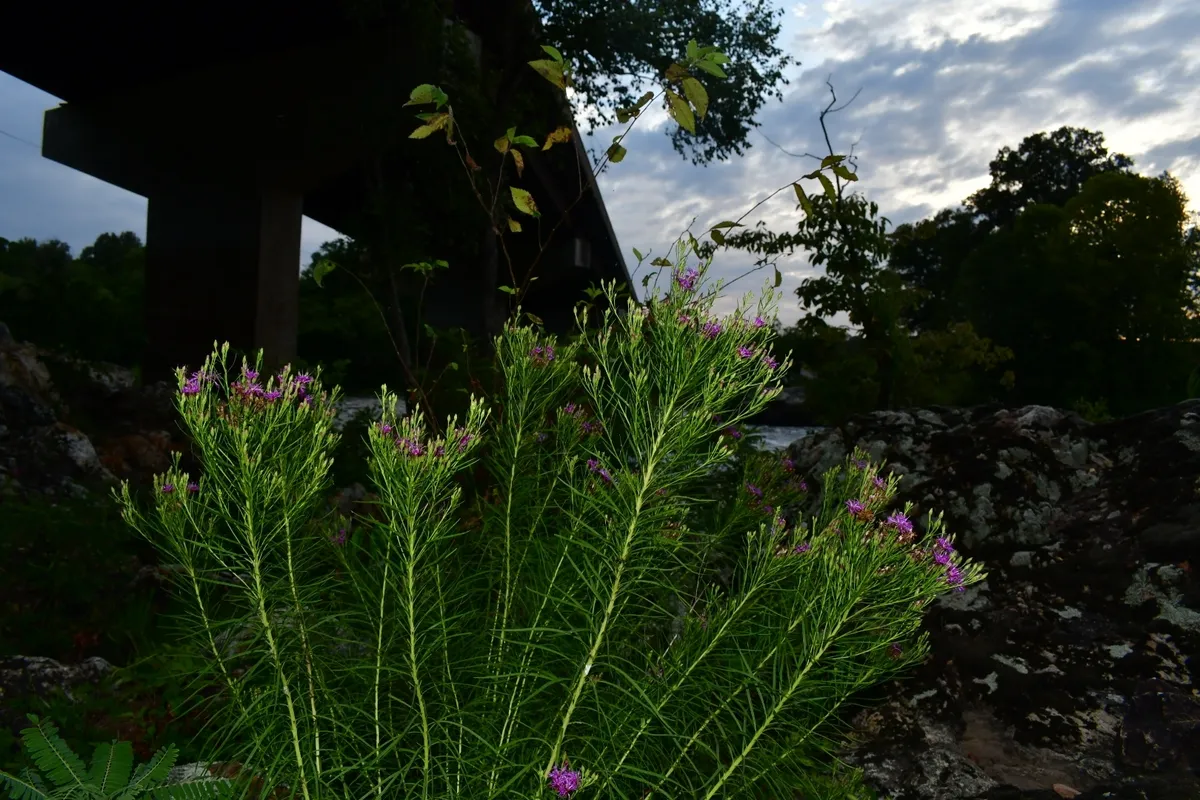
A clump-forming perennial with fine, thread-like foliage that gives the whole plant a soft, airy texture. Rounded clusters of small purple flowers top upright stems from late summer into fall, and the plant holds its shape well without staking.
How to care for Narrow-leaf Ironweed, by region
How to care for Narrow-leaf Ironweed where it is actually grown: year-round basics plus what to do each season, region by region, with the sources for each.
Care guidance last updated: September 2026
Ouachita Mountains (includes Hot Springs, AR)
Year-round
Narrow-leaf ironweed is a low-maintenance perennial that thrives in the region's rocky, well-drained soils, forming a tidy clump of fine, thread-like foliage topped with purple flower clusters in late summer and fall.
- Plant in full sun in well-drained soil; it naturally grows on gravel bars and rocky ground, so avoid heavy, poorly drained clay.
- Established plants tolerate the area's hot, humid summers and periodic dry spells without extra watering.
- Cut back old growth in late winter before new shoots emerge.
- Divide congested clumps every few years in early spring to maintain vigor.
Its neat, rounded clump form and fine foliage read as an intentional ornamental planting rather than a wild patch, especially when edged.
Fall
Bloom continues into fall, when the fine foliage and purple flower heads are at their showiest.
- Leave spent flower heads standing through fall rather than cutting back; they add late-season structure and feed birds.
- This is a good time to divide and replant if you want to expand coverage next spring.
- Reduce watering as the weather cools.
Winter
The clump goes dormant in winter; old growth can be left standing for structure or cut back for a tidier look.
- Cut back dead stems in late winter before new growth starts, or leave them through winter for visual interest and wildlife cover.
- No winter protection is needed here; this plant handles the area's winters without special care.
- This is a good dormant-season window to relocate or divide plants if needed.
Spring
Spring is the best time to divide congested clumps or plant new narrow-leaf ironweed here, before summer heat sets in.
- Cut back any remaining dead stems from last season before new growth emerges.
- Divide crowded clumps and replant divisions with room to spread.
- Water new plantings regularly until established; mature clumps need little supplemental water.
Summer
Fine, airy foliage and rounded purple flower clusters are the summer highlight, with bloom continuing into fall.
- Established plants tolerate the region's hot, humid summers with minimal watering.
- Deadheading is optional; spent flowers dry attractively and later feed seed-eating birds.
- Watch for butterflies and other pollinating insects visiting the blooms through the warm months.
Sources: University of Arkansas Division of Agriculture Cooperative Extension Service
In an HOA neighborhood
Narrow-leaf Ironweed is an HOA-friendly choice. Maintenance level: low. Tidiness: 4 out of 5.
Works well in: border planting, mixed perennial bed, mass planting.
Wildlife value
A strong late-season nectar source for butterflies, including migrating monarchs, and heavily visited by native bees.
Common questions
- How much sun does Narrow-leaf Ironweed need?
- Narrow-leaf Ironweed grows best in full sun conditions.
- When does Narrow-leaf Ironweed bloom?
- Narrow-leaf Ironweed blooms in August, September, and October.
- Where is Narrow-leaf Ironweed native?
- Narrow-leaf Ironweed (Vernonia lettermannii) is native to AR, OK, per the World Checklist of Vascular Plants (Kew).
- What pollinators does Narrow-leaf Ironweed attract?
- Narrow-leaf Ironweed draws butterflies and native bees.
- Is Narrow-leaf Ironweed HOA-friendly?
- Narrow-leaf Ironweed is generally an HOA-friendly choice in the right placement, with low maintenance.
Native range data from the World Checklist of Vascular Plants (Kew). Pollinator and host plant associations compiled from GBIF, iNaturalist, and published ecological literature.
If something looks wrong
Common plant problems, and what to check first
These come up on almost any plant. Each guide lists the likely causes in the order they are worth ruling out, with one thing to check before you act on any of them, and links to the source it came from.
- It is dying right after planting
- Leaves turning yellow
- Wilting even though I watered it
- Brown crispy leaf tips
- Bugs on the plant
Ready to grow Narrow-leaf Ironweed? Add it to your garden in the Pollinator Patch App to track it and get season-by-season care guidance.