Panther Lily
Lilium pardalinum
Last reviewed: September 2026
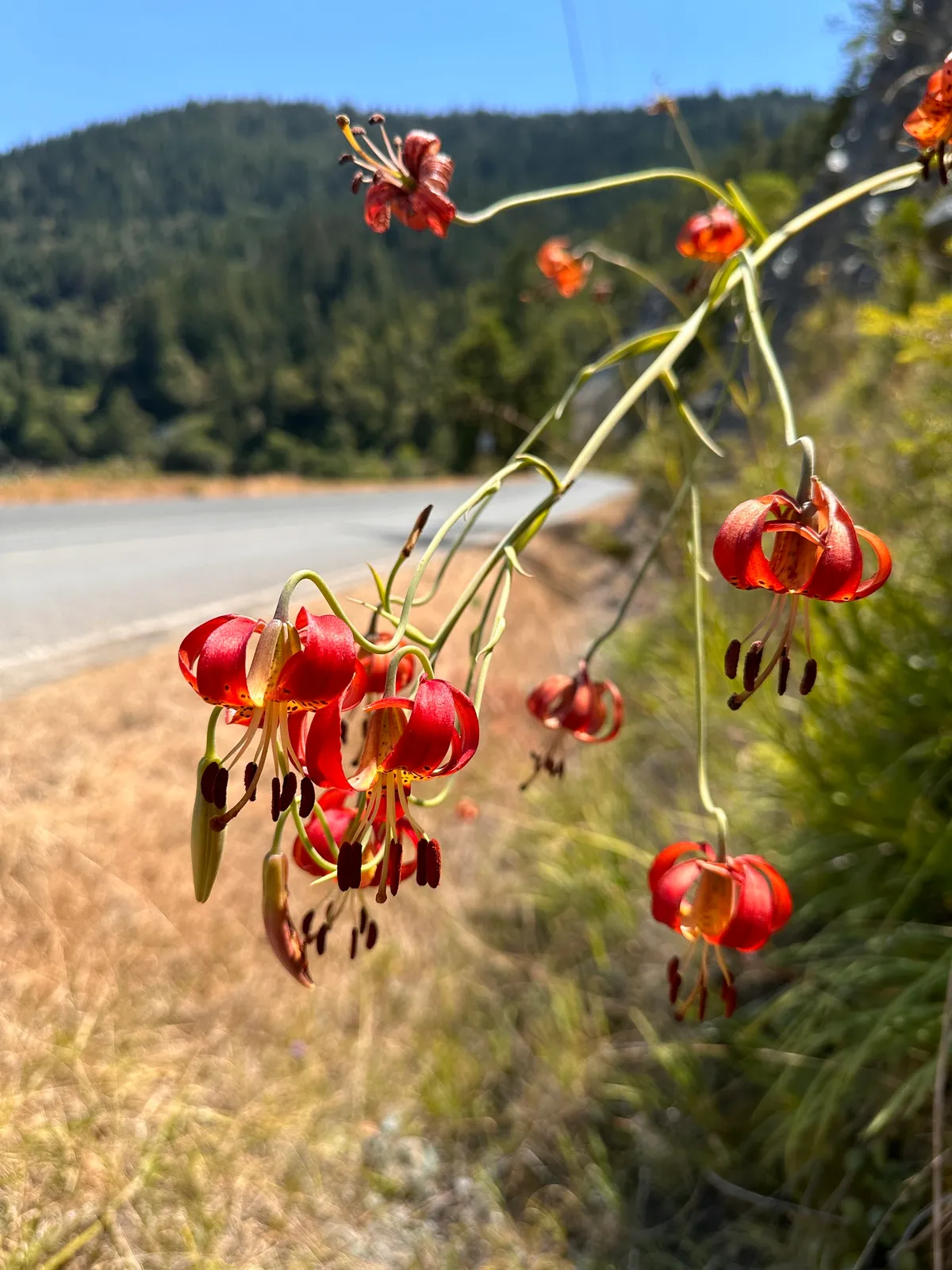
Panther Lily (Lilium pardalinum) is a tall herbaceous perennial that blooms from June through August, with orange, maroon-spotted, recurved petals. It grows well along streambanks, seeps, and moist woodland edges in part sun with medium to wet soil.
Panther Lily (Lilium pardalinum) is not on the ASPCA Animal Poison Control Center toxic plant list for dogs (aspca.org (opens in new tab), last reviewed 2026-05-21). If your pet shows symptoms after eating any plant, call the ASPCA at (888) 426-4435.
Light
part sun
Water
medium
Size
24"–72" H × 12"–24" W
Bloom
Jun, Jul, Aug
Native to
CA, OR
Pollinators
bees, hummingbirds
Before you buy
Your city may pay you to plant this
Cities and water utilities offer rebates for replacing lawn with native and water-wise plants. We track 459 programs across 44 states, each with a link to the provider and the date we last checked it.
Find rebates in your areaPicture natives in your own yard
Upload a photo of your yard and Patch Vision shows a rendering of it planted with natives for your region, like Panther Lily.


Browse plants for this ecoregion
Panther lily is a striking native perennial with tall stems of vibrant orange flowers marked with maroon spots. It grows 2-6 feet tall, blooming in summer with downward-facing, recurved petals that add dramatic interest to garden borders. This lily prefers moist, well-drained soil in partial shade conditions.
Growing Panther Lily
Grow Panther Lily in part sun and medium water. Mature plants reach 24 to 72 inches tall and spread 12 to 24 inches wide. Expect low maintenance to keep it looking intentional in a front yard.
How to care for Panther Lily, by region
How to care for Panther Lily where it is actually grown: year-round basics plus what to do each season, region by region, with the sources for each.
Care guidance last updated: September 2026
Central California Foothills and Coastal Mountains (includes San Francisco, CA)
Year-round
Panther Lily is a California and Oregon native, most at home along stream banks and moist meadows through the Coast Ranges of central and northern California, the same coastal hills that ring the San Francisco Bay. San Francisco's cool, foggy climate and wet winters are a real match for that habitat, much closer than a hot, dry climate would be, so this plant has a genuine shot at feeling at home here with a bit of afternoon shade and steady moisture.
- Give it partial shade, especially in the afternoon, since in the wild it grows at the edges of coastal forests and along shaded stream banks, not in open sun all day.
- Plant it in soil that holds moisture and never fully dries out, similar to the wet meadows and creek edges where it grows naturally.
- San Francisco's summers are dry even when they are cool and foggy, so this plant still needs regular watering through the growing season rather than relying on the fog alone.
Fall
Fall is when Panther Lily's top growth dies back for the year as it heads into winter dormancy underground. San Francisco's fall days are often some of the warmest of the year since the fog backs off, so keep an eye on watering until the rains return rather than assuming cooler weather has arrived.
- If you need to divide a crowded clump, fall is a reasonable window to do it since the plant is going dormant above ground, but keep the soil from drying out until winter rain takes over.
- Do not assume San Francisco's fall means less water is needed. Fog often clears in fall, and the resulting warm, sunny days can dry soil out faster than midsummer.
Cutting back the collapsed stems once they yellow keeps the bed looking tidy for HOA-conscious yards.
Winter
Winter is Panther Lily's true dormant season underground, and it is the easiest stretch for this plant in San Francisco. The wet winter rains here, falling mostly between November and April, are close to what this species gets in its native stream-bank and wet-meadow habitat, so established plants can mostly rely on the rain rather than a hose.
- Let San Francisco's winter rain do the watering, since this plant is naturally used to wet conditions from fall through spring and should never fully dry out even while dormant.
- There is little to do above ground this time of year since the plant has died back, so focus on keeping the bulb area moist rather than dry.
Spring
Spring is when Panther Lily sends up new shoots and grows quickly toward its early summer bloom. San Francisco's rainy season is tapering off by spring, so this is the season to start checking soil moisture yourself instead of counting on rain.
- Watch the soil as San Francisco's winter rains ease up, and start watering by hand once the ground begins to dry out.
- Give the new stems some support if they are in a windy spot, since this plant can grow several feet tall on its way to blooming.
Summer
Summer is Panther Lily's bloom season, and it lines up exactly with San Francisco's dry season, so this is the time it needs the most watering attention. The upside is that San Francisco summers are genuinely cool and often foggy, nothing like the hot, dry heat this plant would face in an inland or desert garden, so it is not fighting extreme heat here even though it still needs supplemental water.
- Water on a regular schedule through summer, since San Francisco sees little to no rain from June through September.
- The coastal fog keeps San Francisco's summer temperatures mild, which is genuinely closer to the cool conditions this plant is used to than a hot inland summer would be.
Sources: Calscape: Lilium pardalinum (Leopard Lily), USDA NRCS Plant Guide: Leopard Lily (Lilium pardalinum), National Park Service: San Francisco's Climate (Presidio of San Francisco)
In an HOA neighborhood
Panther Lily is an HOA-friendly choice. Maintenance level: low. Tidiness: 4 out of 5.
Works well in: front yard, foundation, mid zone.
- Dies back completely in winter, plan companion plants accordingly
Wildlife value
Highly attractive to hummingbirds and native bees, particularly bumble bees, which visit the flowers for nectar. The large, showy blooms serve as important food sources during summer months.
Common questions
- When does Panther Lily bloom?
- Panther Lily typically flowers from June through August, with individual stalks often producing several nodding, spotted blooms over the season.
- How much sun does Panther Lily need?
- It does best in part sun to part shade, mimicking the dappled light of streambanks and open woodland edges where it naturally thrives.
- How much water does Panther Lily require?
- This lily prefers consistently moist to wet soil and is often found near seeps, streambanks, and boggy meadow edges. It does not tolerate prolonged drought well.
- What pollinators visit Panther Lily flowers?
- Bees and hummingbirds are the main visitors, drawn to the nectar-rich, downward-facing blooms during the summer flowering period.
- Is Panther Lily toxic to dogs?
- Panther Lily is not on the ASPCA Animal Poison Control Center toxic plant list for dogs (aspca.org).
- Is Panther Lily toxic to cats?
- Yes. Panther Lily is listed as toxic to cats by the ASPCA Animal Poison Control Center (aspca.org). If your cat has been exposed, call the ASPCA Animal Poison Control Center at (888) 426-4435.
- Is Panther Lily HOA-friendly?
- Panther Lily is generally an HOA-friendly choice in the right placement, with low maintenance.
These answers were drafted with an AI model from this plant's data. Verify care details with a local expert.
Native range data from vouchered herbarium specimen records and regional native plant society lists. Pollinator and host plant associations compiled from GBIF, iNaturalist, and published ecological literature.
If something looks wrong
Common plant problems, and what to check first
These come up on almost any plant. Each guide lists the likely causes in the order they are worth ruling out, with one thing to check before you act on any of them, and links to the source it came from.
- It is dying right after planting
- Leaves turning yellow
- Wilting even though I watered it
- Brown crispy leaf tips
- Bugs on the plant
Ready to grow Panther Lily? Add it to your garden in Pollinator Patch to track it and get season-by-season care guidance.