Plateau Goldeneye
Viguiera dentata
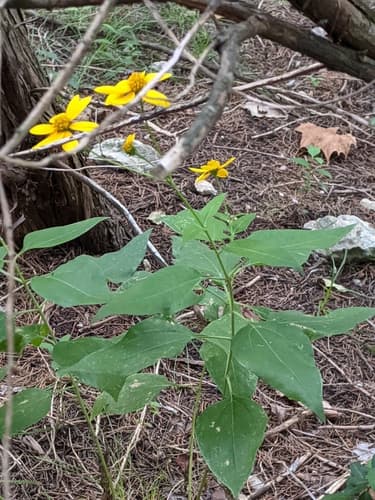
Light
full sun
Water
low
Size
24"–48" H × 24"–48" W
Bloom
Sep, Oct, Nov
Native to
Edwards Plateau, South Texas Plains, Trans-Pecos
Pollinators
Monarch Butterfly, Queen Butterfly, bees, butterflies
Picture natives in your own yard
Upload a photo of your yard and Patch Vision shows a rendering of it planted with natives for your region, like Plateau Goldeneye.


Browse plants for this ecoregion
Plateau Goldeneye is a perennial forb native to Edwards Plateau, South Texas Plains, Trans-Pecos. It grows best in full sun with low water needs.
Plateau Goldeneye (Viguiera dentata) is the late-season workhorse of the Edwards Plateau native garden. Yellow daisy flowers cover 3-4 foot plants from September through November, often coinciding with the peak of the fall monarch migration. The Xerces Society includes Viguiera species among key nectar sources for migrating monarchs in the Central Flyway.
Plateau Goldeneye is not on the ASPCA Animal Poison Control Center toxic plant list for dogs or cats. It grows 2-4 feet tall and wide with a loose, somewhat open habit. The late bloom season fills a gap when most summer perennials are finishing. Queen butterflies, painted ladies, and native bees visit the flowers heavily in October. Goldfinches and other seed-eating birds use the seed heads in winter.
Ecoregion notes for Texas. In the Edwards Plateau and Hill Country (alkaline limestone, rocky): native and reliable. Plant in full sun, give one deep watering per week the first summer, then leave it. It spreads slowly by seed and rhizomes; give it space. In the South Texas Plains and Trans-Pecos (drier, more alkaline): also native; handles extreme heat and alkalinity. In the Blackland Prairie (heavy clay, DFW-Austin-San Antonio): not native but performs in landscape use with improved drainage; cut back hard in early spring to prevent legginess. In the Pineywoods: not recommended.
Plateau Goldeneye pairs with Gregg's Mistflower and Gulf Muhly for a fall pollinator bed that peaks in October. It can sprawl at the edges; give it a 3-4 foot radius. For HOA contexts, place it in a mid-zone bed rather than the street edge because of its loose habit at maturity. Cut to 12 inches in late winter. Established plants look better each year as the root system matures.
Bee species data compiled from GBIF, iNaturalist, Discover Life, and the USGS Native Bee Inventory and Monitoring Lab. Plant-pollinator associations informed by published ecological literature.
Before you buy
Your city may pay you to plant this
Cities and water utilities offer rebates for replacing lawn with native and water-wise plants. We track 459 programs across 44 states, each with a link to the provider and the date we last checked it.
Find rebates in your areaIf something looks wrong
Common plant problems, and what to check first
These come up on almost any plant. Each guide lists the likely causes in the order they are worth ruling out, with one thing to check before you act on any of them, and links to the source it came from.
- It is dying right after planting
- Leaves turning yellow
- Wilting even though I watered it
- Brown crispy leaf tips
- Bugs on the plant
Ready to grow Plateau Goldeneye? Add it to your garden in Pollinator Patch to track it and get season-by-season care guidance.