Pomegranate
Punica granatum
Last reviewed: October 2026
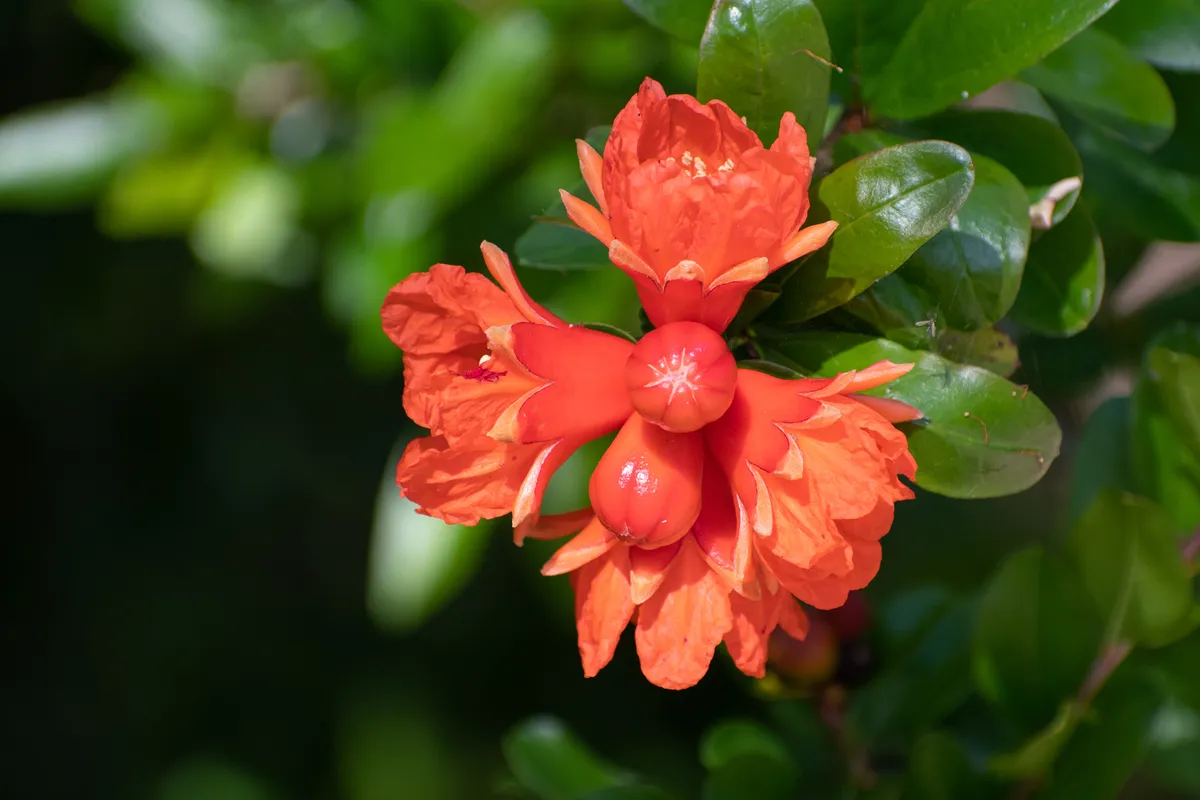
Pomegranate (Punica granatum) is a perennial shrub. It blooms in May and June.
Toxicity unknown
Pomegranate (Punica granatum) is not listed by the ASPCA Animal Poison Control Center (opens in new tab) or the other sources we check, so we have no verdict for it either way. Absence from those lists is not a clearance. If your pet shows symptoms after eating any plant, call the ASPCA at (888) 426-4435.
Light
full sun
Water
low
Size
96"–240" H × 72"–180" W
Bloom
May, Jun
Native alternatives to Pomegranate
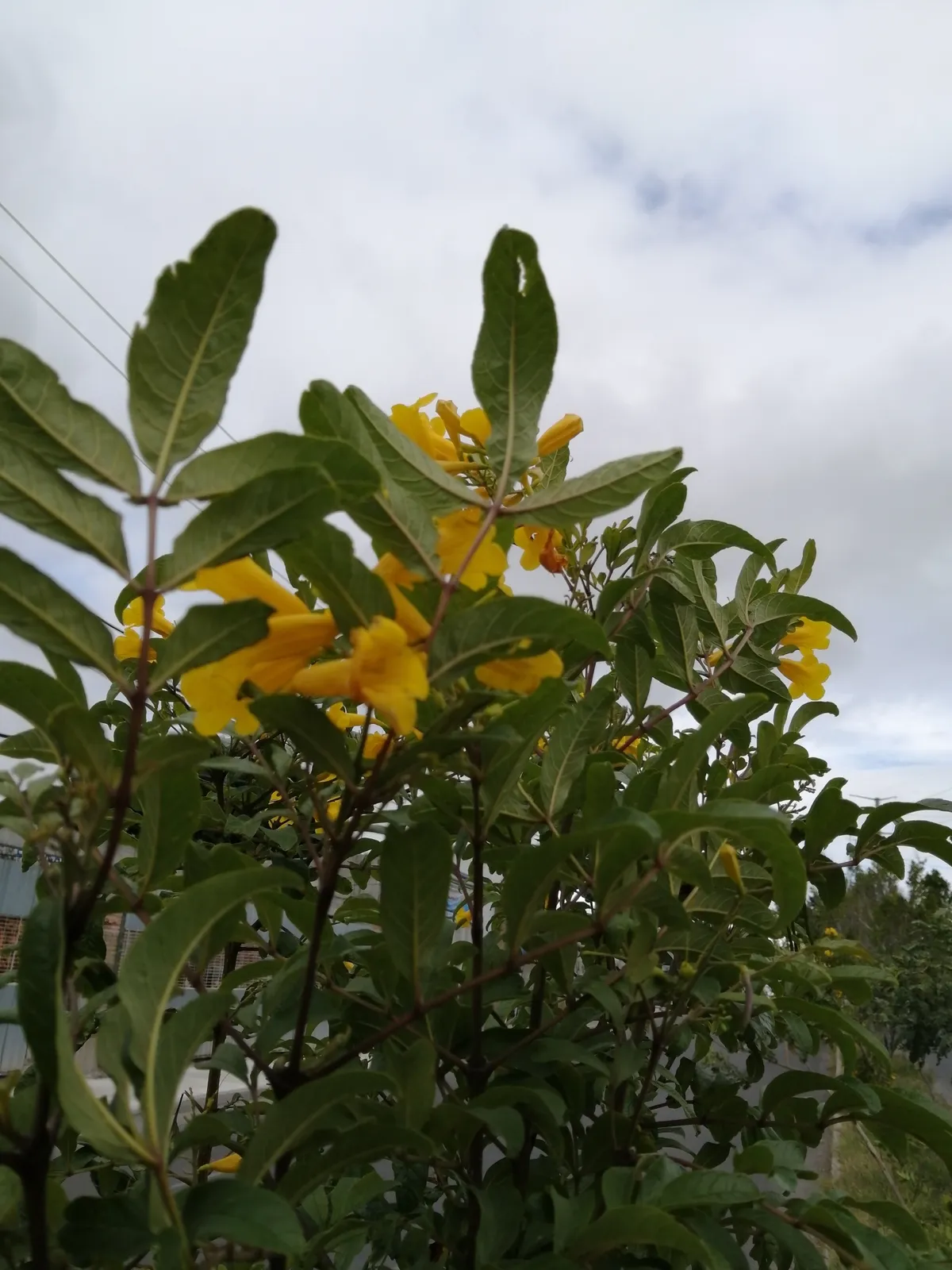
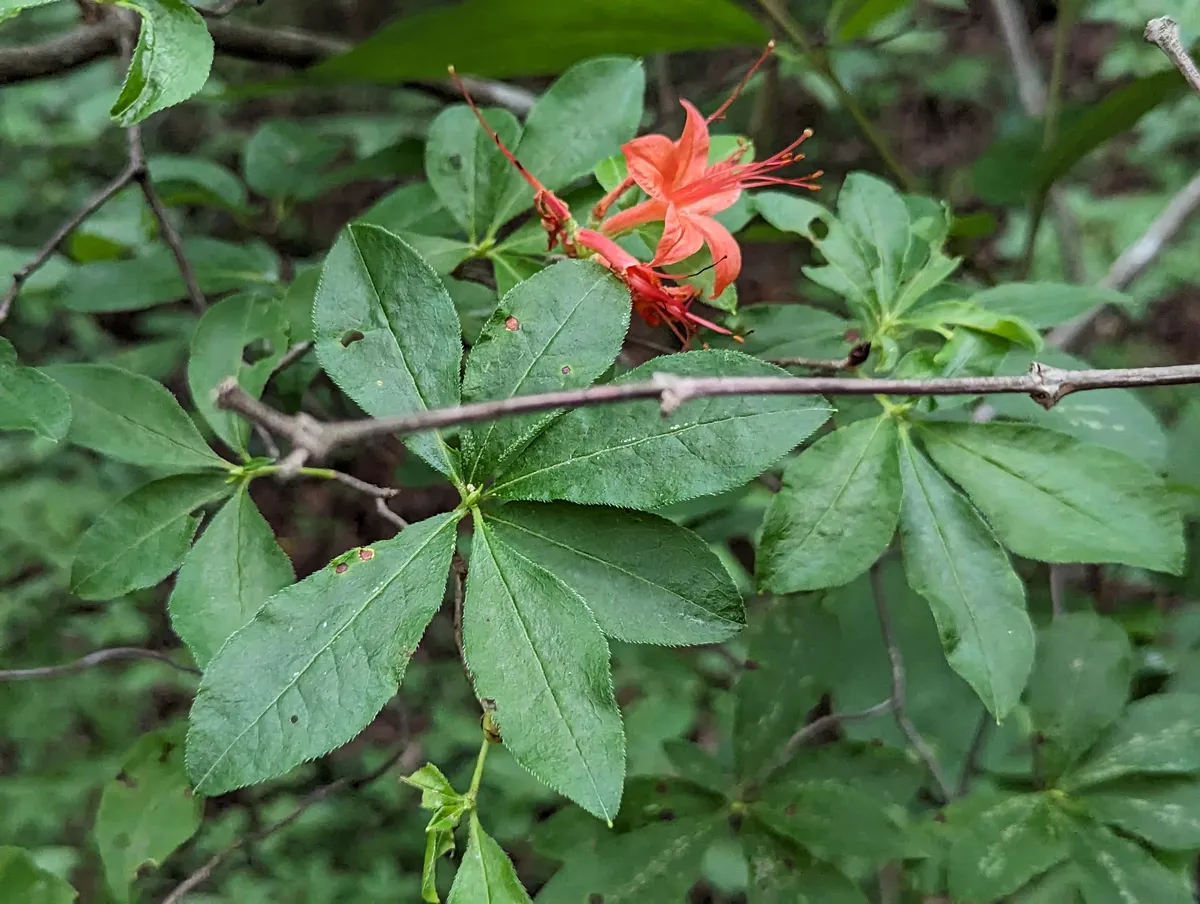
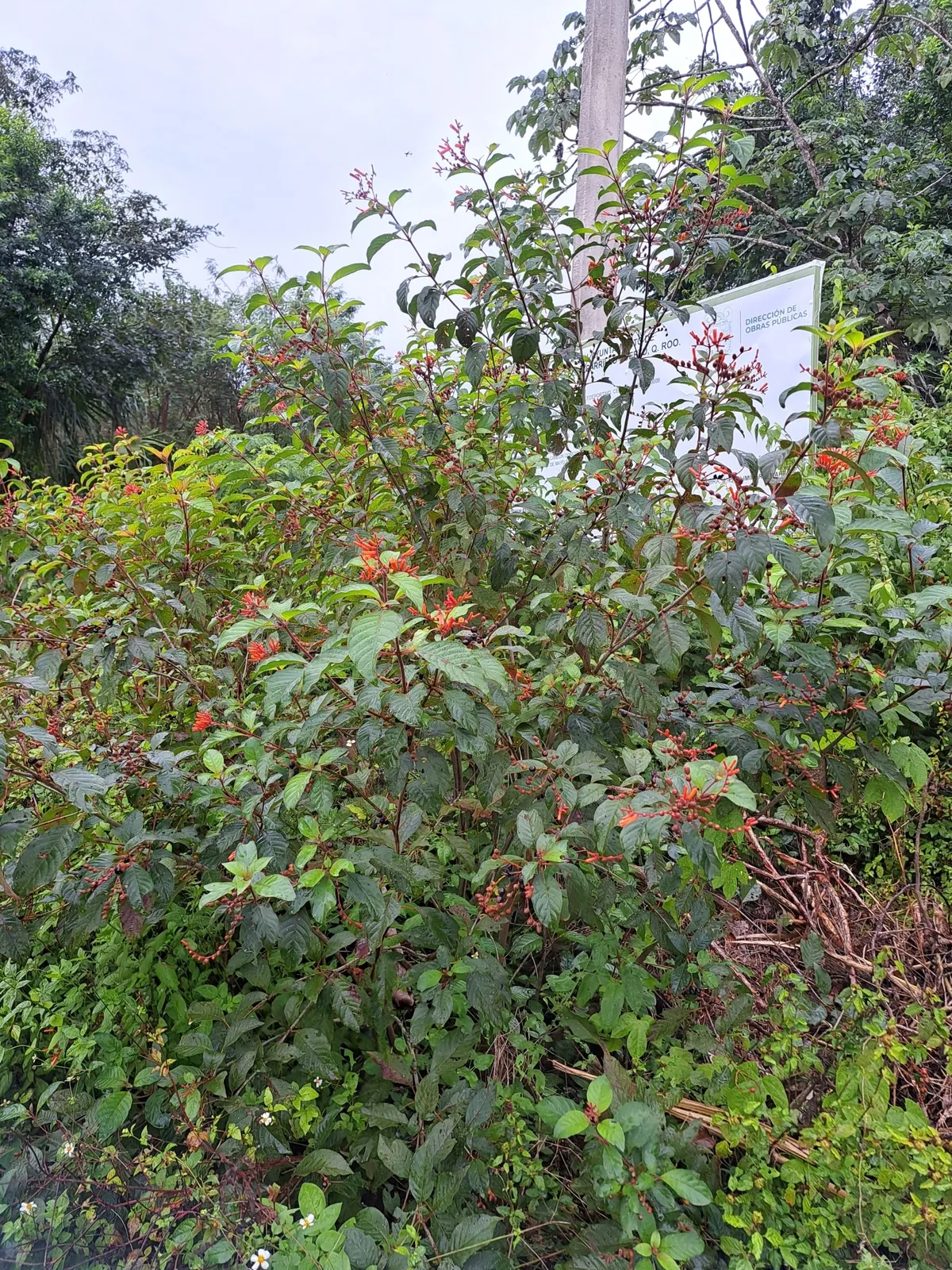
Pomegranate is not native to the United States. These natives fill a similar role in a planting, matched on bloom season, bloom color and mature size.
Before you buy
Your city may pay you to plant this
Cities and water utilities offer rebates for replacing lawn with native and water-wise plants. We track 460 programs across 44 states, each with a link to the provider and the date we last checked it.
Find rebates in your areaPicture natives in your own yard
Wondering what could grow where Pomegranate is now? Upload a photo of the spot and Patch Vision shows a rendering of it replanted with natives for your region.


A deciduous shrub or small tree with narrow glossy leaves, showy orange red flowers in early summer, and leathery fruit in fall. It tolerates heat and drought once established and needs full sun to fruit well.
Growing Pomegranate
Grow Pomegranate in full sun and low water. Mature plants reach 96 to 240 inches tall and spread 72 to 180 inches wide. Expect low maintenance to keep it looking intentional in a front yard.
How to care for Pomegranate, by region
How to care for Pomegranate where it is actually grown: year-round basics plus what to do each season, region by region, with the sources for each.
Care guidance last updated: September 2026
Piedmont (includes Atlanta, GA)
Year-round
Pomegranate isn't native to Georgia, it's native to the Middle East, the Caucasus, and Pakistan, but it grows well in Atlanta yards as a large shrub or small tree with full sun and well drained soil. The fruit itself isn't on the ASPCA's toxic plant list for dogs or cats, though the hard seeds and rind can upset a pet's stomach if they eat a lot of them.
- Give it at least six hours of direct sun a day. Full sun is what keeps the fruit color and the harvest good.
- Skip low spots in the yard. Pomegranate can handle a little standing water for a short time, but it sets fewer flowers and struggles if the soil stays soggy.
- Train young plants to two or three main trunks in an open, vase-shaped form instead of one single trunk. If a hard freeze kills one trunk, the others usually carry the plant through.
- Expect the first fruit about two to three years after planting. In the Atlanta area harvest generally runs from late summer into November, depending on the variety.
- Go light on fertilizer. Too much nitrogen, especially late in the season, pushes soft leafy growth instead of fruit and leaves the plant less prepared for winter cold.
The open, vase-shaped, multi-trunk form UGA Extension recommends also reads as a tidy, intentional small tree from the street, rather than a sprawling shrub.
Fall
Fall is harvest season for pomegranate in the Atlanta area, with fruit ripening from late summer into November depending on the variety, right up until the first freeze.
- Pick fruit as it ripens rather than all at once. Pomegranate doesn't keep ripening after it's picked, and one plant can have two to four separate harvest windows since the flowers don't all open together.
- Ease off heavy watering as fruit nears harvest. A sudden soaking right before picking is a common reason ripe fruit splits open.
- Rake up dropped or rotting fruit from under the plant regularly instead of letting it sit. It draws yellow jackets and other pests and can carry disease over into next year.
- Atlanta's average first freeze lands around November 13. Get the last of the harvest in before then, fruit left on the plant through a hard freeze won't be usable.
Keeping dropped fruit cleared from the ground through fall is what keeps a front yard planting from looking abandoned or drawing pests near a walkway.
Winter
Winter is the highest risk season for pomegranate in the Atlanta area. The plant is dormant, but a hard freeze can still kill it back hard, especially while it's young.
- Do the main structural pruning in late winter before the buds break, shaping the multi-trunk, open form and cutting out any wood the last freeze damaged.
- Watch the forecast for hard freezes each winter. Most pomegranate varieties start taking damage below about 12 degrees Fahrenheit, and Atlanta has had winters cold enough to reach that mark, so a young, unprotected plant is at real risk.
- For a young or newly planted tree, piling a few extra inches of mulch around the base before a hard freeze helps protect the lower trunk, the part most likely to resprout from if the top dies back.
- Painting the lower trunk with white latex paint, a trick UGA Extension notes, reflects sunlight and cuts down on the temperature swings that split bark on the south facing side during cold snaps.
Winter pruning into a clean, open form is what keeps a dormant pomegranate looking like an intentional small tree instead of a tangle of bare stems out front.
Spring
Spring is when pomegranate breaks dormancy in the Atlanta area, usually leafing out and starting to bloom by April. New growth is tender, so a late cold snap can still set it back.
- Feed with a balanced fertilizer like 10-10-10 once new growth starts, roughly one ounce per foot of plant height spread in an 18 inch circle around the base for a young plant.
- Keep an eye on the forecast into early spring. A late cold snap can still nip the season's first flush of blooms even after the plant has leafed out.
- Pull off root suckers at the base as soon as you see them, to keep the multi-trunk shape you're training toward instead of letting the plant thicken into a hedge.
- Hold off on heavy watering until the topsoil actually dries between waterings. Atlanta's clay holds moisture, and pomegranate roots don't like sitting wet through a rainy spring.
Pulling suckers as soon as they show up in spring keeps the base clean and the plant reading as a small tree, not a spreading thicket, which matters most for a front yard planting.
Summer
Georgia's hot, humid summers actually suit pomegranate well, the plant needs heat to ripen its fruit, but the humidity also brings more disease and pest pressure than a drier climate would.
- Water deeply during dry stretches, especially as fruit is filling out in July and August, but water the soil, not the leaves or flowers. Overhead watering raises the odds of fungal problems and can knock young fruit off in Atlanta's humidity.
- Finish up fertilizing by mid to late summer, then stop for the year. Nitrogen applied late in summer pushes soft new growth that doesn't harden off before Georgia's first cold snaps.
- This is the main mid-summer window for pulling root suckers, alongside the light removal you do in spring.
- Watch for leaf spot and fruit rot on the developing fruit, both more common in humid summers, and thin out crowded interior branches so air can move through the canopy.
Sources: UGA Extension, Pomegranate Production (C997), ASPCA Toxic and Non-Toxic Plants, Letter P (pomegranate not listed), Lady Bird Johnson Wildflower Center, Expert Answer, non-native pomegranate, UGA Extension, Fulton County, Pomegranates (Fulton From the Ground Up), National Weather Service Peachtree City/Atlanta, Frost/Freeze Data
In an HOA neighborhood
Pomegranate takes more care to keep looking intentional in a front yard. Maintenance level: low. Consider it for backyard or mid-zone beds rather than the street edge.
Works well in: front yard, foundation bed, border.
Wildlife value
Flowers offer nectar that generalist visitors will use, but as a non-native it feeds no local caterpillars. Treat it as garden interest rather than habitat.
Common questions
- How much sun does Pomegranate need?
- Pomegranate grows best in full sun conditions.
- When does Pomegranate bloom?
- Pomegranate blooms in May and June.
- Is Pomegranate HOA-friendly?
- Pomegranate takes more care to look intentional in a front yard. Consider it for backyard or mid-zone beds rather than the street edge.
Pollinator and host plant associations compiled from GBIF, iNaturalist, and published ecological literature.
If something looks wrong
Common plant problems, and what to check first
These come up on almost any plant. Each guide lists the likely causes in the order they are worth ruling out, with one thing to check before you act on any of them, and links to the source it came from.
- It is dying right after planting
- Leaves turning yellow
- Wilting even though I watered it
- Brown crispy leaf tips
- Bugs on the plant
Ready to grow Pomegranate? Add it to your garden in Pollinator Patch to track it and get season-by-season care guidance.