Purple Needlegrass
Nassella pulchra
Last reviewed: September 2026
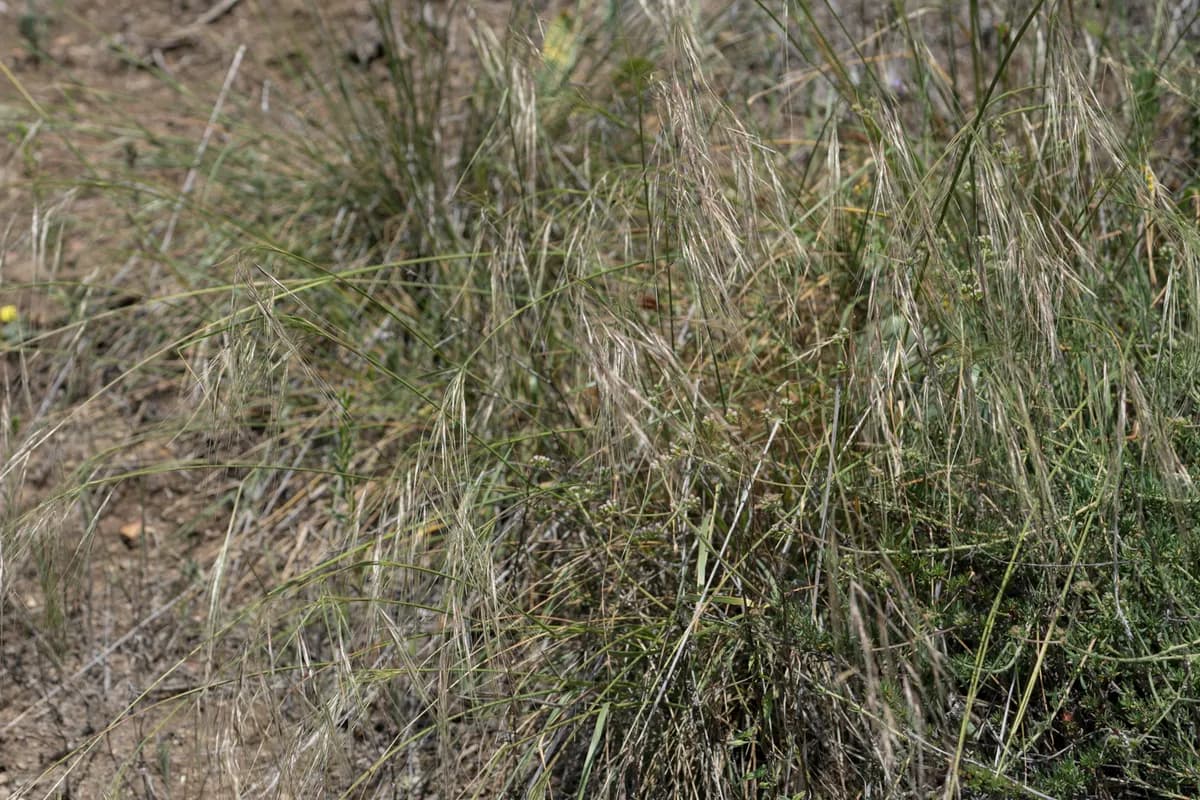
Purple Needlegrass (Nassella pulchra) is not flagged as toxic to dogs or cats by Plants For A Future (PFAF) (opens in new tab) (last reviewed 2026-05-21). This verdict does not come from the ASPCA. If your pet shows symptoms after eating any plant, call the ASPCA at (888) 426-4435.
The USDA PLANTS Database (opens in new tab) does not flag Purple Needlegrass as toxic to livestock.
Light
full sun
Water
low
Size
12"–36" H × 12"–24" W
Bloom
Apr, May, Jun
Native to
CA
Before you buy
Your city may pay you to plant this
Cities and water utilities offer rebates for replacing lawn with native and water-wise plants. We track 459 programs across 44 states, each with a link to the provider and the date we last checked it.
Find rebates in your areaPicture natives in your own yard
Upload a photo of your yard and Patch Vision shows a rendering of it planted with natives for your region, like Purple Needlegrass.


Browse plants for this ecoregion
Nassella pulchra (Purple Needlegrass) is a native grass with delicate, arching foliage. Its subtle purple-tinged seed heads add graceful movement to gardens and catch beautiful light when backlit. This drought-tolerant native grass maintains interest year-round.
How to care for Purple Needlegrass, by region
How to care for Purple Needlegrass where it is actually grown: year-round basics plus what to do each season, region by region, with the sources for each.
Care guidance last updated: July 2026
Central California Valley (includes Sacramento, CA)
Year-round
Purple needlegrass is California's state grass and a tough Central Valley native bunchgrass. It grows green in the cool wet months, blooms in spring, and rests brown and dry through the hot Sacramento summer.
- Plant it in fall in Sacramento so winter rain can settle the roots before the dry summer, not in spring or summer.
- Give it full sun and low water once it is established, this grass is built for hot dry valley summers.
- It handles the heavy clay and clay-loam soils common across Sacramento, Stockton, and Modesto, but a slight mound or raised spot helps water drain away from the crown.
- Space bunches about 12 to 18 inches apart so each clump has room to fill out into a rounded tuft.
Fall
Fall is the prime time to plant purple needlegrass in Sacramento. The first rains wake the dormant clumps and give new plants a whole wet winter to root before summer drought returns.
- Plant plugs or sow seed from late September through November, timed to the first rains, so roots establish before summer.
- Set new plants on a slight mound in the heavy valley clay so water drains away from the crown and does not pool.
- Water new fall plantings in once, then let the winter rains take over, only water again if a long dry stretch follows.
- Established clumps green up on their own with the first rains, so no feeding or heavy watering is needed.
Fall is the tidy reset moment for the front yard. Cleaning up old brown growth and setting clean bed edges before the winter green-up keeps the planting looking cared for and intentional through the cooler months.
Winter
Winter is the cool wet growing season for purple needlegrass in the Sacramento Valley. Rain and Tule fog do the watering while the clumps put on fresh green blades and root in.
- Let winter rain do the work, established clumps need no supplemental water from December through February.
- The clumps grow fresh green blades now and fall-planted plugs are busy rooting into the moist soil.
- Mild frost and fog are fine, this native handles Sacramento winters with no protection needed.
- If a rare dry winter leaves the soil bone dry for weeks, give a single deep soak, otherwise leave it alone.
Winter is when the planting looks its greenest and most kept, so it is a low-effort time to keep bed edges crisp and the front-yard patch reading as an intentional, cared-for meadow.
Spring
Spring is peak season for purple needlegrass in the Sacramento Valley. The clumps are green and full and the purple-tan flowering awns rise up while the soil is still holding winter rain.
- Enjoy the spring flush, the tall wispy purple-tan seed awns appear roughly April through June across the valley.
- The soil is still moist from winter rain, so it needs little to no extra water, taper off any hose watering as the days warm.
- Skip fertilizer, this native grass grows fine in lean Sacramento clay and feeding it just invites weeds.
- Pull spring weeds by hand around the base while the ground is soft so they do not crowd the young clumps.
Summer
In the hot dry Sacramento summer purple needlegrass goes dormant and turns golden brown. This is normal rest, not death, and the number-one mistake is watering it now.
- Do not water an established clump through June to September, summer water on a summer-dormant valley native is the top cause of crown and root rot.
- Let the clumps go brown and dry, they are resting and will green back up on their own with the first fall rains.
- You can shear the clump back to a few inches once it is fully brown in late summer to tidy it and clear old growth before fall.
- Only a brand new plant in its very first summer needs an occasional deep soak, an established one wants nothing.
A brown summer-dormant grass can read as dead to an HOA and draw a violation letter. Cutting the clumps back to neat low tufts once brown, and keeping a clean defined bed edge, makes the resting meadow look intentional rather than neglected.
Sources: Calscape, California Native Plant Society, Purple Needlegrass (Stipa pulchra) plant profile and horticultural notes, USDA NRCS Plant Guide, Purple Needlegrass (Nassella pulchra), native range and establishment
In an HOA neighborhood
Purple Needlegrass is an HOA-friendly choice in the right placement. Maintenance level: moderate. Tidiness: 3 out of 5.
Works well in: mid zone, street edge.
- Can appear slightly unkempt without regular trimming
- Produces seed heads that some HOAs may consider messy
- May need to be planted in organized groupings for best acceptance
Wildlife value
Purple Needlegrass provides valuable nesting material for birds and habitat for beneficial insects. Its seeds are a food source for small mammals and birds.
Common questions
- How much sun does Purple Needlegrass need?
- Purple Needlegrass grows best in full sun conditions.
- When does Purple Needlegrass bloom?
- Purple Needlegrass blooms in April, May, and June.
- Where is Purple Needlegrass native?
- Purple Needlegrass (Nassella pulchra) is native to CA, per vouchered herbarium specimen records and regional native plant society lists.
- Is Purple Needlegrass toxic to dogs?
- Purple Needlegrass is not flagged as toxic to dogs by Plants For A Future (PFAF). This verdict does not come from the ASPCA.
- Is Purple Needlegrass toxic to cats?
- Purple Needlegrass is not flagged as toxic to cats by Plants For A Future (PFAF). This verdict does not come from the ASPCA.
- Is Purple Needlegrass toxic to livestock?
- The USDA PLANTS Database does not flag Purple Needlegrass as toxic to livestock.
- Is Purple Needlegrass HOA-friendly?
- Purple Needlegrass is generally an HOA-friendly choice in the right placement, with moderate maintenance.
Native range data from vouchered herbarium specimen records and regional native plant society lists. Pollinator and host plant associations compiled from GBIF, iNaturalist, and published ecological literature.
If something looks wrong
Common plant problems, and what to check first
These come up on almost any plant. Each guide lists the likely causes in the order they are worth ruling out, with one thing to check before you act on any of them, and links to the source it came from.
- It is dying right after planting
- Leaves turning yellow
- Wilting even though I watered it
- Brown crispy leaf tips
- Bugs on the plant
Ready to grow Purple Needlegrass? Add it to your garden in Pollinator Patch to track it and get season-by-season care guidance.