Red Birch
Betula nigra
Last reviewed: September 2026
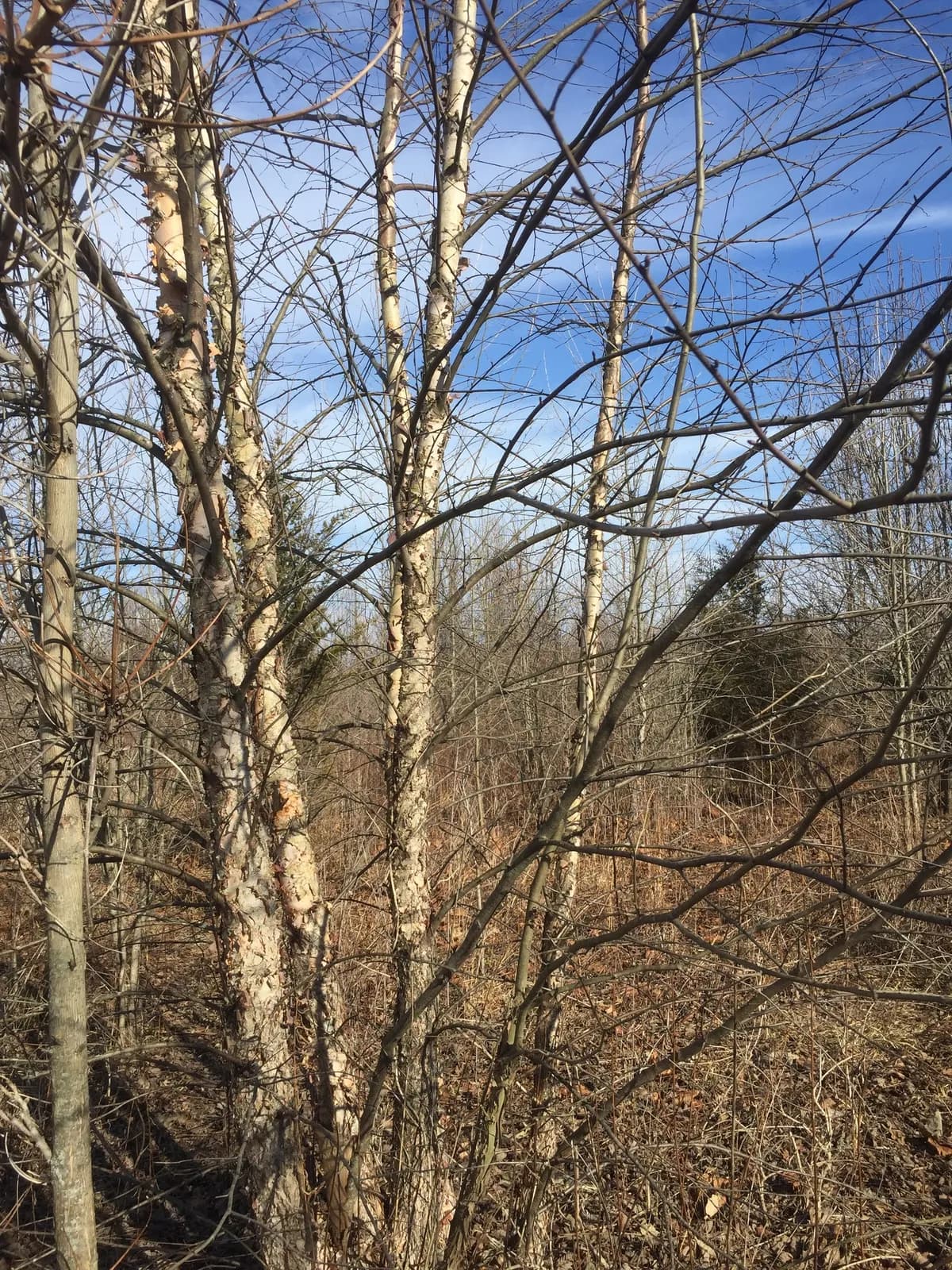
Betula nigra is a fast growing tree often seen along riverbanks and floodplains from Texas to Wisconsin, blooming in April and May with peeling salmon and cinnamon colored bark.
Toxicity unknown
Red Birch (Betula nigra) is not listed by the ASPCA Animal Poison Control Center (opens in new tab) or the other sources we check, so we have no verdict for it either way. Absence from those lists is not a clearance. If your pet shows symptoms after eating any plant, call the ASPCA at (888) 426-4435.
The USDA PLANTS Database (opens in new tab) does not flag Red Birch as toxic to livestock.
Light
part sun
Water
high
Size
240"–900" H × 240"–600" W
Bloom
Apr, May
Native to
AL, AR, CT, DE and 25 more states
Pollinators
bees, moths
Deer
Resistant (per Prairie Moon Nursery)
Before you buy
Your city may pay you to plant this
Cities and water utilities offer rebates for replacing lawn with native and water-wise plants. We track 452 programs across 44 states, each with a link to the provider and the date we last checked it.
Find rebates in your areaBrowse plants for this ecoregion
Red birch is a graceful native tree with attractive peeling bark that reveals cinnamon and salmon colored layers underneath. It grows naturally in moist areas and tolerates wet soils better than most birches, making it excellent for rain gardens or low-lying areas.
Growing Red Birch
Grow Red Birch in part sun and high water. Mature plants reach 240 to 900 inches tall and spread 240 to 600 inches wide. Expect moderate maintenance to keep it looking intentional in a front yard.
How to care for Red Birch, by region
How to care for Red Birch where it is actually grown: year-round basics plus what to do each season, region by region, with the sources for each.
Care guidance last updated: August 2026
Ridge and Valley (includes Harrisburg, PA)
Year-round
River birch is a fast growing, mostly trouble free tree for the Harrisburg area as long as it gets steady moisture. It wants full sun to partial shade and soil that stays moist, and it is naturally resistant to the bronze birch borer that damages white barked birches, so it needs less pest watching than other birch species.
- Give it full sun to partial shade. More sun usually means better fall color and a fuller canopy.
- Keep the root zone consistently moist, especially the first two to three years after planting. A 2 to 3 inch ring of mulch over the root zone helps hold that moisture through Harrisburg's humid summer stretches.
- It tolerates the clay and loam soils common around the Susquehanna Valley and does best in slightly acidic to neutral soil. If leaves look pale with dark green veins, that is often iron chlorosis from high pH soil, not a watering problem.
- River birch is resistant to the bronze birch borer that kills many white barked birches, so routine pest treatment is not needed. Watch instead for aphids or leafminers on new growth.
- Not currently listed on the ASPCA toxic or non-toxic plant list for dogs. Since it has not been formally assessed either way, it is still a good habit to keep pets from chewing on bark or twigs.
Fall
Fall in Harrisburg runs from the first cool nights in September through the first frost around late October. River birch drops its yellow fall leaves early and quickly compared to many trees, so cleanup often starts sooner than expected.
- Expect leaf drop to start earlier than other shade trees in the yard, sometimes beginning in September. This is normal for the species, not a sign of stress.
- Rake and clear dropped leaves from the lawn and beds promptly. Because river birch leaf drop is early and often uneven, staying on top of it keeps the yard looking tended through Harrisburg's fall.
- Keep watering through dry fall stretches until the ground begins to freeze. Going into winter with dry roots makes a young tree more vulnerable to winter stress.
- Late fall through early winter, once leaves are fully down, is one of the two good pruning windows for river birch. Use this stretch to plan any structural pruning before the ground fully freezes.
Prompt fall leaf cleanup, even though it starts earlier than for other trees on the block, keeps the yard reading as well kept rather than neglected.
Winter
Winter in Harrisburg runs roughly November through March, with the coldest stretch in January. This is when river birch's peeling cinnamon, salmon and gray bark becomes the main feature, and deep dormancy is one of the two good pruning windows for the tree.
- Deep winter dormancy, once the tree has been leafless for a while and before sap starts rising again in late winter, is a good window for structural pruning. Avoid pruning from late winter into spring, since that is when sap runs heaviest and cuts bleed.
- The exfoliating bark, curling in cinnamon, salmon and gray layers, is most visible now and is the tree's main winter interest. No care is needed for the bark itself, just avoid physical damage from string trimmers or snow removal equipment near the trunk.
- River birch handles Harrisburg winters without extra protection once established. Newly planted trees benefit from a layer of mulch over the root zone to buffer freeze and thaw cycles.
- This is a good time to check for winter storm damage. Any broken or hanging branches can be removed now while the tree is dormant and sap flow is minimal.
Clearing storm-damaged or hanging branches in winter keeps the canopy looking tidy and intentional for a front-yard tree, rather than storm-battered.
Spring
Spring in Harrisburg runs from the last frost around mid to late April through May. This is sap flowing season for river birch, so it is the one time of year to leave pruning alone and focus instead on watering as the tree leafs out.
- Do not prune in spring. Birch sap runs heavily from late winter through spring, and a fresh cut now will bleed sap for weeks. Wait for a dormant winter window or mid to late summer instead.
- As new leaves emerge, check soil moisture. A dry spring after a mild Harrisburg winter can stress a young tree right when it needs energy to leaf out.
- Watch new leaf growth for aphids, which show up as sticky residue or curled leaf tips. On an established tree this is usually cosmetic and not worth treating.
- If planting a new river birch, spring after the last frost, mid to late April in Harrisburg, is a good window, since it gives roots a full growing season to establish before winter.
Summer
Summer is when Harrisburg's heat and humidity stress river birch the most, and it is normal to see the tree drop some yellow interior leaves in June and July. That drop is the tree's own way of coping with heat, not a sign of disease.
- Water deeply once a week during dry stretches, aiming to soak the top 8 to 12 inches of soil. A soaker hose under the mulch ring works well and keeps water off the leaves.
- If interior leaves turn yellow and drop in June or July, that is a well documented normal response to summer heat and dry spells, not a pest or disease problem. No action is needed.
- Keep mulch topped up to 2 to 3 inches to hold soil moisture and keep roots cooler through Harrisburg's humid summer stretch.
- This is a good window to prune if a cut is truly needed, since the tree's active spring flow has slowed by mid to late summer, reducing wound weeping.
A light summer prune to remove any dead or crossing branches keeps the canopy tidy and reads as intentional to neighbors, rather than looking neglected.
Sources: Lady Bird Johnson Wildflower Center, Betula nigra profile, NC State Extension Gardener Plant Toolbox, Betula nigra, ASPCA Toxic and Non-Toxic Plant List, Dogs, Ask Extension, River Birch Leaves Turning Yellow and Dropping Off in Summer
Want these tasks as reminders timed to your yard? Pollinator Patch turns this guidance into a season-by-season care plan for the plants you actually grow.
In an HOA neighborhood
Red Birch is an HOA-friendly choice. Maintenance level: moderate. Tidiness: 4 out of 5.
Works well in: front yard, mid zone, street edge.
- Requires consistent moisture which may increase maintenance needs
- Can drop small branches and bark pieces
Wildlife value
Host plant for Luna moth, Io moth, Polyphemus moth.
The tree supports bees and moths during its spring bloom period. Its seeds provide food for birds, and the bark and leaves host various native insects.
Common questions
- When does Betula nigra bloom?
- Betula nigra produces catkins in April and May, before the leaves are fully expanded.
- How much water does Betula nigra need?
- This tree prefers consistently moist to wet soil and is often found along riverbanks and in floodplains, though it can tolerate average garden moisture once established.
- What pollinators does Betula nigra support?
- Bees collect pollen from the early spring catkins, and the foliage serves as a larval host plant for a number of moth species.
- What light conditions does Betula nigra prefer?
- It grows best in full sun to part sun, though it can adapt to part shade, especially where soil moisture is high.
- Is Red Birch toxic to livestock?
- The USDA PLANTS Database does not flag Red Birch as toxic to livestock.
- Is Red Birch HOA-friendly?
- Red Birch is generally an HOA-friendly choice in the right placement, with moderate maintenance.
These answers were drafted with an AI model from this plant's data. Verify care details with a local expert.
Native range data from vouchered herbarium specimen records and regional native plant society lists. Pollinator and host plant associations compiled from GBIF, iNaturalist, and published ecological literature.
If something looks wrong
Common plant problems, and what to check first
These come up on almost any plant. Each guide lists the likely causes in the order they are worth ruling out, with one thing to check before you act on any of them, and links to the source it came from.
- It is dying right after planting
- Leaves turning yellow
- Wilting even though I watered it
- Brown crispy leaf tips
- Bugs on the plant
Ready to grow Red Birch? Add it to your garden in Pollinator Patch to track it and get season-by-season care guidance.
Planning a bed around it? Start a free plan with this plant
Not sure where to start? Take the 2-minute yard quiz