Red-osier Dogwood
Cornus sericea
Last reviewed: September 2026
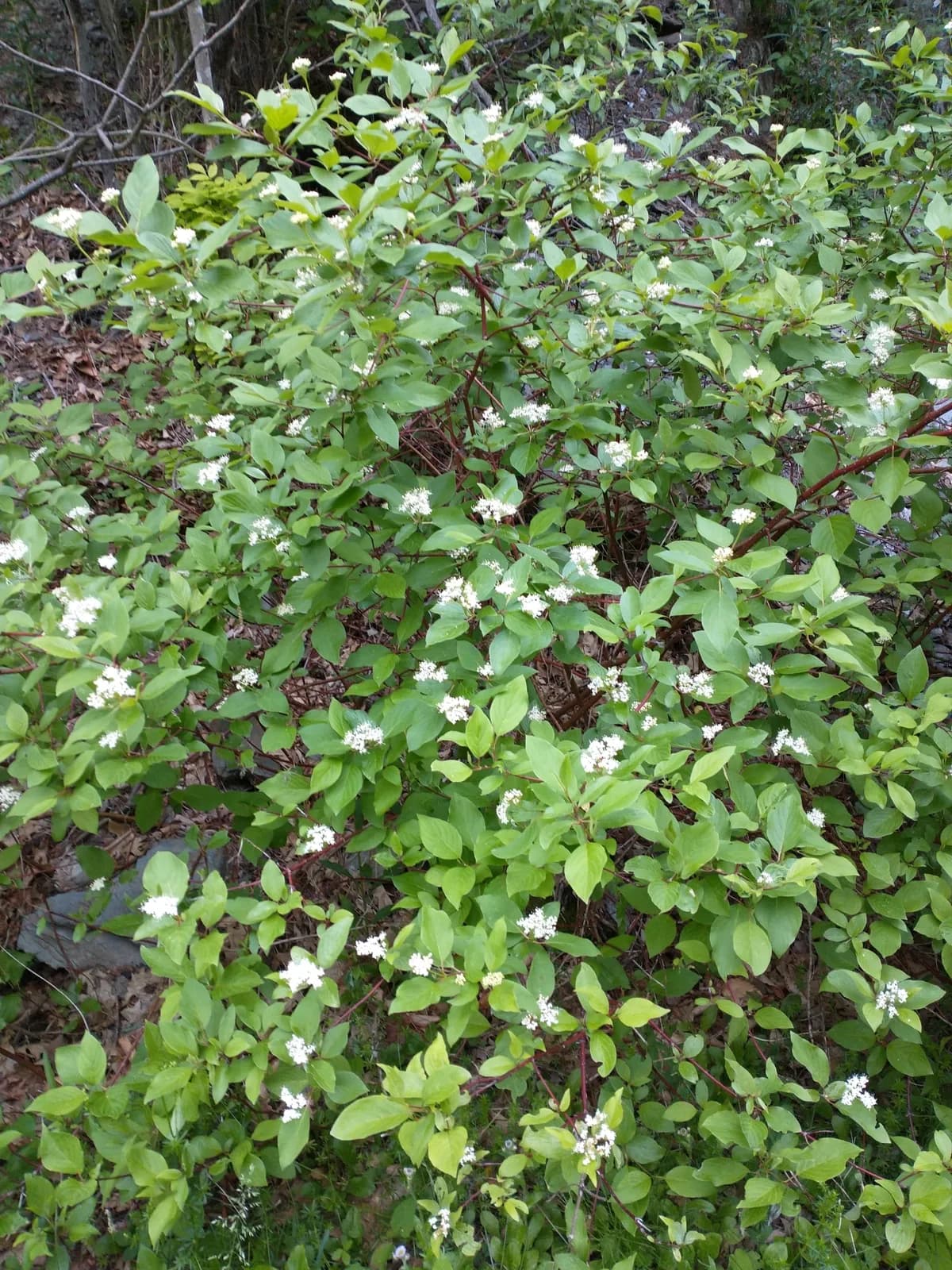
Cornus sericea is a multi-stemmed shrub with bright red winter stems and clusters of small white flowers from May through July. It thrives in consistently moist to wet soil in part sun and is often used along streambanks and in rain gardens.
Red-osier Dogwood (Cornus sericea) is not flagged as toxic to dogs or cats by Plants For A Future (PFAF) (opens in new tab) (last reviewed 2026-05-21). This verdict does not come from the ASPCA. If your pet shows symptoms after eating any plant, call the ASPCA at (888) 426-4435.
The USDA PLANTS Database (opens in new tab) does not flag Red-osier Dogwood as toxic to livestock.
Light
part sun
Water
high
Size
72"–180" H × 72"–180" W
Bloom
May, Jun, Jul
Native to
AZ, CA, CO, CT and 31 more states
Pollinators
bees, butterflies, beetles
Deer
Resistant (per Prairie Moon Nursery)
Before you buy
Your city may pay you to plant this
Cities and water utilities offer rebates for replacing lawn with native and water-wise plants. We track 459 programs across 44 states, each with a link to the provider and the date we last checked it.
Find rebates in your areaPicture natives in your own yard
Upload a photo of your yard and Patch Vision shows a rendering of it planted with natives for your region, like Red-osier Dogwood.


Browse plants for this ecoregion
Red-osier dogwood is a deciduous shrub with striking red stems that provide winter interest. It grows 6-15 feet tall and wide, preferring partial sun and consistently moist soil. White flower clusters in late spring are followed by white berries.
Growing Red-osier Dogwood
Grow Red-osier Dogwood in part sun and high water. Mature plants reach 72 to 180 inches tall and spread 72 to 180 inches wide. Expect moderate maintenance to keep it looking intentional in a front yard.
How to care for Red-osier Dogwood, by region
How to care for Red-osier Dogwood where it is actually grown: year-round basics plus what to do each season, region by region, with the sources for each.
Care guidance last updated: October 2026
Eastern Corn Belt Plains (includes Columbus, OH)
Year-round
A fast, colorful shrub with red winter stems that likes moisture and spreads on its own.
- Plant it in full sun to partial shade, and give it organically rich, consistently moist soil.
- It tolerates both wet and dry soil, including heavy clay.
- It is hardy in USDA zones 2a to 7b, so Columbus winters are fine.
- It spreads by underground stems, and you can root prune with a spade if the spread is unwanted.
In a front yard, yearly renewal pruning and a spade edge keep it neat and HOA-friendly.
Fall
Fall is the time to leave it alone and enjoy it.
- Birds and small mammals eat the fruit.
- Water newly planted shrubs late into the season, only when it is above 40 F.
- Stop watering once the ground freezes.
- Hold the big prune until early spring.
Winter
Winter is when the red stems earn their keep.
- The red stems are very conspicuous in the winter months.
- The bark is dark red, giving color through winter.
- Stems are brightest on young growth, so plan renewal pruning for early spring.
- The 'Isanti' cultivar is hardy to zone 2.
Spring
Spring is the time for a hard prune that brings back bright stems.
- Prune in early spring, since the best stem color is on young vigorous stems.
- Cut the oldest stems down to the ground to keep the plant vigorous.
- Regular renewal pruning helps prevent stem canker and borers.
- It recovers well from heavy pruning because it resprouts from the roots.
Summer
Summer is about steady moisture and watching for stress problems.
- It prefers consistently moist soil, so water during dry spells.
- When stressed it can get powdery mildew, leaf spot and canker.
- Oystershell scale and borers are possible pests.
- New plants spread by suckers, so spade out extras.
Sources: NC State Extension Plant Toolbox, Cornus sericea, University of Illinois Extension, Redosier Dogwood, University of Illinois woody plants, Cornus sericea, NDSU Extension, Redosier Dogwood, Purdue Extension, Winter Water
In an HOA neighborhood
Red-osier Dogwood is an HOA-friendly choice. Maintenance level: moderate. Tidiness: 3 out of 5.
Works well in: foundation, mid zone.
- Can spread aggressively in optimal conditions
- Requires regular moisture which may conflict with drought restrictions
- May look bare in winter despite colorful stems
Wildlife value
Host plant for spring azure butterfly.
Attracts multiple pollinators including bees, butterflies, and beetles. Birds feed on the berries and the dense growth provides good nesting habitat.
Common questions
- When does red-osier dogwood bloom?
- Red-osier dogwood typically flowers from May through July, producing flat clusters of small white blooms at the branch tips.
- What pollinators visit red-osier dogwood flowers?
- The flowers attract bees, butterflies, and beetles, which visit for nectar and pollen during the bloom period.
- How much water does red-osier dogwood need?
- This shrub prefers consistently moist to wet soil and is a good fit for streambanks, ditches, and low spots where water collects after rain.
- How much sun does red-osier dogwood need?
- It grows best in part sun but adapts to conditions ranging from full sun to part shade, especially when soil moisture stays high.
- Does red-osier dogwood lose its leaves in winter?
- Yes, it is deciduous. After the leaves drop, the smooth red stems remain a notable feature through the colder months.
- Is Red-osier Dogwood toxic to dogs?
- Red-osier Dogwood is not flagged as toxic to dogs by Plants For A Future (PFAF). This verdict does not come from the ASPCA.
- Is Red-osier Dogwood toxic to cats?
- Red-osier Dogwood is not flagged as toxic to cats by Plants For A Future (PFAF). This verdict does not come from the ASPCA.
- Is Red-osier Dogwood toxic to livestock?
- The USDA PLANTS Database does not flag Red-osier Dogwood as toxic to livestock.
- Is Red-osier Dogwood HOA-friendly?
- Red-osier Dogwood is generally an HOA-friendly choice in the right placement, with moderate maintenance.
These answers were drafted with an AI model from this plant's data. Verify care details with a local expert.
Native range data from vouchered herbarium specimen records and regional native plant society lists. Pollinator and host plant associations compiled from GBIF, iNaturalist, and published ecological literature.
If something looks wrong
Common plant problems, and what to check first
These come up on almost any plant. Each guide lists the likely causes in the order they are worth ruling out, with one thing to check before you act on any of them, and links to the source it came from.
- It is dying right after planting
- Leaves turning yellow
- Wilting even though I watered it
- Brown crispy leaf tips
- Bugs on the plant
Ready to grow Red-osier Dogwood? Add it to your garden in Pollinator Patch to track it and get season-by-season care guidance.