Rock Penstemon
Penstemon baccharifolius
Last reviewed: August 2026
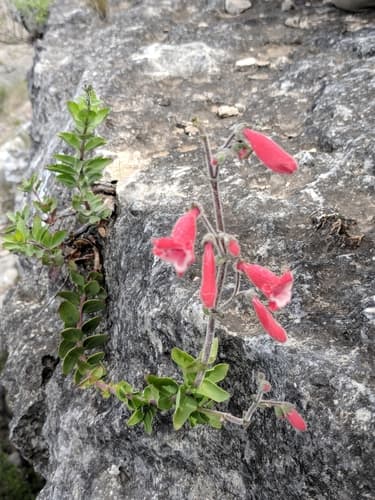
Rock Penstemon is a low-water forb that blooms from June through November in full sun to part shade, producing red tubular flowers that attract hummingbirds. It thrives in rocky, well-drained limestone soils typical of Texas hill country.
Toxicity unknown
Rock Penstemon (Penstemon baccharifolius) is not listed by the ASPCA Animal Poison Control Center (opens in new tab) or the other sources we check, so we have no verdict for it either way. Absence from those lists is not a clearance. If your pet shows symptoms after eating any plant, call the ASPCA at (888) 426-4435.
Light
full sun
Water
low
Size
12"–18" H × 12"–24" W
Bloom
Jun, Jul, Aug, Sep, Oct, Nov
Native to
TX
Pollinators
hummingbirds
Before you buy
Your city may pay you to plant this
Cities and water utilities offer rebates for replacing lawn with native and water-wise plants. We track 452 programs across 44 states, each with a link to the provider and the date we last checked it.
Find rebates in your areaBrowse plants for this ecoregion
Rock Penstemon is a compact native perennial that produces tubular flowers in shades of red, pink, or white from summer through fall. This drought-tolerant plant forms neat clumps with narrow, gray-green foliage that stays attractive most of the year. It thrives in rocky or well-drained soils and requires minimal water once established.
Growing Rock Penstemon
Grow Rock Penstemon in full sun and low water. Mature plants reach 12 to 18 inches tall and spread 12 to 24 inches wide. Expect low maintenance to keep it looking intentional in a front yard.
How to care for Rock Penstemon, by region
How to care for Rock Penstemon where it is actually grown: year-round basics plus what to do each season, region by region, with the sources for each.
Care guidance last updated: July 2026
Cross Timbers (includes Fort Worth, TX)
Year-round
Rock Penstemon is a low, semi-woody Texas wildflower with clusters of cherry-red tubular flowers that draw hummingbirds, and it asks for very little water once it is established.
- Give it full sun to light afternoon shade and skip regular watering once it is settled in, this is a drought-adapted plant bred for rocky, dry ground.
- This species is not native to the Cross Timbers area, so give it soil that drains fast: work coarse sand, decomposed granite, or limestone gravel into the planting hole so roots never sit wet.
- Space plants 12 to 18 inches apart; mature clumps stay compact at roughly 12 to 18 inches tall and about as wide.
- It is not a host plant for a specific butterfly or moth caterpillar, but its tubular flowers are a nectar source for hummingbirds and native bees.
- It is not on the ASPCA's toxic plant list for dogs, cats, or horses, though ASPCA has not evaluated every plant species and this is not a guarantee of safety.
Fall
Blooming tapers off through October, and the cooler weather makes fall a good time to tidy up the plant's shape.
- Expect flowering to wind down by mid to late October as days shorten.
- After the last flush of blooms, trim back any leggy or sprawling stems by about a third to keep the shrubby form tidy.
- Fall planting is possible, but this species roots in fastest during spring; if planting now, get it in the ground by mid November, before the first frost.
- Skip fertilizer, Rock Penstemon flowers best in lean, unimproved soil.
A late trim keeps the plant from flopping open and looking overgrown as it heads into winter dormancy.
Winter
Rock Penstemon is evergreen to semi-evergreen through a typical North Texas winter and needs no special protection except during hard freezes.
- Leave the foliage in place through winter, this low, semi-woody plant usually stays green unless a hard freeze knocks it back.
- During a severe Arctic outbreak with a hard freeze, foliage may brown; wait until new spring growth appears before cutting back any damaged stems.
- Do not water beyond normal rainfall during winter dormancy, wet soil in cold weather is the main threat to this plant.
- Hold off on pruning until late winter or early spring, cutting too early exposes the crown to further cold damage.
Leaving winter foliage in place, even if a little ragged after a freeze, still reads as an intentional low shrub rather than a dead plant, as long as old flower stalks are trimmed away.
Spring
Spring is planting season for Rock Penstemon in North Texas, and the first red flower spikes typically open in April.
- Plant new Rock Penstemon in March or April, after the last frost (mid March), while the soil is still cool and easy to work.
- Dig the planting hole wider than deep and mix in coarse sand or gravel if the native soil is heavier and slow to drain.
- Water new plants two to three times a week for the first month, then taper off as roots establish.
- Watch for the first cherry-red tubular blooms by mid to late April, they will continue into summer.
Fresh red blooms on a tidy, low mounding plant read as an intentional accent along a bed edge or walkway, not a weed.
Summer
Summer is peak bloom for Rock Penstemon, but North Texas's July and August heat is also when a newly planted specimen is most at risk of dying from underwatering.
- Established plants (in the ground a full year or more) need little supplemental water even through 100F afternoons, this is a drought-adapted plant.
- Plants installed within the last 12 months still need a deep soak once a week during stretches with no rain.
- Snip off spent flower spikes to keep the cherry-red blooms coming through August.
- If a young plant wilts after a week without rain, water it that same day rather than waiting for a scheduled soak.
Deadheaded spikes and steady red color through the hottest months keep the planting looking maintained rather than neglected.
Sources: Penstemon baccharifolius, Lady Bird Johnson Wildflower Center, ASPCA Toxic and Non-Toxic Plants List
Texas Blackland Prairies (includes Dallas, TX)
Year-round
Rock Penstemon is a tough little evergreen that grew up on rocky limestone in the Texas Hill Country and West Texas, so the number one thing it needs from you in Dallas is sharp drainage. Your heavy black Blackland clay holds water and turns to gumbo, and this plant will rot if its roots stay wet. Plant it high in a raised bed or berm with plenty of gravel or decomposed granite mixed in, give it full sun, and then mostly leave it alone. It rewards you with red tubular flowers that hummingbirds love from June all the way into November, and it stays a tidy little clump. Good news for pet owners: penstemon is not on the ASPCA toxic plant list.
- Plant in full sun, the more the better in Dallas
- Get sharp drainage in the clay with a raised bed or gravel/decomposed-granite mix, never let roots sit soggy
- Water low once established, this is a very drought-tolerant plant
- Expect a compact clump about 12 to 18 inches tall that does not spread aggressively
- Enjoy red tubular blooms June through November that draw hummingbirds
- Skip rich compost and heavy mulch that trap moisture around the crown
This one stays compact and neat as a small evergreen clump, so it reads as tidy and intentional at a front-yard edge, which keeps it HOA-friendly.
Fall
Fall is the best time to plant Rock Penstemon in Dallas, hands down. The soil is still warm enough for roots to grow but the brutal heat has eased, and the fall rains help a new plant settle in before winter. It also keeps blooming into November, so a fall planting can flower for you the same season. Just keep the drainage lesson front of mind, because fall rain on heavy clay is exactly the wet-feet situation this plant hates, so plant high and keep it gritty.
- Plant now for the best establishment, this is the ideal window
- Set the crown high in a raised or gravel-amended bed so fall rain drains off
- Enjoy late blooms that can run into November
- Water new plantings lightly to settle roots, then let fall rain do the rest
- Skip heavy mulch against the stem that would trap cool-season moisture
Winter
Winter is the quiet season for Rock Penstemon in Dallas, but because it is evergreen it keeps its foliage and stays presentable through the mild cold. Zone 8a winters bring only light, short freezes here, which this Hill Country and West Texas native shrugs off. The biggest winter threat is cold plus wet clay together, so the same sharp drainage that saves it in summer saves it now. Leave the plant mostly alone, hold off on water unless it is bone dry, and wait until spring to cut back anything the freeze damages.
- Expect it to stay evergreen and tidy through mild Dallas winters
- Do not water on a schedule, only if the soil is completely dry during a warm dry spell
- Keep drainage sharp, cold wet clay is the main winter rot risk
- Leave freeze-nipped stems until spring rather than cutting in the cold
- No fertilizer or heavy mulch that would hold moisture at the crown
Spring
Spring is your second-best window to plant Rock Penstemon in Dallas, after fall. The spring rains are helpful for getting a new plant settled, but they are also the danger zone in your heavy clay, so make sure your raised bed or gravel mix drains fast and water never pools around the crown. As the soil warms, this warm-season plant wakes up and pushes new growth, so a light cleanup of any winter-damaged stems now sets it up for a long bloom. Hold off on fertilizer since lean soil is exactly what it wants.
- Plant now if you missed fall, but only into fast-draining raised or amended soil
- Trim off any freeze-nipped or ragged stems to tidy the clump
- Check that spring rain drains away fast and never puddles at the base
- Do not fertilize, lean rocky-style soil keeps it healthy
- Water new plants lightly to establish, then back off as they root in
Summer
Summer is when Rock Penstemon really shines and also when its drainage setup pays off. Dallas heat in the high 90s and long dry spells are no problem for this xeric plant, and it keeps throwing red tubular flowers right through the worst of it. The real risk is not drought but the opposite, so if you get a heavy summer downpour on top of soggy clay, watch for rot at the crown. Water deeply but rarely, let the soil dry well between drinks, and let the hummingbirds work the blooms.
- Let it ride the heat, this plant is built for hot dry Texas summers
- Water deep but infrequent, always let the soil dry out between waterings
- Watch the crown for rot after heavy storms if the clay stays wet
- Deadhead spent stalks lightly if you want to tidy it, though it is optional
- Leave blooms for hummingbirds, which are drawn to the red tubular flowers
Sources: Lady Bird Johnson Wildflower Center, Penstemon baccharifolius plant profile, ASPCA Animal Poison Control, penstemon is not on the toxic plant list, USDA PLANTS Database, Penstemon baccharifolius native to Texas, Texas A&M AgriLife Extension, planting perennials in North Texas clay soils
Want these tasks as reminders timed to your yard? Pollinator Patch turns this guidance into a season-by-season care plan for the plants you actually grow.
In an HOA neighborhood
Rock Penstemon is an HOA-friendly choice. Maintenance level: low. Tidiness: 4 out of 5.
Works well in: front yard, foundation, street edge, mid zone.
Wildlife value
The tubular flowers are specifically adapted to attract hummingbirds, making it an excellent choice for hummingbird gardens. Bees and butterflies also visit the blooms regularly.
Common questions
- How much light does Rock Penstemon need?
- It grows best in full sun but tolerates part sun or light part shade, especially on rocky slopes where afternoon shade occurs naturally.
- How much water does Rock Penstemon require?
- Once established, it needs very little supplemental water and prefers well-drained, rocky or limestone soils over consistently moist ground.
- When does Rock Penstemon bloom?
- Flowering typically runs from June through November, giving an unusually long season of color compared to many other penstemons.
- What pollinators are attracted to Rock Penstemon?
- Its tubular red flowers are especially attractive to hummingbirds, which visit through the long summer and fall bloom period.
- Is Rock Penstemon HOA-friendly?
- Rock Penstemon is generally an HOA-friendly choice in the right placement, with low maintenance.
These answers were drafted with an AI model from this plant's data. Verify care details with a local expert.
Native range data from vouchered herbarium specimen records and regional native plant society lists. Pollinator and host plant associations compiled from GBIF, iNaturalist, and published ecological literature.
If something looks wrong
Common plant problems, and what to check first
These come up on almost any plant. Each guide lists the likely causes in the order they are worth ruling out, with one thing to check before you act on any of them, and links to the source it came from.
- It is dying right after planting
- Leaves turning yellow
- Wilting even though I watered it
- Brown crispy leaf tips
- Bugs on the plant
Ready to grow Rock Penstemon? Add it to your garden in Pollinator Patch to track it and get season-by-season care guidance.
Planning a bed around it? Start a free plan with this plant
Not sure where to start? Take the 2-minute yard quiz