Rough Coneflower
Rudbeckia alismifolia
Last reviewed: September 2026
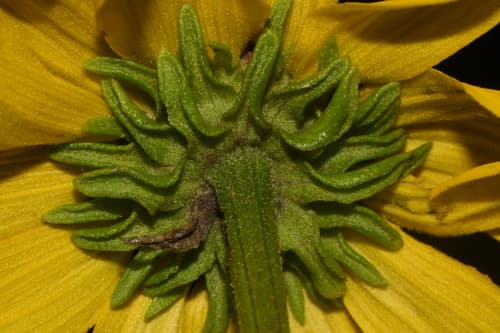
Toxicity unknown
Rough Coneflower (Rudbeckia alismifolia) is not listed by the ASPCA Animal Poison Control Center (opens in new tab) or the other sources we check, so we have no verdict for it either way. Absence from those lists is not a clearance. If your pet shows symptoms after eating any plant, call the ASPCA at (888) 426-4435.
Light
full sun
Water
low
Size
24"–48" H × 12"–18" W
Bloom
Jul, Aug
Native to
TX
Pollinators
bees, butterflies
Before you buy
Your city may pay you to plant this
Cities and water utilities offer rebates for replacing lawn with native and water-wise plants. We track 452 programs across 44 states, each with a link to the provider and the date we last checked it.
Find rebates in your areaBrowse plants for this ecoregion
A tall, sturdy wildflower in the sunflower family, growing upright in dry, open ground and producing yellow daisy-like blooms with a dark, cone-shaped center from midsummer into late summer. Its rough-textured leaves and stems and clump-forming habit make it a striking accent among native grasses and other prairie perennials.
How to care for Rough Coneflower, by region
How to care for Rough Coneflower where it is actually grown: year-round basics plus what to do each season, region by region, with the sources for each.
Care guidance last updated: September 2026
Ouachita Mountains (includes Hot Springs, AR)
Year-round
Rough coneflower is a tall, clump-forming perennial wildflower in the sunflower family, native to prairies, roadsides, and dry open woods across the south-central United States. It produces bright yellow daisy-like blooms with a dark, cone-shaped center from midsummer into late summer.
- Give it full sun and well-drained, dry to average soil; it thrives in dry conditions and does not need supplemental irrigation once established.
- It can reach up to about 4 feet tall, so give it room at the back of a bed or in a naturalized planting.
- It forms a clump rather than spreading aggressively, making it easier to place than many prairie perennials.
- No regular fertilizing is needed; it is adapted to average to lean, dry soils.
Its upright, clump-forming habit and long midsummer bloom read as an intentional prairie-style planting rather than an overgrown bed.
Fall
Bloom has typically finished by fall; the plant sets seed and foliage begins to decline.
- Let seed heads mature and stand through fall if you want the planting to feed birds and self-seed naturally.
- No watering is typically needed; the plant is adapted to dry conditions and does not require fall irrigation.
- No feeding is needed this late in the season.
Winter
Top growth dies back over winter; the plant persists as a dormant clump and any dropped seed.
- Cut back dead stems in late winter or leave them standing as habitat and winter structure, then clear before spring growth resumes.
- No watering is needed while the plant is dormant.
- Expect the clump to resprout from its base once soil warms in spring.
Cutting back dead stems in late winter keeps a naturalized planting looking cared for rather than untidy.
Spring
Spring is a growth phase; foliage emerges and expands ahead of the midsummer bloom.
- Water occasionally during a dry spring to help new growth establish, then taper off as the plant matures.
- No pruning is needed at this stage; let the clump fill in.
- Avoid rich, amended soil or heavy fertilizer, which can cause floppy growth in a plant adapted to lean, dry ground.
Summer
Bloom runs through July and August, with bright yellow, dark-centered flower heads opening on tall stems.
- Once established, it tolerates heat and dry stretches well and rarely needs watering beyond natural rainfall.
- Deadheading is optional; leaving spent blooms provides seed for native bees and birds later in the season.
- Its blooms offer significant value to native bees, so avoid spraying insecticides nearby during bloom.
Sources: Lady Bird Johnson Wildflower Center Native Plant Database, U.S. Fish and Wildlife Service, Rough Coneflower species profile
Want these tasks as reminders timed to your yard? Pollinator Patch turns this guidance into a season-by-season care plan for the plants you actually grow.
In an HOA neighborhood
Rough Coneflower is an HOA-friendly choice. Maintenance level: low. Tidiness: 3 out of 5.
Works well in: prairie planting, dry sunny border, naturalized meadow.
- can reach up to about 4 feet tall, so give it room at the back of a bed or in a naturalized planting
Wildlife value
Its blooms offer significant value to native bees as a pollen and nectar source, and the coarse foliage and seed heads provide structure and food within a prairie planting through the season.
Common questions
- How much sun does Rough Coneflower need?
- Rough Coneflower grows best in full sun conditions.
- When does Rough Coneflower bloom?
- Rough Coneflower blooms in July and August.
- Where is Rough Coneflower native?
- Rough Coneflower (Rudbeckia alismifolia) is native to TX, per vouchered herbarium specimen records and regional native plant society lists.
- What pollinators does Rough Coneflower attract?
- Rough Coneflower draws bees and butterflies.
- Is Rough Coneflower HOA-friendly?
- Rough Coneflower is generally an HOA-friendly choice in the right placement, with low maintenance.
Native range data from vouchered herbarium specimen records and regional native plant society lists. Pollinator and host plant associations compiled from GBIF, iNaturalist, and published ecological literature.
If something looks wrong
Common plant problems, and what to check first
These come up on almost any plant. Each guide lists the likely causes in the order they are worth ruling out, with one thing to check before you act on any of them, and links to the source it came from.
- It is dying right after planting
- Leaves turning yellow
- Wilting even though I watered it
- Brown crispy leaf tips
- Bugs on the plant
Ready to grow Rough Coneflower? Add it to your garden in Pollinator Patch to track it and get season-by-season care guidance.
Planning a bed around it? Start a free plan with this plant
Not sure where to start? Take the 2-minute yard quiz