Sanguine Purple Coneflower
Echinacea sanguinea
Last reviewed: September 2026
Echinacea sanguinea is a low-water forb that blooms from March through August in full sun, thriving in the open woodlands and prairies of the south-central United States.
Toxicity unknown
Sanguine Purple Coneflower (Echinacea sanguinea) is not listed by the ASPCA Animal Poison Control Center (opens in new tab) or the other sources we check, so we have no verdict for it either way. Absence from those lists is not a clearance. If your pet shows symptoms after eating any plant, call the ASPCA at (888) 426-4435.
Light
full sun
Water
low
Size
12"–24" H × 12"–18" W
Bloom
Mar, Apr, May, Jun, Jul, Aug
Native to
AR, LA, OK, TX
Pollinators
butterflies, bees, nectar insects
Before you buy
Your city may pay you to plant this
Cities and water utilities offer rebates for replacing lawn with native and water-wise plants. We track 452 programs across 44 states, each with a link to the provider and the date we last checked it.
Find rebates in your areaBrowse plants for this ecoregion
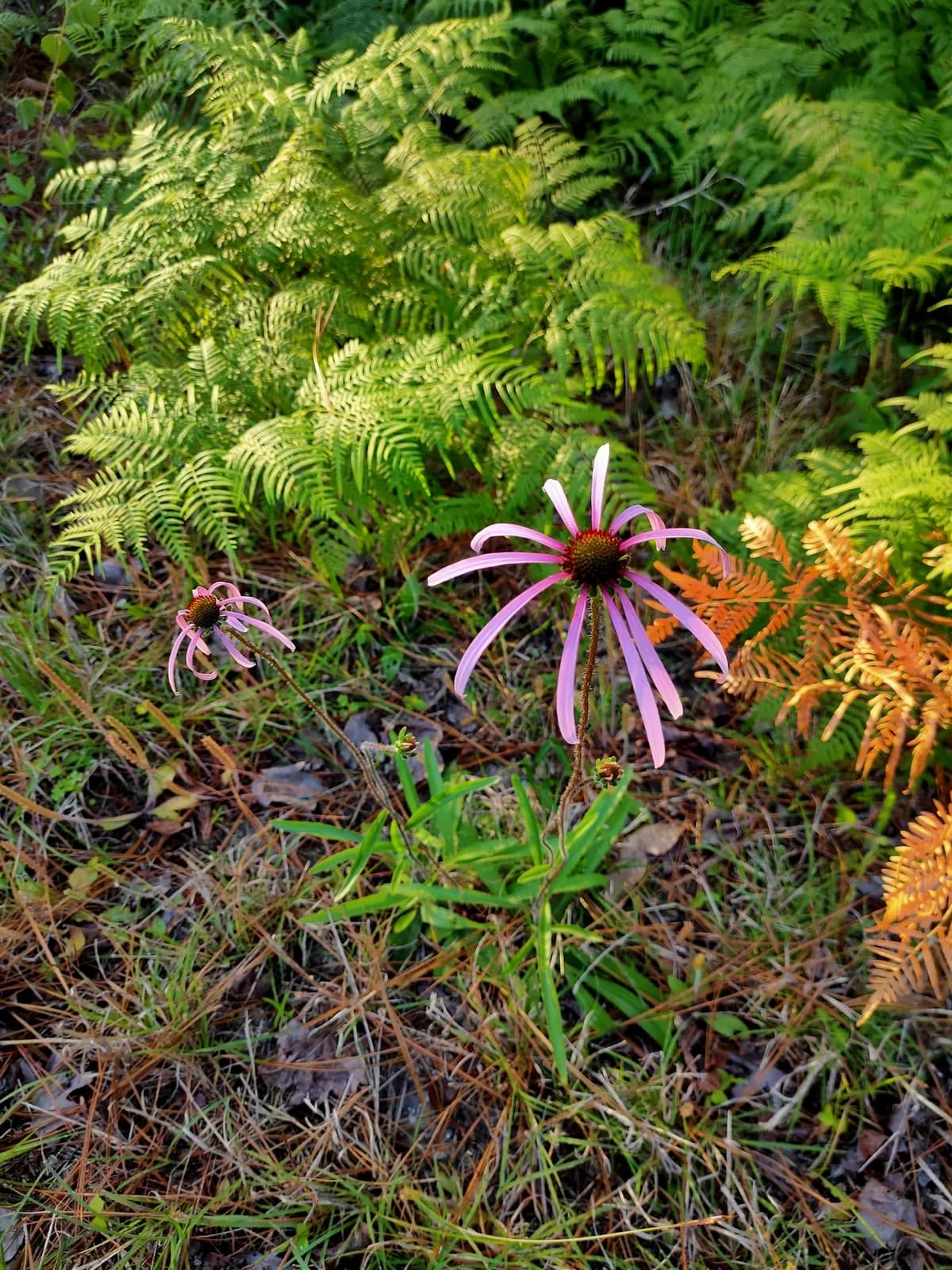
Sanguine Purple Coneflower is a compact native perennial that produces deep red-purple daisy-like flowers with prominent dark centers. This drought-tolerant wildflower blooms for an exceptionally long season from spring through late summer, making it valuable for continuous color in sunny gardens.
Growing Sanguine Purple Coneflower
Grow Sanguine Purple Coneflower in full sun and low water. Mature plants reach 12 to 24 inches tall and spread 12 to 18 inches wide. Expect low maintenance to keep it looking intentional in a front yard.
How to care for Sanguine Purple Coneflower, by region
How to care for Sanguine Purple Coneflower where it is actually grown: year-round basics plus what to do each season, region by region, with the sources for each.
Care guidance last updated: September 2026
Mississippi Valley Loess Plains (includes Memphis, TN)
Year-round
Sanguine purple coneflower is a tough native prairie perennial from Arkansas, Louisiana, Oklahoma, and Texas. It is not native to Tennessee, but in a Memphis-area yard (zone 8a) it settles in well with full sun and soil that drains, and it gives native bees a real food source through the growing season.
- Plant it in full sun to light afternoon shade, in a spot where water does not sit after rain. Heavy, wet clay through Memphis summers is its main problem.
- Water it regularly the first growing season to help roots establish, then let it lean mostly on rainfall once it is settled in.
- Expect single, softly drooping pink-purple flowers on tall stems, generally April through July.
- It draws native bees, so skip pesticide sprays on it while it is blooming.
- This species is native to the south-central prairies of Arkansas, Louisiana, Oklahoma, and Texas, not to Tennessee, so treat it as a well-adapted garden plant here rather than a local native.
Fall
Fall is cutback and division season for sanguine purple coneflower in Memphis. You can tidy the bed now or leave seed heads up for winter interest and bird food.
- Divide clumps that are three to four years old in fall, while the weather is still mild.
- Cut dead stems back to the ground in fall, or leave the seed heads standing. Goldfinches and other birds feed on them through winter.
- If the plant had eriophyid mites or powdery mildew this year, cut those stems to the ground in fall and clear the debris rather than leaving it in the bed.
- Fall is also a good time to plant new coneflowers, giving roots a head start before next summer's heat.
A neat fall cutback along the front edge of the bed reads as intentional care to a passing HOA inspector, even if a few seed head clusters are left standing further back for the birds.
Winter
Winter is the dormant season for sanguine purple coneflower in Memphis. The plant dies back to the ground and returns from its root crown in spring.
- Standing dead stems and seed heads left up from fall are a winter food source for goldfinches.
- No winter watering or protection is needed. Established plants handle Memphis's zone 8a winters without extra care.
- If the bed was not cut back in fall, late winter, before new spring growth starts, is the last good window to clear old stems.
- Avoid piling mulch on top of the crown. Wet mulch sitting on the crown through a Mid-South winter can lead to rot.
A clean late-winter cutback right before spring growth starts keeps the bed looking tended if standing winter stems have drawn any HOA attention.
Spring
Spring is planting and early-growth season for sanguine purple coneflower in Memphis. New growth pushes up after the last frost, with flower buds forming as the weather warms toward April.
- Plant new coneflowers in spring once the last frost has passed, usually by mid-to-late March in the Memphis area.
- Water new plantings well through spring so roots can establish before summer heat arrives.
- Skip heavy fertilizer. Rich soil makes the plant grow floppy instead of upright.
- Look for the first flower buds forming by mid-to-late spring, with bloom typically starting in April.
Summer
Summer is bloom season for sanguine purple coneflower in Memphis. Once established, the plant handles the region's hot, humid stretches with little help.
- Blooms continue into July in most Memphis-area yards. Watch for drooping pink-purple petals around a dark cone.
- Water only during extended dry spells. Once established this plant is drought tolerant, and overwatering in humid Memphis summers invites root and crown rot.
- Water at the base instead of overhead, to help cut down on powdery mildew in Memphis's humid summers.
- Watch for aphids, Japanese beetles, and powdery mildew, common Mid-South summer issues on coneflowers. Good airflow and spacing help prevent them.
Sources: Lady Bird Johnson Wildflower Center - Echinacea sanguinea plant profile, Clemson HGIC - Echinacea (Coneflower) growing guide, PlantMaps - Memphis, TN climate data and frost dates (community tip)
Want these tasks as reminders timed to your yard? Pollinator Patch turns this guidance into a season-by-season care plan for the plants you actually grow.
In an HOA neighborhood
Sanguine Purple Coneflower is an HOA-friendly choice. Maintenance level: low. Tidiness: 4 out of 5.
Works well in: front yard, foundation, street edge, mid zone.
Wildlife value
The nectar-rich flowers attract butterflies, native bees, and other beneficial insects throughout the growing season. Seeds provide food for goldfinches and other birds in fall and winter.
Common questions
- When does Echinacea sanguinea bloom?
- Echinacea sanguinea typically blooms from March through August, with flowering often peaking in late spring depending on local rainfall and temperature.
- What pollinators visit Echinacea sanguinea?
- Butterflies, bees, and other nectar-seeking insects regularly visit the flowers of Echinacea sanguinea for nectar and pollen.
- How much water does Echinacea sanguinea need?
- This plant prefers low water and handles dry, well-drained soils well once it has established a root system.
- What light conditions does Echinacea sanguinea prefer?
- Echinacea sanguinea grows best in full sun, where it produces the sturdiest stems and most abundant flowering.
- What kind of habitat suits Echinacea sanguinea?
- It grows well in open prairies, sandy fields, and dry pine woodlands typical of the Gulf Coastal Plain and surrounding areas.
- Is Sanguine Purple Coneflower HOA-friendly?
- Sanguine Purple Coneflower is generally an HOA-friendly choice in the right placement, with low maintenance.
These answers were drafted with an AI model from this plant's data. Verify care details with a local expert.
Native range data from vouchered herbarium specimen records and regional native plant society lists. Pollinator and host plant associations compiled from GBIF, iNaturalist, and published ecological literature.
If something looks wrong
Common plant problems, and what to check first
These come up on almost any plant. Each guide lists the likely causes in the order they are worth ruling out, with one thing to check before you act on any of them, and links to the source it came from.
- It is dying right after planting
- Leaves turning yellow
- Wilting even though I watered it
- Brown crispy leaf tips
- Bugs on the plant
Ready to grow Sanguine Purple Coneflower? Add it to your garden in Pollinator Patch to track it and get season-by-season care guidance.
Planning a bed around it? Start a free plan with this plant
Not sure where to start? Take the 2-minute yard quiz