Skeleton-leaf goldeneye
Sidneya tenuifolia
Last reviewed: October 2026
Skeleton-leaf goldeneye is a low-water, full-sun shrub that thrives in the arid landscapes of Texas and New Mexico, producing yellow blooms from April through October.
Toxicity unknown
Skeleton-leaf goldeneye (Sidneya tenuifolia) is not listed by the ASPCA Animal Poison Control Center (opens in new tab) or the other sources we check, so we have no verdict for it either way. Absence from those lists is not a clearance. If your pet shows symptoms after eating any plant, call the ASPCA at (888) 426-4435.
Light
full sun
Water
low
Size
24"–48" H × 36"–60" W
Bloom
Apr, May, Jun, Jul, Aug, Sep, Oct
Native to
TX, NM
Pollinators
bees, butterflies
Before you buy
Your city may pay you to plant this
Cities and water utilities offer rebates for replacing lawn with native and water-wise plants. We track 459 programs across 44 states, each with a link to the provider and the date we last checked it.
Find rebates in your areaPicture natives in your own yard
Upload a photo of your yard and Patch Vision shows a rendering of it planted with natives for your region, like Skeleton-leaf goldeneye.


Browse plants for this ecoregion
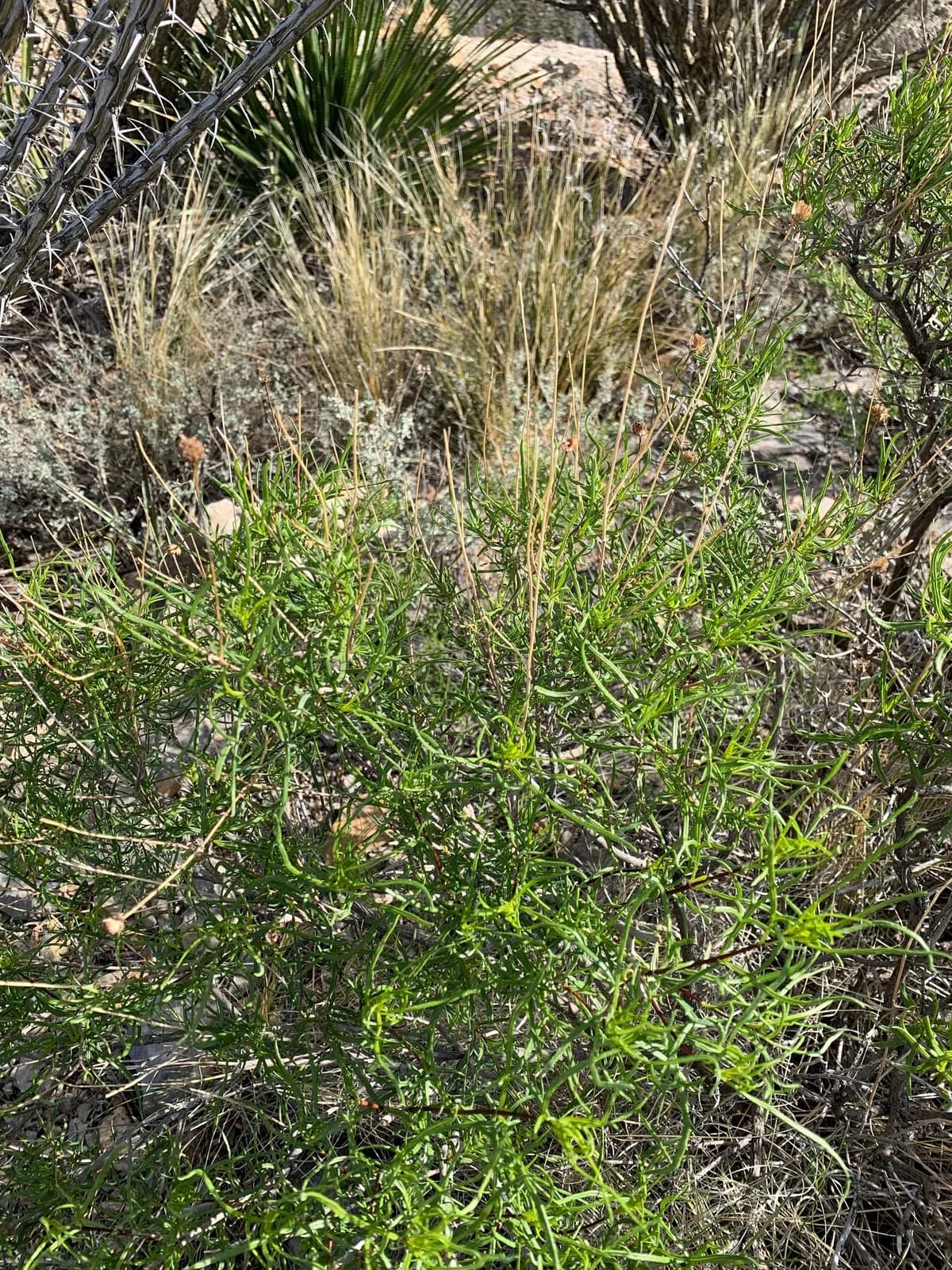
A rounded, woody-based perennial subshrub with narrow, skeleton-like divided leaves and abundant bright yellow daisy-like flowers produced over a long season. Forms a tidy mound in rocky, well-drained soil and tolerates extended dry periods once established.
Growing Skeleton-leaf goldeneye
Grow Skeleton-leaf goldeneye in full sun and low water. Mature plants reach 24 to 48 inches tall and spread 36 to 60 inches wide. Expect low maintenance to keep it looking intentional in a front yard.
How to care for Skeleton-leaf goldeneye, by region
How to care for Skeleton-leaf goldeneye where it is actually grown: year-round basics plus what to do each season, region by region, with the sources for each.
Care guidance last updated: August 2026
Cross Timbers (includes Fort Worth, TX)
Year-round
Skeletonleaf goldeneye is a low-maintenance, rounded shrub covered in small yellow-orange daisy flowers from summer through fall, and once it is established it needs almost no supplemental water.
- Give it full sun and a spot with sharp drainage, it struggles anywhere soil stays wet.
- It fills out to about 2 to 4 feet tall and wide, so space new plants 3 to 4 feet apart.
- This shrub is native to the western and southern parts of Texas (the Trans-Pecos, Rio Grande Plains, and the western Edwards Plateau), not to the North Texas area itself, but it handles the region's heat and drought well once its roots are established.
- Skip regular fertilizer. Rich soil pushes floppy growth and fewer flowers.
- Prune lightly to keep its natural rounded shape rather than shearing it into a hard-edged form.
Its neat, rounded form and long bloom window read as an intentional flowering shrub rather than volunteer growth, which helps in a front bed an HOA will see.
Fall
Fall is skeletonleaf goldeneye's showiest season. It typically reaches peak bloom, with saffron yellow daisies covering the shrub, and fall is also a good window for planting this woody shrub.
- Peak bloom usually runs from September into November, right up to the average first frost in mid November.
- Fall is a good planting window for this woody shrub, since the mild North Texas winter gives new roots time to establish before next summer's heat.
- Leave spent flower heads on the plant heading into winter. They provide seed for birds through the cold months.
- Hold off on any hard pruning in fall. Wait until late winter so you do not push tender new growth out just before a freeze.
A full flush of fall bloom is the moment neighbors notice most, reading as an intentional flowering shrub rather than an overgrown patch.
Winter
Skeletonleaf goldeneye stays evergreen to semi evergreen through a mild North Texas winter, and its main risk is dieback during one of the occasional severe Arctic outbreaks rather than ordinary cold.
- Leave any freeze damaged growth on the plant until temperatures warm up in late February. Cutting too early exposes live tissue to the next cold snap.
- Once the coldest weather has passed, usually in late February, cut back any blackened or dead stems to live wood.
- During a hard freeze or an Arctic outbreak, a light frost cloth over the shrub can help prevent dieback, especially in its first winter.
- It needs no supplemental watering in winter beyond normal North Texas winter rainfall.
Leaving winter damaged stems in place until late February is standard technique, not neglect, but noting that to an HOA board ahead of time avoids questions if a neighbor comments on brown growth.
Spring
Spring is the best time to plant skeletonleaf goldeneye in North Texas, going in after the mid March average last frost so its roots have the full growing season to settle in before summer heat arrives.
- Plant after mid March once frost danger has passed, then water deeply twice a week for the first month.
- Cut back any freeze damaged stems to live wood in early spring, before new growth pushes out.
- In the heavy black clay of the Blackland Prairies, plant it a few inches high on a slight mound or work in coarse expanded shale for drainage. In the sandier soils of the Cross Timbers to the west it drains faster but will need more frequent watering through its first summer.
- Spread 2 to 3 inches of mulch, keeping it a few inches back from the base of the stems, to hold moisture while new roots spread.
A freshly mulched, evenly shaped new planting reads as deliberate landscaping rather than an empty or neglected bed.
Summer
Summer is when skeletonleaf goldeneye starts putting out its main flush of yellow-orange daisies, and it is also when North Texas heat is hardest on any plant that has not yet had a full year to root in.
- Once established for a full growing season, it needs little to no supplemental water, even through weeks of 100F afternoons without rain.
- A plant in its first summer still needs a deep soak about once a week during stretches with no rain.
- Deadhead spent flower heads to tidy the plant and encourage more blooms, though it will keep flowering into fall on its own.
- Hold off on fertilizer in summer. Extra nitrogen in the heat pushes weak, leggy growth instead of flowers.
Steady yellow-orange bloom through the hottest months keeps the bed looking cared for when many other plants go dormant or brown.
Sources: Viguiera stenoloba, Lady Bird Johnson Wildflower Center, Skeletonleaf Goldeneye, City of Austin Grow Green Plant Guide
Edwards Plateau (includes San Antonio, TX)
Year-round
Skeleton-leaf goldeneye is built for San Antonio's hot, dry limestone country, it just needs sharp drainage and a yearly cutback to stay tidy.
- Plant in well drained soil, if you have heavy clay, work in decomposed granite or plant on a raised berm, this shrub struggles with wet feet far more than with heat or drought.
- Water regularly the first season to establish deep roots, then taper off, once established it handles San Antonio's dry summers on rainfall alone in most years.
- Keep mulch light and away from the base, this plant prefers the drier, rockier conditions of its native limestone habitat over a moist mulched bed.
- Cut the whole plant back by about a third each year to keep it compact, without this it turns woody and open in the middle within a few seasons.
- The most common mistake is overwatering or planting it somewhere water collects, root rot is a bigger risk for this plant in San Antonio gardens than drought stress ever is.
Its natural habit is a loose rounded mound, the yearly cutback keeps it compact and tidy for a front yard bed rather than sprawling into a woody, open shape that can look neglected to an HOA.
Fall
Bloom continues into October, one of the longest flowering windows of any San Antonio native shrub.
- Skip fertilizing, this plant does best in lean, rocky soil rather than a rich feeding schedule.
- Fall is a good time for a light planting or transplanting since cooler weather reduces transplant stress.
- Reduce watering as temperatures drop and rainfall typically increases.
- Leave the last flush of blooms in place, they are still feeding late season pollinators.
Winter
San Antonio winters are mild and this shrub is cold hardy well below the area's typical lows, so no frost protection is needed.
- Do the yearly hard cutback in late winter before spring growth starts, removing about a third of the plant to keep it compact and encourage fresh flowering growth.
- Hold off on watering during the dormant season unless the winter turns unusually dry.
- Leave the woody structure over winter if you like some texture in the bed, it will flush back out fast in spring.
- No mulch or wrapping is needed, this shrub tolerates cold well below San Antonio's normal winter lows.
Spring
New growth resumes as temperatures warm in March.
- This is the best time for the yearly hard pruning if you did not do it in late winter, cut back by a third to keep growth dense rather than woody.
- Water new spring plantings regularly while roots establish in San Antonio's warming, drying soil.
- Established plants need little supplemental water yet, spring rain usually carries them.
- Watch for fresh growth filling in, this is when the rounded mound shape starts taking form again after the cutback.
Summer
Yellow daisy like flowers cover the plant from June into fall.
- Water only during extended dry stretches, this shrub is built for San Antonio's hot dry summers and rarely needs regular irrigation once established.
- Deadhead spent blooms if you want a tidier look and to encourage more flowering, though it will keep blooming on its own for months.
- Watch drainage during any heavy summer downpour, standing water is the real threat here, not the heat.
- Skip fertilizer, this plant does best in the lean, rocky soil it evolved for.
Sources: Lady Bird Johnson Wildflower Center - Viguiera stenoloba, Mountain States Wholesale Nursery - Viguiera stenoloba
Texas Blackland Prairies (includes Dallas, TX)
Year-round
Skeletonleaf goldeneye is a low-maintenance, rounded shrub covered in small yellow-orange daisy flowers from summer through fall, and once it is established it needs almost no supplemental water.
- Give it full sun and a spot with sharp drainage, it struggles anywhere soil stays wet.
- It fills out to about 2 to 4 feet tall and wide, so space new plants 3 to 4 feet apart.
- This shrub is native to the western and southern parts of Texas (the Trans-Pecos, Rio Grande Plains, and the western Edwards Plateau), not to the North Texas area itself, but it handles the region's heat and drought well once its roots are established.
- Skip regular fertilizer. Rich soil pushes floppy growth and fewer flowers.
- Prune lightly to keep its natural rounded shape rather than shearing it into a hard-edged form.
Its neat, rounded form and long bloom window read as an intentional flowering shrub rather than volunteer growth, which helps in a front bed an HOA will see.
Fall
Fall is skeletonleaf goldeneye's showiest season. It typically reaches peak bloom, with saffron yellow daisies covering the shrub, and fall is also a good window for planting this woody shrub.
- Peak bloom usually runs from September into November, right up to the average first frost in mid November.
- Fall is a good planting window for this woody shrub, since the mild North Texas winter gives new roots time to establish before next summer's heat.
- Leave spent flower heads on the plant heading into winter. They provide seed for birds through the cold months.
- Hold off on any hard pruning in fall. Wait until late winter so you do not push tender new growth out just before a freeze.
A full flush of fall bloom is the moment neighbors notice most, reading as an intentional flowering shrub rather than an overgrown patch.
Winter
Skeletonleaf goldeneye stays evergreen to semi evergreen through a mild North Texas winter, and its main risk is dieback during one of the occasional severe Arctic outbreaks rather than ordinary cold.
- Leave any freeze damaged growth on the plant until temperatures warm up in late February. Cutting too early exposes live tissue to the next cold snap.
- Once the coldest weather has passed, usually in late February, cut back any blackened or dead stems to live wood.
- During a hard freeze or an Arctic outbreak, a light frost cloth over the shrub can help prevent dieback, especially in its first winter.
- It needs no supplemental watering in winter beyond normal North Texas winter rainfall.
Leaving winter damaged stems in place until late February is standard technique, not neglect, but noting that to an HOA board ahead of time avoids questions if a neighbor comments on brown growth.
Spring
Spring is the best time to plant skeletonleaf goldeneye in North Texas, going in after the mid March average last frost so its roots have the full growing season to settle in before summer heat arrives.
- Plant after mid March once frost danger has passed, then water deeply twice a week for the first month.
- Cut back any freeze damaged stems to live wood in early spring, before new growth pushes out.
- In the heavy black clay of the Blackland Prairies, plant it a few inches high on a slight mound or work in coarse expanded shale for drainage. In the sandier soils of the Cross Timbers to the west it drains faster but will need more frequent watering through its first summer.
- Spread 2 to 3 inches of mulch, keeping it a few inches back from the base of the stems, to hold moisture while new roots spread.
A freshly mulched, evenly shaped new planting reads as deliberate landscaping rather than an empty or neglected bed.
Summer
Summer is when skeletonleaf goldeneye starts putting out its main flush of yellow-orange daisies, and it is also when North Texas heat is hardest on any plant that has not yet had a full year to root in.
- Once established for a full growing season, it needs little to no supplemental water, even through weeks of 100F afternoons without rain.
- A plant in its first summer still needs a deep soak about once a week during stretches with no rain.
- Deadhead spent flower heads to tidy the plant and encourage more blooms, though it will keep flowering into fall on its own.
- Hold off on fertilizer in summer. Extra nitrogen in the heat pushes weak, leggy growth instead of flowers.
Steady yellow-orange bloom through the hottest months keeps the bed looking cared for when many other plants go dormant or brown.
Sources: Viguiera stenoloba, Lady Bird Johnson Wildflower Center, Skeletonleaf Goldeneye, City of Austin Grow Green Plant Guide
In an HOA neighborhood
Skeleton-leaf goldeneye is an HOA-friendly choice. Maintenance level: low. Tidiness: 4 out of 5.
Works well in: front yard, foundation, street edge.
Wildlife value
Long, heavy bloom period makes it a reliable nectar source for bees and butterflies for much of the growing season.
Common questions
- How much water does skeleton-leaf goldeneye need?
- This shrub is drought tolerant and prefers low water once established, making it a good fit for xeriscapes and rocky, well-drained sites in Texas and New Mexico.
- When does skeleton-leaf goldeneye bloom?
- It flowers over a long season, typically from April through October, with yellow daisy-like blooms.
- What pollinators visit skeleton-leaf goldeneye?
- Bees and butterflies regularly visit the flowers for nectar and pollen throughout its long bloom period.
- How much light does this shrub need?
- It grows best in full sun and can tolerate some part-sun conditions, but flowering is heaviest with direct sunlight.
- Is Skeleton-leaf goldeneye HOA-friendly?
- Skeleton-leaf goldeneye is generally an HOA-friendly choice in the right placement, with low maintenance.
These answers were drafted with an AI model from this plant's data. Verify care details with a local expert.
Native range data from vouchered herbarium specimen records and regional native plant society lists. Pollinator and host plant associations compiled from GBIF, iNaturalist, and published ecological literature.
If something looks wrong
Common plant problems, and what to check first
These come up on almost any plant. Each guide lists the likely causes in the order they are worth ruling out, with one thing to check before you act on any of them, and links to the source it came from.
- It is dying right after planting
- Leaves turning yellow
- Wilting even though I watered it
- Brown crispy leaf tips
- Bugs on the plant
Ready to grow Skeleton-leaf goldeneye? Add it to your garden in Pollinator Patch to track it and get season-by-season care guidance.