Southern Bush Monkeyflower
Diplacus longiflorus
Last reviewed: September 2026
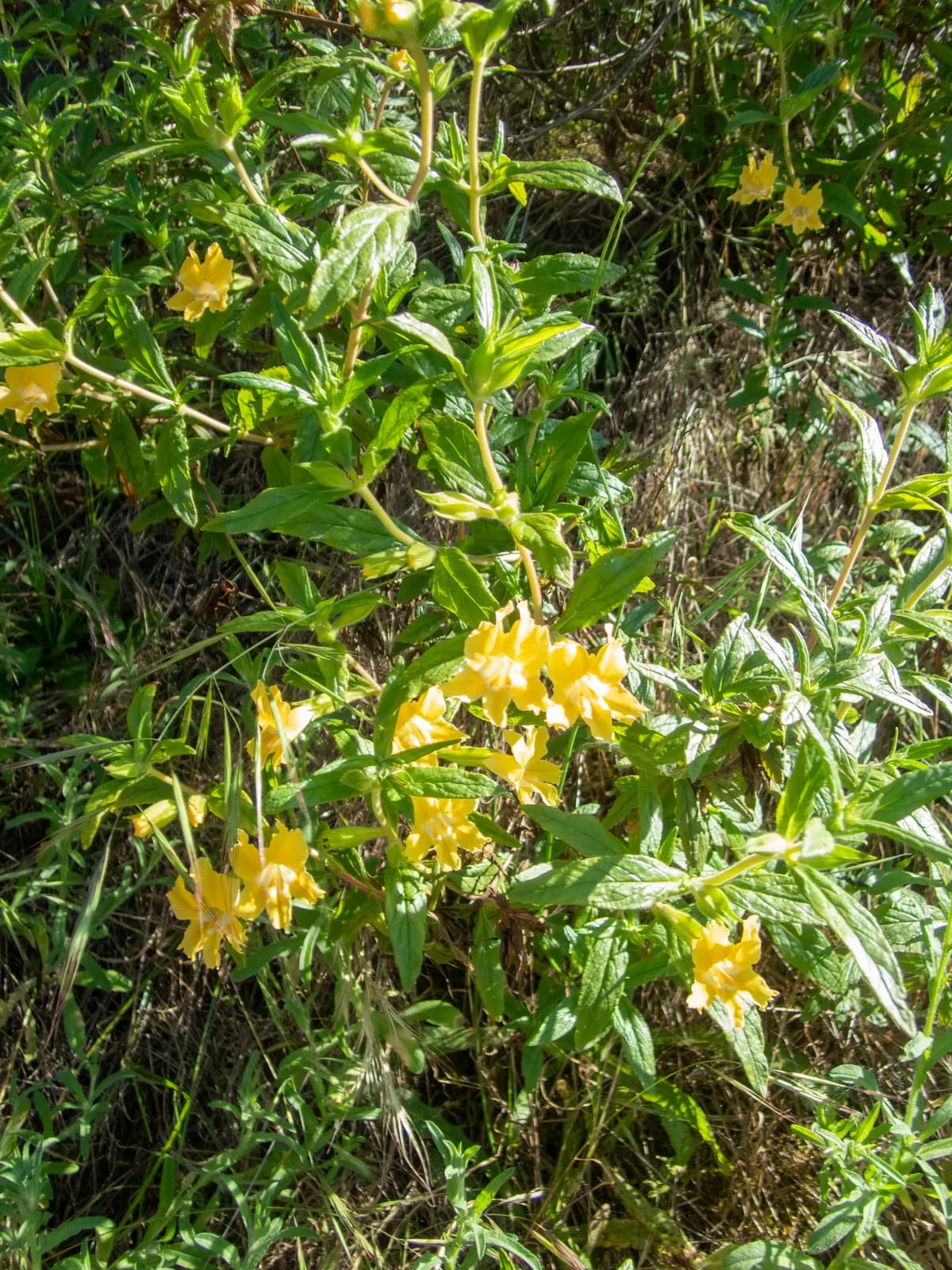
Diplacus longiflorus is a low water shrub suited to full sun or light shade, thriving on dry slopes and chaparral banks. It produces tubular pale yellow to pink flowers from March through June that draw hummingbirds and bees.
Southern Bush Monkeyflower (Diplacus longiflorus) is not flagged as toxic to dogs or cats by Plants For A Future (PFAF) (opens in new tab) (last reviewed 2026-05-21). This verdict does not come from the ASPCA. If your pet shows symptoms after eating any plant, call the ASPCA at (888) 426-4435.
Light
full sun
Water
low
Size
12"–36" H × 12"–36" W
Bloom
Mar, Apr, May, Jun
Native to
CA
Pollinators
hummingbirds, bees, butterflies
Before you buy
Your city may pay you to plant this
Cities and water utilities offer rebates for replacing lawn with native and water-wise plants. We track 459 programs across 44 states, each with a link to the provider and the date we last checked it.
Find rebates in your areaPicture natives in your own yard
Upload a photo of your yard and Patch Vision shows a rendering of it planted with natives for your region, like Southern Bush Monkeyflower.


Browse plants for this ecoregion
Diplacus longiflorus (Southern Bush Monkeyflower) is a compact, evergreen shrub with vibrant tubular orange to salmon flowers that bloom profusely in spring through early summer. It features attractive glossy green foliage and thrives in sunny, well-drained locations with minimal water once established.
Growing Southern Bush Monkeyflower
Grow Southern Bush Monkeyflower in full sun and low water. Mature plants reach 12 to 36 inches tall and spread 12 to 36 inches wide. Expect moderate maintenance to keep it looking intentional in a front yard.
In an HOA neighborhood
Southern Bush Monkeyflower is an HOA-friendly choice. Maintenance level: moderate. Tidiness: 3 out of 5.
Works well in: front yard, foundation, mid zone.
- Can look slightly sparse or leggy if not occasionally pruned
- May need deadheading to maintain tidy appearance after flowering
Wildlife value
This native shrub is a valuable nectar source for hummingbirds and butterflies, while also attracting native bees. The tubular flowers are particularly well-suited for hummingbird feeding.
Common questions
- How much water does Southern Bush Monkeyflower need?
- Diplacus longiflorus is a low water shrub once established, doing best with infrequent summer irrigation and good drainage. Overwatering in hot, humid conditions can cause root problems.
- What light conditions suit Diplacus longiflorus best?
- This shrub grows well in full sun along the coast and inland, and tolerates part sun or light part shade, especially in hotter inland gardens where some afternoon shade reduces stress.
- When does Diplacus longiflorus bloom?
- Flowering typically runs from March through June, with tubular blooms opening earlier in mild coastal areas and later at higher or cooler inland sites.
- What pollinators visit Diplacus longiflorus flowers?
- The tubular flowers attract hummingbirds along with bees and butterflies, which use the long corolla shape to access nectar.
- Is Southern Bush Monkeyflower toxic to dogs?
- Southern Bush Monkeyflower is not flagged as toxic to dogs by Plants For A Future (PFAF). This verdict does not come from the ASPCA.
- Is Southern Bush Monkeyflower toxic to cats?
- Southern Bush Monkeyflower is not flagged as toxic to cats by Plants For A Future (PFAF). This verdict does not come from the ASPCA.
- Is Southern Bush Monkeyflower HOA-friendly?
- Southern Bush Monkeyflower is generally an HOA-friendly choice in the right placement, with moderate maintenance.
These answers were drafted with an AI model from this plant's data. Verify care details with a local expert.
Native range data from vouchered herbarium specimen records and regional native plant society lists. Pollinator and host plant associations compiled from GBIF, iNaturalist, and published ecological literature.
If something looks wrong
Common plant problems, and what to check first
These come up on almost any plant. Each guide lists the likely causes in the order they are worth ruling out, with one thing to check before you act on any of them, and links to the source it came from.
- It is dying right after planting
- Leaves turning yellow
- Wilting even though I watered it
- Brown crispy leaf tips
- Bugs on the plant
Ready to grow Southern Bush Monkeyflower? Add it to your garden in Pollinator Patch to track it and get season-by-season care guidance.