Spiderwort
Tradescantia ohiensis
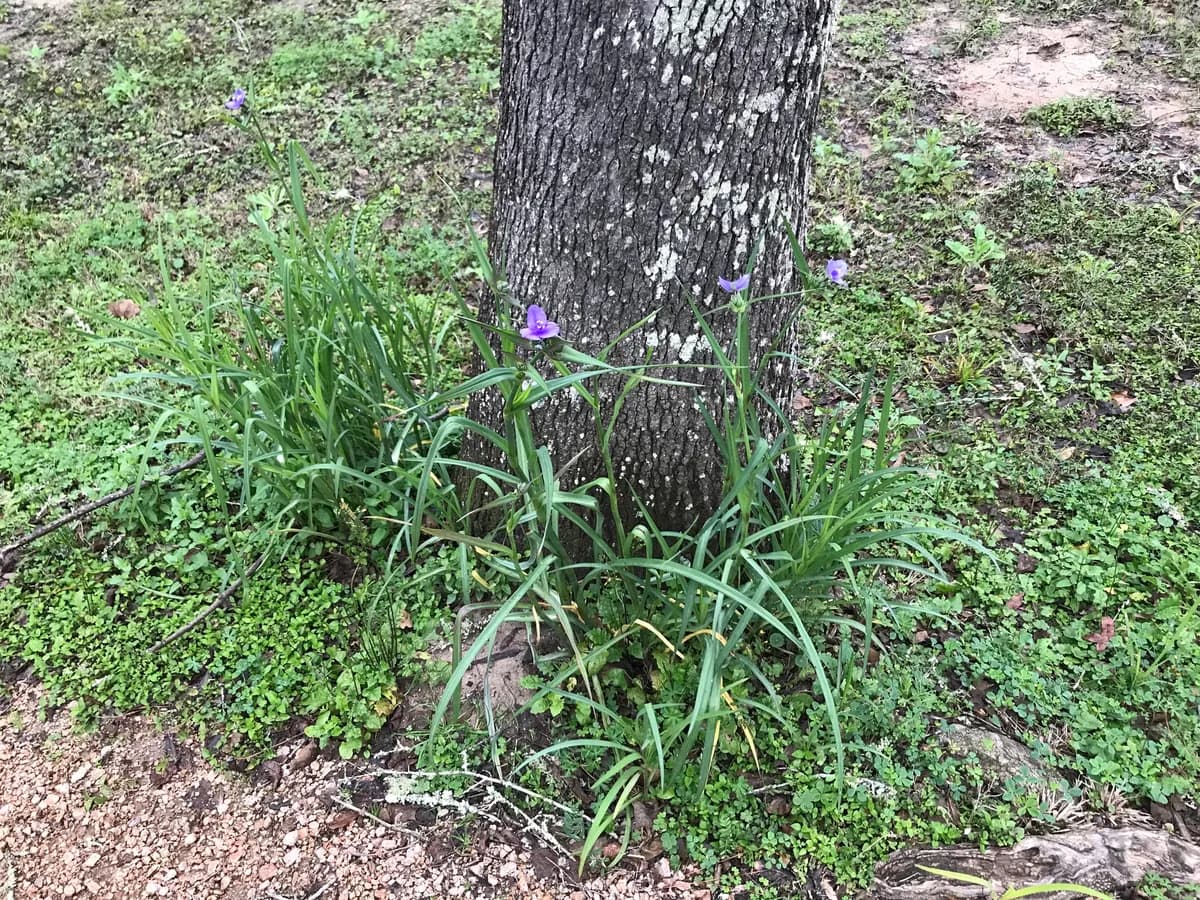
Light
part sun
Water
low
Size
12"–24" H × 12"–18" W
Bloom
Mar, Apr, May, Jun
Native to
Blackland Prairie, Edwards Plateau, Post Oak Savannah, Pineywoods
Pollinators
bees, butterflies
Picture natives in your own yard
Upload a photo of your yard and Patch Vision shows a rendering of it planted with natives for your region, like Spiderwort.


Browse plants for this ecoregion
Spiderwort is a perennial forb native to Blackland Prairie, Edwards Plateau, Post Oak Savannah, Pineywoods. It grows best in part sun with low water needs.
Spiderwort (Tradescantia ohiensis) is the first wildflower most Texas gardeners notice in spring. The blue-purple three-petaled flowers open in the morning and close by midday, creating a changing display from March through June. Each flower lasts one day, but new buds open continuously. The plant is native across a large swath of Texas and is commonly found blooming along roadsides in April.
Spiderwort is not on the ASPCA Animal Poison Control Center toxic plant list for dogs or cats. It grows 1-2 feet tall with arching strap-like leaves. The early spring bloom fills the gap between the first warm days and the summer perennials. Native bee species, including long-tongued mining bees, are the primary pollinators; they collect the bright yellow pollen from the characteristic yellow stamens.
Ecoregion notes for Texas. In the Blackland Prairie (DFW, Austin, San Antonio corridor, heavy clay): native and thrives. It is one of the few ornamental perennials that genuinely prefers clay; the moisture retention suits it perfectly. Bloom lasts longer in clay than in sandy soil. In the Post Oak Savannah and Pineywoods (East Texas, acidic, well-drained loam): native; give it part shade and consistent moisture. In the Edwards Plateau (alkaline, rocky): plant in dappled shade or north-facing beds with some afternoon protection. In the Trans-Pecos: not recommended.
Spiderwort goes dormant in summer after blooming. Cut the yellowing foliage back to 6 inches in July; new growth returns in fall and persists through the winter. For HOA contexts, pair with Black-eyed Susan and Mealy Blue Sage so the bed stays interesting after Spiderwort's dormancy. In good conditions it spreads by seed; thin volunteers if they exceed your planned footprint.
Bee species data compiled from GBIF, iNaturalist, Discover Life, and the USGS Native Bee Inventory and Monitoring Lab. Plant-pollinator associations informed by published ecological literature.
How to care for Spiderwort, by region
How to care for Spiderwort where it is actually grown: year-round basics plus what to do each season, region by region, with the sources for each.
Care guidance last updated: September 2026
Arkansas Valley (includes Fort Smith, AR)
Year-round
Ohio spiderwort is a native Arkansas Valley wildflower that needs very little upkeep once it settles into your yard.
- This species is native to Arkansas, according to the Arkansas Department of Transportation's wildflower program and the Lady Bird Johnson Wildflower Center.
- Give it full sun to part shade. It flowers best with at least half a day of direct sun.
- It tolerates clay, sandy, and average garden soil, and needs little extra water once it has a full growing season in the ground.
- It spreads on its own by seed and by forming new clumps at the base, so plan for it to fill in and expand over a few years.
- Long-tongued native bees, especially bumblebees, are its main pollinators.
Keeping it inside a defined bed edge helps this spreading plant stay HOA-friendly in a visible front yard bed.
Fall
Fall around Fort Smith is mainly cleanup and dividing time for this plant, not a bloom season.
- Blooming has usually finished by late summer, so fall foliage is past its best and can be cut back.
- Early fall, well ahead of the average first frost date of about November 5, is a good time to divide crowded clumps.
- The plant will die back on its own once frost arrives. Leaving the dried stems in place over winter is a fine, low-effort option.
Winter
Winters around Fort Smith are mild enough that this plant needs no special protection.
- It dies back to the ground and regrows from its roots each spring, so winter is a dormant, hands-off season.
- No mulching or covering is needed in the Fort Smith area.
- If the dead foliage was not cut back in fall, late winter before new growth starts is the last easy window to clear it away.
Spring
Spring in the Fort Smith area is when Ohio spiderwort wakes up and starts its first bloom push.
- New grass-like shoots come up as nights warm after the average last frost date of about March 26 for Fort Smith.
- No need to cover or protect it from a late cold snap. It is a cold-hardy perennial that regrows from the root each year.
- Flowering can start as early as April and run into summer, with a handful of blue to rose flowers open each morning.
- If a clump is crowded, early spring before new growth gets tall is one of the two best windows to divide it.
Summer
Fort Smith summers are hot and humid, and this plant's flowers respond by closing early each day.
- Flowers open in the cool of the morning and shrivel by early afternoon once temperatures climb. That is normal for this species, not a sign of stress.
- Once established, it handles Fort Smith's hot summers and rarely needs extra watering outside of a long dry stretch.
- After the main bloom period, foliage often turns yellow or floppy in the heat. Cutting it back at that point tidies the plant and can bring on fresh new leaves.
- Removing spent flower clusters is not required for more blooms, but it can cut down on volunteer seedlings nearby.
Sources: Ohio Spiderwort, Arkansas DOT Wildflower Program, Tradescantia ohiensis, Lady Bird Johnson Wildflower Center, Fort Smith Frost Climatology, National Weather Service, Tradescantia ohiensis Ohio Spiderwort, Prairie Moon Nursery
Cross Timbers (includes Fort Worth, TX)
Year-round
Ohio spiderwort is native to the Eastern Cross Timbers around Fort Worth, favoring the moister savanna and woodland-edge pockets. It forms grassy clumps with clear blue three-petaled flowers.
- Native to the Cross Timbers of north-central Texas, where it grows in the moister savanna and woodland-edge sites (Lady Bird Johnson Wildflower Center).
- It prefers the region's sandier soils and part shade to morning sun. On drier open ground it gives way to western spiderwort, Tradescantia occidentalis (Native Plant Society of Texas).
- Flowers open in the morning and close by midday, but the clump keeps sending up buds for weeks of color.
- It offers special value to native bees and bumble bees, a good pick for a savanna-edge pollinator planting (Lady Bird Johnson Wildflower Center).
- Ohio spiderwort is not on the ASPCA toxic plant list. Its relative the inch plant, Tradescantia fluminensis, is listed as causing skin irritation in dogs and cats, worth noting around pets (ASPCA Animal Poison Control, aspca.org).
In a bordered bed under filtered light, its neat clumps and blue flowers give a front yard a calm, deliberate look that suits the Cross Timbers savanna style.
Fall
Fall is a good time to divide or plant Ohio spiderwort in the Cross Timbers, and cooler weather can bring a last round of flowers.
- Early fall is a solid window to lift and divide clumps so they root in before winter.
- Watch for a light second bloom on the fresh growth if you cut back in summer.
- Let the final seed heads ripen and drop for volunteer seedlings next year.
- Ease off watering as temperatures fall and the plant moves toward dormancy.
Winter
Ohio spiderwort dies back to the ground for winter in the Cross Timbers and needs almost no care.
- The plant is dormant in winter, so bare ground where the clump was is expected.
- Cut any remaining brown foliage to the ground in late winter for a clean start.
- No watering is needed during dormancy.
- Mark the crown so you do not disturb it before spring growth returns.
Spring
Spring is the main bloom for Ohio spiderwort in the Eastern Cross Timbers. Growth comes up fast and the blue flowers open through cool mornings.
- Bloom runs from about March into summer, heaviest in late spring (Lady Bird Johnson Wildflower Center).
- Divide crowded clumps in early spring for more plants or a tidier shape.
- Water new divisions until fresh growth shows, then rely on spring rains for established plants.
- Give it the sandier, better-drained spots in your yard, which mirror its natural Cross Timbers footing.
Summer
Summer heat in the Fort Worth area leaves spiderwort floppy and yellowing after bloom. A hard cutback tidies it and can bring a second, lighter flush.
- After the main bloom, cut the plant back by half to two-thirds to clear the tired stems.
- With some moisture, that cutback pushes fresh foliage and sometimes a lighter fall bloom.
- Post-bloom yellowing is normal for spiderwort, so cut back rather than assuming trouble.
- In the drier Cross Timbers summers, a deep soak during heat waves keeps new growth from scorching.
The midsummer cutback swaps floppy stems for a fresh low mound, keeping a front bed looking maintained through the hottest weeks.
Sources: Lady Bird Johnson Wildflower Center, Tradescantia ohiensis, Native Plant Society of Texas, Tradescantia occidentalis, ASPCA Animal Poison Control, Inch Plant (Tradescantia), Missouri Botanical Garden Plant Finder, Tradescantia ohiensis, North Carolina Extension Gardener Plant Toolbox, Tradescantia ohiensis, Prairie Moon Nursery, Tradescantia ohiensis
East Central Texas Plains (includes College Station, TX)
Year-round
Ohio spiderwort belongs in the sandy oak savannas of the Post Oak Savanna around College Station. It makes grassy clumps and clear blue three-petaled flowers on upright stems.
- Native to sandy oak savannas, thickets, and woodland edges of the Post Oak Savanna belt (Lady Bird Johnson Wildflower Center).
- It likes the region's sandy loams and does best in part shade to morning sun with average moisture.
- Flowers open in the morning and close by midday, but a steady run of new buds keeps the clump in color for weeks.
- It carries special value to native bees and bumble bees, a good fit for a savanna-style pollinator planting (Lady Bird Johnson Wildflower Center).
- Ohio spiderwort is not on the ASPCA toxic plant list. The related inch plant, Tradescantia fluminensis, is listed as causing skin irritation in dogs and cats, so keep that in mind around pets (ASPCA Animal Poison Control, aspca.org).
Grouped in a defined bed under filtered light, its neat clumps and blue flowers give a front yard a calm, put-together look.
Fall
Fall is a good time to divide or add Ohio spiderwort in the Post Oak Savanna, and cooler weather can bring a last round of flowers.
- Early fall is a solid window to lift and divide clumps so they root in before winter.
- If you cut it back in summer, watch for a light second bloom on the new growth.
- Let the final seed heads ripen and drop for volunteer seedlings next year.
- Cut back on watering as temperatures fall and the plant moves toward dormancy.
Winter
Ohio spiderwort goes dormant and dies back to the ground in winter around College Station, needing almost no attention.
- The plant is dormant in winter, so bare ground where the clump was is expected.
- Cut any lingering brown foliage to the ground in late winter for a clean look before spring shoots.
- No watering is needed while it is dormant.
- Mark the crown so you do not dig into it before it re-emerges in spring.
Spring
Spring is the peak bloom for Ohio spiderwort in the Post Oak Savanna. Growth comes up fast and the blue flowers open through cool mornings.
- Bloom runs from about March into summer, with the biggest flush in late spring (Lady Bird Johnson Wildflower Center).
- Divide crowded clumps in early spring to make more plants or keep the shape in check.
- Water new divisions until fresh growth shows, then rely on spring rains for established plants.
- Leave some seed heads if you want it to seed into bare spots over the seasons.
Summer
Summer heat in the College Station area leaves spiderwort floppy and yellow after bloom. Cutting it back hard tidies the clump and can spark a second flush.
- After the main bloom, cut the plant back by half to two-thirds to clear the floppy stems.
- With enough moisture, that cutback brings a fresh mound of foliage and sometimes a lighter fall bloom.
- Yellowing after bloom is normal for spiderwort, so cut back rather than assuming the plant is failing.
- On the well-drained sandy soils here, give a deep soak during dry spells so new growth does not scorch.
The summer cutback trades a floppy look for a fresh low mound, which keeps a front bed reading as maintained through the hot months.
Sources: Lady Bird Johnson Wildflower Center, Tradescantia ohiensis, ASPCA Animal Poison Control, Inch Plant (Tradescantia), Missouri Botanical Garden Plant Finder, Tradescantia ohiensis, Prairie Moon Nursery, Tradescantia ohiensis, North Carolina Extension Gardener Plant Toolbox, Tradescantia ohiensis
Eastern Corn Belt Plains (includes Columbus, OH)
Year-round
Ohio Spiderwort (Tradescantia ohiensis) is confirmed native to Ohio and grows well in full sun to part shade in Columbus-area yards.
- Confirmed native to Ohio according to the Lady Bird Johnson Wildflower Center range map, which lists Ohio among the states from Ontario and Maine south to Florida and Texas where this plant occurs naturally.
- Grows best in full sun to part shade with average to lean, well-drained soil. Too much shade or overly rich, fertile soil tends to make the stems flop and sprawl instead of standing upright.
- Blue to purple three-petaled flowers open in the morning and close by early afternoon on sunny days, and each individual bloom lasts only a day.
- Special value to native bees, including bumble bees, according to the Xerces Society Pollinator Program as noted on the Wildflower Center profile.
- Can self-seed aggressively and spread by offshoots, so an unmanaged clump can spread beyond where it was planted over a few seasons.
Fall
Fall is the time to manage seed drop on Ohio Spiderwort before it self-seeds through the bed.
- Ohio Spiderwort self-seeds readily and can become weedy if seed pods are left to mature and drop, per Prairie Moon Nursery and NC State Extension.
- Established clumps can be divided in fall if they have outgrown their space, since the plant also spreads by offshoots.
- Foliage may start to yellow and decline as nights cool. This is normal and comes before winter dormancy, not a sign of disease.
Deadhead or cut back spent seed heads in fall to prevent volunteer seedlings and keep the bed looking intentional.
Winter
Ohio Spiderwort dies back to the ground for winter in Columbus, and pet owners should know toxicity varies across the Tradescantia genus.
- This herbaceous perennial dies back to the ground in winter and is hardy to USDA zone 4, well within Columbus's zone 6, per NC State Extension.
- New growth returns from the crown in spring, so winter dormancy is normal and not a sign the plant has died.
- ASPCA does not have a listing specific to Tradescantia ohiensis. Its Spiderwort entry (Tradescantia virginiana, a close relative) is not on the ASPCA toxic plant list for dogs, while other Tradescantia species sold as houseplants, like Inch Plant (Tradescantia fluminensis), are listed as toxic to dogs, cats, and horses, with dermatitis, a skin irritation, as the clinical sign.
- NC State Extension states Tradescantia ohiensis specifically is non-toxic to humans and pets including cats and dogs. Because toxicity can vary by species within the same genus, watch for skin irritation on pets after contact with the sap and contact ASPCA Poison Control or a vet if it occurs.
Cut back dead foliage after it browns for a tidy winter bed.
Spring
Spring is planting and green-up time for Ohio Spiderwort in Columbus. Give it full sun and lean soil from the start so it stays upright later on.
- New grass-like shoots emerge in early to mid spring, and young growth can occasionally attract slugs and snails, per the Missouri Botanical Garden Plant Finder.
- Plant potted Ohio Spiderwort in spring in full sun to part shade with well-drained soil. Avoid rich, heavily amended beds if you want it to stay upright rather than flop later in the season.
- No fertilizer is needed at planting. This species tolerates average to lean soil, and heavy feeding tends to encourage the floppy growth the plant is known for by midsummer.
Summer
Summer is bloom season for Ohio Spiderwort, and by midsummer the plant usually needs a hard cutback to stay tidy.
- Blue-purple three-petaled flowers bloom mainly from late May into July, opening in the morning and closing by early afternoon on sunny days.
- By midsummer the foliage often sprawls and looks ragged, especially in shade or rich soil, per the Missouri Botanical Garden Plant Finder and NC State Extension.
- It tolerates heat and drought once established and does not need extra water beyond normal rainfall in most Columbus summers.
Cut back to 6 to 12 inches after the main bloom fades to keep the bed tidy and encourage a neater fall rebloom.
Sources: Tradescantia ohiensis (Ohio spiderwort) - Lady Bird Johnson Wildflower Center, Tradescantia ohiensis - Missouri Botanical Garden Plant Finder, Inch Plant - ASPCA Toxic and Non-Toxic Plants, Toxic and Non-Toxic Plant List - Dogs - ASPCA, Tradescantia ohiensis - NC State Extension Gardener Plant Toolbox, Tradescantia ohiensis Ohio Spiderwort - Prairie Moon Nursery
Mississippi Alluvial Plain (includes Memphis, TN)
Year-round
Ohio spiderwort is native to Tennessee and grows well in the heavier, moisture-holding soils common around Memphis.
- This species is part of Tennessee's native flora, according to the Lady Bird Johnson Wildflower Center's native plant distribution.
- Plant it in full sun to part shade for the strongest bloom.
- It adapts to a wide range of soils, including the heavier clay common in the Memphis area, and tolerates both moist and drier conditions once established.
- Expect it to spread over time by seed and by forming new clumps, so give it room or plan to divide it periodically.
- It is an early to midseason nectar and pollen source, and long-tongued bees such as bumblebees are its main pollinators.
Because it self-seeds and spreads, a defined bed edge keeps an HOA-conscious front yard planting looking tidy and intentional.
Fall
Fall around Memphis is mainly cleanup and division time for this plant, not a bloom season.
- Flowering has usually wrapped up by late summer, so fall foliage is past its best and can be trimmed back.
- Early fall, well ahead of the average first fall frost date of about November 3, is a good window to divide crowded clumps.
- The plant will die back on its own once frost arrives, and leaving the dried stems in place over winter is a fine, low-effort option.
Winter
Winters in the Memphis area are mild enough that this plant needs no protection.
- It goes fully dormant and dies back to the ground, regrowing from its roots the following spring.
- No mulching, covering, or winter watering is needed in this climate.
- If dead foliage was left up over winter, late winter before new shoots appear is the last easy time to cut it back.
Spring
Spring is the main growth and bloom-starting season for this plant around Memphis.
- New shoots come up as the soil warms after the average last spring frost date of about March 30 for Memphis.
- It is a cold-hardy perennial, so a stray late cold snap around that average date is not a concern once it has emerged.
- Blooms typically begin in the second half of spring and continue into summer.
- Early spring, before new growth gets tall, is one of the two best times to divide a crowded clump.
Summer
Memphis summers are hot and humid, and this plant's flowers are built to handle that by closing early each day.
- Each flower opens in the cooler morning hours and shrivels by early afternoon in the heat. That is normal behavior, not heat stress.
- Once established, it tolerates Memphis's hot, humid summers and usually does not need extra watering except in an extended dry spell.
- As the main bloom period winds down, foliage often gets floppy or discolored in the heat. Cutting it back at that point cleans up the plant and can bring on fresh new leaves.
- Removing spent flower clusters can help limit how many volunteer seedlings show up nearby, though it is not required for more blooms.
Sources: Tradescantia ohiensis, Lady Bird Johnson Wildflower Center, Frost/Freeze Dates, National Weather Service Memphis, Tradescantia ohiensis Ohio Spiderwort, Prairie Moon Nursery
North Central Hardwood Forests (includes Minneapolis, MN)
Year-round
Ohio Spiderwort is native to parts of southeastern Minnesota and grows as a clump of grass-like leaves topped with blue to purple three-petaled flowers. In the Twin Cities it settles in well with full sun to part shade and average to consistently moist soil, coming back reliably from the roots each year.
- Full sun gives the fullest bloom. Part shade, like under a deciduous tree, still works but means fewer flowers and slightly taller stems.
- It tolerates clay, loam, sandy, or gravelly soil, but does best when the soil stays evenly moist rather than going bone dry for long stretches.
- Each flower opens in the morning and closes by midday, but the plant keeps producing new buds, so it stays in bloom for weeks at a time.
- Divide crowded clumps every three to four years to keep the planting full and vigorous.
- The Xerces Society for Invertebrate Conservation, via the Lady Bird Johnson Wildflower Center's plant database, recognizes it as having special value to native bees and bumble bees.
Fall
Fall is when the foliage yellows and dies back for winter, and it is the Twin Cities' recommended window for both a fall cleanup and mulching.
- Foliage naturally yellows and dies back as the plant sends energy underground for winter. This is normal and not a sign of a problem.
- The University of Minnesota Extension's Upper Midwest garden calendar lists November as the local window to cut back perennial foliage for the season.
- Apply winter mulch from October through the end of November, per the same UMN Extension calendar, to buffer the crown through Minnesota's freeze-thaw winters.
- Fall isn't UMN Extension's top pick for dividing this plant. Its calendar reserves clear fall division windows for peonies and iris. For Ohio Spiderwort, the better window is spring, April through June.
A November cutback and fresh mulch layer leave the bed looking tended heading into winter, when a bare, floppy perennial bed can read as neglected from the street.
Winter
Ohio Spiderwort is a true herbaceous perennial in the Twin Cities. It dies back completely and spends winter as dormant roots underground.
- All above-ground growth dies back each winter. Only the root system survives, so an empty-looking spot from December through March is expected, not a sign of loss.
- The Twin Cities sit near the boundary of USDA hardiness zones 4b and 5a on the current map, and this species is commonly rated hardy through zone 4, so it is well within range for the area.
- No winter watering or feeding is needed while the plant is dormant.
- New shoots emerge again once the soil warms in spring, generally after the Twin Cities' early May average last frost, though shoots that appear earlier simply pause growth if a late freeze hits.
Spring
Spring arrives slowly in the Twin Cities, with cold soil lingering into May, so spring care is mostly a light cleanup once new growth is clearly up.
- Wait to cut back last year's dead stems until March or April, once new shoots are visible, per the University of Minnesota Extension's Upper Midwest garden calendar.
- The University of Minnesota Extension notes that average last frost dates in southern Minnesota, which includes the Twin Cities, fall in early May. A late cold snap can still nip new growth after it has started, so a light row cover overnight is a good precaution if a freeze is forecast.
- The University of Minnesota Extension's calendar marks the second week of April through the third week of June as the best local window for dividing overcrowded clumps.
- New leaves and stems emerge through April and May, ahead of the June start to bloom typical for this species in Minnesota.
A tidy spring cutback of last year's stems, done before new growth hides them, keeps the bed looking cared for while neighboring yards are still waking up.
Summer
Summer is peak season for Ohio Spiderwort in the Twin Cities. It blooms hardest from June into August and does better with steadier moisture through hot, humid stretches than its drought-tolerant reputation suggests.
- In Minnesota, bloom typically runs June through August, with each day's flowers open only in the cooler morning hours before closing by midday heat.
- Full sun brings the most flowers, but during hot, humid stretches the plant does better with soil kept evenly moist rather than let go dry. This matches Missouri Botanical Garden's guidance that it prefers moist to average soil.
- By mid to late summer the stems often flop over and look messy. That is typical for the species, not a problem. Shearing the plant back to 6 to 12 inches tidies it up and can bring a second, shorter flush of growth.
- No serious pest or disease problems are typical. Occasional deer or rabbit browsing and slug damage on young shoots are the main things to watch for.
A midsummer shear-back once the stems start to sprawl keeps the bed looking maintained from the sidewalk instead of overgrown.
Sources: Tradescantia ohiensis, Lady Bird Johnson Wildflower Center Native Plant Database, Tradescantia ohiensis, Missouri Botanical Garden Plant Finder, Ohio Spiderwort, Minnesota Wildflowers (community tip), A new plant hardiness zone map from the USDA, UMN Extension, A Minnesota guide to garden timing, UMN Extension, Upper Midwest home garden care calendar, UMN Extension
Piedmont (includes Atlanta, GA)
Year-round
Ohio spiderwort is native to Georgia and grows easily in Atlanta yards. It self seeds and clumps can get large, so plan on dividing or editing it most years.
- This plant is native to Georgia, one of several spiderwort species found naturally across the state.
- Plant in full sun for the most flowers, though it also handles part shade.
- It grows in a wide range of soils, including Atlanta's clay, and tolerates both moist spots and short dry spells once established.
- It self seeds readily. Deadhead spent flower clusters if you want to keep it from spreading into nearby beds.
Its grassy foliage and blue to purple flowers look tidy in a border, but a clump left to go to seed near a front walkway can pop up where it is not wanted.
Fall
Fall is a good time to thin self sown seedlings and clean up any midsummer cutback growth before frost.
- Remove or transplant unwanted seedlings that came up from summer self seeding.
- Leave some seed heads if you want the plant to fill in nearby next year, or deadhead if you want to limit spread.
- This is also a fine time to divide clumps if you did not do it in spring.
Winter
Ohio spiderwort dies back completely in winter and returns from its roots each spring.
- Cut back dead foliage after frost, or leave it through winter for a bit of structure and insect habitat.
- No winter protection is needed for established plants in the Atlanta area.
- Winter is a good time to edit out unwanted patches before spring growth resumes.
Spring
Spring is when Ohio spiderwort greens up fast and starts its main bloom, and it is a good time to divide crowded clumps.
- Divide established clumps in early spring, keeping roots intact on each division.
- New spring growth can look grass like. Mark the spot in fall so you do not weed it out by mistake.
- Water new divisions regularly until they are established.
Summer
Summer flowers each last only a single day, but the plant keeps blooming over a long stretch and can look ragged by midsummer.
- Cut the whole plant back by about half in midsummer if it looks leggy or yellowing. It usually regrows and can rebloom in fall.
- Watch for self sown seedlings nearby and pull the ones you do not want.
- It tolerates Atlanta's summer heat and humidity well once established.
Sources: Lady Bird Johnson Wildflower Center: Tradescantia ohiensis, USDA PLANTS Database: Tradescantia ohiensis profile (TROH), NC State Extension Gardener Plant Toolbox: Tradescantia ohiensis
South Central Plains (includes Beaumont, TX)
Year-round
Ohio spiderwort is a clumping native perennial for the Piney Woods around Beaumont. It sends up grassy blue-green foliage and three-petaled blue flowers, and it is easygoing in the moist, sandy, slightly acidic soils common to East Texas.
- Native to the East Texas Piney Woods, where it grows in moist meadows, thickets, and along woodland edges (Lady Bird Johnson Wildflower Center).
- Give it part shade to morning sun. It handles the region's wetter spots and also takes average garden soil.
- Each flower opens in the morning and closes by midday, but a healthy clump throws new buds for weeks so you get steady color.
- It offers special value to native bees and bumble bees, so it earns its keep as a pollinator plant (Lady Bird Johnson Wildflower Center).
- Not on the ASPCA toxic plant list for Ohio spiderwort. The related inch plant, Tradescantia fluminensis, is listed as causing skin irritation in dogs and cats, so plant with children and pets in mind (ASPCA Animal Poison Control, aspca.org).
Keep it in a defined bed or border. Its tidy clump form and soft blue flowers read as an intentional planting rather than a wild patch, which sits well in a front yard.
Fall
Fall is a good window to divide or move Ohio spiderwort in the Piney Woods, and cooler weather may coax a last round of flowers.
- Early fall is a solid time to lift and divide clumps. The plant settles in through the mild, wetter East Texas autumn.
- If you cut it back in summer, watch for a light second bloom now on the fresh growth.
- Let the last seed heads ripen and drop if you want volunteer seedlings next year.
- Ease off watering as temperatures fall. The plant is heading toward dormancy and does not need much.
Winter
Ohio spiderwort dies back to the ground for winter around Beaumont. There is almost nothing to do except leave it alone.
- The plant is fully dormant in winter. Bare ground where the clump was is expected, not a dead plant.
- Cut any remaining brown foliage to the ground in late winter if you want a clean start before spring shoots appear.
- No watering needed while it is dormant. Rainfall covers it.
- Mark the spot if your bed is busy, so you do not dig into the crown before it wakes up.
Spring
Spring is the main show for Ohio spiderwort in the Beaumont area. New shoots come up fast and the blue flowers open through the cooler mornings.
- Blooming runs from about March into summer, with the heaviest flush in late spring (Lady Bird Johnson Wildflower Center).
- Divide crowded clumps in early spring before the flush of growth if you want more plants or a neater shape.
- Water new spring divisions until you see fresh growth, then ease off since established plants get by on rainfall here.
- Leave the seed heads if you want it to fill in. It self-sows modestly and spreads slowly by underground stems.
Summer
By midsummer the foliage often flops and yellows after the main bloom. A hard cutback in the Beaumont heat resets the plant and can bring a second, smaller show.
- After the main bloom fades, cut the plant back by half to two-thirds to remove the floppy, tired stems.
- That cutback pushes a fresh mound of foliage, and with the region's summer moisture you may get a lighter second bloom in fall.
- Do not worry if it looks rough before you cut it. Post-bloom yellowing is normal for spiderwort, not a sign of disease.
- Established clumps rarely need extra water here, but a deep soak during a dry spell keeps the new foliage from scorching.
The midsummer cutback is also a curb-appeal move. Trading floppy post-bloom stems for a fresh low mound keeps the bed looking cared for.
Sources: Lady Bird Johnson Wildflower Center, Tradescantia ohiensis, ASPCA Animal Poison Control, Inch Plant (Tradescantia), North Carolina Extension Gardener Plant Toolbox, Tradescantia ohiensis, Prairie Moon Nursery, Tradescantia ohiensis, Missouri Botanical Garden Plant Finder, Tradescantia ohiensis
Texas Blackland Prairies (includes Dallas, TX)
Year-round
Ohio spiderwort is a natural fit for the Blackland Prairies around Dallas, where it grows in moist to mesic prairie soils. It forms upright grassy clumps topped with clear blue flowers.
- Native to moist and mesic Blackland prairie, along with thickets and prairie edges (Lady Bird Johnson Wildflower Center).
- It handles the region's heavier clay soils and prefers part shade to morning sun with moderate moisture.
- Flowers open in the morning and close by midday, but the clump keeps sending up buds for weeks of color.
- It provides special value to native bees and bumble bees, useful in a prairie-style pollinator bed (Lady Bird Johnson Wildflower Center).
- Ohio spiderwort is not on the ASPCA toxic plant list. Its relative the inch plant, Tradescantia fluminensis, is listed as causing skin irritation in dogs and cats, worth keeping in mind around pets (ASPCA Animal Poison Control, aspca.org).
Planted in a bordered bed, its upright clumps and soft blue flowers keep a front yard looking intentional even in a naturalistic prairie scheme.
Fall
Fall is a good window to divide or plant Ohio spiderwort on the Blackland Prairie, and cooler weather can bring one last round of flowers.
- Early fall is a solid time to lift and divide clumps so they establish before winter.
- Watch for a light second bloom on the fresh growth if you cut back in summer.
- Let the final seed heads mature and drop if you want volunteer seedlings.
- Cut back watering as it cools and the plant heads into dormancy.
Winter
Ohio spiderwort dies back to the ground for winter around Dallas and asks for almost nothing.
- The plant is dormant in winter, so bare soil where the clump was is expected.
- Trim any remaining brown foliage to the ground in late winter for a clean start.
- No watering is needed during dormancy.
- Mark the crown so you do not dig into it before spring growth returns.
Spring
Spring is the headline season for Ohio spiderwort on the Blackland Prairie. Growth comes up quickly and blue flowers open through cool mornings.
- Bloom runs from roughly March into summer, heaviest in late spring (Lady Bird Johnson Wildflower Center).
- Divide crowded clumps in early spring for more plants or a neater shape.
- Water new divisions until fresh growth appears, then lean on spring rains for established plants.
- On heavy clay, plant a little high and avoid waterlogging so the crown does not rot.
Summer
Dallas summer heat leaves spiderwort floppy and yellowing after the main bloom. A hard cutback resets the clump and can bring a second, lighter flush.
- Once the main bloom fades, cut the plant back by half to two-thirds to remove the tired stems.
- Given some moisture, that cutback pushes fresh foliage and sometimes a lighter fall bloom.
- Post-bloom yellowing is normal, so cut back instead of assuming the plant is struggling.
- During the hottest, driest weeks a deep soak helps, but let the clay dry between waterings to protect the crown.
The summer cutback swaps floppy stems for a tidy low mound, which keeps a front bed looking cared for through the peak heat.
Sources: Lady Bird Johnson Wildflower Center, Tradescantia ohiensis, ASPCA Animal Poison Control, Inch Plant (Tradescantia), Prairie Moon Nursery, Tradescantia ohiensis, Missouri Botanical Garden Plant Finder, Tradescantia ohiensis, North Carolina Extension Gardener Plant Toolbox, Tradescantia ohiensis
Western Gulf Coastal Plain (includes Houston, TX)
Year-round
Ohio spiderwort is a native perennial that fits the moist prairies and meadow edges of the upper Gulf Coast around Houston. It forms grassy clumps topped with clear blue three-petaled flowers.
- Native to the upper Gulf Coast prairies, where it grows in moist meadows and prairie openings (Lady Bird Johnson Wildflower Center).
- It takes the region's heavier, damp soils in stride and prefers part shade to a spot with morning sun.
- Flowers open in the morning and close by midday, but fresh buds keep coming for weeks so the clump stays colorful.
- It has special value to native bees and bumble bees, a real draw for a coastal pollinator garden (Lady Bird Johnson Wildflower Center).
- Ohio spiderwort is not on the ASPCA toxic plant list. Its relative the inch plant, Tradescantia fluminensis, is listed as causing skin irritation in dogs and cats, worth noting if pets share the yard (ASPCA Animal Poison Control, aspca.org).
Set it in a bordered bed rather than loose in the lawn. The upright clumps and soft blue flowers keep a front planting looking deliberate and calm.
Fall
Fall is a comfortable time to divide or plant Ohio spiderwort on the Gulf Coast, and cooler weather can bring one more round of flowers.
- Early fall is a good window to lift and divide clumps. Mild, damp coastal autumns let them root in well.
- Watch for a light second bloom on fresh growth if you cut the plant back in summer.
- Let the final seed heads mature and drop if you want volunteer seedlings.
- Reduce watering as it cools and the plant heads toward dormancy.
Winter
Ohio spiderwort goes dormant in winter around Houston, dying back to the ground with little care needed.
- The clump dies back to the ground in winter. Bare soil where it stood is normal.
- Trim any leftover brown foliage to ground level in late winter for a clean start before spring shoots.
- No supplemental water is needed during dormancy on the coast.
- Mark the crown's spot so you do not disturb it while planting winter annuals nearby.
Spring
Spring brings the strongest bloom for Ohio spiderwort along the Houston coast. Growth comes up quickly and flowers open through the mild mornings.
- Expect bloom from roughly March into summer, heaviest in late spring (Lady Bird Johnson Wildflower Center).
- Divide crowded clumps in early spring if you want more plants or a tidier footprint.
- Keep new divisions watered until they show fresh growth, then back off as the rainy season carries them.
- Leave some seed heads if you want it to fill in gaps on its own over time.
Summer
Houston's heat and humidity leave spiderwort floppy and yellowing after the main bloom. A hard cutback tidies it and can trigger a second flush.
- Once the main bloom is done, cut the plant back by half to two-thirds to clear the tired stems.
- With the coast's summer moisture, that cutback often brings fresh foliage and a lighter fall bloom.
- Post-bloom yellowing is normal here, so do not read it as a problem before you cut back.
- A deep soak during a dry, hot stretch keeps the new growth from scorching, but avoid keeping the crown soggy.
Cutting back the floppy summer stems swaps a messy look for a neat low mound, which keeps a front bed tidy through the hottest months.
Sources: Lady Bird Johnson Wildflower Center, Tradescantia ohiensis, ASPCA Animal Poison Control, Inch Plant (Tradescantia), North Carolina Extension Gardener Plant Toolbox, Tradescantia ohiensis, Prairie Moon Nursery, Tradescantia ohiensis, Missouri Botanical Garden Plant Finder, Tradescantia ohiensis
Before you buy
Your city may pay you to plant this
Cities and water utilities offer rebates for replacing lawn with native and water-wise plants. We track 459 programs across 44 states, each with a link to the provider and the date we last checked it.
Find rebates in your areaIf something looks wrong
Common plant problems, and what to check first
These come up on almost any plant. Each guide lists the likely causes in the order they are worth ruling out, with one thing to check before you act on any of them, and links to the source it came from.
- It is dying right after planting
- Leaves turning yellow
- Wilting even though I watered it
- Brown crispy leaf tips
- Bugs on the plant
Ready to grow Spiderwort? Add it to your garden in Pollinator Patch to track it and get season-by-season care guidance.