Sulfur-buckwheat
Eriogonum umbellatum
Last reviewed: September 2026
Sulfur-buckwheat is a low, mat-forming subshrub that thrives on rocky slopes and open dry ground in full sun. It blooms from May through August with clusters of sulfur-yellow flowers and needs very little supplemental water once established.
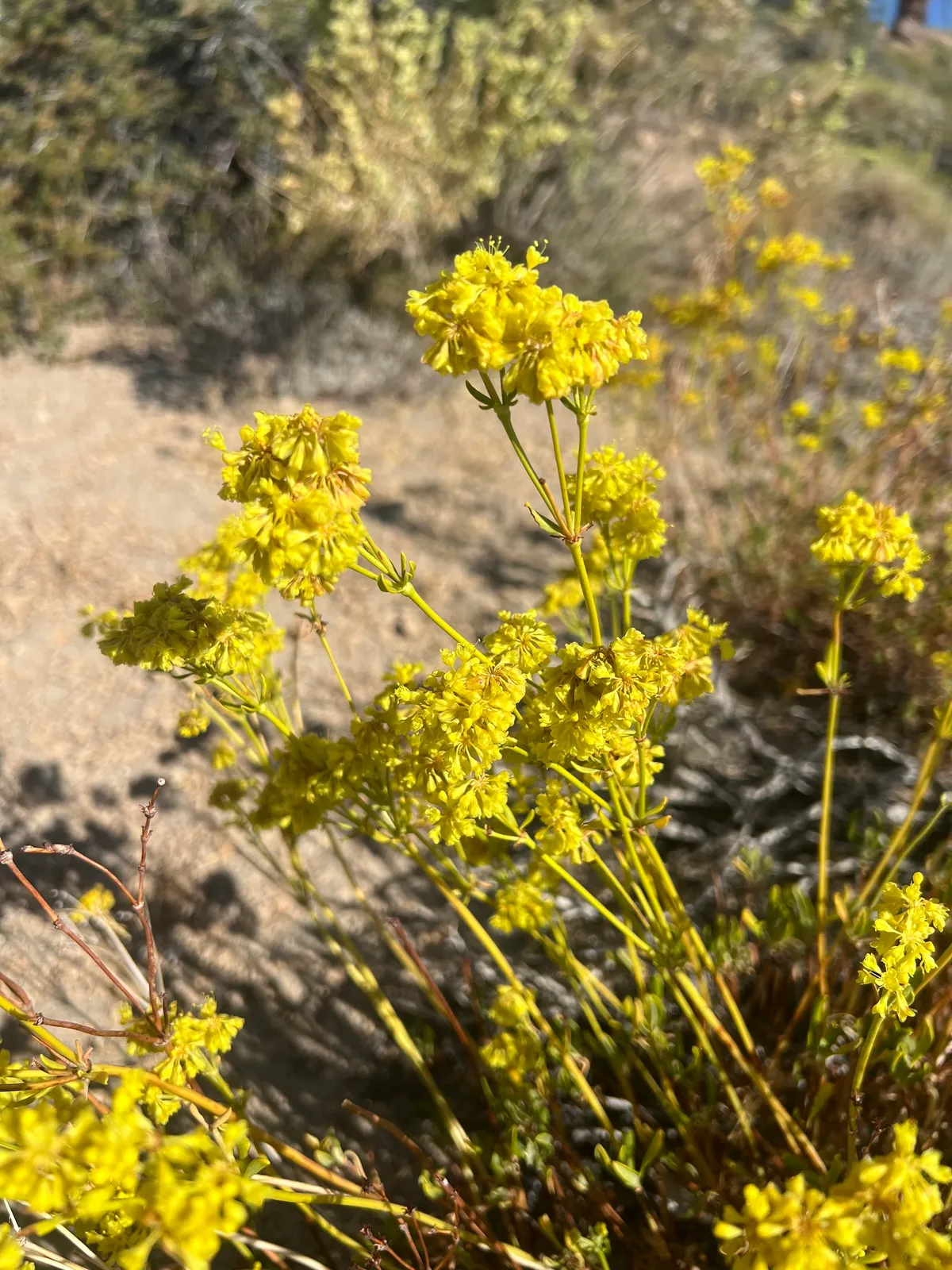
Sulfur-buckwheat (Eriogonum umbellatum) is not flagged as toxic to dogs or cats by Plants For A Future (PFAF) (opens in new tab) (last reviewed 2026-05-21). This verdict does not come from the ASPCA. If your pet shows symptoms after eating any plant, call the ASPCA at (888) 426-4435.
The USDA PLANTS Database (opens in new tab) does not flag Sulfur-buckwheat as toxic to livestock.
Light
full sun
Water
low
Size
4"–24" H × 6"–36" W
Bloom
May, Jun, Jul, Aug
Native to
AZ, CA, CO, ID and 7 more states
Pollinators
bees, butterflies, beetles
Before you buy
Your city may pay you to plant this
Cities and water utilities offer rebates for replacing lawn with native and water-wise plants. We track 459 programs across 44 states, each with a link to the provider and the date we last checked it.
Find rebates in your areaPicture natives in your own yard
Upload a photo of your yard and Patch Vision shows a rendering of it planted with natives for your region, like Sulfur-buckwheat.


Browse plants for this ecoregion
Sulfur-buckwheat is a striking native perennial with rounded clusters of bright yellow flowers that rise above a compact mat of silvery-green foliage. The flowers age to coppery orange, providing visual interest from late spring through summer. This drought-tolerant plant forms an attractive low mound that works well in rock gardens or as a border plant.
Growing Sulfur-buckwheat
Grow Sulfur-buckwheat in full sun and low water. Mature plants reach 4 to 24 inches tall and spread 6 to 36 inches wide. Expect low maintenance to keep it looking intentional in a front yard.
How to care for Sulfur-buckwheat, by region
How to care for Sulfur-buckwheat where it is actually grown: year-round basics plus what to do each season, region by region, with the sources for each.
Care guidance last updated: October 2026
Blue Mountains (includes La Grande, OR)
Year-round
Year-round care for sulphur-flower buckwheat around La Grande, OR: full sun, fast drainage, and almost no water once it is established.
- Plant it in full sun on a well-drained site. Sandy, gravelly, or rocky soil with low fertility suits it, and ordinary garden loam works too.
- Water it through the first year while it gets established. After that it is drought tolerant and needs very little extra water.
- Soggy ground is what kills it, through root and crown rot, so keep it out of low spots where water collects.
- It forms a low mat about 4 to 6 inches tall and 1 to 2 feet wide, with flower stalks up to about 2 feet in early to midsummer. The mat stays partly green through winter.
- Keep weeds, especially annual grasses, out of the planting during its first year.
- It needs no regular upkeep. Cut the spent flower stalks in spring, or trim it back after flowering if you want a denser, tighter plant.
Its low, neat mat reads as tidy groundcover along a walk or at the front of a bed.
Sources: USDA NRCS Plant Fact Sheet: Sulphur-flower Buckwheat (Eriogonum umbellatum), Western Native Plants (Utah State University): Sulphur Buckwheat in the Landscape
Cascades (includes Oakridge, OR)
Year-round
Year-round care for sulfur-buckwheat around Oakridge, OR: sun to part shade, dry gravelly soil.
- It grows in sun or part shade.
- It prefers dry, gravelly soil.
- It grows as a matted or spreading plant, from about 3 inches to 3 feet or more depending on variety.
- The species is very variable, so pick plants from a habitat that matches your site.
- Grow it from seed, because the long taproots make mature plants nearly impossible to move or divide.
Its low mat keeps a clean edge along a front bed.
Sources: Lady Bird Johnson Wildflower Center: Eriogonum umbellatum
Central California Foothills and Coastal Mountains (includes San Francisco, CA)
Year-round
Sulfur buckwheat is a low, evergreen buckwheat from dry mountain slopes and rocky, sun-baked ground across the West. It is not naturally from San Francisco's cool, foggy, clay-soil conditions, so getting the site right matters more than usual for this one.
- This species comes from dry, rocky mountain and interior habitat, not the immediate coastal fog belt, so pick the sunniest, best-draining spot available. A raised bed, rock garden, or slope away from clay or low, damp ground gives it the best chance.
- Skip soil amendments and rich compost at planting. In the wild it grows in lean, gravelly, near-neutral soil, and heavier or richer soil is more likely to cause root rot than help it thrive.
- Water sparingly, at most a few times a month while it establishes, then taper off. It is adapted to long dry summers and does not want regular irrigation once settled in.
- It is grown from seed rather than by transplanting or dividing an existing plant. Mature plants have a long taproot that does not tolerate being dug up and moved.
- The Xerces Society lists it as having special value to native bees, and its flat yellow flower clusters also draw butterflies over a long summer bloom.
- It is not on the ASPCA's toxic plant list for dogs, cats, or horses, which is a plus if pets share the yard.
Fall
Fall is when the flower clusters finish aging to a rust brown. There is little to do this season beyond leaving them be.
- There is no need to deadhead this plant for a second bloom. Once the flower clusters fade for the year, leaving them in place is fine, they age from yellow to a warm rust color that still reads as intentional.
- Established plants need little to no supplemental water once fall rains begin.
- If drainage was a struggle during the growing season, fall, before winter rains arrive, is the time to fix it. Move the plant to a raised or sloped spot, or work coarse grit into the planting hole.
Leaving the rust-colored, dried flower clusters up reads as an intentional, textural planting through fall rather than an unkempt one, so this species does not need fall deadheading for curb appeal.
Winter
Winter is the plant's biggest risk period in a wet, coastal climate like San Francisco's. Cold itself is not the concern, standing water is.
- This species tolerates real cold, down to 0 degrees Fahrenheit per Calscape, so temperature is not the risk in a mild coastal winter. Fast-draining soil is what it actually needs, and that matters most during the wettest months.
- Do not cut the plant back hard in winter. It keeps its evergreen, often reddish-tinged foliage through the cold months and does not need the kind of winter cutback many perennials get.
- If a spot has stayed soggy through past winters, treat that as a sign to improve drainage or relocate the plant rather than waiting for it to adapt.
Because this plant stays evergreen and holds its shape through winter rather than dying back, it needs no winter cutback to look tended, which is one less front-yard task on a winter checklist.
Spring
Spring is when new growth resumes and the flat, ball-shaped flower clusters begin forming ahead of a long summer bloom.
- Hold off on fertilizing. This plant is adapted to poor, gravelly soils, and extra nutrients tend to produce weak growth that flops open in the middle.
- If plants were started from seed the previous fall, thin crowded seedlings now so the strongest ones have room to develop their long taproot.
- Check drainage after spring rains. Standing water or soggy soil around the crown is the most common way this species is lost in a Bay Area garden.
Summer
Summer is peak bloom, when the yellow to cream flower clusters open and draw bees and butterflies over a long stretch of weeks.
- Water only sparingly, if at all, once the plant is established. Overwatering through summer is a bigger risk to this species than underwatering.
- Leave the flowers in place as they age. Through summer they fade from yellow toward a warm rust color that still reads as intentional rather than spent.
- Full sun keeps the mounding form tight and compact. In a shadier or foggier spot, expect looser, less floriferous growth.
Sources: Calscape - Sulphur Buckwheat (Eriogonum umbellatum), Lady Bird Johnson Wildflower Center - Eriogonum umbellatum, California Flora Nursery - Eriogonum umbellatum, ASPCA - Wild Buckwheat (Eriogonum umbellatum) Toxic and Non-Toxic Plants
Columbia Plateau (includes Yakima, WA)
Year-round
Year-round care for sulphur-flower buckwheat around Yakima, WA: full sun, fast drainage, and almost no water once it is established.
- Plant it in full sun on a well-drained site. Sandy, gravelly, or rocky soil with low fertility suits it, and ordinary garden loam works too.
- Water it through the first year while it gets established. After that it is drought tolerant and needs very little extra water.
- Soggy ground is what kills it, through root and crown rot, so keep it out of low spots where water collects.
- It forms a low mat about 4 to 6 inches tall and 1 to 2 feet wide, with flower stalks up to about 2 feet in early to midsummer. The mat stays partly green through winter.
- Keep weeds, especially annual grasses, out of the planting during its first year.
- It needs no regular upkeep. Cut the spent flower stalks in spring, or trim it back after flowering if you want a denser, tighter plant.
Its low, neat mat reads as tidy groundcover along a walk or at the front of a bed.
Sources: USDA NRCS Plant Fact Sheet: Sulphur-flower Buckwheat (Eriogonum umbellatum), Western Native Plants (Utah State University): Sulphur Buckwheat in the Landscape
Eastern Cascades Slopes and Foothills (includes Susanville, CA)
Year-round
Year-round care for sulphur-flower buckwheat around Susanville, CA: full sun, fast drainage, and almost no water once it is established.
- Plant it in full sun on a well-drained site. Sandy, gravelly, or rocky soil with low fertility suits it, and ordinary garden loam works too.
- Water it through the first year while it gets established. After that it is drought tolerant and needs very little extra water.
- Soggy ground is what kills it, through root and crown rot, so keep it out of low spots where water collects.
- It forms a low mat about 4 to 6 inches tall and 1 to 2 feet wide, with flower stalks up to about 2 feet in early to midsummer. The mat stays partly green through winter.
- Keep weeds, especially annual grasses, out of the planting during its first year.
- It needs no regular upkeep. Cut the spent flower stalks in spring, or trim it back after flowering if you want a denser, tighter plant.
Its low, neat mat reads as tidy groundcover along a walk or at the front of a bed.
Sources: USDA NRCS Plant Fact Sheet: Sulphur-flower Buckwheat (Eriogonum umbellatum), Western Native Plants (Utah State University): Sulphur Buckwheat in the Landscape
High Plains (includes Lubbock, TX)
Year-round
Sulphur buckwheat is a Western US plant from the mountains and high deserts of the Great Basin, Sierra, and Cascades, and you are growing it here in the Lubbock High Plains. It is a low, tidy mound that wants full sun, very little water, and lean gritty soil that drains fast. The good news is Lubbock's dry, alkaline, well-drained ground actually suits it well. The thing that kills it is wet feet, so heavy clay that stays soggy or too much watering will rot the roots. USDA lists it as non-toxic to horses, so a stray nibble near a paddock is not a poisoning worry.
- Full sun, all day, is what it wants
- Water low, only when the soil is dry several inches down
- Give it lean, gritty, fast-draining soil, not rich compost
- Wet feet and heavy soil are the number one killers
- Low tidy mound, blooms roughly May through August
- USDA lists it non-toxic to horses
Fall
Fall, around September into October, is the best planting window in Lubbock because the roots get to settle in during cool, mild weather before next summer's heat. If you are adding a plant, do it now and water just enough to settle it, then let it be. For plants already in the ground, ease off water as the weather cools so they harden off for winter. This is also a good time to tidy the clump, trimming off tired or floppy stems so it goes into winter as a clean, low mound rather than a messy one.
- Best planting window is September into October
- Cool fall weather lets roots settle before summer stress
- Water new fall plantings lightly, then taper off
- Reduce watering on existing plants as it cools
- Trim tired or floppy stems to a clean low mound
- Do not fertilize, this plant wants lean soil
A light fall cleanup so the plant heads into winter as a tidy mound reads as intentional upkeep and helps avoid a violation letter over something that could otherwise look overgrown.
Winter
This is a tough mountain and high-desert plant, so Lubbock's hard freezes, wind, and occasional snow or ice are not the problem for it. Cold is not what kills sulphur buckwheat here, wet soil in winter is. When the ground is cold and damp and does not drain, the roots can rot, so the single most important winter job is to not water and to make sure the crown is sitting in dry, gritty ground rather than a low spot that puddles. Leave the plant alone over winter. Pull any bark mulch or wet leaves away from the base so the crown can stay dry.
- Hard freezes and snow do not hurt this plant
- Do not water over winter, cold wet soil causes rot
- Make sure the crown is not sitting in a spot that puddles
- Keep wet leaves and bark mulch off the base
- Gravel around the crown helps it stay dry
- Leave the plant be, no pruning needed until spring
Spring
Spring is the second-best time to plant sulphur buckwheat here, right after the last frost around early to mid April. Pick the sunniest, best-draining spot you have and work some grit or decomposed granite into the hole so water runs through fast. New plants are most at risk from Lubbock's dry spring wind, which pulls moisture out of them before the roots can catch up, so water lightly to settle them in and then back off. Do not pile on rich soil or mulch against the crown. A thin layer of gravel around the base is better than bark mulch because it keeps the crown dry.
- Plant after the last frost, roughly early to mid April
- Choose full sun and the fastest-draining spot in the yard
- Mix grit or decomposed granite into the planting hole
- Water new transplants lightly, then let the soil dry between
- Shield young plants from drying spring wind the first few weeks
- Use gravel, not bark mulch, and keep it off the crown
Summer
Summer is when this plant is happiest and when you can do the most harm with a hose. It is built for hot, dry, sunny conditions, so an established mound needs very little water even when Lubbock highs sit in the 90s and 100s. The real danger is the summer thunderstorm season, when a downpour soaks the ground and, if your soil holds water, the roots sit wet and rot. If your soil is on the heavier caliche-clay side, hold back on all extra watering during the rainy stretch and let nature do it. It blooms through summer, and you can snip spent flower stalks to keep the mound looking neat.
- Established plants need very little summer water
- Skip watering after thunderstorms so roots do not stay wet
- On clay or caliche soil, let rain be the only summer water
- Full sun and heat are fine, no shade needed
- Snip spent bloom stalks to keep the mound tidy
- Yellow flowers may fade to orange or red as they age
Clipping the spent flower stalks keeps the clump reading as intentional and cared-for through the season, which is what keeps a front-yard planting looking deliberate to HOA-conscious neighbors.
Sources: USDA PLANTS Database, Eriogonum umbellatum (ERUM), Lady Bird Johnson Wildflower Center, Eriogonum umbellatum
Klamath Mountains/California High North Coast Range (includes Medford, OR)
Year-round
Year-round care for sulphur-flower buckwheat around Medford, OR: full sun, fast drainage, and almost no water once it is established.
- Plant it in full sun on a well-drained site. Sandy, gravelly, or rocky soil with low fertility suits it, and ordinary garden loam works too.
- Water it through the first year while it gets established. After that it is drought tolerant and needs very little extra water.
- Soggy ground is what kills it, through root and crown rot, so keep it out of low spots where water collects.
- Winter here is the wet season, so a slope or a raised spot where water drains away gives it the best chance.
- It forms a low mat about 4 to 6 inches tall and 1 to 2 feet wide, with flower stalks up to about 2 feet in early to midsummer. The mat stays partly green through winter.
- Keep weeds, especially annual grasses, out of the planting during its first year.
- It needs no regular upkeep. Cut the spent flower stalks in spring, or trim it back after flowering if you want a denser, tighter plant.
Its low, neat mat reads as tidy groundcover along a walk or at the front of a bed.
Sources: USDA NRCS Plant Fact Sheet: Sulphur-flower Buckwheat (Eriogonum umbellatum), Western Native Plants (Utah State University): Sulphur Buckwheat in the Landscape
Mojave Basin and Range (includes Las Vegas, NV)
Year-round
Sulfur buckwheat is a low woody mat with flat clusters of bright yellow flowers held on short stems above the leaves. Authorities describe it on dry, rocky, sunny mountain slopes and ridges across the West, growing anywhere from about 700 to 12,000 feet. A northwest Las Vegas yard at roughly 2,700 feet is the low, hot edge of its comfort, so give it afternoon shade and very sharp drainage and it can do well. It wants lean, gritty, unamended ground and very little water once it settles in. Rich soil and fertilizer are the most common way people lose this plant, because they push soft growth that flops open and does not last.
- Put it in the leanest, grittiest spot you have, ideally on a slight mound or slope, because it rots in ground that stays wet.
- Skip compost, potting soil, and fertilizer completely. It grows best in low fertility ground.
- Mulch with about 2 inches of gravel or decomposed granite instead of bark, and keep the gravel pulled back off the woody crown.
- Give it afternoon shade here. All day sun at 110F is harder on it than the heat it gets in the mountains.
- Caliche alkalinity is not the real obstacle. It has high carbonate tolerance and handles soil pH up to about 9.0. Drainage is what you have to fix.
- The ASPCA lists this plant as non-toxic to dogs, cats, and horses. Grocery buckwheat (Fagopyrum) is a different genus and the ASPCA does list that one as toxic.
It grows as a low evergreen mat rather than a tall loose clump, which reads as an intentional, maintained planting in an HOA-friendly front bed.
Fall
Fall is the best planting window in southern Nevada and the natural time to tidy this plant up. Bloom finishes around September and the spent stalks dry to a papery tan. Cutting plants back after flowering promotes a denser, more compact mat, so a light shear now is both a looks decision and a health one. Soil is still warm, so roots put on real growth before winter arrives.
- October and November are the best time to set out new plants. Roots grow in warm soil while the top is not fighting heat.
- Shear the spent flower stalks off after bloom to get a tighter mat. Cut the stalks only and never into the old woody base.
- If you would rather feed wildlife, leave part of the seed heads standing. The seeds are an important food source for many birds and small mammals.
- Taper watering to roughly once a month as nights cool off.
- Do not try to relocate an established plant. It makes a long taproot and mature plants do not move well.
- Top gravel mulch back up to about 2 inches, keeping it pulled back from the crown.
Clearing the dry stalks before the holidays matters, because a front bed of brown stems in December is the thing that gets noticed from the street.
Winter
Winter is the quiet season and mostly a matter of not doing damage. The mat stays evergreen, so it holds a low patch of green in a bed where most things have gone brown. Las Vegas winter lows sit well inside what this plant handles, since it takes cold down to about 0F. The real winter risk is water sitting around the crown during a mild wet stretch, not the cold itself.
- Water only after a long dry and windy stretch, roughly once a month at most, and skip it entirely if you have had real rain.
- Dial back or cap any drip emitter on this plant so it is not running on the same winter schedule as thirstier shrubs.
- Keep gravel pulled an inch or two off the woody crown so the base is not sitting in damp mulch.
- Do not prune now. Any shaping belongs right after bloom, not in the dormant months.
- Late winter is a good time to walk the bed and decide where to add plants, since new stock goes in best in spring or fall.
Because it stays low and green through winter, it keeps a front bed from looking bare in the months when everything around it is dormant.
Spring
Spring is when the mat greens up and pushes new growth before the heat lands. In the Las Vegas valley that window is short, roughly March into early May. It is also one of the two good times to plant, the other being fall. Water anything you set out this spring often enough that roots go deep, and otherwise leave established plants nearly alone.
- March and April are the planting window. Stop once daytime highs push past 95F, because new roots will not keep up.
- On a plant set out this spring, check soil moisture 2 to 3 inches below the surface for the first few weeks and water when it is dry down there.
- An established mat usually needs nothing more than one deep soak every two to three weeks if the winter was dry.
- Do not feed it. No fertilizer, no compost topdressing, no bagged soil piled around the crown.
- Pull weeds out of the gravel by hand while they are small. The mat sits low and weeds hide inside it fast.
- Flower stems start forming above the leaves in late spring, so hold off on any shearing until after bloom.
A crisp gravel edge and a clean mulch line around the mat is most of what makes a low native planting read as deliberate from the sidewalk.
Summer
Summer is bloom season and the hardest stretch of the year for this plant down in the valley. Flowers open in June and carry through September, starting bright sulfur yellow and aging to rusty orange and red. Authorities place it in regions that get 8 to 18 inches of precipitation a year, so a yard under 5 inches does need some help, though far less than most people give. Overwatering in July is what kills it, not the heat.
- A deep soak every two to three weeks is usually enough once established. Three waterings in a month is about the ceiling.
- Water early in the morning at the soil line, never overhead onto the crown. Root and crown rot in wet ground is the main risk.
- Leave the flowers standing while they bloom. They feed a long list of native bees, and this species is a larval host plant for the lupine blue butterfly.
- No fertilizer in summer. Feeding pushes soft growth that splits open in the middle of the mat.
- After a monsoon storm, check that gravel has not washed into a damp berm against the woody base.
- If the mat browns during a heat wave but the stems are still flexible, hold your water rather than adding more.
The flowers rusting to orange and red in late summer is normal aging color rather than a dying plant, which is worth saying out loud if a neighbor or a board member asks.
Sources: USDA NRCS Plant Fact Sheet, Sulphur-flower Buckwheat (Eriogonum umbellatum), Lady Bird Johnson Wildflower Center, Eriogonum umbellatum, ASPCA Toxic and Non-toxic Plants, Wild Buckwheat (Eriogonum umbellatum), ASPCA Toxic and Non-toxic Plants, Buckwheat (Fagopyrum spp.), University of Nevada Reno Extension, Mulches for Nevada Landscapes, Calscape (CNPS), Sulphur Buckwheat
Northern Rockies (includes Coeur d'Alene, ID)
Year-round
Year-round care for sulphur-flower buckwheat around Coeur d'Alene, ID: full sun, fast drainage, and almost no water once it is established.
- Plant it in full sun on a well-drained site. Sandy, gravelly, or rocky soil with low fertility suits it, and ordinary garden loam works too.
- Water it through the first year while it gets established. After that it is drought tolerant and needs very little extra water.
- Soggy ground is what kills it, through root and crown rot, so keep it out of low spots where water collects.
- It forms a low mat about 4 to 6 inches tall and 1 to 2 feet wide, with flower stalks up to about 2 feet in early to midsummer. The mat stays partly green through winter.
- Keep weeds, especially annual grasses, out of the planting during its first year.
- It needs no regular upkeep. Cut the spent flower stalks in spring, or trim it back after flowering if you want a denser, tighter plant.
Its low, neat mat reads as tidy groundcover along a walk or at the front of a bed.
Sources: USDA NRCS Plant Fact Sheet: Sulphur-flower Buckwheat (Eriogonum umbellatum), Western Native Plants (Utah State University): Sulphur Buckwheat in the Landscape
Northwestern Glaciated Plains (includes Great Falls)
Year-round
Year-round care for sulphur-flower buckwheat around Great Falls: full sun, fast drainage, and almost no water once it is established.
- Plant it in full sun on a well-drained site. Sandy, gravelly, or rocky soil with low fertility suits it, and ordinary garden loam works too.
- Water it through the first year while it gets established. After that it is drought tolerant and needs very little extra water.
- Soggy ground is what kills it, through root and crown rot, so keep it out of low spots where water collects.
- It forms a low mat about 4 to 6 inches tall and 1 to 2 feet wide, with flower stalks up to about 2 feet in early to midsummer. The mat stays partly green through winter.
- Keep weeds, especially annual grasses, out of the planting during its first year.
- It needs no regular upkeep. Cut the spent flower stalks in spring, or trim it back after flowering if you want a denser, tighter plant.
Its low, neat mat reads as tidy groundcover along a walk or at the front of a bed.
Sources: USDA NRCS Plant Fact Sheet: Sulphur-flower Buckwheat (Eriogonum umbellatum), Western Native Plants (Utah State University): Sulphur Buckwheat in the Landscape
Northwestern Great Plains (includes Billings)
Year-round
Year-round care for sulphur-flower buckwheat around Billings: full sun, fast drainage, and almost no water once it is established.
- Plant it in full sun on a well-drained site. Sandy, gravelly, or rocky soil with low fertility suits it, and ordinary garden loam works too.
- Water it through the first year while it gets established. After that it is drought tolerant and needs very little extra water.
- Soggy ground is what kills it, through root and crown rot, so keep it out of low spots where water collects.
- It forms a low mat about 4 to 6 inches tall and 1 to 2 feet wide, with flower stalks up to about 2 feet in early to midsummer. The mat stays partly green through winter.
- Keep weeds, especially annual grasses, out of the planting during its first year.
- It needs no regular upkeep. Cut the spent flower stalks in spring, or trim it back after flowering if you want a denser, tighter plant.
Its low, neat mat reads as tidy groundcover along a walk or at the front of a bed.
Sources: USDA NRCS Plant Fact Sheet: Sulphur-flower Buckwheat (Eriogonum umbellatum), Western Native Plants (Utah State University): Sulphur Buckwheat in the Landscape
Southern Rockies (includes Durango, CO)
Year-round
Sulphur-flower buckwheat is a native, low mat-forming wildflower that fits the Southern Rockies around Durango well. It wants full sun and fast-draining, gravelly or sandy soil, and its natural elevation range, roughly 4,000 feet to well above 10,000 feet, comfortably covers Durango's elevation.
- Give it full sun and a spot that drains quickly after rain or snowmelt.
- Use gravel or crushed rock around the base instead of compost or bark mulch, wet organic mulch against the crown invites rot.
- Water only occasionally once established, this plant is built for dry, lean soil.
- Foliage is evergreen to semi-evergreen, holding a low gray-green mound most of the year.
Fall
In fall the spent flower heads turn rust orange to copper red, giving the plant a second season of color, and the seed heads are worth leaving standing since they feed birds and hold the bed together into winter. Cooler fall weather also makes this a good time to plant new sulphur-flower buckwheat so roots can settle in before summer heat returns.
- Leave the rust colored seed heads standing instead of cutting them back, they add color and feed birds through fall.
- Cut back watering as temperatures drop, this species wants to head into winter on the dry side.
- Fall is a good planting window in the Southern Rockies, cooler weather helps roots establish.
- Foliage stays evergreen to semi-evergreen, so the bed will not go bare heading into winter.
Leaving the rust colored seed heads standing through fall reads as intentional, cared for landscaping rather than an unkempt bed, which helps in an HOA-conscious front yard.
Winter
Sulphur-flower buckwheat is very cold hardy and holds its low, evergreen to semi-evergreen mound through winter around Durango, so the bed keeps some structure and color even under snow. No winter watering or protection is needed, and any seed heads left from fall keep feeding birds.
- No winter watering or protection needed once established, this species is rated very cold hardy and fits Southern Rockies winters.
- Foliage stays low and evergreen to semi-evergreen, giving the bed a tended look instead of bare dirt.
- Leave any remaining dried seed heads standing for winter bird forage, save cleanup for spring.
- Skip winter mulch around the crown, extra moisture in cold weather can cause rot in this species.
A tidy, low evergreen mound through winter reads as deliberate landscaping rather than a neglected bed, which is useful in an HOA-conscious front yard.
Spring
Spring is when this plant breaks winter dormancy and pushes new basal growth, so it is the best window to clip off last year's dried flower stalks if you want a cleaner look before flower buds form in early summer. Keep watering minimal, spring rain is usually enough on its own.
- Optional cleanup, cut last season's dried flower stalks back to the mound if you want a fresher look.
- Skip fertilizer, rich feeding works against this plant's natural low-water habit.
- Watch for new basal leaf growth filling in the mound as it warms up.
- Flower buds are not expected yet, bloom typically starts in early summer.
Clipping back last year's dried flower stalks in spring reads as intentional, tended care rather than leftover mess, which matters in an HOA-conscious front yard.
Summer
Summer is bloom season, sulphur yellow flower clusters open from around June into August and pull in bees and butterflies. This plant is built for arid summers, so water deeply but rarely, frequent light watering does more harm than good once it is established.
- Peak bloom runs roughly June through August.
- Water deeply and infrequently, long dry spells are normal and too much summer water can hurt the plant.
- Full sun keeps flower stalks upright and the mound compact.
- Let spent flowers age in place, they slowly shift from yellow toward rust and copper tones instead of needing deadheading.
Sources: Lady Bird Johnson Wildflower Center, Eriogonum umbellatum plant profile, Calscape, Eriogonum umbellatum (Sulphur Buckwheat), Utah State University Extension, Western Native Plants, Sulphur Buckwheat in the Landscape, High Country Gardens, Plant Profile: Sulfur Buckwheats
Wyoming Basin (includes Laramie, WY)
Year-round
Year-round care for sulphur-flower buckwheat around Laramie, WY: full sun, fast drainage, and almost no water once it is established.
- Plant it in full sun on a well-drained site. Sandy, gravelly, or rocky soil with low fertility suits it, and ordinary garden loam works too.
- Water it through the first year while it gets established. After that it is drought tolerant and needs very little extra water.
- Soggy ground is what kills it, through root and crown rot, so keep it out of low spots where water collects.
- It forms a low mat about 4 to 6 inches tall and 1 to 2 feet wide, with flower stalks up to about 2 feet in early to midsummer. The mat stays partly green through winter.
- Keep weeds, especially annual grasses, out of the planting during its first year.
- It needs no regular upkeep. Cut the spent flower stalks in spring, or trim it back after flowering if you want a denser, tighter plant.
Its low, neat mat reads as tidy groundcover along a walk or at the front of a bed.
Sources: USDA NRCS Plant Fact Sheet: Sulphur-flower Buckwheat (Eriogonum umbellatum), Western Native Plants (Utah State University): Sulphur Buckwheat in the Landscape
In an HOA neighborhood
Sulfur-buckwheat is an HOA-friendly choice. Maintenance level: low. Tidiness: 4 out of 5.
Works well in: front yard, foundation, street edge, mid zone.
- Seed heads may appear untidy if not deadheaded after blooming
Wildlife value
Sulfur-buckwheat is a valuable pollinator plant, particularly attractive to native bees, butterflies, and beetles. The abundant blooms provide nectar and pollen during the summer months.
Common questions
- When does sulfur-buckwheat bloom?
- Eriogonum umbellatum typically flowers from May through August, with the sulfur-yellow blooms often aging to orange or rust as the season progresses.
- What pollinators does sulfur-buckwheat attract?
- Bees, butterflies, and beetles regularly visit the flower clusters of Eriogonum umbellatum for nectar and pollen.
- What growing conditions does sulfur-buckwheat need?
- It grows best in full sun with low water once established, favoring gravelly, rocky, or well-drained soils typical of open slopes and dry mountain terrain.
- Is sulfur-buckwheat a shrub or a wildflower?
- It is often classed as a forb or low subshrub, forming a mat of basal leaves with wiry flowering stems that rise above the foliage.
- Is Sulfur-buckwheat toxic to dogs?
- Sulfur-buckwheat is not flagged as toxic to dogs by Plants For A Future (PFAF). This verdict does not come from the ASPCA.
- Is Sulfur-buckwheat toxic to cats?
- Sulfur-buckwheat is not flagged as toxic to cats by Plants For A Future (PFAF). This verdict does not come from the ASPCA.
- Is Sulfur-buckwheat toxic to livestock?
- The USDA PLANTS Database does not flag Sulfur-buckwheat as toxic to livestock.
- Is Sulfur-buckwheat HOA-friendly?
- Sulfur-buckwheat is generally an HOA-friendly choice in the right placement, with low maintenance.
These answers were drafted with an AI model from this plant's data. Verify care details with a local expert.
Native range data from vouchered herbarium specimen records and regional native plant society lists. Pollinator and host plant associations compiled from GBIF, iNaturalist, and published ecological literature.
If something looks wrong
Common plant problems, and what to check first
These come up on almost any plant. Each guide lists the likely causes in the order they are worth ruling out, with one thing to check before you act on any of them, and links to the source it came from.
- It is dying right after planting
- Leaves turning yellow
- Wilting even though I watered it
- Brown crispy leaf tips
- Bugs on the plant
Ready to grow Sulfur-buckwheat? Add it to your garden in Pollinator Patch to track it and get season-by-season care guidance.