Texas fescue
Festuca versuta
Last reviewed: September 2026
Texas fescue (Festuca versuta) is a perennial grass native to AR, KS, OK, TN and 1 more states. It blooms in March, April, and May.
Toxicity unknown
Texas fescue (Festuca versuta) is not listed by the ASPCA Animal Poison Control Center (opens in new tab) or the other sources we check, so we have no verdict for it either way. Absence from those lists is not a clearance. If your pet shows symptoms after eating any plant, call the ASPCA at (888) 426-4435.
Light
full sun
Water
low
Size
12"–24" H × 12"–18" W
Bloom
Mar, Apr, May
Native to
AR, KS, OK, TN and 1 more states
Before you buy
Your city may pay you to plant this
Cities and water utilities offer rebates for replacing lawn with native and water-wise plants. We track 458 programs across 44 states, each with a link to the provider and the date we last checked it.
Find rebates in your areaBrowse plants for this ecoregion
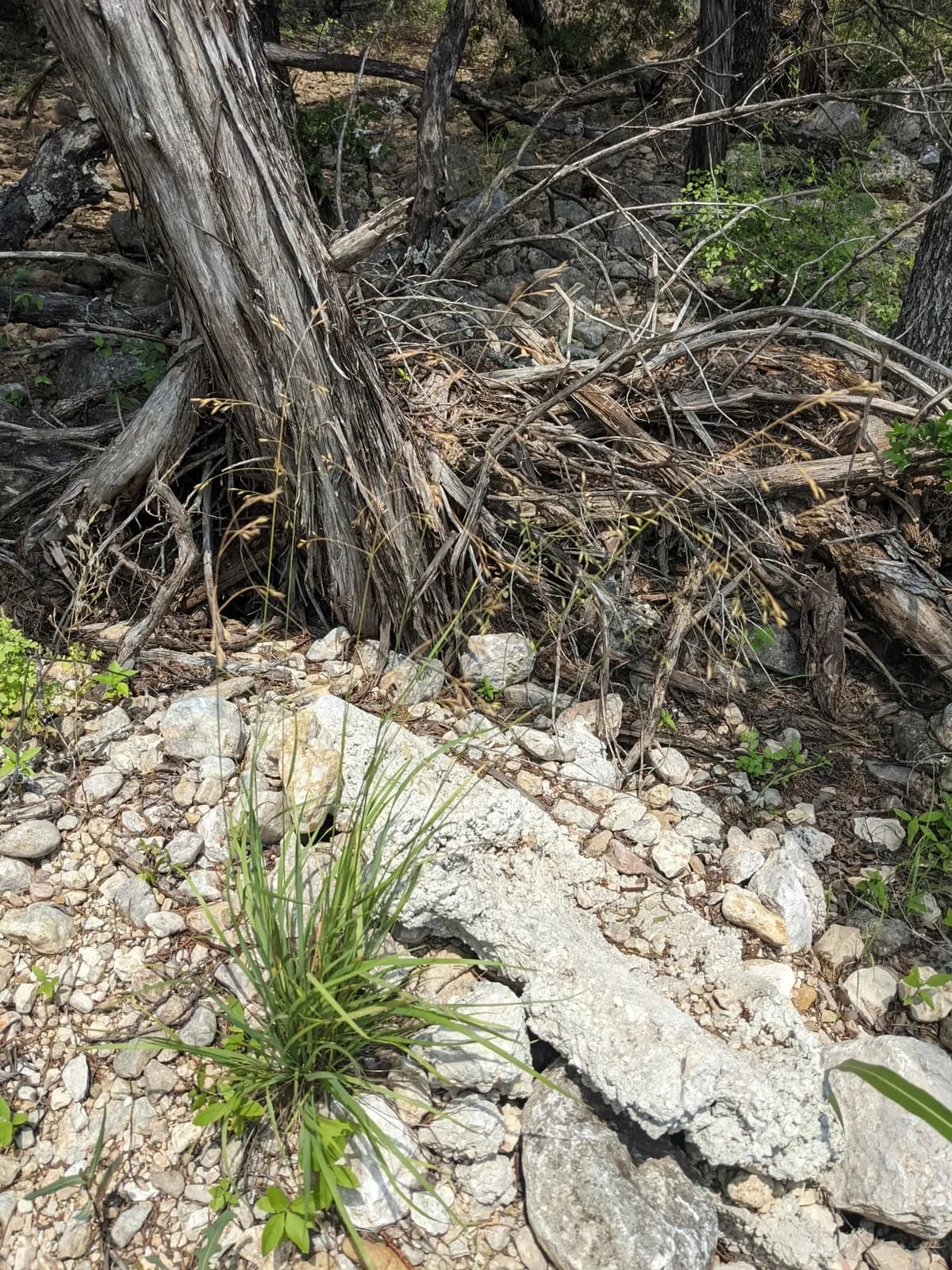
A fine-textured cool-season bunchgrass with narrow arching blue-green blades. Forms neat clumps and stays green through mild winters, thriving on dry rocky or caliche soils.
Growing Texas fescue
Grow Texas fescue in full sun and low water. Mature plants reach 12 to 24 inches tall and spread 12 to 18 inches wide.
How to care for Texas fescue, by region
How to care for Texas fescue where it is actually grown: year-round basics plus what to do each season, region by region, with the sources for each.
Care guidance last updated: September 2026
Ouachita Mountains (includes Hot Springs, AR)
Year-round
Texas fescue is a genuine Arkansas native grass, not just a Texas plant despite the name. The Lady Bird Johnson Wildflower Center lists Arkansas in its native range, and in the wild it grows as a loose, upright clump in open woods and on rocky slopes. In the Hot Springs area it does best in full sun to part shade with dry to average soil, and it does not need regular fertilizer once it is established.
- Native to Arkansas, Kansas, Oklahoma, Tennessee, and Texas, per the Lady Bird Johnson Wildflower Center, so the Arkansas native claim holds despite the common name.
- Grows 3 to 5 feet tall with a loose, lanky habit rather than a tight tuft, per Hamilton Native Outpost, a native plant nursery.
- Tolerates full sun to part shade in dry to average, well drained soil.
- A cool season grass, meaning most of its growth happens in spring and fall rather than at the peak of summer.
Fall
Fall's cooler, wetter weather brings this grass back into active growth after its summer slowdown. Because it grows tall and lanky rather than in a tidy tuft, fall is a good time to cut back any floppy or heat worn summer foliage so the clump reads as tended rather than overgrown in a front yard bed.
- Growth picks back up as fall temperatures drop, typical of cool season grasses, per Iowa State University Extension.
- The plant's natural habit is tall and lanky, 3 to 5 feet, per Hamilton Native Outpost, so a fall trim keeps it from flopping over.
- Cutting back worn summer leaves now avoids a messy look heading into winter.
- No fertilizer is needed for the fall regrowth.
A fall trim of this grass's lanky summer growth reads as intentional care, not neglect, in a front yard planting.
Winter
Hot Springs sits in USDA Hardiness Zone 8a, mild enough that this grass can often keep some foliage through winter instead of dying back completely, though older leaves usually look tan and worn rather than green. Keeping the clump cut back and neat over winter keeps a front yard bed looking cared for.
- Hot Springs falls in USDA Hardiness Zone 8a, per the University of Arkansas Cooperative Extension Service.
- Foliage can persist through a mild Arkansas winter, but expect a tan, worn look rather than green growth.
- Cutting the clump back neatly avoids a scraggly look through the mild winter months.
- Hold off on new plantings or moving the clump until active growth resumes in spring.
A neat, cut back winter clump avoids looking like an HOA violation for an unkept bed, while still keeping a genuine Arkansas native in the ground.
Spring
Spring is this grass's main active growing season in the Hot Springs area. It flowers from March through June, and new leaf growth fills out the clump from the base as the ground warms.
- Flowers March through June, per the Lady Bird Johnson Wildflower Center.
- New basal growth resumes once the soil warms in early spring.
- No fertilizer is needed. In the wild this grass grows in dry to average soil without help.
- The grass flowers are small and easy to miss. Do not expect a showy bloom.
Summer
Hot Springs summers are hot and humid, and cool season grasses like this one often slow down or look tan and worn once the heat sets in. That is a normal survival response, not a sign the plant is dying, so there is no need to water it heavily or push fertilizer during the hottest stretch.
- Cool season grasses naturally slow growth and can brown when soil gets hot, per Iowa State University Extension.
- This species grows in dry to average soil in the wild, so it does not need extra watering to get through summer heat.
- A part shade spot, rather than full baking sun, can reduce summer stress, per growing notes from Hamilton Native Outpost.
- Skip fertilizer during peak summer heat. It will not help and can stress the crown.
Sources: Lady Bird Johnson Wildflower Center, Festuca versuta plant profile, Hamilton Native Outpost, Texas Fescue growing notes, Iowa State University Extension and Outreach, Summer Dormancy in Cool-Season Lawns, University of Arkansas Cooperative Extension Service, Plant Hardiness Zone Map
Wildlife value
Provides year-round groundcover and shelter for small insects in dry rocky sites.
Common questions
- How much sun does Texas fescue need?
- Texas fescue grows best in full sun conditions.
- When does Texas fescue bloom?
- Texas fescue blooms in March, April, and May.
- Where is Texas fescue native?
- Texas fescue (Festuca versuta) is native to AR, KS, OK, TN and 1 more states, per the World Checklist of Vascular Plants (Kew).
Native range data from the World Checklist of Vascular Plants (Kew). Pollinator and host plant associations compiled from GBIF, iNaturalist, and published ecological literature.
If something looks wrong
Common plant problems, and what to check first
These come up on almost any plant. Each guide lists the likely causes in the order they are worth ruling out, with one thing to check before you act on any of them, and links to the source it came from.
- It is dying right after planting
- Leaves turning yellow
- Wilting even though I watered it
- Brown crispy leaf tips
- Bugs on the plant
Ready to grow Texas fescue? Add it to your garden in Pollinator Patch to track it and get season-by-season care guidance.