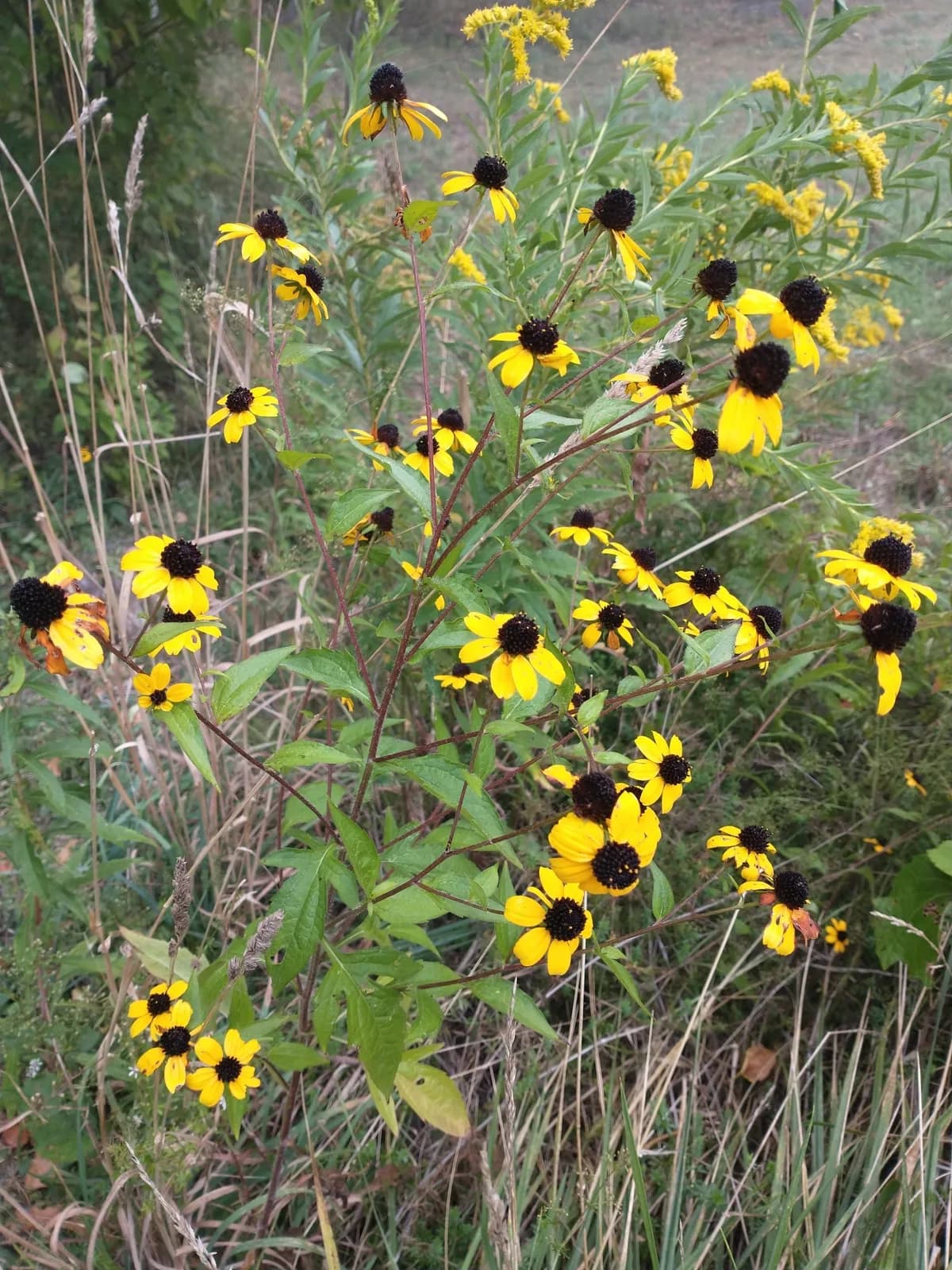
Thin-leaf Coneflower

Rudbeckia triloba

Last reviewed: September 2026

Rudbeckia triloba is a bushy forb that blooms July through October with small yellow daisy-like flowers and dark centers, thriving in full sun to part shade with medium moisture.

Thin-leaf Coneflower (Rudbeckia triloba)
Photo: (c) Tom Norton, some rights reserved (CC BY)

Toxicity unknown

Thin-leaf Coneflower (Rudbeckia triloba) is not listed by the ASPCA Animal Poison Control Center (opens in new tab) or the other sources we check, so we have no verdict for it either way. Absence from those lists is not a clearance. If your pet shows symptoms after eating any plant, call the ASPCA at (888) 426-4435.

Light

full sun

Water

medium

Size

24"–60" H × 12"–24" W

Bloom

Jul, Aug, Sep, Oct

Native to

AL, AR, CO, DE and 28 more states

Pollinators

bees, butterflies, beetles

Before you buy

Your city may pay you to plant this

Cities and water utilities offer rebates for replacing lawn with native and water-wise plants. We track 452 programs across 44 states, each with a link to the provider and the date we last checked it.

Find rebates in your area

Thin-leaf coneflower produces masses of small, bright yellow daisy-like flowers from summer through fall. This plant forms upright clumps with delicate, deeply-lobed foliage that creates an airy texture in the garden. It's drought tolerant once established and provides reliable color during the hottest months.

Growing Thin-leaf Coneflower

Grow Thin-leaf Coneflower in full sun and medium water. Mature plants reach 24 to 60 inches tall and spread 12 to 24 inches wide. Expect low maintenance to keep it looking intentional in a front yard.

How to care for Thin-leaf Coneflower, by region

How to care for Thin-leaf Coneflower where it is actually grown: year-round basics plus what to do each season, region by region, with the sources for each.

Care guidance last updated: September 2026

Enter your ZIP code and we will open the guidance for your region.

Cross Timbers (includes Fort Worth, TX)

Year-round

Brown-eyed Susan fits the Cross Timbers, where oak woodland edges and creek banks meet prairie. Its documented habitats of woodland edges, thickets, and stream banks match this transition zone around Fort Worth. It blooms gold with brown centers from summer into fall.

  • Its indigenous habitats include woodland edges, thickets, savannas, and creek and river banks, which describe the Cross Timbers oak-and-prairie mosaic (Native Plant Society of Texas, USDA PLANTS Database habitat description).
  • Full sun to part shade both suit it, matching the light under scattered Cross Timbers oaks (Lady Bird Johnson Wildflower Center).
  • It takes dry to moist soil and is drought-tolerant once established, useful for the region's sandy and clay mixes (Lady Bird Johnson Wildflower Center).
  • It reseeds freely, so give it room or thin seedlings to keep beds tidy.
  • It feeds native bees and butterflies in summer and seed-eating birds in fall (Native Plant Society of Texas).

In a defined bed with thinned reseeders it reads as a planned wildflower border, which most boards accept as intentional.

Fall

Fall closes the bloom and starts seed set. Flowers hold into October, then seedheads form. Your choice to leave or cut them controls spread and bird food.

  • Blooms often continue into October for late color around Fort Worth (Lady Bird Johnson Wildflower Center).
  • Leave seedheads standing to feed goldfinches and other songbirds into winter (Lady Bird Johnson Wildflower Center notes it attracts birds).
  • Cut and remove seedheads before they drop to reduce volunteer seedlings next spring.
  • Fall is a good time to divide or move crowded clumps while soil stays warm.

Trim the front row of seedheads and leave the rest to keep a clean curb line while still feeding birds.

Winter

Winter is dormancy in the Cross Timbers. The plant dies back and seed waits in the soil for spring. Little to do beyond a late-winter cleanup.

  • Expect bare, dormant stems. Bare in winter is normal, not a dead plant.
  • Leave stems and seedheads for birds through winter, then cut back in late winter before new growth.
  • Dropped seed overwinters and sprouts as spring volunteers.
  • No watering needed while dormant unless a long warm dry spell hits.

Spring

Spring is establishment time in the Cross Timbers. Plant or sow while soil is still moist from spring rain. First-year plants usually leaf out without blooming, which is normal.

  • Plant transplants or sow seed in early spring so roots settle before Fort Worth summer heat.
  • Water new plants through spring, since sandy Cross Timbers soils drain fast and dry out young roots.
  • A first-year rosette without flowers is expected for this biennial.
  • Go easy on fertilizer. Native soil plus mulch keeps growth sturdy.

Summer

Summer is peak bloom in the Cross Timbers, June into fall, and the busiest pollinator window. Keep water steady through dry spells and it will flower heavily.

  • Bloom runs June through October, so summer carries the show (Lady Bird Johnson Wildflower Center).
  • It offers nectar and pollen to native bees and butterflies through the season (Native Plant Society of Texas).
  • It is a documented larval host for the silvery checkerspot butterfly, so chewed leaves may mean caterpillars (Butterflies and Moths of North America, Alabama Butterfly Atlas).
  • Water in dry stretches. It is drought-tolerant once established but blooms better with medium water.
  • Deadhead for more blooms and less self-seeding, or leave flowers to set seed.

Sources: Native Plant Society of Texas, Rudbeckia triloba, USDA PLANTS Database, Rudbeckia triloba (RUTR2), Lady Bird Johnson Wildflower Center, Rudbeckia triloba, Butterflies and Moths of North America, Silvery Checkerspot (Chlosyne nycteis), Alabama Butterfly Atlas, Silvery Checkerspot

East Central Texas Plains (includes College Station, TX)

Year-round

Brown-eyed Susan fits the Post Oak Savanna. Its natural home is savannas, woodland edges, and thickets, which is exactly the open-oak-and-grassland mix around College Station. It blooms gold with brown centers from summer into fall and reseeds to hold its ground.

  • It is indigenous to savannas, thickets, and woodland edges, the core habitats of the Post Oak Savanna (Native Plant Society of Texas, USDA PLANTS Database habitat description).
  • Full sun to part shade both suit it, matching the dappled light under scattered post oaks (Lady Bird Johnson Wildflower Center).
  • It takes dry to moist soil and is drought-tolerant once established, which fits the region's variable rainfall (Lady Bird Johnson Wildflower Center).
  • It reseeds freely, so give it room or thin seedlings to keep beds tidy.
  • It feeds native bees and butterflies in summer and seed-eating birds in fall (Native Plant Society of Texas).

In a defined bed with thinned reseeders it looks like a planned wildflower border, which reads as intentional to most boards.

Fall

Fall closes out the bloom and starts seed set. Flowers linger into October, then seedheads form. Your call on leaving or cutting them controls spread and bird food.

  • Blooms often continue into October for late color around College Station (Lady Bird Johnson Wildflower Center).
  • Leave seedheads standing to feed goldfinches and other songbirds into winter (Lady Bird Johnson Wildflower Center notes it attracts birds).
  • Cut and remove seedheads before they drop to reduce volunteer seedlings next spring.
  • Fall is a good time to thin or move crowded clumps while soil is warm.

Cut the front row of seedheads and leave the rest to keep a neat curb edge while still feeding birds.

Winter

Winter is dormancy. The plant dies back and seed waits in the soil for spring. Mild Post Oak Savanna winters keep upkeep minimal.

  • Expect bare, dormant stems. Bare in winter is normal, not a dead plant.
  • Leave stems and seedheads for birds through winter, then cut back in late winter before new growth.
  • Dropped seed overwinters and sprouts as spring volunteers.
  • No watering needed in dormancy unless a long warm dry spell hits.

Spring

Spring is establishment season in the Post Oak Savanna. Plant or sow while soil is still moist from spring rain. First-year plants typically leaf out without blooming, which is normal.

  • Plant transplants or sow seed in early spring so roots settle before summer heat.
  • Water new plants regularly through spring even with rain, since young roots dry out fast in sandy savanna soils.
  • A first-year rosette without flowers is expected for this biennial.
  • Go easy on fertilizer. Native soil plus mulch keeps growth sturdy.

Summer

Summer is peak bloom in the savanna, June into fall, and the busiest time for pollinators on this plant. Keep water steady through dry spells and it will flower heavily.

  • Bloom runs June through October, so summer is the main event (Lady Bird Johnson Wildflower Center).
  • It supplies nectar and pollen to native bees and butterflies through the season (Native Plant Society of Texas).
  • It is a documented larval host for the silvery checkerspot butterfly, so chewed leaves may mean caterpillars (Butterflies and Moths of North America, Alabama Butterfly Atlas).
  • Water in dry stretches. It is drought-tolerant once established but blooms better with medium water.
  • Deadhead for more blooms and less self-seeding, or leave flowers for seed.

Sources: Native Plant Society of Texas, Rudbeckia triloba, USDA PLANTS Database, Rudbeckia triloba (RUTR2), Lady Bird Johnson Wildflower Center, Rudbeckia triloba, Butterflies and Moths of North America, Silvery Checkerspot (Chlosyne nycteis), Alabama Butterfly Atlas, Silvery Checkerspot

Ouachita Mountains (includes Hot Springs, AR)

Year-round

Thin-leaf coneflower is a tall, branching wildflower with small yellow-orange daisy blooms that shows up naturally across most of Arkansas, including the Hot Springs area. It behaves more like a short-lived perennial or biennial than a plant that stays put for decades, and it reseeds itself readily, so a patch tends to move around the bed over a few years rather than staying in one clump.

  • Give it full sun to light shade and average to moist, well-drained soil. It tolerates the Hot Springs area's rocky, clay-heavy Ouachita soils once established, but drains-quickly upland spots may need occasional deep watering in dry stretches.
  • Plants often live only two to three years individually. Let a few seed heads mature and drop each fall if you want the patch to persist, since new seedlings are what carries the planting forward, not the original plant.
  • It self-seeds freely. If you want a tidy, contained look rather than a spreading colony, deadhead most flowers before they set seed and only let a portion go to seed each year.
  • Mature plants reach about 2 to 5 feet tall and can flop or lean in rich soil or shade. A stake or nearby sturdy neighbor plant helps it stay upright through summer storms.

The self-seeding habit means an unmanaged patch spreads year over year. Deadheading most of the blooms keeps the planting looking like a deliberate bed rather than a spreading wild patch, which reads better from the street.

Fall

Fall is when the last blooms fade and the plant sets the seed that keeps the patch going into next year. In the Hot Springs area, the first fall freeze usually lands around late October to early November.

  • Let a portion of the fall seed heads mature and drop naturally if you want the planting to return next year. This species relies on self-seeding rather than the same root surviving indefinitely.
  • Cut back the rest of the spent stems after the first hard freeze, expected in the late October to early November window for this area, once seed heads you want to keep have dried and dropped.
  • If a bed looks too full of volunteer seedlings by late fall, thin them now rather than waiting until spring, since crowded seedlings compete for light and get leggy.
  • This is also a fine time to direct-sow fresh seed if you are starting a new patch, since Rudbeckia triloba seed germinates well after a period outdoors over winter.

Leaving standing dried stems through fall for the birds can look unkempt from the street. Cutting the bulk of them back after seed drop, and leaving just a few tucked toward the back of the bed, balances wildlife value with curb appeal.

Winter

The plant dies back completely in winter and disappears above ground. In the Hot Springs area's zone 8a winters, the crown or fallen seed usually comes through fine without any special protection.

  • Once cut back, the spot will look bare all winter. If that matters for a front-yard bed, plan a low evergreen groundcover or winter-interest neighbor nearby so the space is not empty.
  • No mulching or covering is generally needed in this zone 8a climate, since the plant's cold tolerance covers the area's typical winter lows.
  • Avoid disturbing the soil where seed has dropped. The seed needs to sit through winter cold before it germinates well in spring.
  • If a hard, unusually early or late freeze is forecast outside the normal window, there is little to do for this species since it is already dormant or has already died back for the year.

A bare bed all winter can draw HOA attention on a front-facing lot. Pairing this planting with a low evergreen neighbor keeps the bed looking intentional year-round.

Spring

Spring in Hot Springs is when new seedlings from last year's self-seeding show up, and it is also the window to start new plants or divide older clumps before the heat sets in.

  • The average last frost-free date for the Arkansas area is April 15. Wait until after that date to set out nursery starts or move seedlings, since a late frost can still nip young growth.
  • Look for volunteer seedlings from last fall's seed drop starting in March and April. Thin or transplant the crowded ones while the soil is still cool and moist, which makes transplanting easier on the roots.
  • Divide an established clump in late winter to early spring if you want to control its spread or share plants, rather than letting it seed out on its own.
  • Hold off on heavy fertilizing. Rich soil tends to make the plant grow tall and floppy rather than sturdy.

Summer

Summer is the plant's main show, with small yellow-orange blooms opening from June into fall in the Hot Springs area's hot, humid climate. It handles heat well but appreciates water during the driest stretches.

  • Blooms run roughly June through October in this range. Deadhead spent flower heads regularly through summer to keep the plant tidy and to hold back some of the self-seeding if you want a contained look.
  • It is fairly drought-tolerant once established, but during multi-week dry spells in the humid Arkansas summer, a deep watering every week or two keeps the flower count up and prevents the lower leaves from browning.
  • Watch for powdery mildew on the leaves in humid, still air. Space plants for airflow and water at the base rather than overhead to cut down on it.
  • Leave a few of the tallest stems unstaked seed heads intact toward late summer if you want goldfinches and other seed-eating birds to visit.

Regular deadheading through summer keeps the front-yard view neat and signals active upkeep, which matters more on a street-facing bed than in a back corner.

Sources: Rudbeckia triloba, Lady Bird Johnson Wildflower Center Native Plant Database, Rudbeckia triloba, Missouri Botanical Garden Plant Finder, Hot Springs, Arkansas Hardiness Zones, PlantMaps (community tip), Spring Planting Tips, University of Arkansas Cooperative Extension Service, Frost Dates for Places in Arkansas, National Gardening Association (community tip)

South Central Plains (includes Beaumont, TX)

Year-round

Brown-eyed Susan is a native East Texas wildflower that fits the moist, shady woods and stream edges of the Piney Woods. It grows as a biennial or short-lived perennial, throwing hundreds of small gold flowers with dark brown centers from early summer into fall, then reseeds itself so a patch keeps coming back.

  • Native to the Flatwoods and Western Gulf Coastal Plain of East Texas, right where the Piney Woods sits, so it belongs here rather than being a plant you are forcing into the wrong climate (Native Plant Society of Texas).
  • Give it full sun to part shade. It is happy under a few hours of shade, which suits pine-shaded yards around Beaumont (Lady Bird Johnson Wildflower Center).
  • It likes dry to moist soil and does best with steady, medium water in the Piney Woods where rain is regular (Lady Bird Johnson Wildflower Center).
  • It reseeds hard. Plan for it to spread, or thin the seedlings each year so it stays where you want it.
  • Songbirds like American goldfinches eat the seeds if you leave the seedheads standing into winter (Lady Bird Johnson Wildflower Center notes it attracts birds).

Reads as a tidy cottage-garden bloomer, not a weed, when you keep it in a defined bed and thin the reseeders so the edge stays crisp.

Fall

Fall is late bloom plus the seed decision. Flowers keep going into October, then the seedheads form. Whether you leave them or cut them decides how much the plant spreads and how much bird food you provide.

  • Blooming often continues into October, so you still get color late in the Beaumont season (Lady Bird Johnson Wildflower Center).
  • Leave seedheads standing to feed goldfinches and other seed-eating songbirds into winter (Lady Bird Johnson Wildflower Center notes it attracts birds).
  • If you want fewer volunteer seedlings next spring, cut and remove seedheads before they drop.
  • Fall is a good time to move or thin crowded clumps while the soil is still warm and moist.

Standing seedheads can look untidy to some boards. Cutting the front row and leaving the back keeps a neat curb edge while still feeding birds.

Winter

Winter is quiet. The plant dies back and mild Piney Woods winters let seed sit in the soil for spring. There is very little to do beyond a light cleanup when you are ready.

  • Expect it to go dormant and look bare. Bare stems in winter are normal, not a dead plant.
  • You can leave standing stems and seedheads through winter for birds, then cut back in late winter before new growth.
  • Dropped seed overwinters in the soil and sprouts as volunteers in spring, so a patch renews itself.
  • No watering needed in dormancy unless you hit a long warm dry spell with no rain.

Spring

Spring is for getting plants and seed established while Piney Woods soil is still moist. First-year plants make a low rosette of leaves and usually will not flower until year two, so do not panic if you see leaves and no blooms yet.

  • Set out transplants or sow seed in early spring so roots settle before summer heat.
  • Water new plants regularly through spring. The moist Beaumont climate helps, but do not let a new plant dry out.
  • A first-year rosette with no flowers is normal for a biennial. It is building energy to bloom next year.
  • Hold off on heavy fertilizer. Rich native soil plus mulch is enough and keeps growth from getting floppy.

Summer

Summer is peak bloom. From June into fall the plant is covered in small gold daisies with brown centers, and that is when it does its work feeding pollinators. Keep water steady through Piney Woods dry spells.

  • Bloom runs June through October, so summer is the main show (Lady Bird Johnson Wildflower Center).
  • It gives nectar and pollen to native bees and butterflies through the summer (Native Plant Society of Texas).
  • It is a documented larval host for the silvery checkerspot butterfly, so leaving some foliage lets caterpillars feed (Butterflies and Moths of North America, Alabama Butterfly Atlas).
  • Water during dry stretches. It is drought-tolerant once established but blooms better with medium water.
  • Deadhead spent flowers if you want more blooms and less self-seeding, or leave them for seed and birds.

Sources: Native Plant Society of Texas, Rudbeckia triloba, Lady Bird Johnson Wildflower Center, Rudbeckia triloba, Butterflies and Moths of North America, Silvery Checkerspot (Chlosyne nycteis), Alabama Butterfly Atlas, Silvery Checkerspot

Texas Blackland Prairies (includes Dallas, TX)

Year-round

Brown-eyed Susan is a true Blackland Prairie native. Its documented indigenous habitat includes Blackland prairies, prairie remnants, and creek banks, which is the Dallas region. It handles the area's heavy clay soils and blooms gold with brown centers from summer into fall.

  • It is indigenous to Blackland prairies, prairie remnants, thickets, and creek and river banks, the defining habitats of this ecoregion (Native Plant Society of Texas, USDA PLANTS Database habitat description).
  • Full sun to part shade both work, useful in Dallas yards with some tree cover (Lady Bird Johnson Wildflower Center).
  • It takes dry to moist soil and tolerates the region's heavy clay, and is drought-tolerant once established (Lady Bird Johnson Wildflower Center).
  • It reseeds heavily, so plan for spread or thin seedlings to keep it in bounds.
  • It feeds native bees and butterflies in summer and seed-eating birds in fall (Native Plant Society of Texas).

As a documented prairie native kept in a bordered bed with thinned reseeders, it presents as an intentional planting rather than an untended patch.

Fall

Fall wraps the bloom and begins seed set. Flowers hold into October, then seedheads form. Leaving or cutting them controls spread and how much you feed the birds.

  • Blooms often continue into October for late color in the Dallas area (Lady Bird Johnson Wildflower Center).
  • Leave seedheads standing to feed goldfinches and other songbirds into winter (Lady Bird Johnson Wildflower Center notes it attracts birds).
  • Cut and remove seedheads before they drop to cut down on volunteer seedlings next spring.
  • Fall is a good window to divide or move crowded clumps while soil is still warm and workable.

Trim the curb-facing row of seedheads and leave the interior standing to stay neat while still feeding birds.

Winter

Winter is dormancy on the prairie. The plant dies back and seed waits in the clay for spring. Little to do beyond a late-winter cleanup.

  • Expect bare, dormant stems. Bare in winter is normal, not dead.
  • Leave stems and seedheads for birds through winter, then cut back in late winter before new growth.
  • Dropped seed overwinters in the soil and sprouts as spring volunteers.
  • No watering needed while dormant unless a long warm dry spell hits with no rain.

Spring

Spring is establishment time on the Blackland Prairie. Plant or sow while the clay soil is still moist from spring rain. First-year plants usually make leaves only, so expect no blooms until year two.

  • Plant transplants or sow seed in early spring so roots establish before Dallas summer heat.
  • Water new plants through spring. Heavy clay holds water but can also crust and shed rain, so check that roots stay moist.
  • A leafy first-year rosette with no flowers is normal for this biennial.
  • Skip heavy fertilizer. Clay prairie soil plus mulch is plenty.

Summer

Summer is peak bloom on the prairie, June into fall, and the busiest pollinator window. Blackland clay can bake hard in summer, so keep water steady during dry spells.

  • Bloom runs June through October, so summer is the main show (Lady Bird Johnson Wildflower Center).
  • It provides nectar and pollen to native bees and butterflies all summer (Native Plant Society of Texas).
  • It is a documented larval host for the silvery checkerspot butterfly, so some leaf damage may be caterpillars (Butterflies and Moths of North America, Alabama Butterfly Atlas).
  • Water in dry stretches. Clay can crack and pull away from roots in a Dallas drought, so watch soil moisture.
  • Deadhead for more blooms and less self-seeding, or leave flowers to set seed.

Sources: Native Plant Society of Texas, Rudbeckia triloba, USDA PLANTS Database, Rudbeckia triloba (RUTR2), Lady Bird Johnson Wildflower Center, Rudbeckia triloba, Butterflies and Moths of North America, Silvery Checkerspot (Chlosyne nycteis), Alabama Butterfly Atlas, Silvery Checkerspot

Western Gulf Coastal Plain (includes Houston, TX)

Year-round

Brown-eyed Susan is native to the Western Gulf Coastal Plain, which covers the Houston-area Gulf Coast prairies and marshes. It handles the region's moist soils and part shade, and rewards you with a long summer-to-fall run of small gold flowers with dark centers.

  • The Native Plant Society of Texas places it in the Western Gulf Coastal Plain of East Texas, the same region as the Gulf Coast Prairies, so it is a genuine local native (Native Plant Society of Texas).
  • Full sun to part shade both work, which helps in Houston yards with tree cover (Lady Bird Johnson Wildflower Center).
  • It takes dry to moist soil and does fine with the region's regular rain and heavier ground (Lady Bird Johnson Wildflower Center).
  • It is a heavy reseeder, so give it room or thin the seedlings to keep the bed neat.
  • It feeds native bees and butterflies in summer and songbirds like goldfinches in fall (Native Plant Society of Texas).

Kept in a bordered bed with the reseeders thinned, it reads as an intentional cottage planting rather than something that got away from you.

Fall

Fall brings the last blooms and the seed choice. Flowers keep going into October, then seedheads set. Leaving or cutting them decides how much it reseeds and how much you feed the birds.

  • Blooms often run into October, giving late-season color in the Houston area (Lady Bird Johnson Wildflower Center).
  • Leave seedheads for goldfinches and other seed-eating songbirds (Lady Bird Johnson Wildflower Center notes it attracts birds).
  • Cut and remove seedheads before they drop if you want fewer volunteer seedlings next spring.
  • Fall is a good window to divide or move crowded clumps while soil stays warm and moist.

Trim the front edge and leave interior seedheads standing to keep a clean curb line while still feeding birds.

Winter

Winter is downtime. Mild Gulf Coast winters mean the plant dies back but seed sits ready for spring. Very little to do beyond a late-winter cleanup.

  • Expect dormancy and bare stems. Bare in winter is normal, not dead.
  • Leave standing stems for birds through winter, then cut back in late winter before new growth starts.
  • Dropped seed overwinters and sprouts as spring volunteers, so the patch renews on its own.
  • No watering needed while dormant unless a long warm dry spell hits with no rain.

Spring

Spring is planting and establishment time on the Gulf Coast. Get plants or seed in while spring rains keep the soil moist. First-year plants usually make leaves only, so no blooms yet is expected.

  • Plant transplants or sow seed in early spring so roots establish before Houston summer heat and humidity.
  • Keep new plants watered through spring even though rain is common, since young roots are shallow.
  • A leafy rosette with no flowers in year one is normal for this biennial.
  • Skip heavy feeding. Good soil and mulch keep it sturdy instead of floppy.

Summer

Summer is the main bloom stretch on the Gulf Coast, June into fall. This is when the plant feeds pollinators the most. Humidity is fine for it, but give steady water in dry spells and watch for crowding.

  • Bloom runs June through October, so summer carries the show (Lady Bird Johnson Wildflower Center).
  • It offers nectar and pollen to native bees and butterflies all summer (Native Plant Society of Texas).
  • It is a documented larval host for the silvery checkerspot butterfly, so some chewed leaves means caterpillars, not a problem (Butterflies and Moths of North America, Alabama Butterfly Atlas).
  • Water during dry Houston stretches. It is drought-tolerant once set but blooms better with medium water.
  • Give it airflow in humid weather to limit leaf spot, and deadhead to keep flowers coming.

Sources: Native Plant Society of Texas, Rudbeckia triloba, Lady Bird Johnson Wildflower Center, Rudbeckia triloba, Butterflies and Moths of North America, Silvery Checkerspot (Chlosyne nycteis), Alabama Butterfly Atlas, Silvery Checkerspot

Want these tasks as reminders timed to your yard? Pollinator Patch turns this guidance into a season-by-season care plan for the plants you actually grow.

In an HOA neighborhood

Thin-leaf Coneflower is an HOA-friendly choice. Maintenance level: low. Tidiness: 3 out of 5.

Works well in: mid zone, foundation.

  • Can reach 5 feet tall and may appear too informal for strict HOAs
  • Self-seeds readily which some may view as weedy

Wildlife value

Host plant for silvery checkerspot butterfly, gorgone checkerspot butterfly.

The abundant small flowers attract a wide variety of pollinators including native bees, butterflies, and beetles throughout its long bloom period. Seeds provide food for goldfinches and other songbirds in fall and winter.

Common questions

When does Rudbeckia triloba bloom?
Rudbeckia triloba typically flowers from July through October, producing masses of small yellow blooms with brown-purple centers on branching stems.
What pollinators visit Rudbeckia triloba?
Bees, butterflies, and beetles regularly visit the flowers of Rudbeckia triloba for nectar and pollen throughout its summer and fall bloom period.
How much light does Rudbeckia triloba need?
This plant flowers most heavily in full sun but also grows well in part sun to part shade conditions, such as woodland edges or lightly filtered shade.
How much water does Rudbeckia triloba require?
Rudbeckia triloba does best with medium, consistent soil moisture but can handle occasional dry spells once established.
Is Rudbeckia triloba a perennial?
It behaves as a short-lived perennial or biennial in many gardens, often reseeding readily so that new plants replace older ones each year.
Is Thin-leaf Coneflower HOA-friendly?
Thin-leaf Coneflower is generally an HOA-friendly choice in the right placement, with low maintenance.

These answers were drafted with an AI model from this plant's data. Verify care details with a local expert.

Native range data from the World Checklist of Vascular Plants (Kew). Pollinator and host plant associations compiled from GBIF, iNaturalist, and published ecological literature.

If something looks wrong

Common plant problems, and what to check first

These come up on almost any plant. Each guide lists the likely causes in the order they are worth ruling out, with one thing to check before you act on any of them, and links to the source it came from.

See all plant problem guides

Ready to grow Thin-leaf Coneflower? Add it to your garden in Pollinator Patch to track it and get season-by-season care guidance.

Planning a bed around it? Start a free plan with this plant

Not sure where to start? Take the 2-minute yard quiz