Twistleaf Yucca
Yucca rupicola
Last reviewed: September 2026
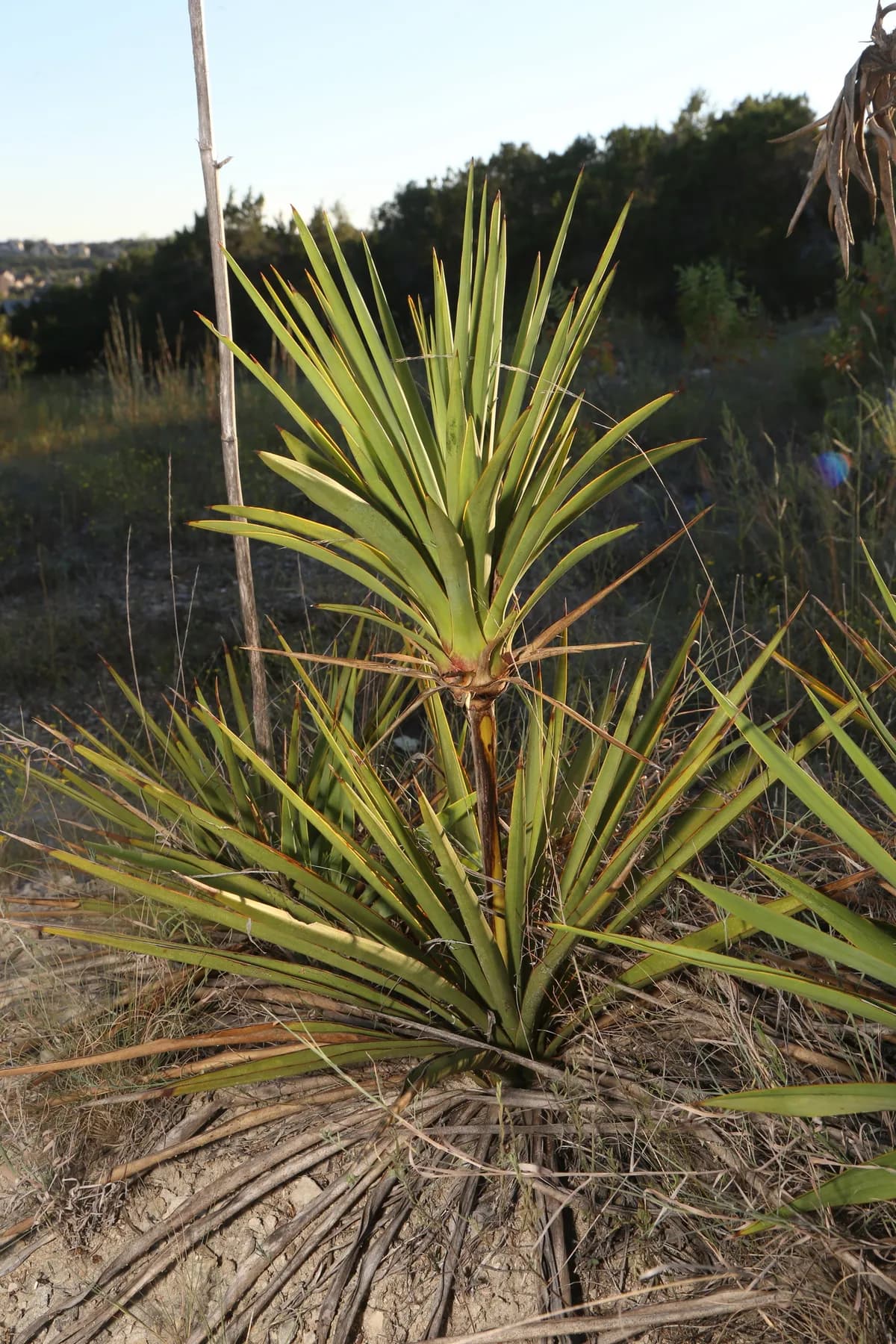
Yucca rupicola, or twistleaf yucca, is a low water succulent with curling ribbon like leaves that sends up tall white bloom spikes in spring, typically March through May.
Toxicity unknown
Twistleaf Yucca (Yucca rupicola) is not listed by the ASPCA Animal Poison Control Center (opens in new tab) or the other sources we check, so we have no verdict for it either way. Absence from those lists is not a clearance. If your pet shows symptoms after eating any plant, call the ASPCA at (888) 426-4435.
Light
full sun
Water
low
Size
12"–21" H × 12"–12" W
Bloom
Mar, Apr, May
Native to
TX
Pollinators
butterflies, bees, moths
Before you buy
Your city may pay you to plant this
Cities and water utilities offer rebates for replacing lawn with native and water-wise plants. We track 452 programs across 44 states, each with a link to the provider and the date we last checked it.
Find rebates in your areaBrowse plants for this ecoregion
Twistleaf Yucca is a compact, sculptural succulent with distinctive twisted blue-green leaves that form a neat rosette. This drought-tolerant native produces tall spikes of creamy white flowers in spring and maintains its attractive form year-round with minimal care.
Growing Twistleaf Yucca
Grow Twistleaf Yucca in full sun and low water. Mature plants reach 12 to 21 inches tall and spread 12 to 12 inches wide. Expect low maintenance to keep it looking intentional in a front yard.
How to care for Twistleaf Yucca, by region
How to care for Twistleaf Yucca where it is actually grown: year-round basics plus what to do each season, region by region, with the sources for each.
Care guidance last updated: August 2026
Cross Timbers (includes Fort Worth, TX)
Year-round
Twistleaf Yucca is a native, low, spiky rosette that wants full sun and almost no supplemental water once it is settled in. It stays under two feet tall and rewards a spot where the sandier soils west of the metro drain fast after rain.
- Plant in full sun, at least 6 to 8 hours a day; it sulks and can rot in shade or wet, low spots
- Water deeply about once a week the first summer, then taper to rain only once the root system is established, usually by the second year
- Give it 2 to 3 feet of open space on all sides so the curling, twisting leaves are not brushing a walkway or trimmed by mowers
- Skip fertilizer entirely; overfeeding pushes soft, floppy growth instead of the tight, HOA-friendly rosette shape
- Keep the leaf tips away from foot traffic, hoses, and where kids or pets pass close by, the tips are stiff and sharp enough to puncture skin
Fall
Fall is a second good planting window for this yucca in North Texas, and it is a low-fuss season since there is little to actively do.
- Fall (September through November) is fine for planting, though spring is still the primary window for this particular species
- Trim any leaves that browned or split in summer heat back to healthy tissue, cutting close to where the leaf meets the base
- Leave the plant alone through the mild fall weather, no fertilizer and no routine watering once it is past its first year
- Clear fallen leaves or debris from neighboring trees out of the rosette center so water does not pool against the crown
A cleaned-out rosette with no debris caught in the leaves reads as deliberately maintained rather than neglected in a front bed.
Winter
This yucca stays evergreen through North Texas winters and needs essentially nothing from you, just a caution about where the sharp leaf tips sit near winter foot traffic.
- No winter watering needed once established; established plants tolerate the mild 8a to 8b winters and short hard freezes without protection
- During a severe Arctic outbreak with prolonged hard freeze, a light frost cloth over the rosette can prevent leaf-tip burn, though established plants usually recover on their own
- Do not cut back healthy winter foliage, this yucca holds its leaves year-round and pruning green leaves removes stored energy for spring bloom
- Keep it clear of walkways that see more foot traffic in winter, since low light makes the sharp leaf tips easier to walk into
Spring
Spring is bloom season and the best window to plant this yucca in North Texas, right after the mid March last frost.
- Plant new specimens in March or April so roots have the mild spring weather to establish before the first 100F days hit
- Watch for a tall flower stalk rising from the center in April or May, it can reach 3 to 5 feet even though the leaf rosette stays low
- Water a newly planted yucca once a week if spring rain is light; established plants in the ground more than a year need no extra water
- Cut the spent flower stalk down to the base once the blooms fade in late May to keep the plant tidy for a front bed
The tall white spring flower stalk reads as an intentional accent bloom, not a weed, especially if the surrounding bed is mulched and edged.
Summer
This yucca is built for the North Texas summer, it is one of the few plants that gets more comfortable as July and August turn dry and brutally hot.
- Do not water on a schedule, established plants handle weeks without rain and can rot if kept damp through summer heat
- If you planted this spring, give it a deep soak every 7 to 10 days through the first July and August only, then stop next year
- In the sandier soils west of the metro it may still need an occasional deep water in the hardest heat; in heavy black clay it almost never needs summer water at all
- Keep mulch pulled back an inch or two from the base of the rosette so the crown stays dry and does not rot in humid spells
Sources: Lady Bird Johnson Wildflower Center: Yucca rupicola, Missouri Botanical Garden Plant Finder: Yucca rupicola, Native Plant Society of Texas (community tip), ASPCA: Yucca (toxic plant list), Texas A&M AgriLife Extension: Native and Adapted Landscape Plants, USDA PLANTS Database: Yucca rupicola
Edwards Plateau (includes San Antonio, TX)
Year-round
Twistleaf yucca (Yucca rupicola) is confirmed native to the Edwards Plateau of Texas, the region that covers the San Antonio area, so it is naturally suited to this area's shallow, rocky, alkaline soils. It is a slow growing, evergreen rosette that needs full sun to part shade and very little water once it is established.
- Plant in full sun to part shade in well drained rocky, limestone, caliche, or clay loam soil, the same conditions found on Edwards Plateau hillsides and canyon rims.
- Water only to get a new plant established, then rely on rainfall. Consistently damp soil in heavy clay or a poorly drained bed is the most common way this plant is lost to rot.
- Mature clumps stay a few feet wide and never form an above ground trunk, so give each rosette 2 to 3 feet of open space to spread into a small colony over time.
- Like other yucca species, this plant contains saponins that can cause vomiting and other stomach upset if a pet chews on the leaves or flower stalk, so keep that in mind if pets have access to the bed.
- The blooms are a nectar source for night flying moths and the plant is a larval host for Kendall's yucca skipper, so leaving some flower stalks and foliage in place supports those pollinators.
Fall
Fall's cooler, still frost free weeks are a strong planting window for twistleaf yucca around San Antonio, and general bed cleanup is the main task once the growing season slows.
- If you are adding new plants, fall planting, roughly September through November before the first freeze, lets roots establish in cooler soil ahead of next summer's heat, a pattern Texas A&M AgriLife recommends broadly for fall planting in the state.
- Clear fallen leaves from nearby trees out of the center of the rosette so air can move through the plant and moisture does not sit against the crown.
- San Antonio's first fall frost typically arrives in mid to late November, so there is no need to rush any protection, this species handles freezing temperatures without covering.
- Skip fertilizer in fall. This plant is adapted to low nutrient, rocky Edwards Plateau soil and does not need feeding to look its best.
A quick fall clearing of dead leaf tips and debris keeps the rosette looking tended for curb appeal heading into winter.
Winter
Winter is the quiet season for twistleaf yucca. The evergreen rosette holds its shape and color through cold snaps, giving the bed structure when most other plants have died back.
- This species tolerates San Antonio area winter cold without any covering or protection, even during a hard freeze.
- Leave the evergreen, twisted leaf rosette in place through winter, it is one of the few pieces of structural greenery in a native bed during the dormant season.
- Skip winter watering and fertilizing. Above ground growth is dormant and the plant does not need either.
- If last year's bloom stalk is still standing, this is a good time to cut it to the ground before new growth resumes in spring.
The tidy, evergreen winter shape reads as intentional, low maintenance structure rather than a bare or overgrown bed, which supports an HOA-conscious front yard.
Spring
Spring is when twistleaf yucca sends up its tall flower stalk and blooms, and it is also the best window to divide offshoots if you want to start a new clump elsewhere in the yard.
- Watch for a flower stalk up to 5 or 6 feet tall carrying pendant, bell shaped white flowers, typically from around April into June.
- If you want more plants, lift and separate rooted offshoots from the base of an established clump in April or May, then let the cut ends callous over before replanting in well drained soil.
- Trim off any leaf tips that browned over winter, but leave the rest of the twisted foliage alone since that shape is the plant's natural look, not a problem to fix.
- Hold off on regular irrigation. An established plant does not need spring watering beyond normal Hill Country rainfall.
Summer
Summer heat is when this drought tough native needs the least attention, and it is also the time to deal with the spent flower stalk once blooming has finished.
- After the spring bloom fades, decide whether to cut the flower stalk down at the base or leave it standing so the pods can mature and drop seed for new plants.
- This plant handles Texas summer heat and short dry spells without supplemental water once it has been in the ground for a full growing season.
- Skip lawn or annual bed irrigation schedules near this plant. Consistently damp soil around the base during a humid summer is the main risk to the rosette.
- Check that mulch or nearby plantings are not holding moisture against the base of the rosette during any wet summer stretch.
For a tidier front yard look, cutting the spent flower stalk back to the base is the HOA-friendly choice, while leaving it standing reads more informal until the pods dry out.
Sources: Lady Bird Johnson Wildflower Center, Native Plant Database: Yucca rupicola, ASPCA Toxic and Non-Toxic Plants: Yucca (genus-level page, listed as Yucca spp., not specific to Yucca rupicola), Native Plant Society of Texas: Yucca rupicola, Texas A&M AgriLife Today: Tips to plant wildflowers this fall for a beautiful spring
Texas Blackland Prairies (includes Dallas, TX)
Year-round
Twisted-leaf yucca is a low, clumping evergreen with soft curling leaves and tall white flower stalks. In the heavier clay soil around Dallas the main job is keeping its roots from sitting in wet ground. Plant it high, water it lightly, and leave it mostly alone.
- Plant on a slight mound or slope so the clay drains away from the crown, since standing water is the fastest way to rot this plant. Water a new plant deeply once a week for the first summer to settle the roots, then stop.
- Once established it needs almost no water. A slow soak once every three or four weeks in a long dry stretch is plenty.
- Keep mulch thin and pulled back a few inches from the base so the crown stays dry. Use gravel or a light bark layer, not thick wet compost.
- The one common mistake here is overwatering. Yellowing or mushy lower leaves usually mean too much water or clay holding moisture, not too little.
Fall
Fall around Dallas brings cooler air and more rain. The plant slows down and needs almost nothing from you, but the wetter soil is the thing to watch.
- Ease off any watering entirely. Fall rain on top of heavy clay is more than enough, and extra water now sets up rot going into winter.
- Do a light cleanup of any dead outer leaves so the clump goes into winter tidy and open at the center.
- If you added mulch over summer, thin it back from the crown so fall moisture can dry out rather than sit.
A quick fall cleanup of dead outer leaves keeps the plant reading as intentional and tended through the off season, which avoids a tidiness complaint.
Winter
This plant is cold tolerant and stays evergreen through Dallas winters, including the occasional hard freeze. Winter care is basically hands off, with a light touch after a bad ice event.
- Leave the plant alone. It holds its green leaves all winter and gives the front yard a tidy year-round shape with no cutback needed.
- Do not water. Cold, wet clay in winter is the single biggest rot risk for this plant.
- After a hard freeze or ice storm, wait until spring to trim any damaged leaves. Cutting frozen tissue right away can open the plant to more damage.
The plant keeps a neat evergreen silhouette all winter, so leaving it uncut still reads as intentional and cared for from the curb.
Spring
Spring is the best time to clean up and, if needed, plant or divide. Around Dallas the plant wakes up and pushes new central leaves, so tidy the old growth before the flower stalk shoots up in April.
- Pull or trim away any brown, mushy, or winter-damaged leaves at the base so the fresh center can grow cleanly.
- If you want to add or move a plant, do it now while soil is warming but before the heat, and set it high on a mound in the clay.
- Hold off on feeding. This plant does not need fertilizer and a heavy spring feed just makes soft, floppy growth.
Summer
Dallas summers are hot and often dry, which this plant loves. The flower stalk from spring will finish and dry out, so the summer task is dealing with the spent bloom spike.
- After the white flowers fade, cut the tall bloom stalk down near the base with loppers once it browns. This keeps the clump looking neat and directs energy back to the leaves.
- Water only in a true drought, and only a deep soak every three or four weeks. An established plant will sail through a normal hot Dallas summer with no water at all.
- Do not add extra mulch or compost against the base in the heat, since trapped moisture plus heat invites crown rot.
A dried, leaning flower stalk can read as neglect to an HOA, so cutting it once it browns keeps the front yard looking intentional and cared for.
Sources: Lady Bird Johnson Wildflower Center Yucca rupicola, Texas AandM AgriLife rangeplants Yucca, Native Plant Society of Texas Yucca rupicola
Want these tasks as reminders timed to your yard? Pollinator Patch turns this guidance into a season-by-season care plan for the plants you actually grow.
In an HOA neighborhood
Twistleaf Yucca is an HOA-friendly choice. Maintenance level: low. Tidiness: 4 out of 5.
Works well in: front yard, foundation, street edge.
Wildlife value
The spring flower spikes attract butterflies, bees, and moths with their abundant nectar. The plant also provides shelter for small wildlife in its dense rosette structure.
Common questions
- When does twistleaf yucca bloom?
- Twistleaf yucca typically blooms in spring, with flower stalks appearing from March through May.
- What pollinators visit twistleaf yucca flowers?
- The tall white flower spikes attract bees, butterflies, and moths, including species that rely on yucca blooms for nectar.
- How much water does twistleaf yucca need?
- This succulent is drought tolerant and prefers low water once established, making it a good fit for dry, well drained sites.
- What kind of light does twistleaf yucca prefer?
- It grows best in full sun but can tolerate some light afternoon shade, especially in hot climates.
- Why are the leaves twisted?
- Twistleaf yucca gets its common name from its narrow, curling leaves, which spiral and bend rather than staying flat like many other yucca species.
- Is Twistleaf Yucca HOA-friendly?
- Twistleaf Yucca is generally an HOA-friendly choice in the right placement, with low maintenance.
These answers were drafted with an AI model from this plant's data. Verify care details with a local expert.
Native range data from vouchered herbarium specimen records and regional native plant society lists. Pollinator and host plant associations compiled from GBIF, iNaturalist, and published ecological literature.
If something looks wrong
Common plant problems, and what to check first
These come up on almost any plant. Each guide lists the likely causes in the order they are worth ruling out, with one thing to check before you act on any of them, and links to the source it came from.
- It is dying right after planting
- Leaves turning yellow
- Wilting even though I watered it
- Brown crispy leaf tips
- Bugs on the plant
Ready to grow Twistleaf Yucca? Add it to your garden in Pollinator Patch to track it and get season-by-season care guidance.
Planning a bed around it? Start a free plan with this plant
Not sure where to start? Take the 2-minute yard quiz