Western Wild Petunia
Ruellia occidentalis
Last reviewed: July 2026
Light
part sun
Water
low
Size
12"–24" H × 6"–18" W
Bloom
Jun, Jul, Aug, Sep, Oct, Nov
Native to
TX
Pollinators
butterflies
Before you buy
Your city may pay you to plant this
Cities and water utilities offer rebates for replacing lawn with native and water-wise plants. We track 411 programs across 44 states, each with a link to the provider and the date we last checked it.
Find rebates in your areaBrowse plants for this ecoregion
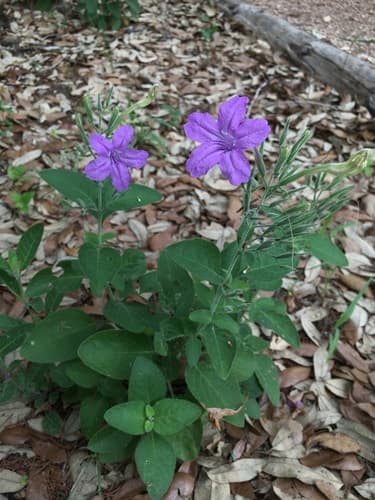
Western Wild Petunia is a compact native perennial that produces delicate purple flowers from summer through late fall. This drought-tolerant plant forms neat clumps and provides long-lasting color with minimal water requirements.
In an HOA neighborhood
Western Wild Petunia is an HOA-friendly choice. Maintenance level: low. Tidiness: 4 out of 5.
Works well in: front yard, foundation, street edge, mid zone.
Wildlife value
The flowers attract butterflies and other pollinators throughout its extended bloom period from June to November.
Common questions
- How much sun does Western Wild Petunia need?
- Western Wild Petunia grows best in part sun conditions.
- When does Western Wild Petunia bloom?
- Western Wild Petunia blooms in June, July, August, September, October, and November.
- Where is Western Wild Petunia native?
- Western Wild Petunia (Ruellia occidentalis) is native to TX, per the USDA PLANTS Database and regional native plant society lists.
- What pollinators does Western Wild Petunia attract?
- Western Wild Petunia draws butterflies.
- Is Western Wild Petunia HOA-friendly?
- Western Wild Petunia is generally an HOA-friendly choice in the right placement, with low maintenance.
Native range data from the USDA PLANTS Database and regional native plant society lists. Pollinator and host plant associations compiled from GBIF, iNaturalist, and published ecological literature.
Ready to grow Western Wild Petunia? Add it to your garden in Pollinator Patch to track it and get season-by-season care guidance.
Not sure where to start? Take the 2-minute yard quiz