Whorled tickseed
Coreopsis verticillata
Last reviewed: October 2026
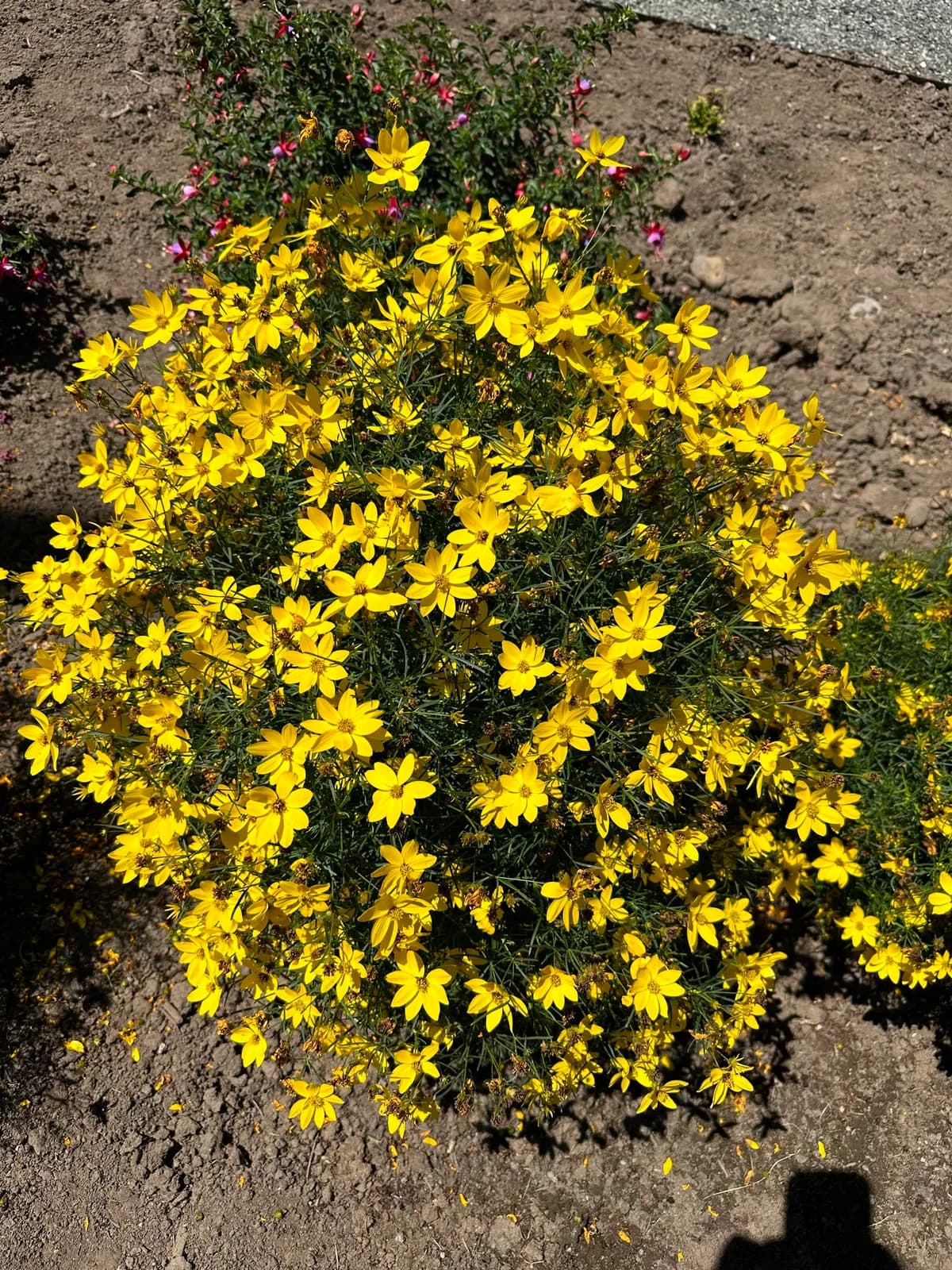
Coreopsis verticillata is a fine textured perennial forb that produces bright yellow flowers from June through September. It grows well in full sun on dry to medium, well-drained soils across much of the eastern and southeastern United States.
Whorled tickseed (Coreopsis verticillata) is not on the ASPCA Animal Poison Control Center toxic plant list for dogs or cats (aspca.org (opens in new tab), last reviewed 2026-05-21). If your pet shows symptoms after eating any plant, call the ASPCA at (888) 426-4435.
Light
full sun
Water
low
Size
18"–36" H × 18"–30" W
Bloom
Jun, Jul, Aug, Sep
Native to
AL, AR, DC, GA and 13 more states
Pollinators
bees, butterflies, hoverflies
Before you buy
Your city may pay you to plant this
Cities and water utilities offer rebates for replacing lawn with native and water-wise plants. We track 459 programs across 44 states, each with a link to the provider and the date we last checked it.
Find rebates in your areaPicture natives in your own yard
Upload a photo of your yard and Patch Vision shows a rendering of it planted with natives for your region, like Whorled tickseed.


Browse plants for this ecoregion
A clumping perennial with fine, thread-like foliage and a long summer display of small, bright yellow daisy flowers. It tolerates heat, drought and poor soil once established and forms a tidy mound.
How to care for Whorled tickseed, by region
How to care for Whorled tickseed where it is actually grown: year-round basics plus what to do each season, region by region, with the sources for each.
Care guidance last updated: October 2026
Northern Piedmont (includes Lancaster, PA)
Year-round
Whorled tickseed is an easygoing, sun-loving perennial that blooms yellow all summer with very little fuss.
- Give it full sun or light shade and well-drained soil.
- Once settled, it handles dry spells, so water deeply but not often.
- Skip heavy feeding. Poor to average soil is fine.
- The ASPCA lists tickseed (Coreopsis) as non-toxic to dogs, cats and horses.
Fall
Fall is easy. Enjoy the last blooms and wait to cut back until the plant dies down.
- Stop watering unless it is unusually dry.
- Cut stems down after they die back, leaving a few inches above the ground.
- Skip fertilizer so the plant can slow down for winter.
If the bed faces the street, a fall cutback to a few inches keeps it looking tidy and HOA-friendly.
Winter
Winter needs almost nothing. The plant rests underground until spring.
- No watering needed while it is frozen or dormant.
- Good drainage matters most, since soggy winter soil is the main risk.
- Leave a few inches of stem to mark the spot if you cut back in fall.
Spring
Spring is the time to tidy up, divide and let new feathery growth take off.
- Cut any old stems left standing down to the base before new growth gets tall.
- If the clump is crowded or thinning in the middle, divide it in early spring.
- Water new plants about once a week until roots settle.
Summer
Summer is bloom season. A little shearing keeps it neat and flowering.
- Water deeply during long dry spells, then let the soil dry a bit.
- Shear back the plant by about a quarter to a half in mid-summer to refresh it and encourage fall flowers.
- Watch for slugs and snails in damp weather.
Sources: Native Plant Trust Plant Finder - Coreopsis verticillata, Royal Horticultural Society - Coreopsis verticillata, ASPCA - Tickseed, Sunset - Threadleaf coreopsis (community tip)
In an HOA neighborhood
Whorled tickseed is an HOA-friendly choice. Maintenance level: low. Tidiness: 4 out of 5.
Works well in: front yard, borders, mass planting.
Wildlife value
Open daisy flowers supply nectar and pollen to small bees, butterflies and hoverflies through summer, and the seed heads feed finches in fall.
Common questions
- When does Coreopsis verticillata bloom?
- It blooms from June through September, producing a long season of small, bright yellow daisy-like flowers on airy, thread-leaf foliage.
- What pollinators visit Coreopsis verticillata?
- Bees, butterflies, and beetles regularly visit the flowers for nectar and pollen, making it a useful plant for pollinator gardens.
- How much water does Coreopsis verticillata need?
- This plant prefers low water once established and handles dry, well-drained soil well, so it holds up in periods of drought better than in soggy sites.
- What light conditions does Coreopsis verticillata need?
- Full sun produces the heaviest bloom, though the plant will tolerate part sun to part shade with somewhat fewer flowers.
- Is Whorled tickseed toxic to dogs?
- Whorled tickseed is not on the ASPCA Animal Poison Control Center toxic plant list for dogs (aspca.org).
- Is Whorled tickseed toxic to cats?
- Whorled tickseed is not on the ASPCA Animal Poison Control Center toxic plant list for cats (aspca.org).
- Is Whorled tickseed HOA-friendly?
- Whorled tickseed is generally an HOA-friendly choice in the right placement, with low maintenance.
These answers were drafted with an AI model from this plant's data. Verify care details with a local expert.
Native range data from the World Checklist of Vascular Plants (Kew). Pollinator and host plant associations compiled from GBIF, iNaturalist, and published ecological literature.
If something looks wrong
Common plant problems, and what to check first
These come up on almost any plant. Each guide lists the likely causes in the order they are worth ruling out, with one thing to check before you act on any of them, and links to the source it came from.
- It is dying right after planting
- Leaves turning yellow
- Wilting even though I watered it
- Brown crispy leaf tips
- Bugs on the plant
Ready to grow Whorled tickseed? Add it to your garden in Pollinator Patch to track it and get season-by-season care guidance.