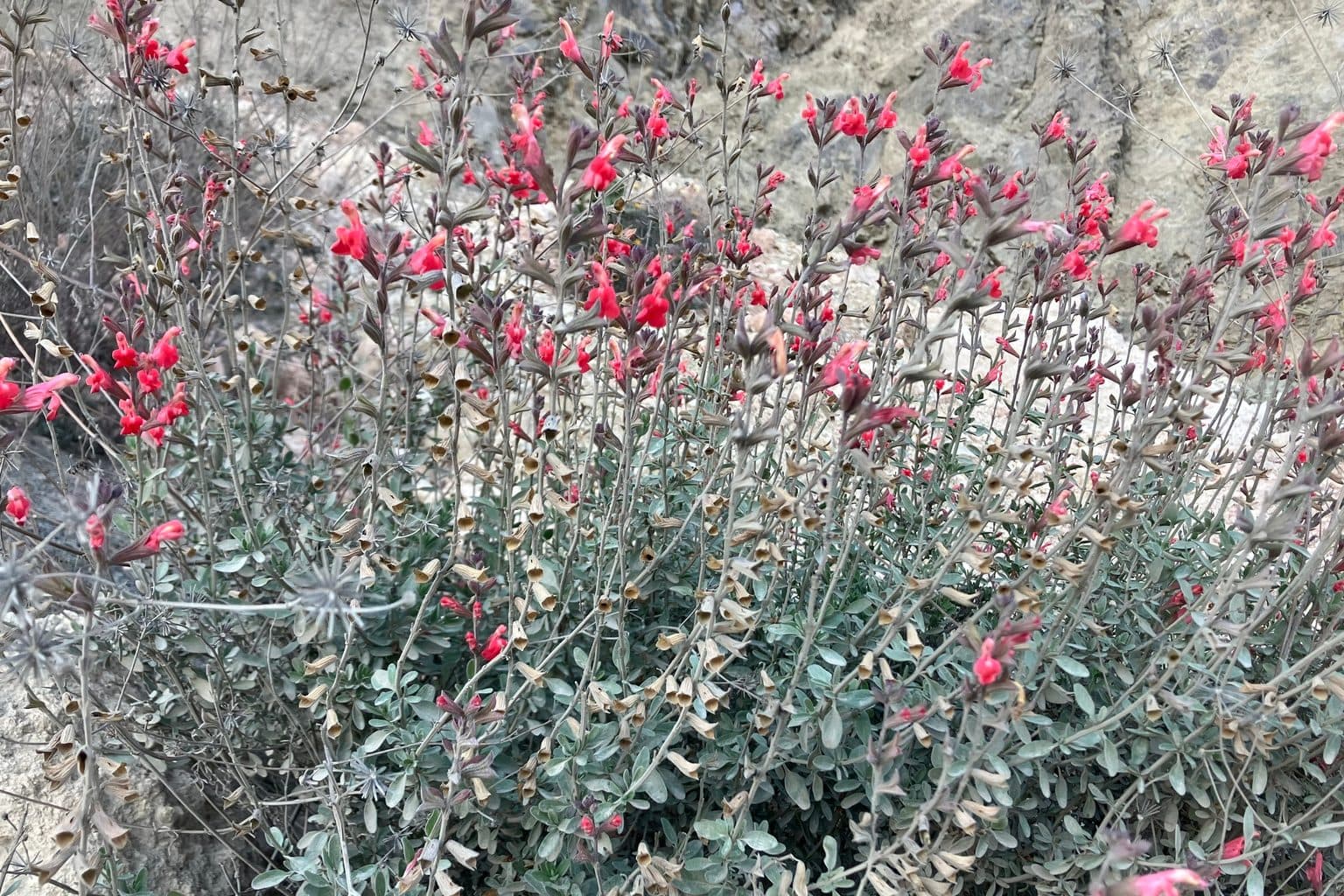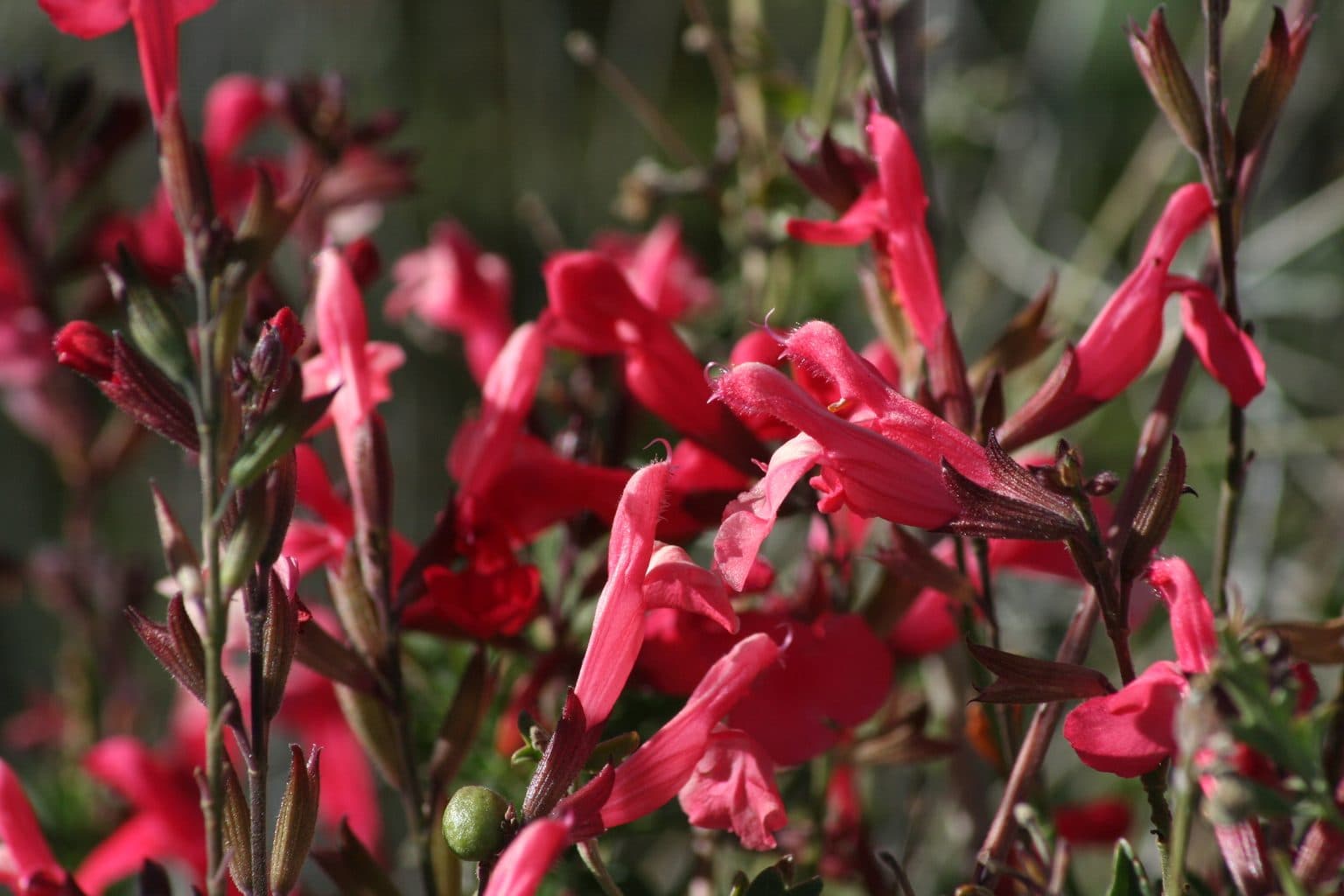
Quick answer: Mostly yes, but the rating is not a promise. The Lady Bird Johnson Wildflower Center lists autumn sage (Salvia greggii) as Deer Resistant: High, and the Texas A&M AgriLife Extension Bexar County deer-resistant list includes it. Both sources also say hungry deer will eat almost anything, so a young plant in a lean season can still get browsed.
Key takeaways
- The Lady Bird Johnson Wildflower Center lists Salvia greggii as Deer Resistant: High (Lady Bird Johnson Wildflower Center).
- Texas A&M AgriLife Extension, Bexar County, includes autumn sage on its deer-resistant landscape plant list, under perennials (Texas A&M AgriLife Extension, Bexar County).
- Rutgers does not rate Salvia greggii by name. It rates annual salvia and meadow sage as B (Seldom Severely Damaged) and garden sage as A (Rarely Damaged) (Rutgers NJAES).
- Every source here warns against reading the rating as a promise. Deer behavior depends on local populations, weather and how hungry they are (Rutgers NJAES, Texas A&M AgriLife Extension).
- Lindheimer's muhly, Wright's Mexican flame and cenizo are other Edwards Plateau natives that the Lady Bird Johnson Wildflower Center rates Deer Resistant: High.
What the sources say about autumn sage
I looked for a university rating for Salvia greggii before writing this, because the general claim that salvias are deer resistant is repeated on a lot of nursery pages without a source. I found two sources that name autumn sage directly, and one that does not.
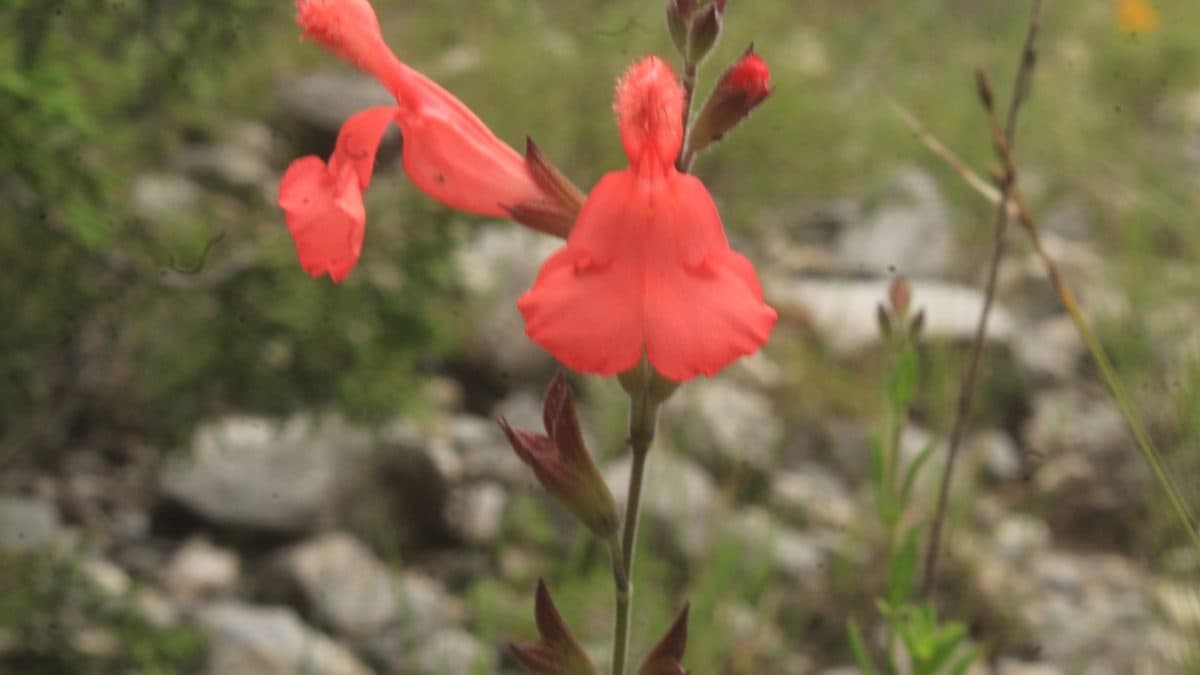
The first is the Lady Bird Johnson Wildflower Center at the University of Texas at Austin. Its plant profile for autumn sage carries a deer field, and the field reads "High" (Lady Bird Johnson Wildflower Center). The same profile lists fragrant foliage and describes the leaves as small and mintily aromatic. The page does not say aromatic leaves are why deer leave it alone, so I will not either.
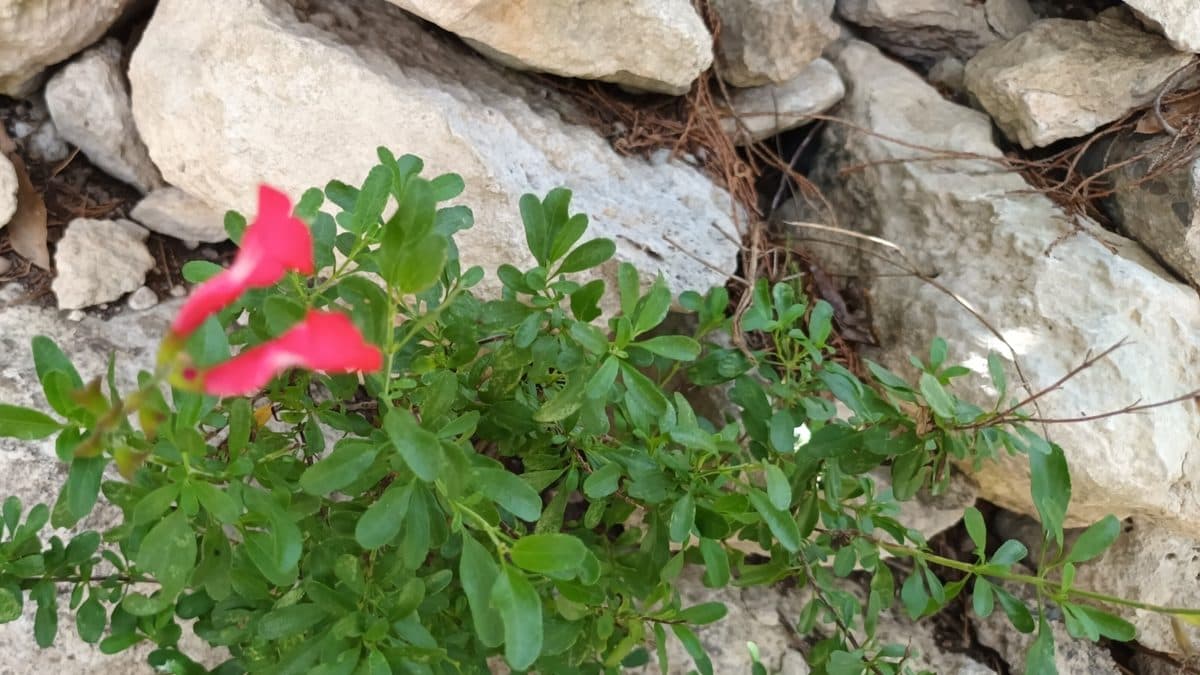
The second is Texas A&M AgriLife Extension. The Bexar County Urban Program (San Antonio) hosts a deer-resistant landscape plant list written by Master Gardener Forrest Appleton, and autumn sage is on it under perennials, next to Mexican bush sage, mealy cup sage and 'Indigo Spires' salvia (Texas A&M AgriLife Extension, Bexar County). The page is a county list and not a statewide AgriLife publication, and it carries no date, so treat it as a local field list.
The third is Rutgers New Jersey Agricultural Experiment Station, and this is where the claim gets looser. Its deer-resistance list does not include Salvia greggii. It does rate other salvias: annual salvia is B (Seldom Severely Damaged), meadow sage (Salvia nemorosa) is B, and garden sage (Salvia officinalis) is A (Rarely Damaged) (Rutgers NJAES, Landscape Plants Rated by Deer Resistance). So a Rutgers rating supports the genus reputation, but it does not speak for autumn sage specifically. It is also a New Jersey list, compiled with input from nursery and landscape professionals, Rutgers extension staff and Master Gardeners in northern New Jersey.
What the rating actually means
"Deer resistant" is a rating drawn from what gardeners and extension staff have seen deer do, and the sources are candid about how far it goes. Rutgers uses four categories: A for Rarely Damaged, B for Seldom Severely Damaged, C for Occasionally Severely Damaged and D for Frequently Severely Damaged. It says plants in A and B are the best choices for landscapes prone to deer damage, and that success depends on local deer populations and weather conditions (Rutgers NJAES). Even the best category means a lower chance of damage, not none.
The Texas A&M Bexar County page is blunter. Its author says the list has to be caveated, because deer cannot read, and when they are hungry they will eat almost anything (Texas A&M AgriLife Extension, Bexar County). That matches what I would expect in the Hill Country, where a dry summer thins out what is on the menu.
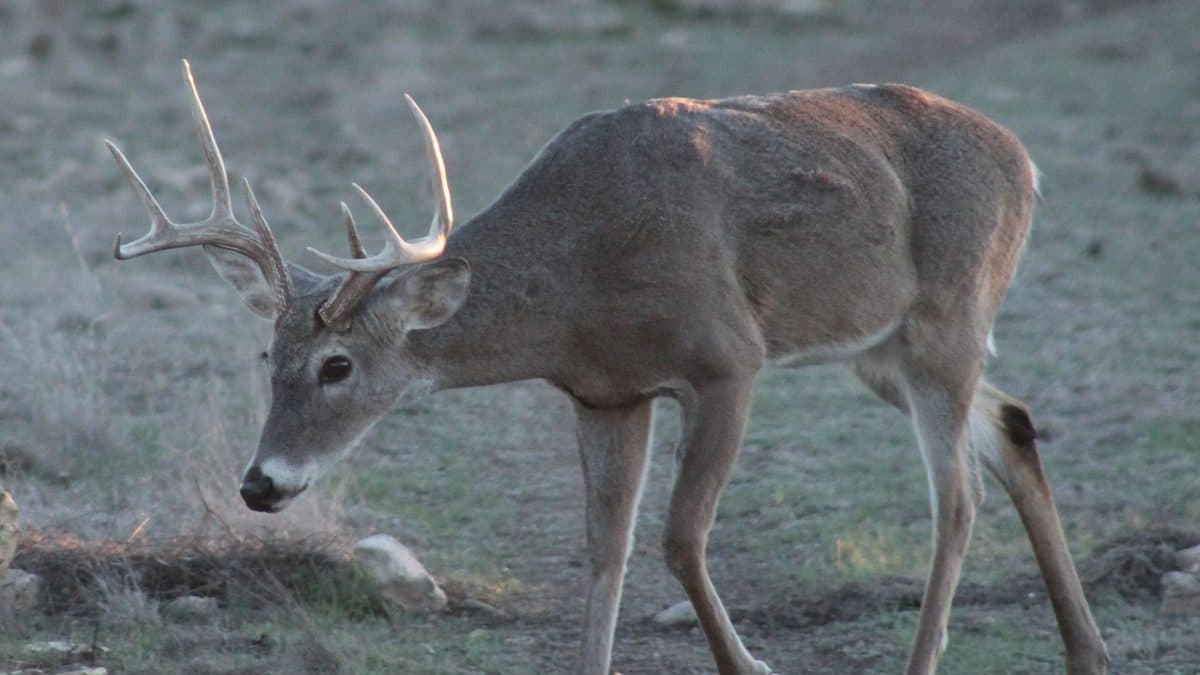
Two things follow from that. First, a rating is a reason to choose a plant, not a reason to skip watching it. Second, the rating says nothing about a plant's first season. None of the three sources I read says anything specific about young autumn sage, so how a new transplant fares against a hungry herd is something to watch for yourself and not a documented fact.
Where autumn sage grows, and what it needs
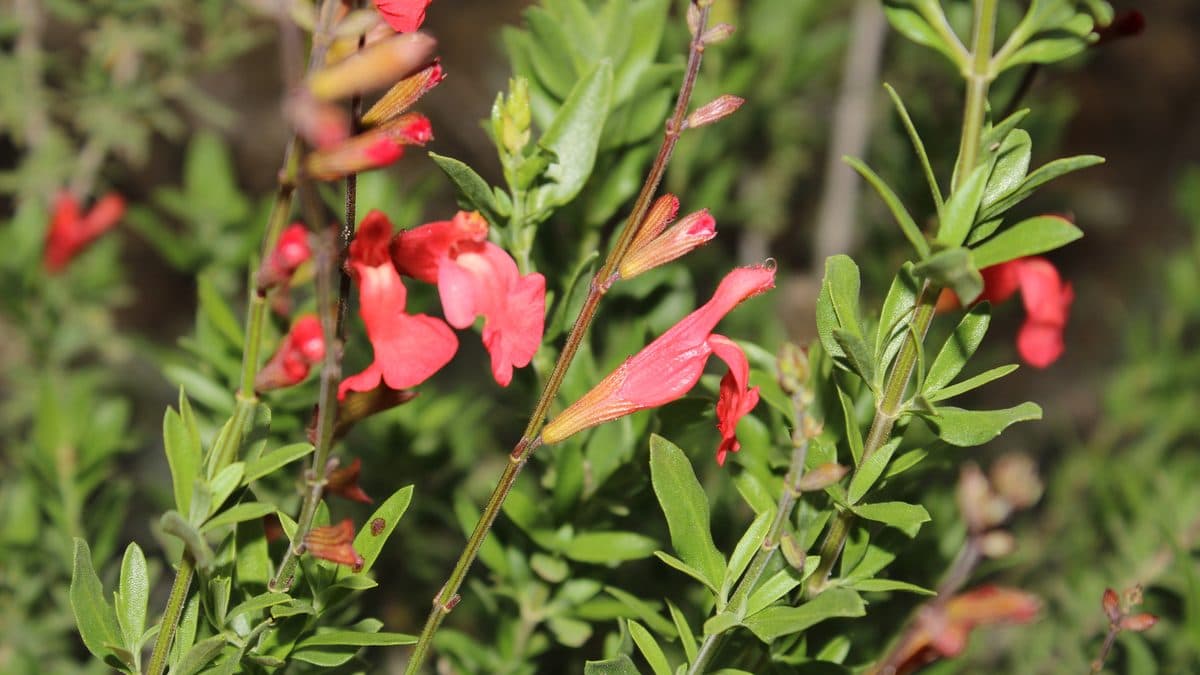
Autumn sage is native to central and west Texas, south to San Luis Potosi in Mexico, on well-drained rocky slopes (Lady Bird Johnson Wildflower Center). Pollinator Patch's regional care guide covers it for the Edwards Plateau (San Antonio area), among other regions, on the autumn sage plant page. The Lady Bird Johnson Wildflower Center says it must have a well-drained site and cannot take shrink-swell clay soils (Lady Bird Johnson Wildflower Center). That is a planting question that matters more than the deer question, because a plant stressed by wet clay is a weaker plant whatever its rating. If you are weighing it for the winter, the post on whether autumn sage survives a freeze covers cold hardiness and cutback timing.
Three other deer-rated natives for the same yard
If deer visit your yard, one plant does not need to carry the whole job. These three are native to the Edwards Plateau (San Antonio and Austin area), carry a Deer Resistant: High field on their Lady Bird Johnson Wildflower Center profiles, and appear by name or genus on the same Bexar County list as autumn sage.
| Plant | Native range (Lady Bird Johnson Wildflower Center) | On the Bexar County list as |
|---|---|---|
| Lindheimer's muhly (Muhlenbergia lindheimeri) | Edwards Plateau of central Texas south to northern Mexico | Lindheimer's Muhley |
| Wright's Mexican flame (Anisacanthus quadrifidus var. wrightii) | South-central Texas (southern Edwards Plateau) and west Texas into northern Mexico | Hummingbird Bush |
| Cenizo (Leucophyllum frutescens) | Rio Grande Plain, southern Trans-Pecos and Edwards Plateau in Texas, south to Nuevo Leon | Ceniza/Texas Sage (listed by genus) |
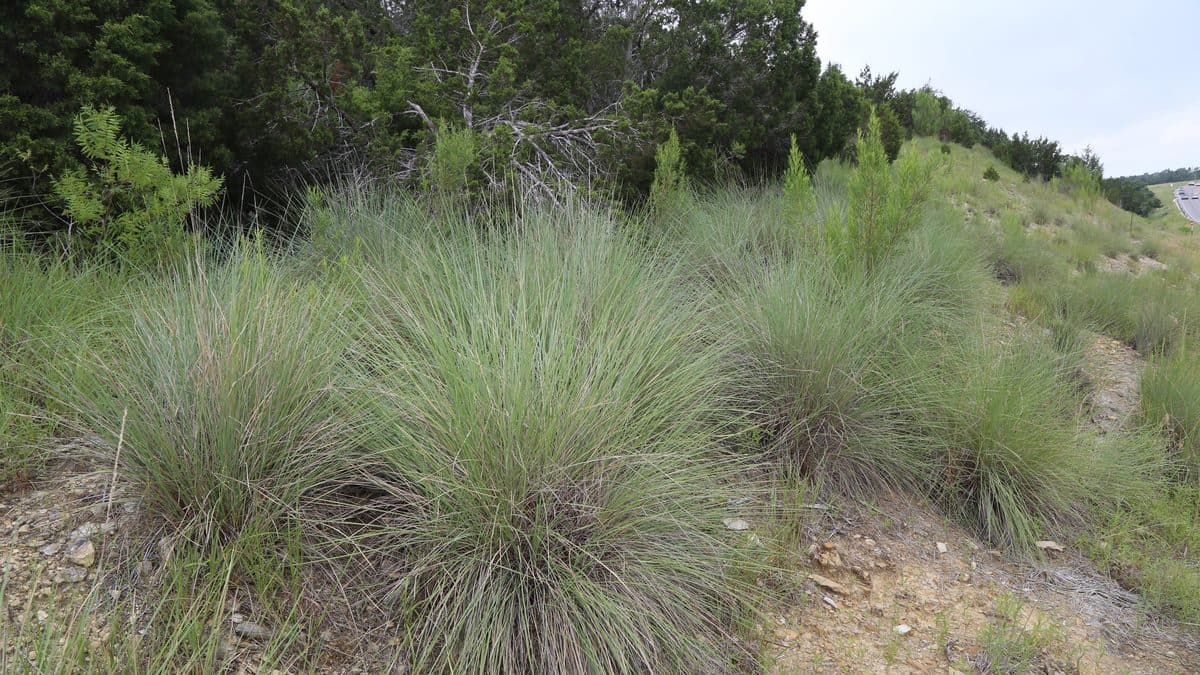
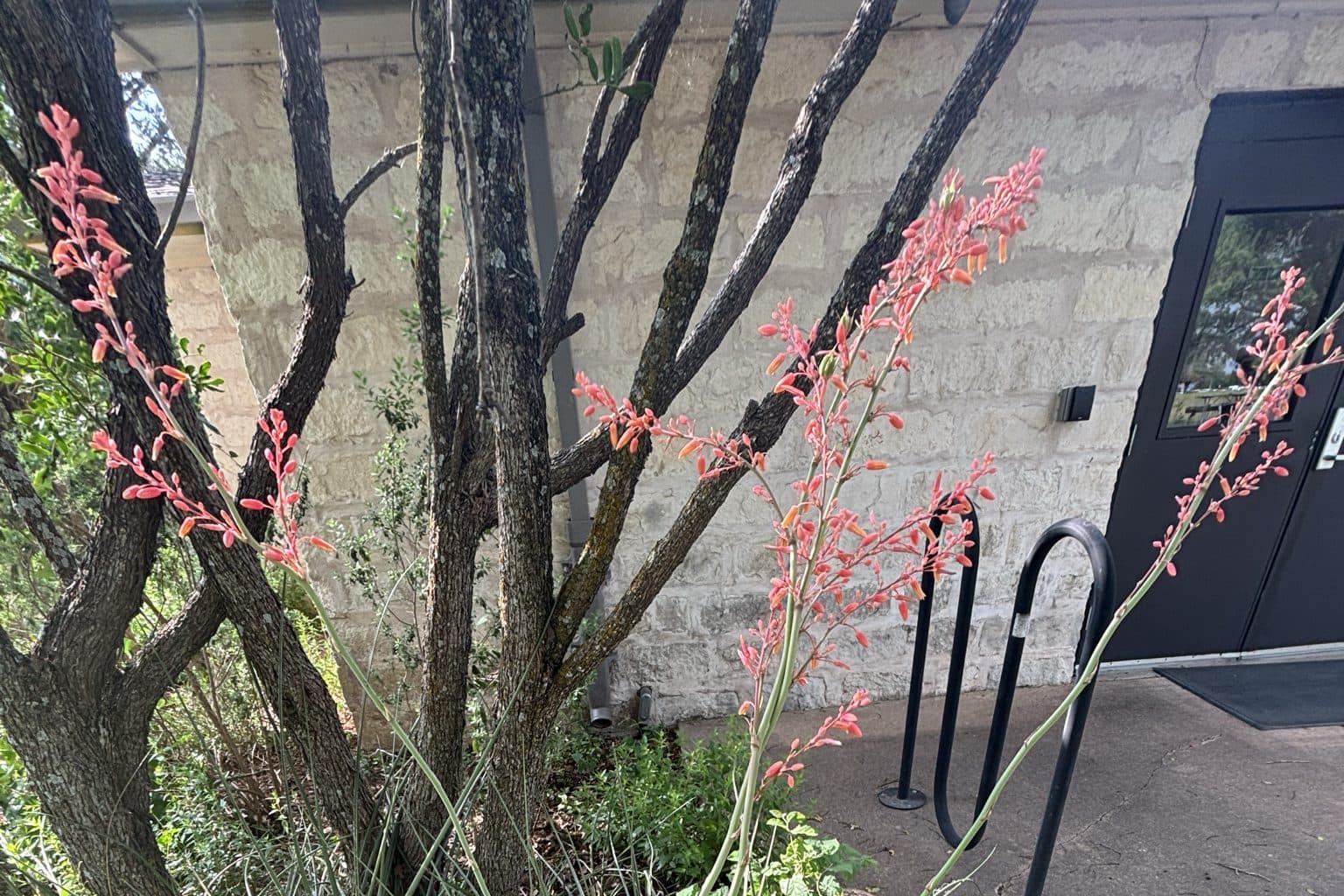
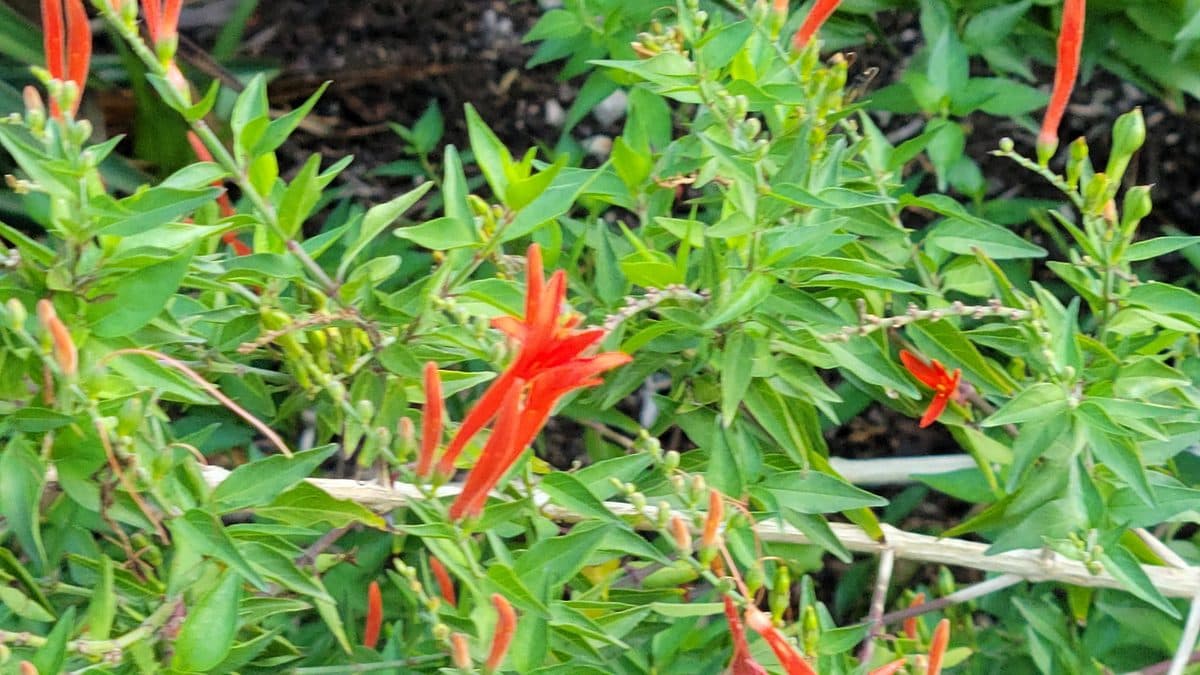
Lindheimer's muhly adds a tall, soft grass that stays in the picture through winter, and the Lady Bird Johnson Wildflower Center describes its habitat as limestone uplands near streams (Lady Bird Johnson Wildflower Center). Wright's Mexican flame is a shrub with orange-red tubular flowers, and the same source lists the Texan crescent butterfly (BAMONA) as a larval host (Lady Bird Johnson Wildflower Center).
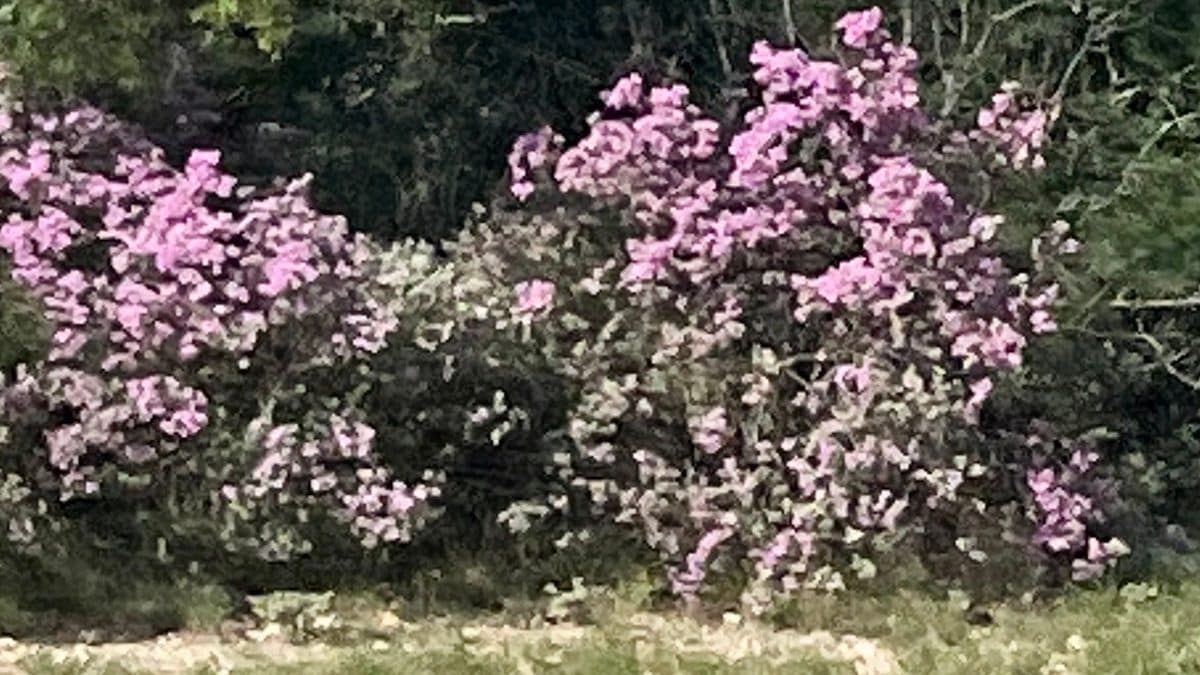
Cenizo is the one to double check. The Bexar County page lists Leucophyllum at the genus level and not Leucophyllum frutescens by name, so the species-level Deer Resistant: High comes from the Lady Bird Johnson Wildflower Center profile and not from Texas A&M. For the broader planting list, including hummingbird plants for the region, see the post on native hummingbird plants in Texas.
How to plant with the rating, not around it
What follows is judgment, not a cited method. If deer are regular visitors, plant several rated species instead of leaning on one, keep an eye on any new planting through its first season, and give each plant the site its profile asks for, since a healthy plant is the better bet in a lean year. If damage shows up anyway, the Rutgers page names fencing and repellents as the extra protection for plants in its weaker categories, and I leave product choices to you. Autumn sage is also a plant you cut back hard once a year, so a nibbled plant is usually recoverable (see the regional cutback guidance on the plant page).
If you also have a dog, the question there is a separate one. The post on whether salvia is toxic to dogs covers the ASPCA listing.
People also ask
Is salvia deer resistant?
Generally, but it depends on the species. Rutgers rates annual salvia and meadow sage B (Seldom Severely Damaged) and garden sage A (Rarely Damaged) (Rutgers NJAES). The Lady Bird Johnson Wildflower Center rates autumn sage Deer Resistant: High (Lady Bird Johnson Wildflower Center). Hungry deer can still eat rated plants.
Will deer eat autumn sage?
They can. The Texas A&M AgriLife Extension Bexar County list includes autumn sage but says hungry deer will eat almost anything, and Rutgers says success depends on local deer populations and weather (Texas A&M AgriLife Extension, Bexar County, and Rutgers NJAES). Expect it to be a low priority for deer, not off the menu.
What does deer resistant mean on a plant tag?
It is a rating of how often deer damage a plant, not a promise. Rutgers uses four categories, from A (Rarely Damaged) to D (Frequently Severely Damaged), and advises choosing from A and B in deer-prone areas (Rutgers NJAES).
What other Texas natives are deer resistant?
For the Edwards Plateau (San Antonio area), Lindheimer's muhly, Wright's Mexican flame and cenizo each carry Deer Resistant: High on their Lady Bird Johnson Wildflower Center profiles, and the Bexar County list includes all three (Lady Bird Johnson Wildflower Center and Texas A&M AgriLife Extension, Bexar County).
See what grows in your ecoregion
Pollinator Patch recommends native plants by ecoregion and gives free care for every plant you own, native or not. The autumn sage page has its regional care guide, including cutback timing.