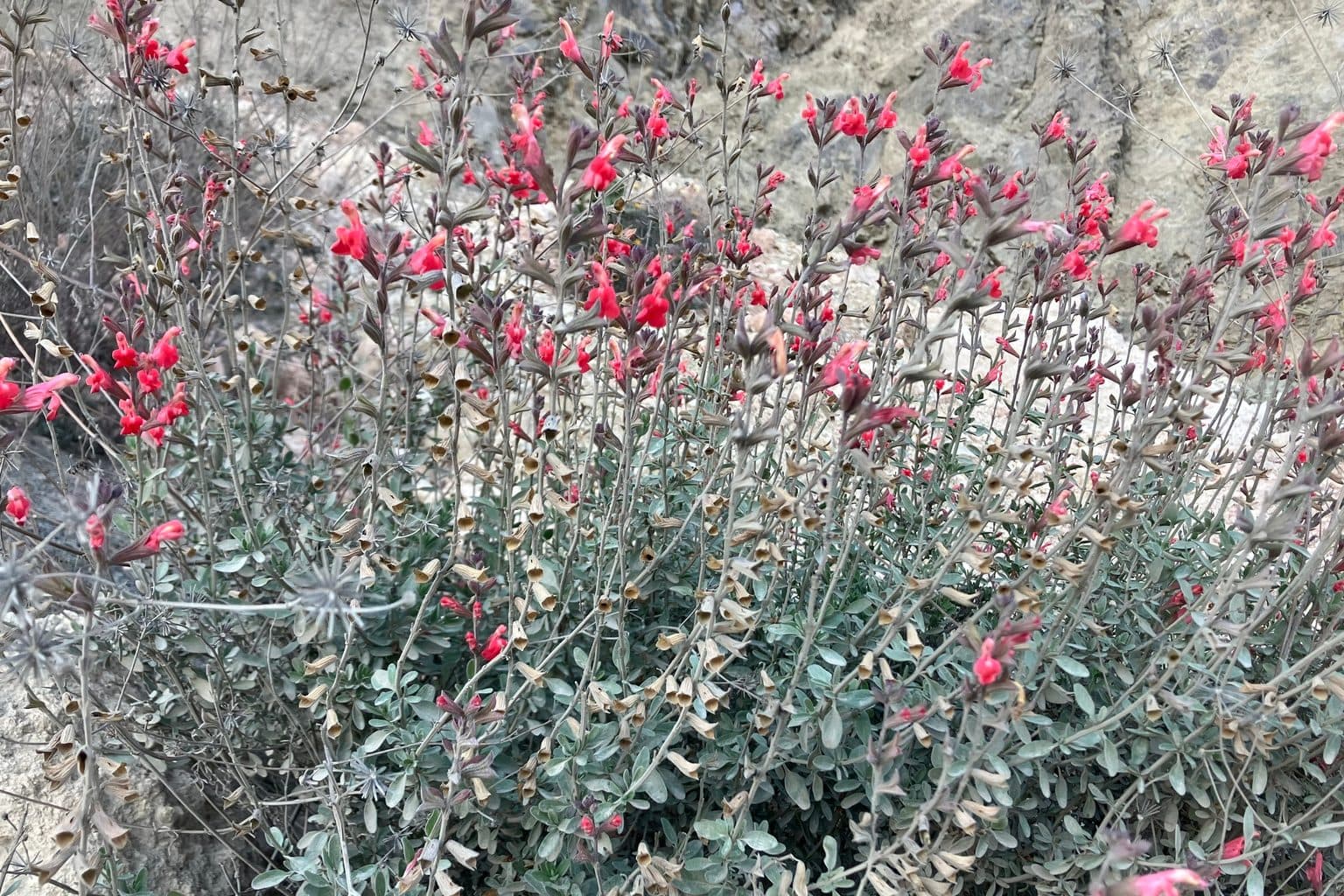
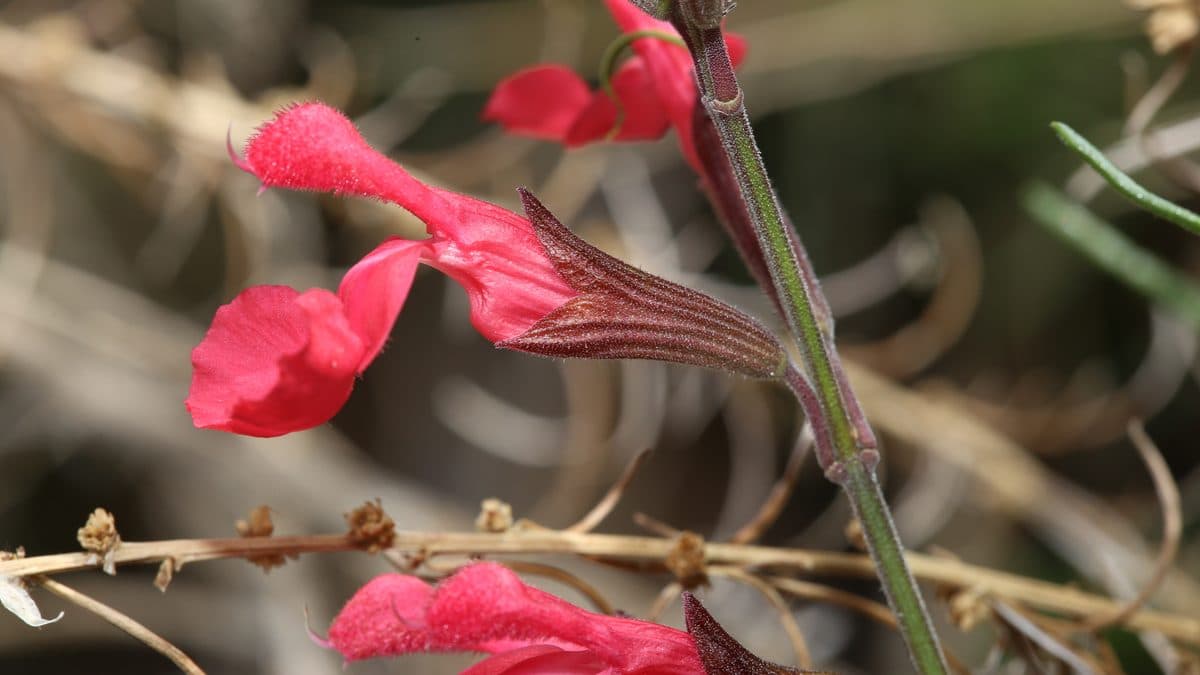
Quick answer: Usually the plant does, even when the top does not. Autumn sage (Salvia greggii) is a small deciduous sub-shrub from rocky slopes in Texas and northern Mexico. Missouri Botanical Garden says most selections can be grown in zones 6 to 9, and Texas Tech University rates the species zones 8 to 11. The Lady Bird Johnson Wildflower Center calls it generally cold tolerant but deciduous where winters are extremely cold. Expect brown leaves and bare stems after a hard freeze, then regrowth in spring. Cold, wet soil does more harm than cold air (Pollinator Patch regional care guide).
Key takeaways
- Missouri Botanical Garden says most autumn sage selections can be grown successfully in zones 6 to 9, with winter mulch and excellent drainage at the cold end of that range (Missouri Botanical Garden Plant Finder).
- Texas Tech University lists the species at zones 8 to 11 and says it may not overwinter in colder areas, so two university sources disagree by about two zones (Texas Tech University Plant Resources).
- The plant is generally cold tolerant but deciduous in regions with extremely cold winters, and it must have a well-drained site (Lady Bird Johnson Wildflower Center).
- A leafless plant in January is not a dead one. Wait for spring growth before judging it or pruning it (Pollinator Patch regional care guide, citing the Lady Bird Johnson Wildflower Center and NC State Extension).
- 'Wild Thing' reportedly has better winter hardiness than the species plant (Missouri Botanical Garden Plant Finder, NC State Extension Plant Toolbox).
Will Salvia greggii survive a freeze?
Most of the time, yes. That answer comes with a range, because the sources do not agree on how far north it reaches. Missouri Botanical Garden says most selections can be grown successfully in zones 6 to 9, and adds that cold hardiness varies from one selection to the next (Missouri Botanical Garden Plant Finder). NC State Extension lists zones 6a through 9b (NC State Extension Plant Toolbox). Texas Tech University Plant Resources gives zones 8 to 11 and says autumn sage "may not overwinter in colder areas" (Texas Tech University Plant Resources). If you garden in zone 7 or colder, you are in the stretch where the two ranges stop agreeing.
None of the pages I read gives one temperature at which autumn sage dies. They give zone ranges and site advice. In the warm half of its range a freeze rarely does more than burn the leaf tips. In the cold half the plant can lose its leaves and much of its top growth and still come back.
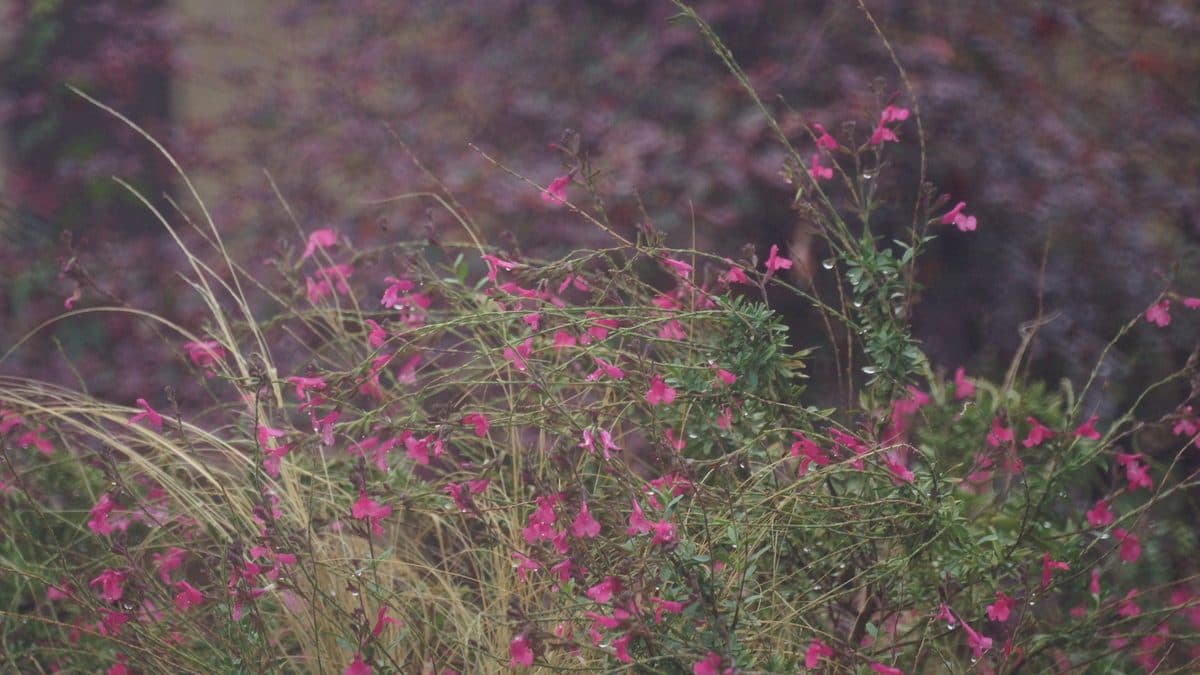
The plant is native to central and west Texas, south to San Luis Potosi in Mexico, and the Lady Bird Johnson Wildflower Center describes its habitat as well-drained, rocky slopes (Lady Bird Johnson Wildflower Center). Pollinator Patch's regional care guide places it in the Edwards Plateau (San Antonio area), the Trans-Pecos and the South Texas Plains (see the autumn sage regional care guide). Farther north, Missouri Botanical Garden attaches its advice on winter mulch and excellent drainage to the cold end of the range.
What a light freeze does, and what a hard one does
None of the sources I read describe a light freeze as a threat to a plant growing in a zone it is rated for. The warmer ecoregions in the table below show little to no dieback. What a light freeze does decide is whether you spend the night out with bedsheets, and for an established autumn sage the answer is no. The post on covering plants before the first frost covers what is worth a sheet and what is not.
A hard freeze, several hours well below freezing or a string of nights, does more. Pollinator Patch's regional care guide says that in the Edwards Plateau (San Antonio area) the plant is semi-evergreen but may drop leaves or die back partway in a hard freeze, and that this is normal. In the Chihuahuan Deserts (El Paso area), leaf drop after a freeze is described as normal dormancy (autumn sage regional care guide). The Lady Bird Johnson Wildflower Center puts it in one line: the plant is deciduous in regions with extremely cold winters (Lady Bird Johnson Wildflower Center).
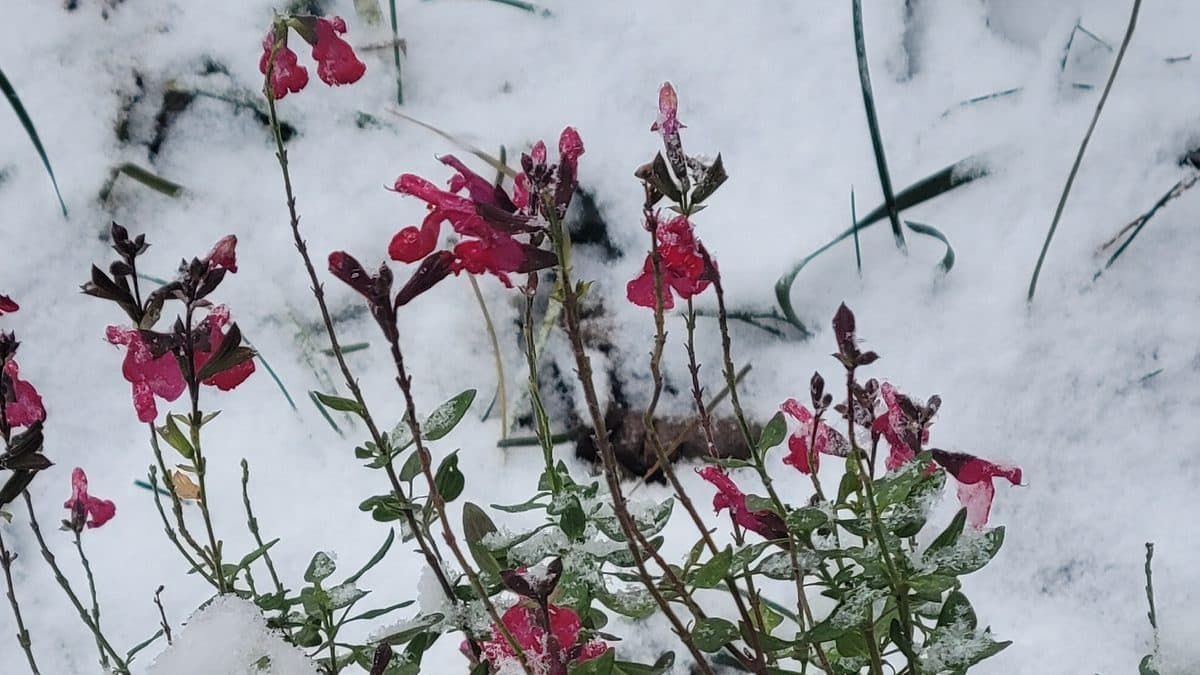
For the Middle Atlantic Coastal Plain (Philadelphia area), the regional guide says to leave top growth standing all winter to insulate the crown, and to add a couple of inches of loose mulch, kept off the crown, if nights reach single digits (regional care guide).
Why it looks dead and probably is not
In January and February a hard-hit autumn sage can be a brown, brittle thing. Leaves crisp, flowers gone, stems the color of a dry twig. The Pollinator Patch regional guide for the Middle Atlantic Coastal Plain says it directly: do not judge the plant dead on bare stems in January, wait for spring regrowth. For the Cross Timbers (Fort Worth area), it adds that the plant usually keeps some leaves through winter, so a sparse plant is not necessarily a dead one (regional care guide).
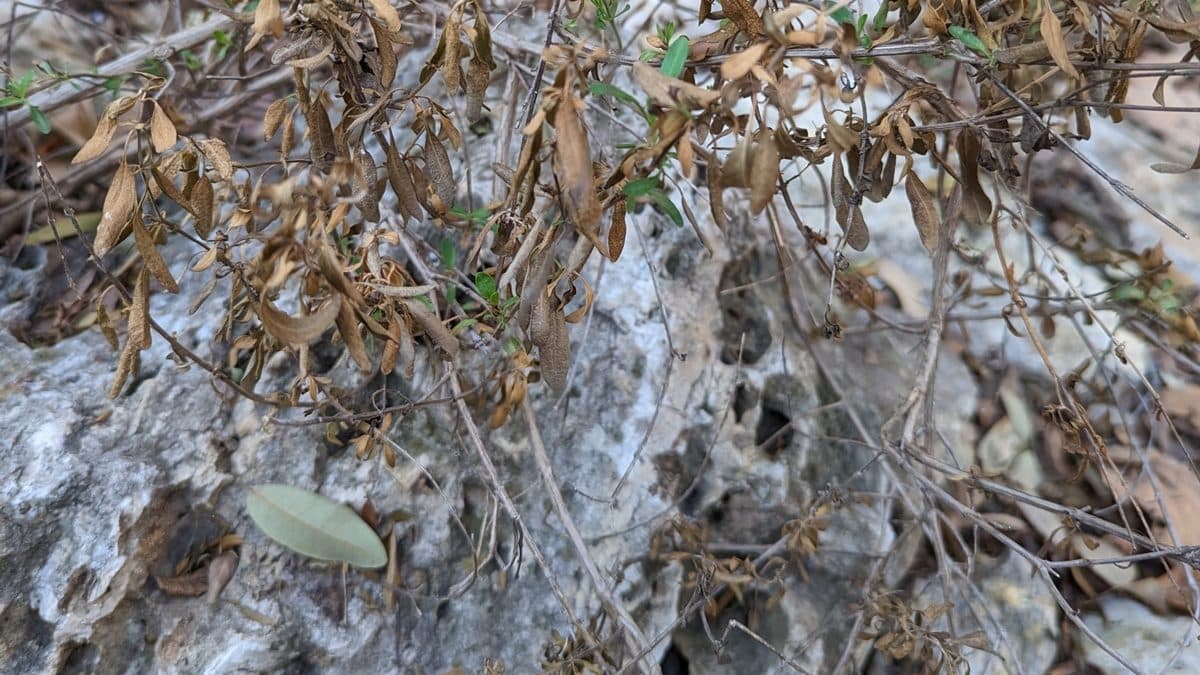
One quick check does not hurt the plant. Scratch a small patch of bark on a lower stem with a thumbnail. Green underneath means the stem is alive. Brown and dry means that stem is gone. No extension source I read publishes this test, so it is a gardener's habit and not a cited method.
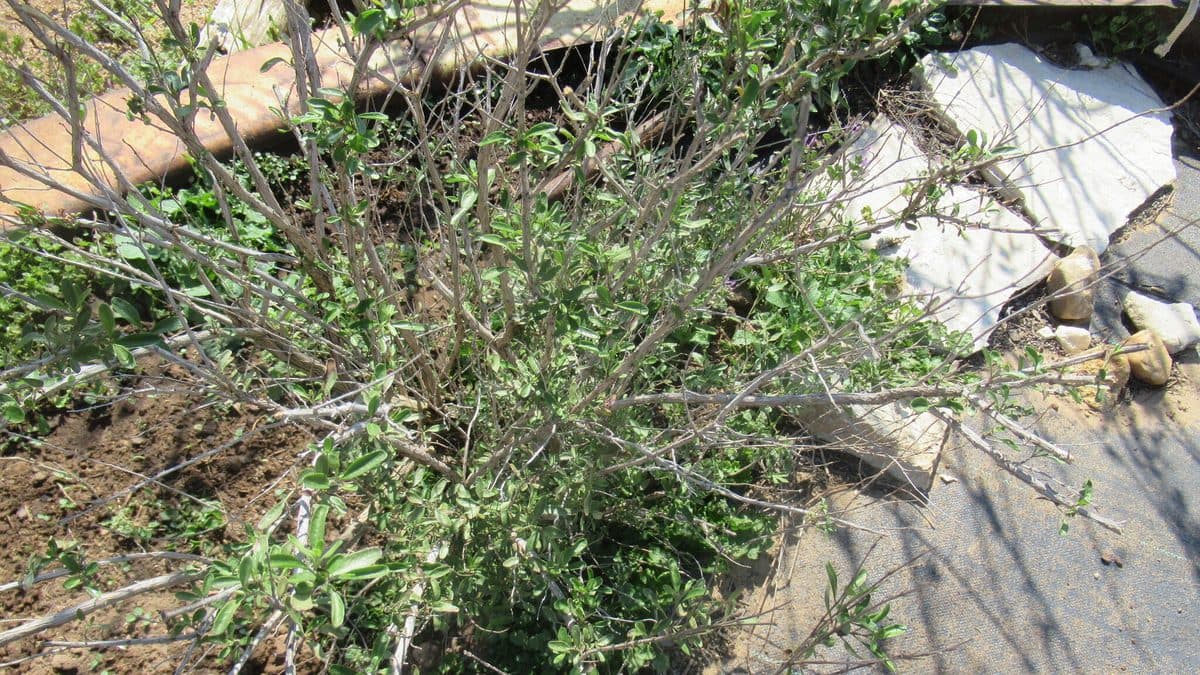
Give it until spring. The Edwards Plateau (San Antonio area) guidance is to hold all major cuts until new growth appears in early spring, and the Chihuahuan Deserts (El Paso area) guidance warns that cuts made before spring can expose new growth to a hard freeze (regional care guide).
When to cut it back, and how far
Once new leaves show, prune. For the Cross Timbers (Fort Worth area) and the Texas Blackland Prairies (Dallas area), Pollinator Patch's regional care guide gives the main yearly prune as late winter, cutting one-third to one-half. In El Paso it says to wait for early-spring new growth before a one-third to one-half cutback (regional care guide).
Cut to green, not to a number
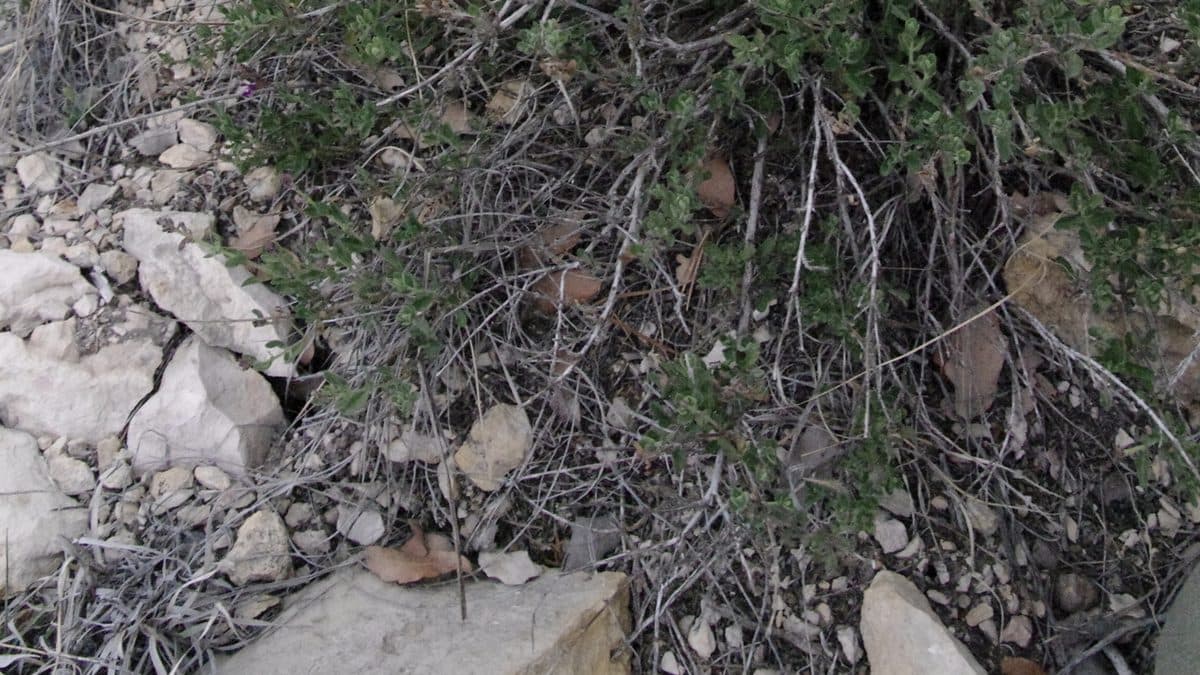
If nothing has leafed out by the time nearby perennials are growing, the stems are probably dead. Cut to the base and watch the soil for sprouts for a few more weeks before pulling anything. That is a judgment call, not a figure from a source.
Wet feet kill it faster than cold
The Lady Bird Johnson Wildflower Center says autumn sage must have a well-drained site and cannot take shrink-swell clay soils, and suggests working in organic matter and planting on a slope in clay (Lady Bird Johnson Wildflower Center). Missouri Botanical Garden asks for sandy or rocky soil with sharp drainage and says to plant in protected locations with excellent drainage (Missouri Botanical Garden Plant Finder).
The regional guide in the app turns that into winter rules. In the Northern Piedmont (Lancaster, PA area), cold and wet soil does more harm than cold air. In the Northeastern Coastal Zone (New York, NY area), wet, cold clay is more likely to kill it than cold air. In the Texas Blackland Prairies (Dallas area), saturated clay around the crown is the main danger, and in the East Central Texas Plains (College Station area), soggy clay can rot the roots and crown (regional care guide). For a plant you are worried about, the practical moves are modest: do not water it during freezing weather, keep mulch loose and pulled back from the stems, and check that the planting spot still drains after a winter storm. There is more on mulch timing in winter mulch after the ground freezes.
How autumn sage behaves from Houston to New York
The same plant has different winters depending on where it sits. Here is how Pollinator Patch's regional care guide describes it, by EPA Level III ecoregion with an anchor city. The guide draws on sources that include the Lady Bird Johnson Wildflower Center and NC State Extension.
| Ecoregion (anchor city) | What winter does to it |
|---|---|
| Western Gulf Coastal Plain (Houston) | Semi-evergreen, usually little to no dieback, and established plants generally need no winter protection. |
| Texas Blackland Prairies (Dallas) | Hardy through winters and stays semi-evergreen. Prune in late winter. |
| Cross Timbers (Fort Worth) | Usually keeps some leaves, so a sparse plant is not necessarily dead. Cold, wet soil is the main risk. |
| Edwards Plateau (San Antonio) | Semi-evergreen, may drop leaves or die back partway in a hard freeze, which is normal. |
| Chihuahuan Deserts (El Paso) | Leaf drop after a freeze is normal dormancy. Do not prune in winter. |
| High Plains (Lubbock) | Outside the native range and the riskiest season. Expect dieback in a hard freeze, and some plants may not return. |
| Middle Atlantic Coastal Plain (Philadelphia) | Leave top growth standing, make sure the site drains, and add loose mulch if nights reach single digits. |
| Northern Piedmont (Lancaster, PA) | Zone 6b to 7a is close to the limit. Expect dieback to the base with spring regrowth. |
| Northeastern Coastal Zone (New York, NY) | Only marginally hardy. Expect some dieback and possible total loss in a harsh winter. |
The full set, with the sources for each row, is on the autumn sage plant page. For a Texas-wide view of what else to do before and after a freeze, see protecting native plants from a freeze in Texas.
Which autumn sage do you have?
Autumn sage is sold in a lot of colors, and the cultivar matters at the cold end of its range. Missouri Botanical Garden says the flower color is usually a form of red but can be orange, pink, purple or sometimes white (Missouri Botanical Garden Plant Finder). Two cultivars are worth knowing by name. 'Wild Thing' reportedly has better winter hardiness than the species plant (Missouri Botanical Garden Plant Finder, NC State Extension Plant Toolbox), and the regional guide recommends it as the better choice if you are replanting in the Northern Piedmont. 'Furman's Red' is listed at zones 6 to 10, with the same advice on winter mulch at the cold end (Missouri Botanical Garden Plant Finder).
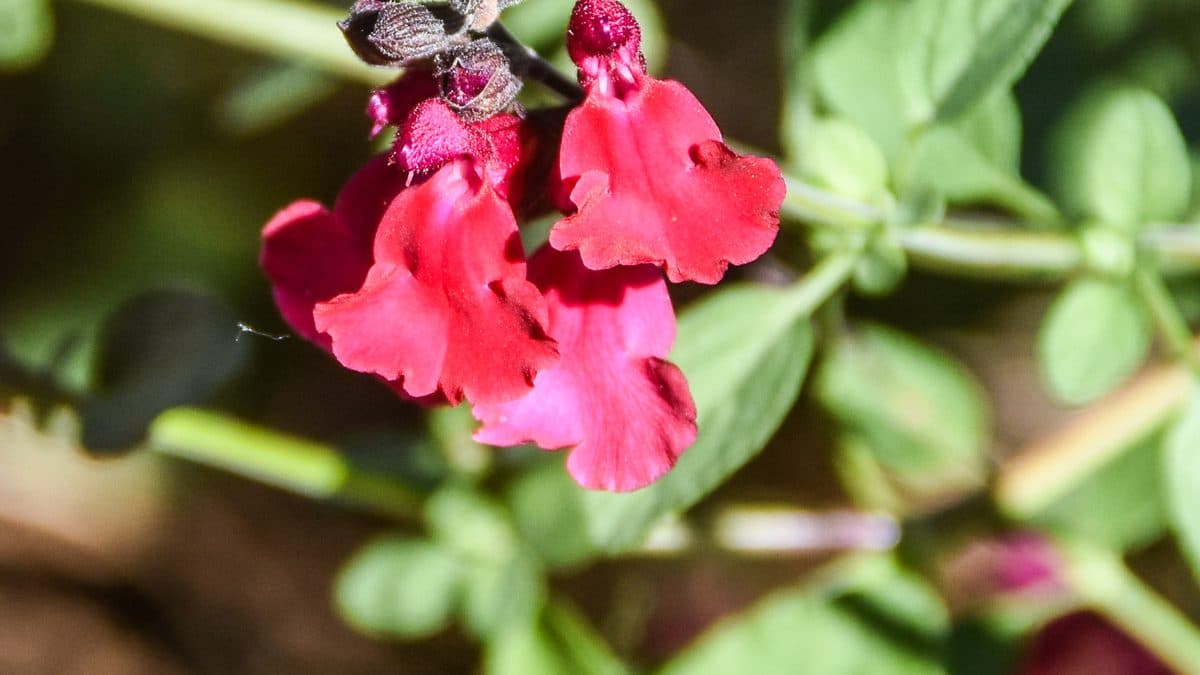
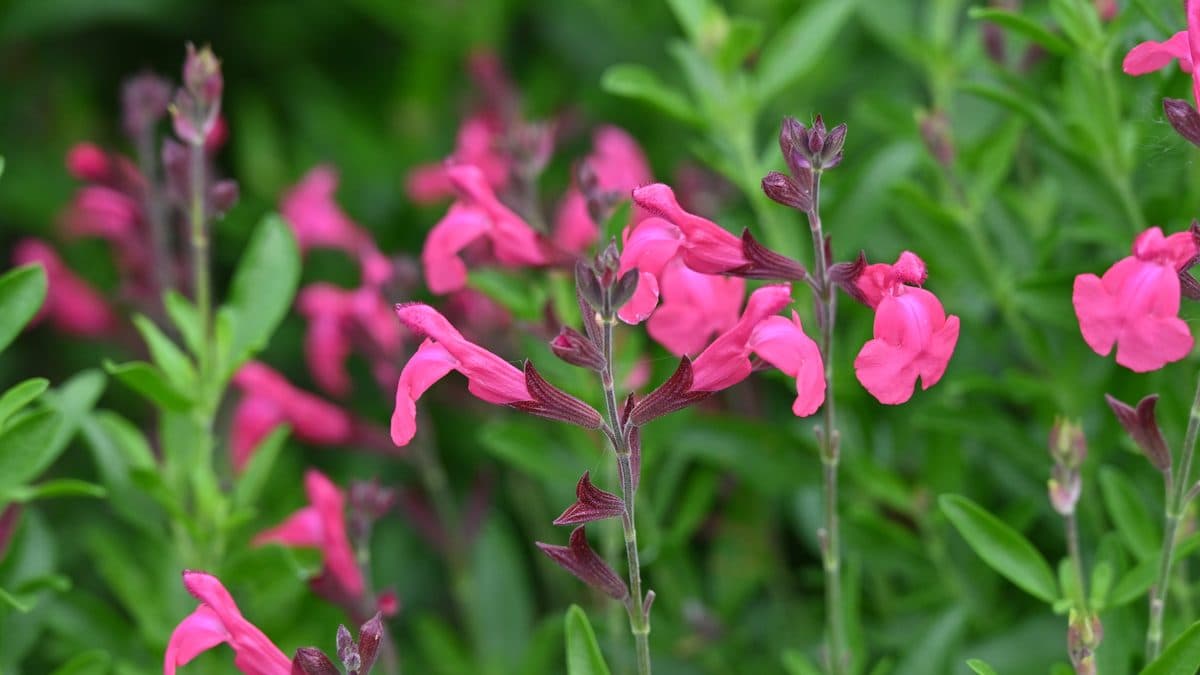
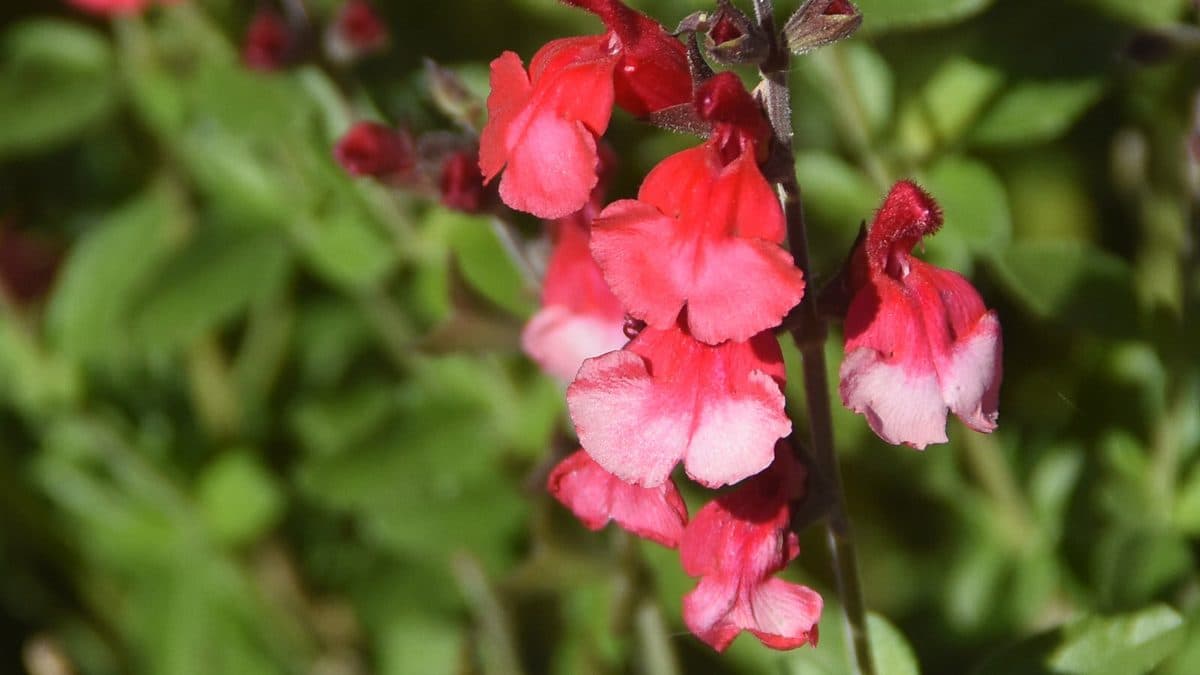
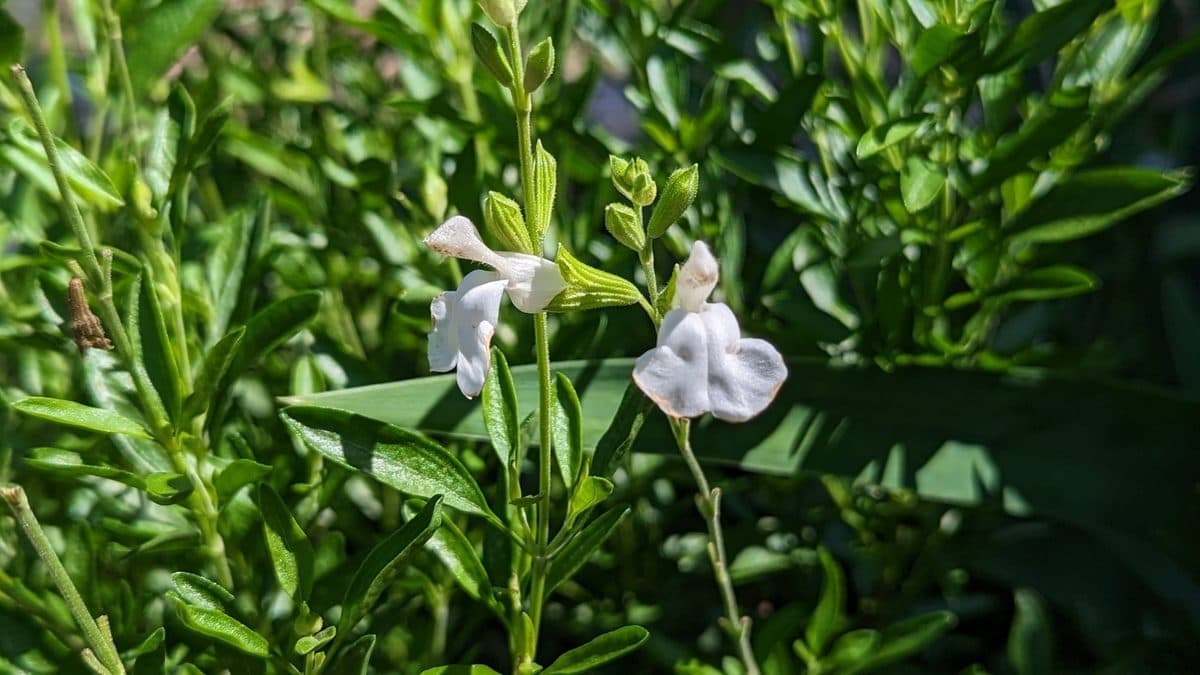
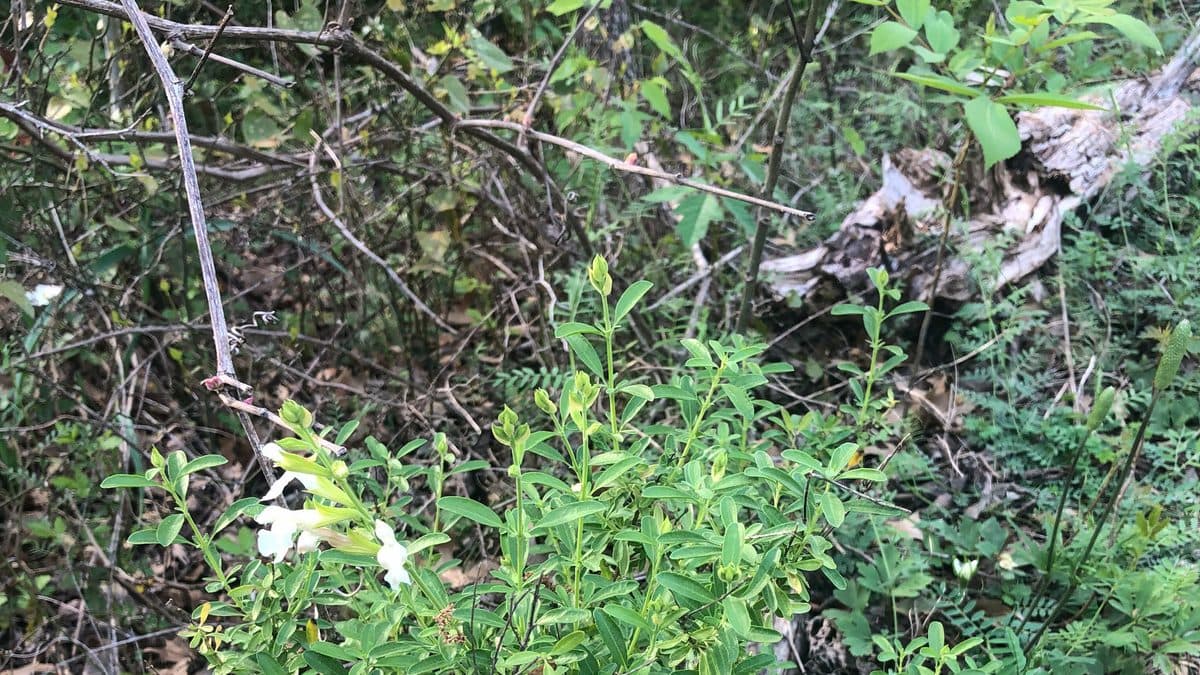
If you do not know which one you have, treat it as the species. A plant tag is the fastest way to find out.
What to do the night of a freeze
Not much. An established autumn sage in the ground does not need a sheet. Do these things instead:
- Skip watering in the freezing stretch. Wet, cold soil is the bigger risk than dry cold.
- Leave the dead top growth where it is. It buffers the crown.
- If you added mulch, check that it sits loose around the plant and not up against the stems.
- For a potted plant, move it to a sheltered spot. The regional guide says containers moved to a sheltered spot overwinter better than in-ground plants in heavy soil.
- Look up your own freeze dates at frost dates by ZIP, and read the cover guide linked above for the plants that do need protecting.
People also ask
Is Salvia greggii frost hardy?
Mostly. Missouri Botanical Garden says most selections can be grown in zones 6 to 9, and Texas Tech University lists the species at zones 8 to 11, so a two-zone gap exists between the two sources (Missouri Botanical Garden Plant Finder, Texas Tech University Plant Resources). A light frost usually leaves the woody base alone.
What zone is autumn sage?
It depends on the source. Missouri Botanical Garden says zones 6 to 9 for most selections, NC State Extension lists 6a through 9b, and Texas Tech University lists zones 8 to 11. 'Wild Thing' reportedly has better winter hardiness than the species plant (Missouri Botanical Garden Plant Finder, NC State Extension Plant Toolbox, Texas Tech University Plant Resources).
My Salvia greggii died back. Is it dead?
Probably not. Pollinator Patch's regional care guide says not to judge the plant dead on bare stems in January, and to wait for spring regrowth before pruning. Dieback to the base is expected in colder regions, with regrowth in spring (Pollinator Patch regional care guide, citing the Lady Bird Johnson Wildflower Center and NC State Extension).
When should I cut back autumn sage?
Late winter in warm Texas ecoregions, and early spring in colder ones, once new growth appears. Pollinator Patch's regional care guide gives a cut of one-third to one-half for the main yearly prune, and warns that cuts made before spring can expose new growth to a hard freeze (Pollinator Patch regional care guide).
Get freeze alerts for your own ZIP code
Pollinator Patch sends freeze alerts by ZIP code, so the night a hard freeze is coming you know before you go to bed. Care is free for every plant you own, native or not, and the autumn sage page has the winter rules for your ecoregion.