Quick answer: Bougainvillea (Bougainvillea spp.) is not on the ASPCA Animal Poison Control Center toxic plant list for dogs, cats, or horses. It is not considered systemically poisonous to pets. The real hazard is physical, not chemical: bougainvillea has long, sharp thorns that can cause puncture wounds and skin irritation. If your dog chews it and shows symptoms, call the ASPCA Animal Poison Control Center at (888) 426-4435.
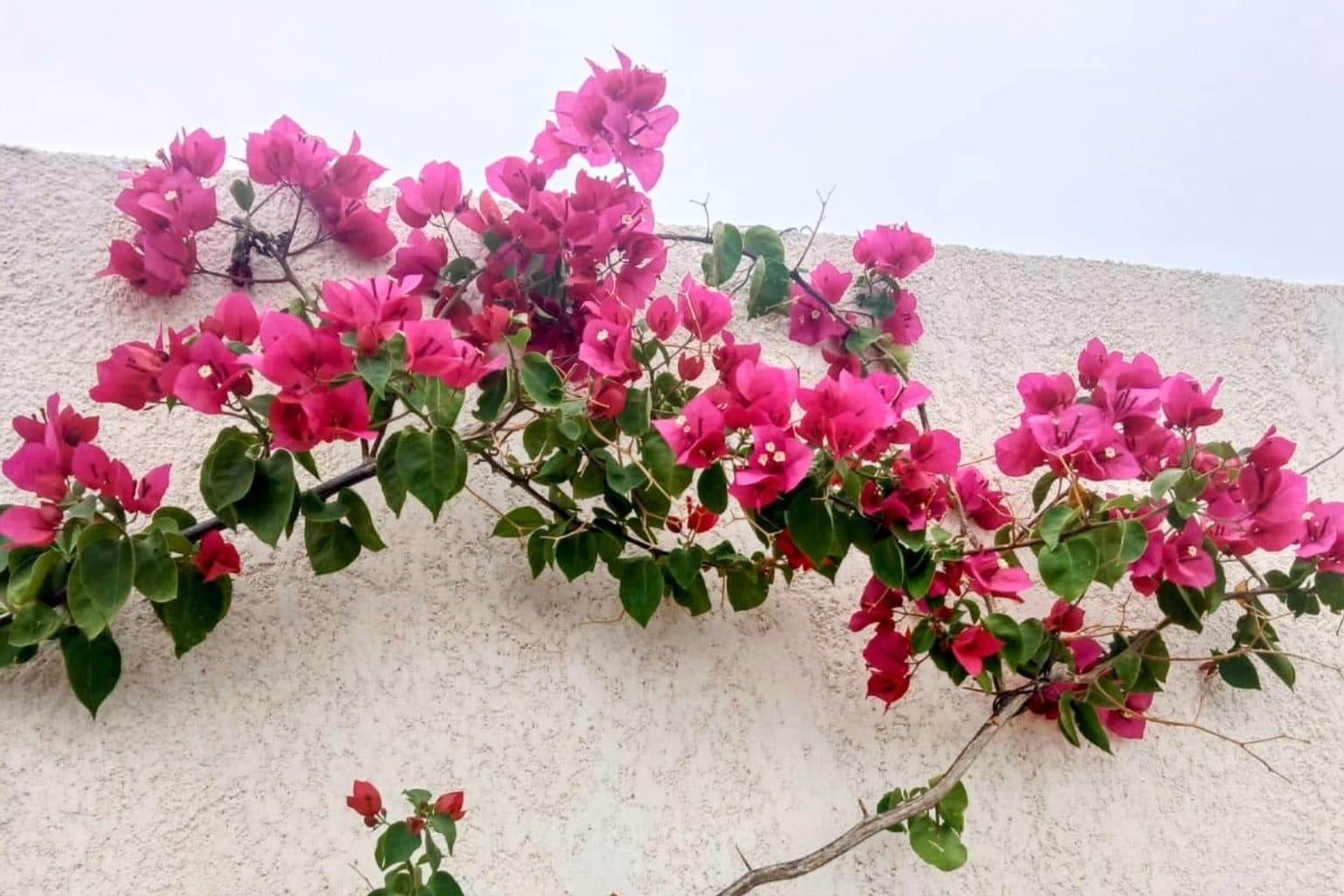
Bougainvillea drapes fences, arbors, and walls across central and south Florida, and it is one of the plants dog owners ask about most because of how much of it a dog can brush against. The chemical answer is reassuring. The thorns are the part to plan around.
What the ASPCA says
Bougainvillea does not appear on the ASPCA Animal Poison Control Center toxic plant list for dogs, cats, or horses. That standard means there is no documented systemic toxin for those species. You can verify at aspca.org/pet-care/animal-poison-control/toxic-and-non-toxic-plants.
As with any plant, a dog that eats a large amount of foliage can get mild GI upset, and the sap can cause minor mouth or skin irritation in sensitive animals. That is a different order of concern from the cardiac or liver toxins in plants like oleander or sago palm.
The real risk with bougainvillea is the thorns
Bougainvillea's woody stems carry stiff, sharp thorns that can reach an inch or more. The most common dog injuries are punctures to paws, nose, or mouth from pushing through or chewing a vine, and thorn scratches can become irritated or infected. In a yard where a dog runs the fence line, a mature bougainvillea along that fence is worth siting carefully or keeping trimmed back from where the dog patrols.
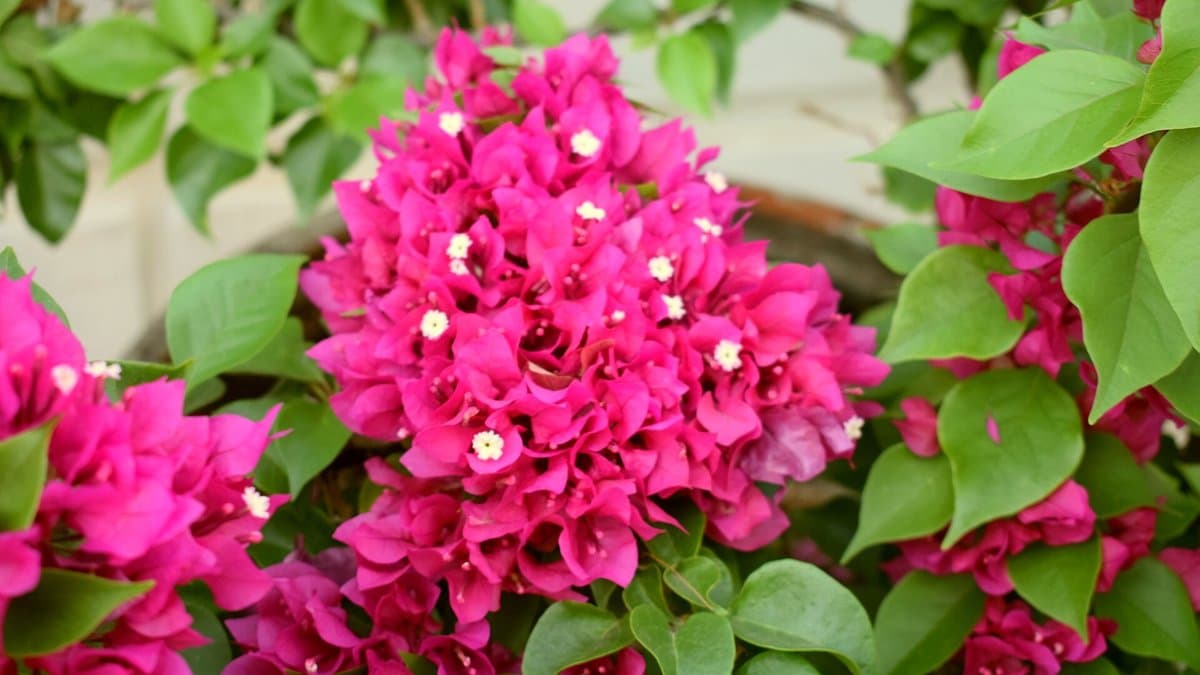
If your dog gets a thorn puncture, clean it and watch for swelling or limping. A puncture that closes over the top can trap bacteria, so a deep one is worth a vet check even though the plant itself is not poisonous.
Dog-friendly Florida natives for the same job
Bougainvillea is usually planted for a splash of color on a fence, wall, or trellis. If you want that vertical color without the thorns, these Florida natives are worth a look. Native ranges per the Florida Native Plant Society and the Lady Bird Johnson Wildflower Center.

| Plant | Dog Safe? | Notes |
|---|---|---|
| Bougainvillea (Bougainvillea spp.) | Caution | Not on ASPCA toxic plant list, but sharp thorns cause punctures; site away from dog runs |
| Coral Honeysuckle (Lonicera sempervirens) | Yes | Not on ASPCA toxic plant list; thornless twining vine, red tubular flowers, hummingbird favorite |
| Crossvine (Bignonia capreolata) | Yes | Not on ASPCA toxic plant list; thornless, orange-red spring trumpets, fast on a fence |
| Purple Passionflower (Passiflora incarnata) | Yes | Not on ASPCA toxic plant list; intricate purple flowers, host plant for Gulf fritillary butterflies |
What to do if your dog chews bougainvillea
- For a mouthful of foliage, watch for drooling or mild stomach upset; it is usually minor.
- For a thorn puncture, clean the wound and watch for swelling, limping, or signs of infection.
- Call the ASPCA Animal Poison Control Center at (888) 426-4435 if your dog ate a large amount and is symptomatic, or your vet for a deep puncture.
Planning a dog-friendly Florida yard? See the best native plants for Florida front yards and the Florida plants most toxic to dogs.
If something goes wrong
ASPCA Animal Poison Control Center: (888) 426-4435 (24/7, fee may apply). Have the plant name ready when you call.
Checking more than one plant? See the full list of plants toxic to dogs and cats, with native alternatives, covering every plant on the ASPCA list.