If your dog ate something and you are worried right now
Call the ASPCA Animal Poison Control Center: (888) 426-4435. There is a consultation fee, but they are available 24/7 and will walk you through it. Your vet's emergency line is the other call to make.
Quick answer: The most dangerous plants for dogs in Florida yards are Sago Palm, Oleander, Azalea and Rhododendron, Lantana, Nandina (Heavenly Bamboo), and Chinaberry. Each has a Florida-native swap that is not on the ASPCA toxic plant list: Dwarf Palmetto, Wax Myrtle, Virginia Sweetspire, Firebush, American Beautyberry, and Cabbage Palm.
A lot of what Florida nurseries and big-box stores sell is seriously toxic to dogs, and almost none of it carries a warning. Sago palms sit by the register in spring. Oleander lines highways and older subdivisions. Nandina shows up in nearly every builder-grade foundation planting.
Here are the worst offenders you will find in Florida yards, what they do to dogs, and a Florida-native plant you can use instead. Toxicity below is per the ASPCA Animal Poison Control Center plant database. Native swaps are drawn from the Florida Native Plant Society and University of Florida IFAS Extension recommended lists.
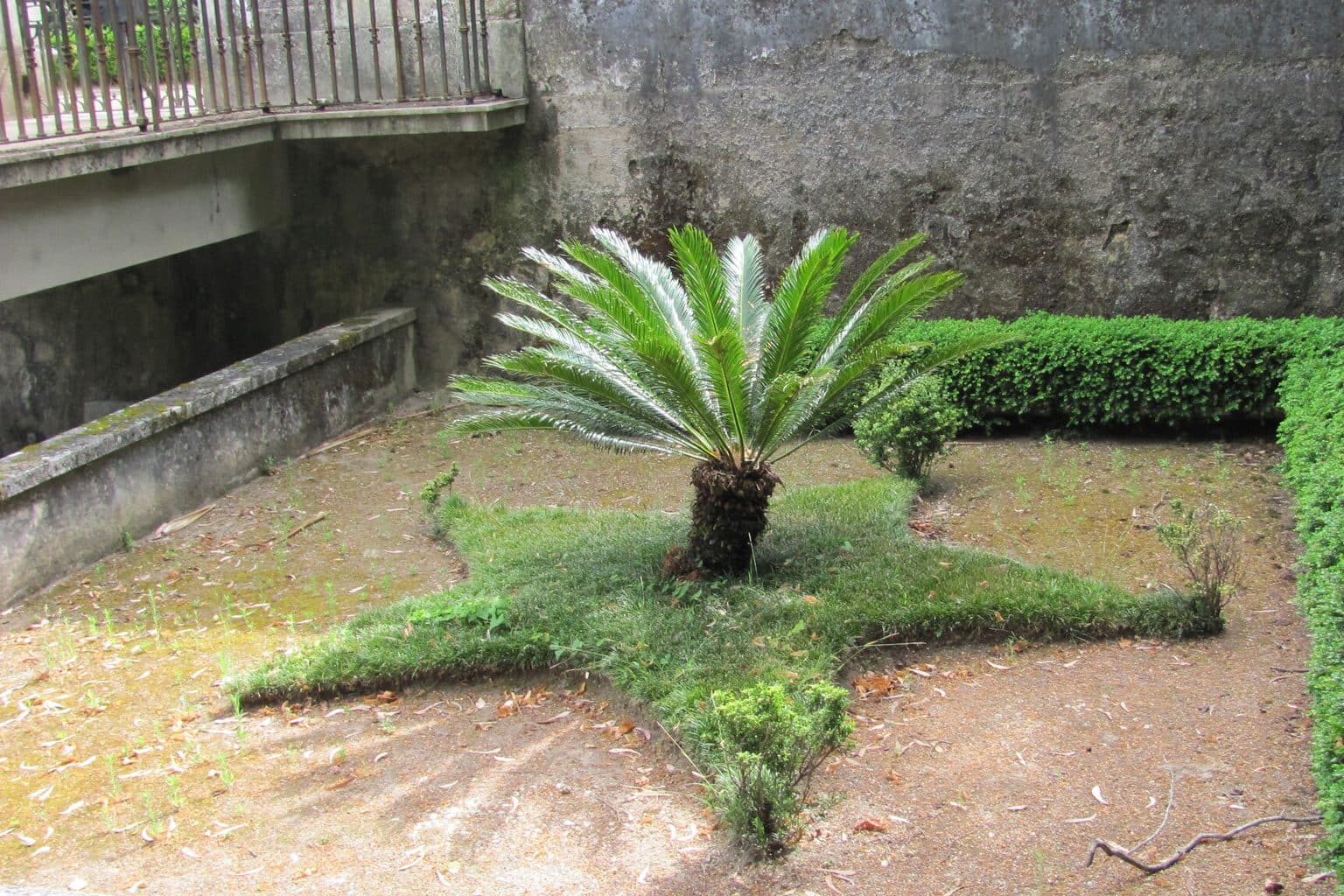
Sago Palm (Cycas revoluta)
The single most dangerous plant in a Florida yard with dogs, and it grows outdoors across most of the state. Every part is toxic per the ASPCA; the seeds are the worst, and dogs are oddly drawn to them. The toxic principle is cycasin, and ingestion can progress to liver failure and death even with treatment.
Safe swap: Dwarf Palmetto (Sabal minor). Native across much of Florida, handles shade and wet soil, stays compact. Gives you the same fan-palm texture without the emergency-vet trip, and it is not on the ASPCA toxic list. Note that Florida's native coontie is also a cycad and also toxic; see the full sago palm and coontie breakdown.
Oleander (Nerium oleander)
Common along highways and in central and coastal Florida, and toxic top to bottom per the ASPCA: leaves, flowers, bark, and roots. Even water from a vase of cuttings can sicken a dog. The toxic agents are cardiac glycosides, and symptoms include drooling, vomiting, diarrhea, and abnormal heart rhythm.
Safe swap: Wax Myrtle (Morella cerifera). A fast, evergreen, salt-tolerant Florida native that makes the same dense screen or hedge oleander is used for, with fragrant foliage and berries for birds. Not on the ASPCA toxic plant list (UF IFAS Extension).
Azalea and Rhododendron (Rhododendron spp.)
The signature shrub of the north and central Florida spring, and toxic to dogs per the ASPCA. All parts contain grayanotoxins; even a few leaves can cause vomiting, drooling, and in larger amounts heart effects. This includes native deciduous azaleas, so do not assume a native azalea is pet-safe.
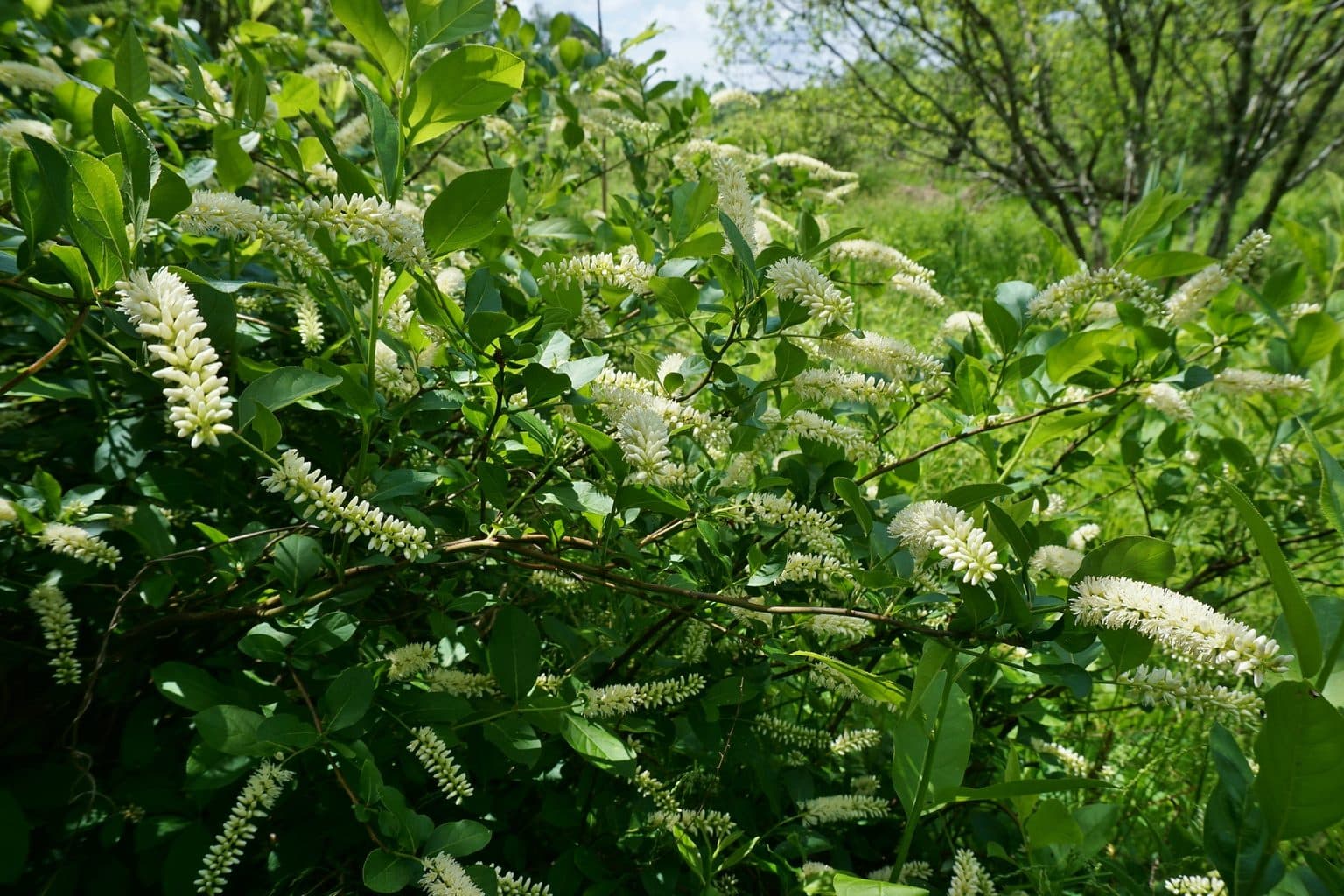
Safe swap: Virginia Sweetspire (Itea virginica). A Florida-native shrub with fragrant white spring spikes and deep red fall color, happy in sun or part shade and tolerant of wet spots. Not on the ASPCA toxic plant list (Florida Native Plant Society).
Lantana (Lantana camara)
One of the most planted flowering shrubs in Florida, and toxic to dogs, cats, and horses per the ASPCA. It contains pentacyclic triterpenoids that can cause vomiting, diarrhea, weakness, and labored breathing. The unripe green berries are the most dangerous part. Lantana camara is also invasive across much of Florida.
Safe swap: Firebush (Hamelia patens). A Florida native with red-orange tubular flowers much of the year that hummingbirds and butterflies love, giving you the same long, hot color in full sun. Not on the ASPCA toxic plant list (Florida Native Plant Society).
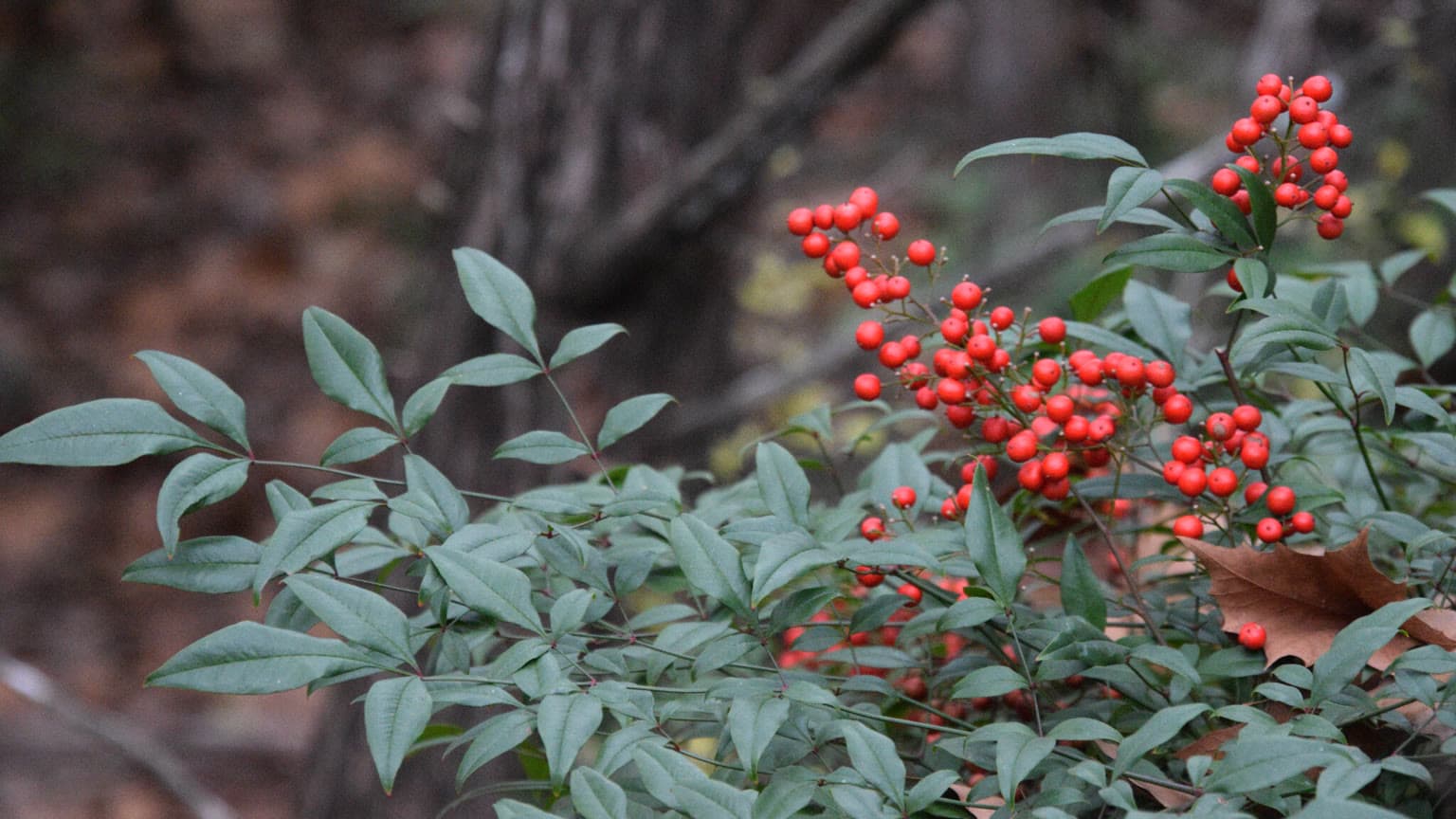
Nandina / Heavenly Bamboo (Nandina domestica)
In nearly every builder landscape in Florida, and a problem on two fronts. The bright red berries contain cyanogenic compounds; the ASPCA lists Nandina as toxic to dogs, and the berries are also documented to harm cedar waxwings and other birds. It is invasive in Florida as well.
Safe swap: American Beautyberry (Callicarpa americana). A Florida-native shrub with striking purple berry clusters in fall that birds eat safely. Not on the ASPCA toxic plant list (Florida Native Plant Society).
Chinaberry (Melia azedarach)
A fast-growing shade tree that escaped cultivation and is now invasive across Florida. The ASPCA lists it as toxic to dogs; the berries carry the highest concentration of toxin and can cause vomiting, diarrhea, weakness, and seizures. Dogs sometimes chew the fallen fruit.
Safe swap: Cabbage Palm (Sabal palmetto). Florida's state tree, native statewide, tough and low-maintenance, with a classic palm silhouette. Not on the ASPCA toxic plant list (UF IFAS Extension).
A note on the plants people worry about needlessly
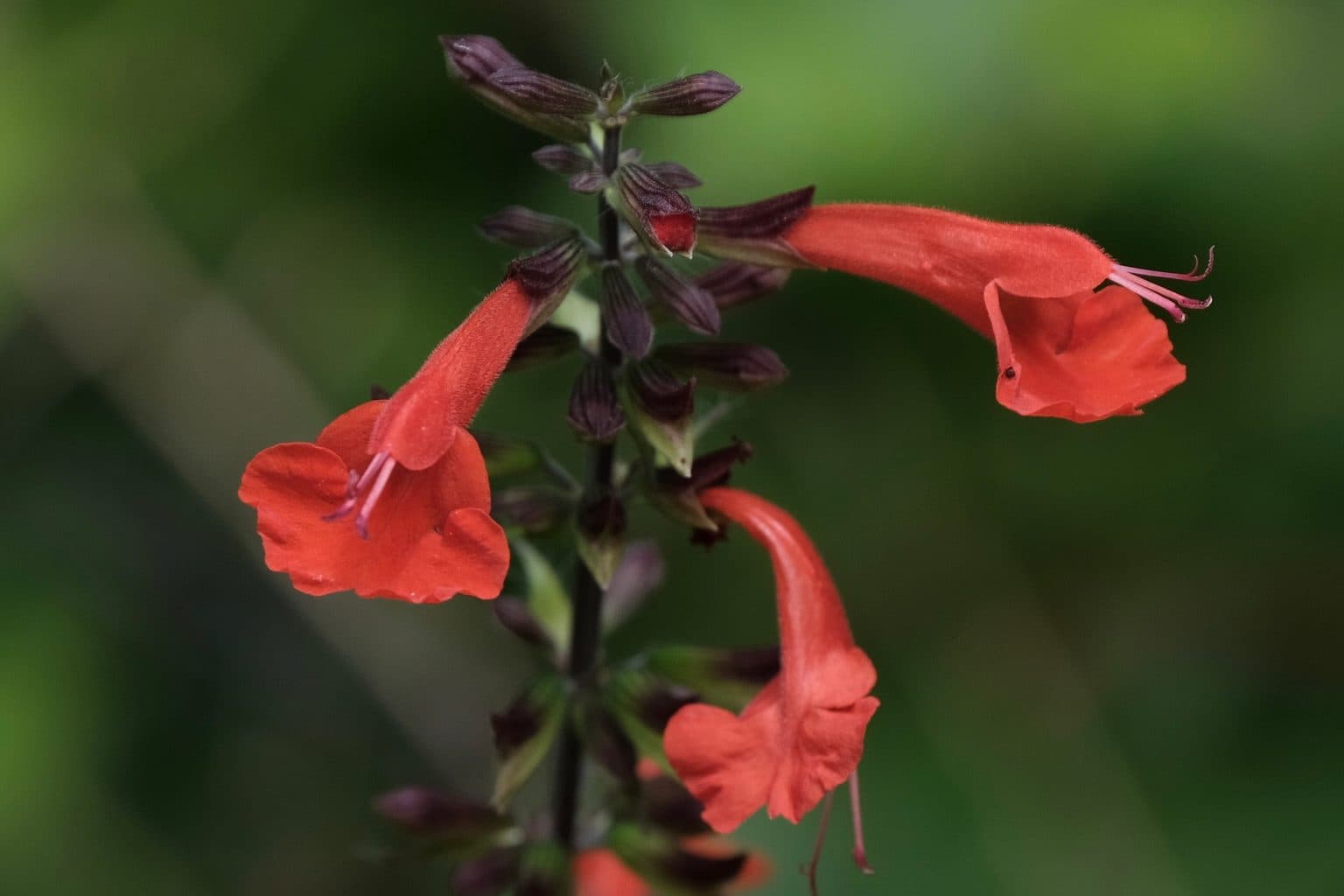
Some Florida favorites are fine. Firebush, Scarlet Sage (Salvia coccinea), and Pink Muhly Grass (Muhlenbergia capillaris) are not on the ASPCA toxic plant list and are reliable, dog-reasonable choices for a sunny front bed. As with any plant, "non-toxic" means no known systemic toxin, not that a dog should eat a whole clump; large amounts of any plant can cause mild stomach upset. If something looks off, call the ASPCA Animal Poison Control Center at (888) 426-4435.
Quick reference
Toxicity details on this page follow the ASPCA Animal Poison Control Center plant database. For native swaps suited to your part of the state, our best native plants for Florida front yards guide breaks them down by ecoregion.
If you are replacing toxic plants and want help covering the cost, see Florida landscaping and water rebates.
To filter every plant in your plan by pet toxicity before you buy, get Pollinator Patch on the App Store. Plants with a cited toxic listing carry a Toxic to Pets flag right on the card.
Checking more than one plant? See the full list of plants toxic to dogs and cats, with native alternatives, covering every plant on the ASPCA list.