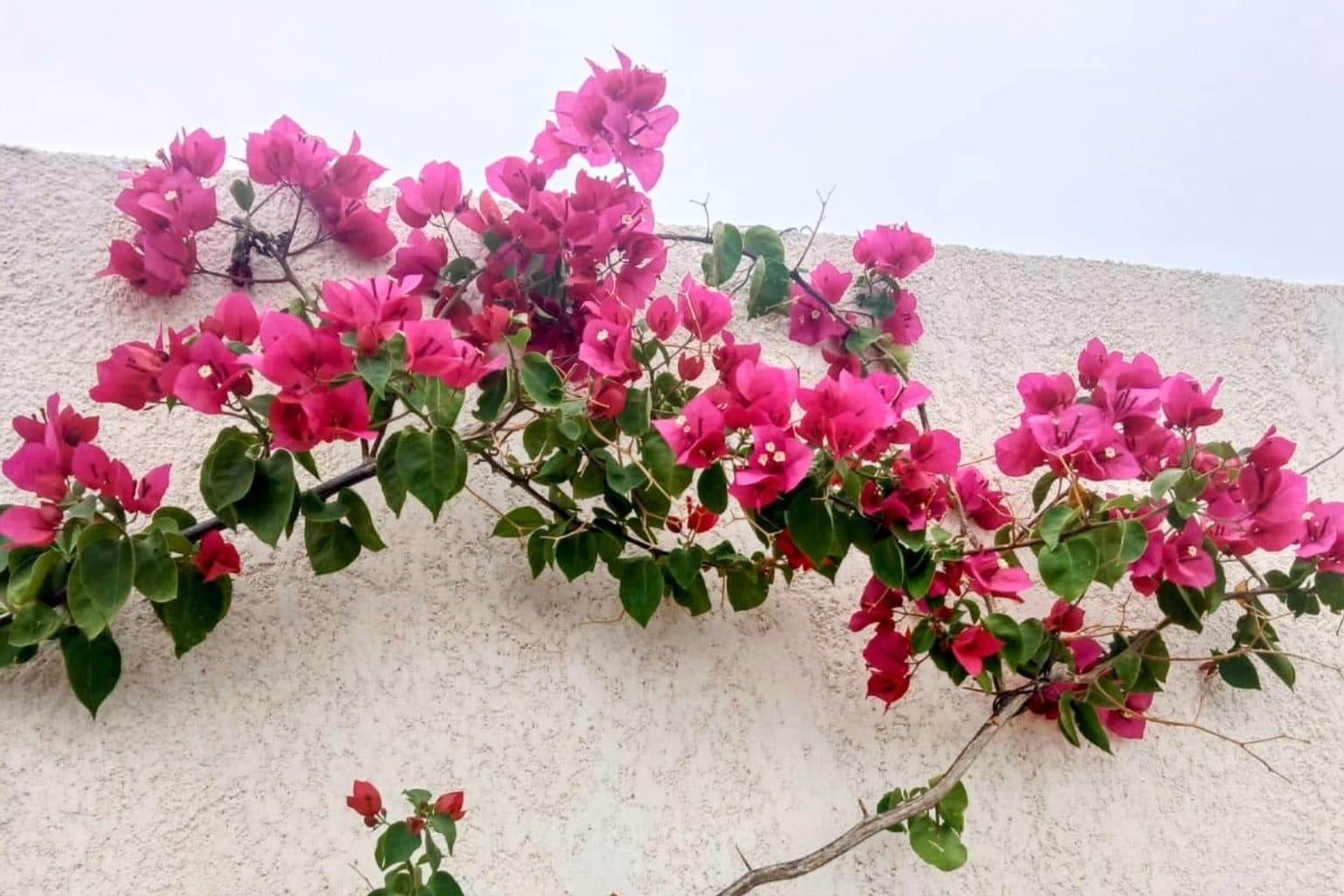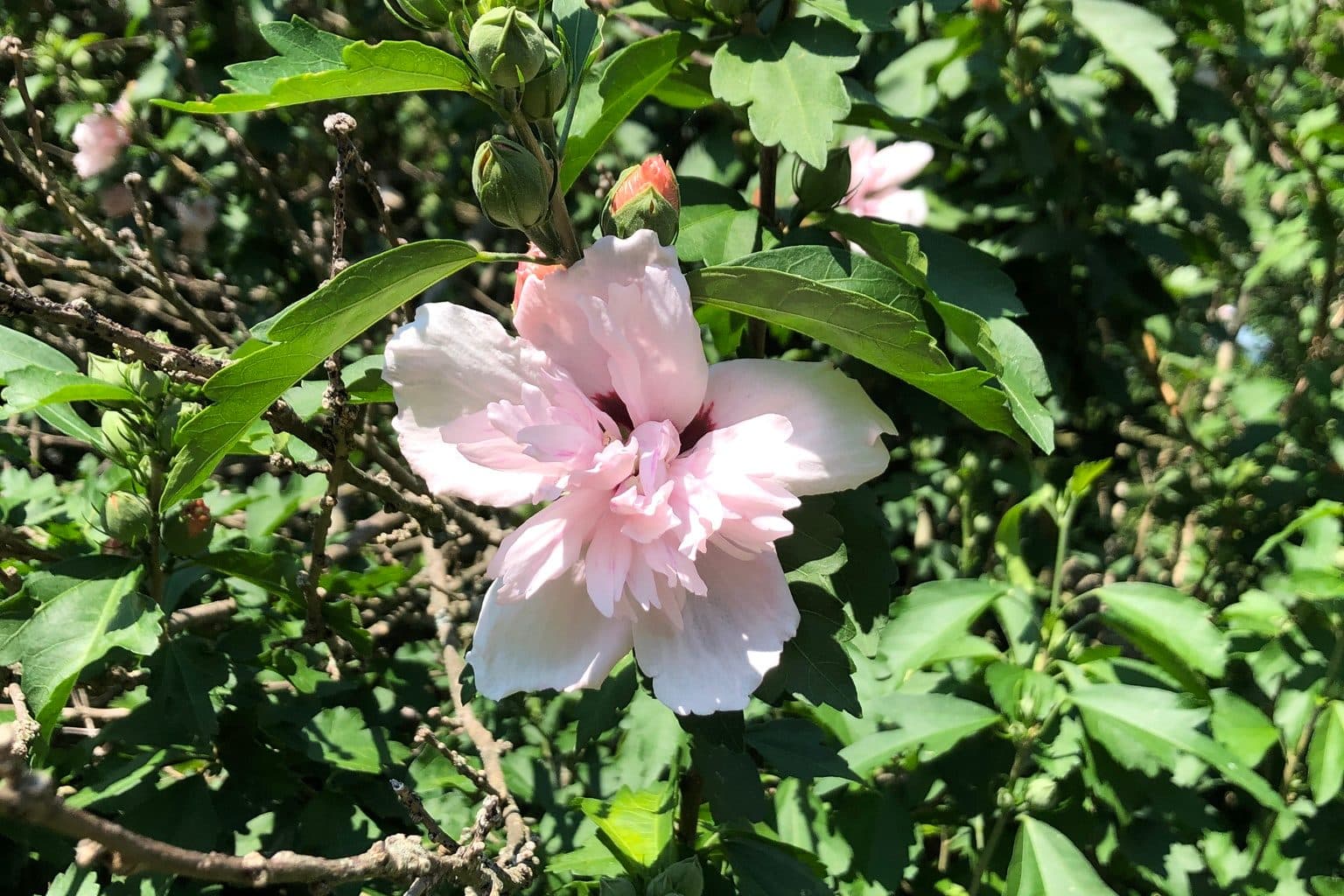
Quick answer: No, with one thing to check. The ASPCA Animal Poison Control Center lists Hibiscus (Hibiscus syriacus, also called Rose of Sharon and Rose of China) as non-toxic to dogs, cats, and horses. That is one of the stronger safety claims you can make, because the ASPCA published the plant as non-toxic rather than simply leaving it off the list. The one caveat is the genus name is used loosely at nurseries, so confirm what you actually have.
Hibiscus is everywhere in Florida yards, from tropical hibiscus hedges in Miami to hardy Rose of Sharon further north. The good news for dog owners is that the hibiscus the ASPCA evaluated is on the non-toxic list. Here is how to be sure the one in your yard is covered.
Is hibiscus poisonous to dogs? What the ASPCA says
The ASPCA Animal Poison Control Center lists Hibiscus (Hibiscus syriacus), with the additional common names Rose of Sharon and Rose of China, as non-toxic to dogs, cats, and horses. A non-toxic listing is a positive statement from the ASPCA rather than a simple absence from the list, which makes it a firmer answer than the usual "not on the toxic list" phrasing.
The usual caveat still applies: non-toxic means there is no documented systemic toxin, not that a dog should eat a whole shrub. Any dog that eats a large quantity of plant material can get mild stomach upset. If your dog eats a lot and shows symptoms, call the ASPCA Animal Poison Control Center at (888) 426-4435.
Which hibiscus do you actually have?
"Hibiscus" gets applied to several plants in Florida, and only Hibiscus syriacus carries the explicit ASPCA non-toxic listing. The two you are most likely to meet:
| Plant | Dog Safe? | Notes |
|---|---|---|
| Rose of Sharon (Hibiscus syriacus) | Yes | Explicitly listed non-toxic to dogs, cats, and horses (ASPCA Animal Poison Control Center) |
| Tropical Hibiscus (Hibiscus rosa-sinensis) | Yes | Not on the ASPCA toxic plant list; the common Florida landscape hibiscus |
| Scarlet Rosemallow (Hibiscus coccineus) | Yes | Not on the ASPCA toxic plant list; a Florida native hibiscus for wet, sunny spots |
| Rose of Sharon lookalikes sold as "hardy hibiscus" | Check | Confirm the label says Hibiscus; unrelated plants are sometimes sold under loose common names |
The fast ID check: true hibiscus has large, funnel-shaped, five-petaled flowers with a long central column of fused stamens sticking out of the middle. If your plant has that prominent central column, you are looking at a hibiscus and the safety answer above applies.
A Florida native hibiscus worth planting
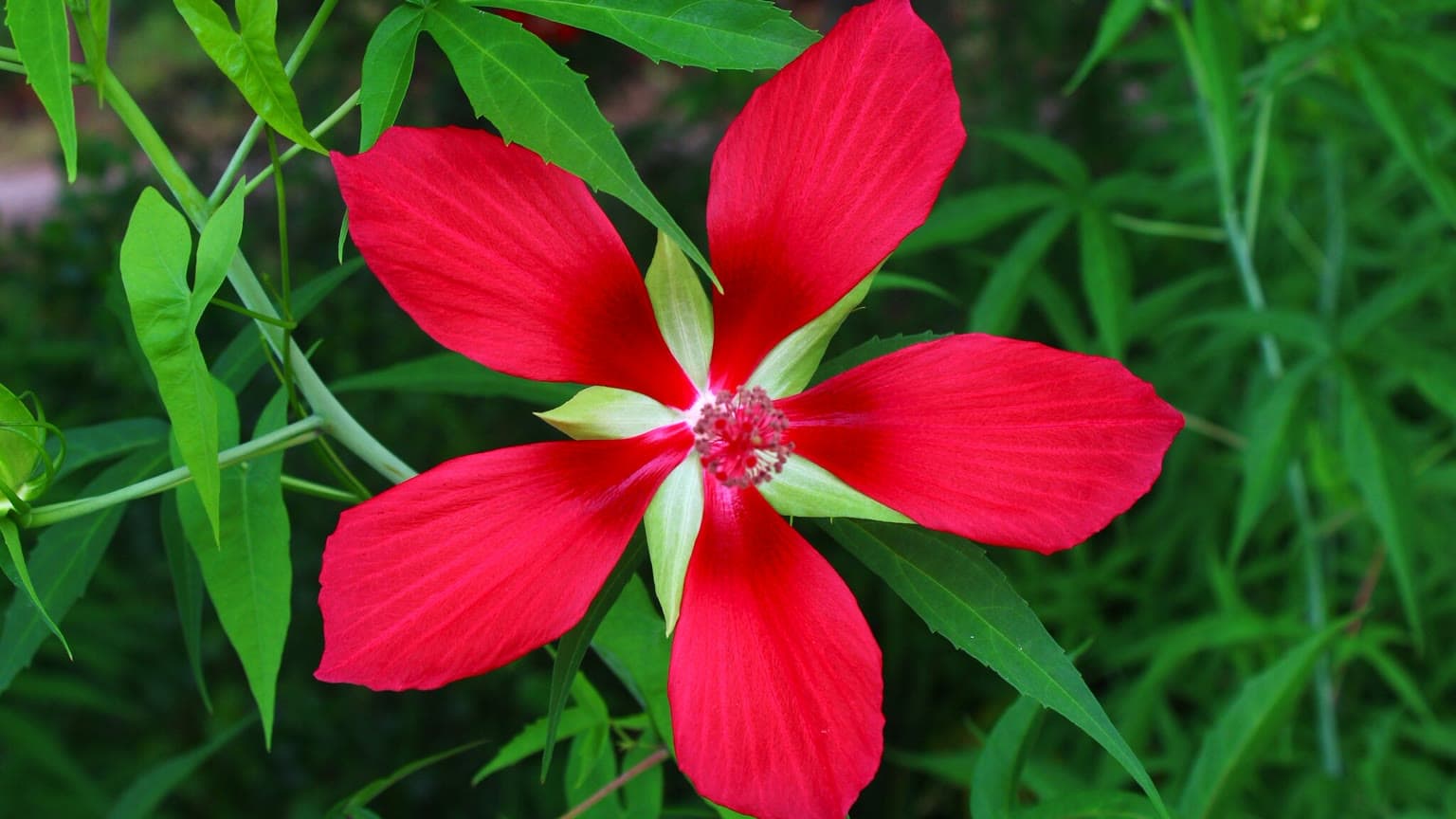
If you want a hibiscus that is both dog-reasonable and native, look at Scarlet Rosemallow (Hibiscus coccineus), a Florida native that thrives in wet, sunny spots and throws big red flowers all summer. It is native across the Southern Coastal Plain and Southern Florida Coastal Plain, per the Florida Native Plant Society, and it is not on the ASPCA toxic plant list. It pairs well with the other picks in our best native plants for Florida front yards guide.
If something goes wrong
ASPCA Animal Poison Control Center: (888) 426-4435 (24/7, fee may apply). Have the plant name ready when you call.
Checking more than one plant? See the full list of plants toxic to dogs and cats, with native alternatives, covering every plant on the ASPCA list.