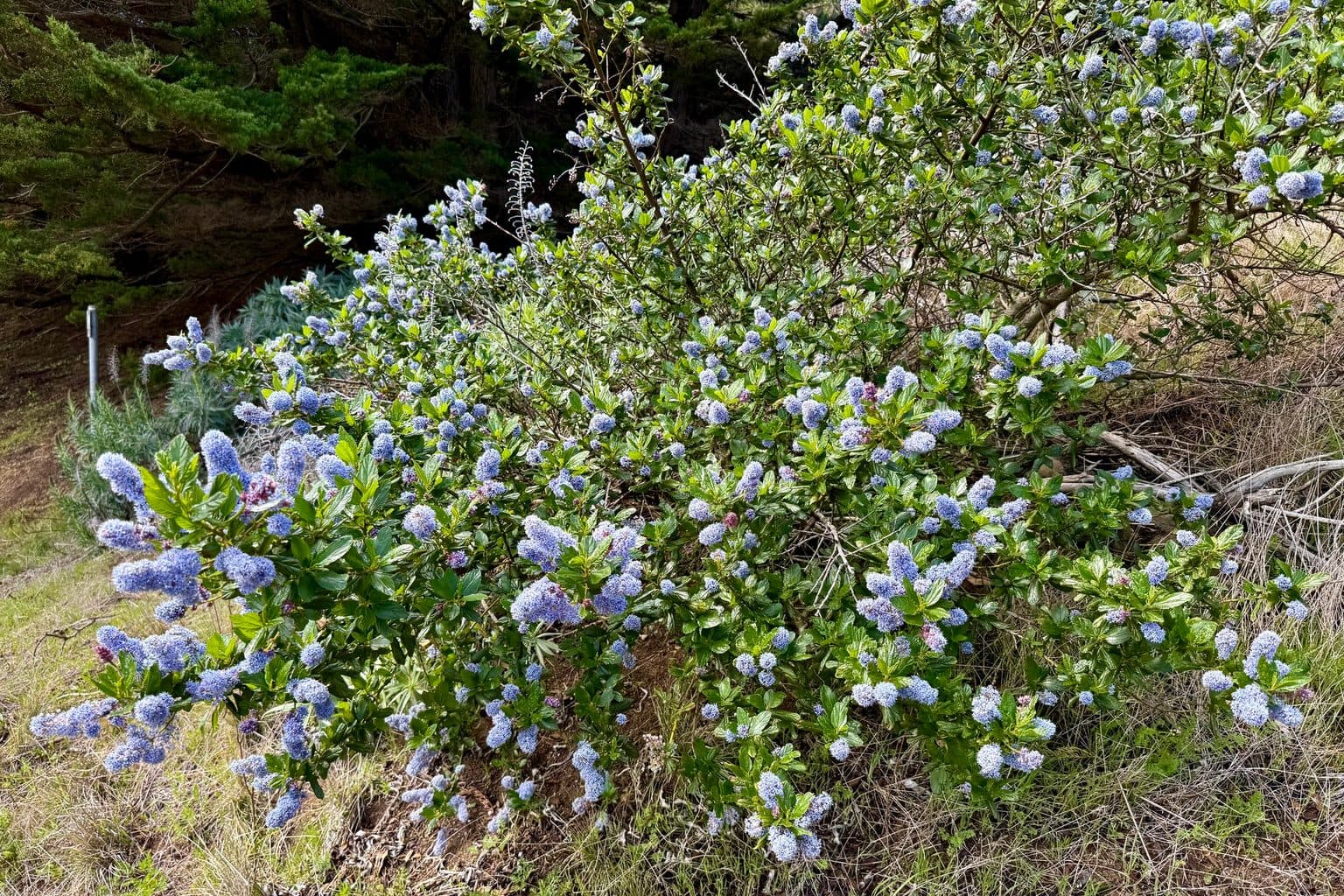
Is Ceanothus Toxic to Dogs?
Short answer
No. Ceanothus, sold as California lilac or wild lilac, is not on the ASPCA Animal Poison Control Center toxic plant list for dogs, cats, or horses, and no species in the genus appears there. The blue and purple yard plants that are on the list are hydrangea and wisteria. Hotline: (888) 426-4435.
The short version
- Ceanothus (California lilac, wild lilac, New Jersey tea) is not on the ASPCA Animal Poison Control Center toxic plant list for dogs, cats, or horses, and no species in the genus appears there under any common name.
- The ASPCA list covers the plants pets most often encounter rather than every plant, so "not on the ASPCA toxic plant list" is the honest wording, and a dog that eats a large amount of any shrub can still get mild stomach upset.
- Common lilac (Syringa vulgaris) is not on the ASPCA toxic list either. The blue and purple flowering yard plants that are on it are hydrangea and wisteria, both toxic to dogs, cats, and horses per the ASPCA.
- Fast ID: Ceanothus has tiny flowers packed into dense clusters, small glossy leaves with three main veins from the base, and blooms late winter into spring (Calscape).
- Bay Area natives to plant next to it that are also not on the ASPCA list: toyon, common manzanita, California fuchsia, sticky monkeyflower, and California buckwheat (Central California Foothills and Coastal Mountains, EPA Level III ecoregion 6).
- If your dog eats a lot of any plant and seems off, call the ASPCA Animal Poison Control Center at (888) 426-4435.
Quick answer
Ceanothus, the shrub sold as California lilac or wild lilac, is not on the ASPCA Animal Poison Control Center toxic plant list for dogs, cats, or horses. No species in the genus appears on that list, including blueblossom (Ceanothus thyrsiflorus), the garden hybrids like 'Ray Hartman', and the eastern New Jersey tea (Ceanothus americanus). A dog that eats a lot of any shrub can get an upset stomach. If yours does and seems off, call the ASPCA Animal Poison Control Center at (888) 426-4435.
Most people who type this question are looking at a shrub with blue flower clusters, sold as California lilac, that grows along a lot of Bay Area sidewalks and gets sniffed by every dog that walks past. The ASPCA database has a clear answer. The harder part is making sure the blue shrub in your yard is a Ceanothus and not one of the two blue or purple flowering plants that are on the list. After that comes what to plant beside it if the dog has the run of the front bed.
What the ASPCA says
The ASPCA Animal Poison Control Center keeps the plant list veterinarians point to first, and it covers non-toxic plants as well as toxic ones. I went through the C section of that list entry by entry. There are 137 plants filed under C, and none of them is a Ceanothus. No Ceanothus species turns up under another common name either, not California lilac, not wild lilac, not buckbrush, not New Jersey tea. You can check it yourself at aspca.org/pet-care/animal-poison-control/toxic-and-non-toxic-plants.
The ASPCA says its list is not meant to be all-inclusive. It is a compilation of the plants pets most often run into. So "not on the ASPCA toxic plant list" is the honest wording, and it is the wording I use everywhere on this site. It is a different thing from a lab study clearing the plant. For a common, widely planted native like Ceanothus, it is still the best answer available.
The usual caveat applies. A dog that eats a large amount of any plant material can get mild stomach upset, vomiting, or diarrhea. There is no toxin involved, so the amount is what matters. If your dog ate a lot of it and seems off, call the ASPCA Animal Poison Control Center at (888) 426-4435 or your vet.
The genus question works in your favor here. With lantana, the native Texas species carries the same compounds as the listed one, so "it's the native kind" is no comfort. With Ceanothus, the whole genus is absent from the list, so the name on the nursery tag does not change the answer. 'Ray Hartman', 'Dark Star', 'Concha', 'Yankee Point', 'Julia Phelps', a straight blueblossom, a groundcover Carmel ceanothus: the answer is the same for all of them.
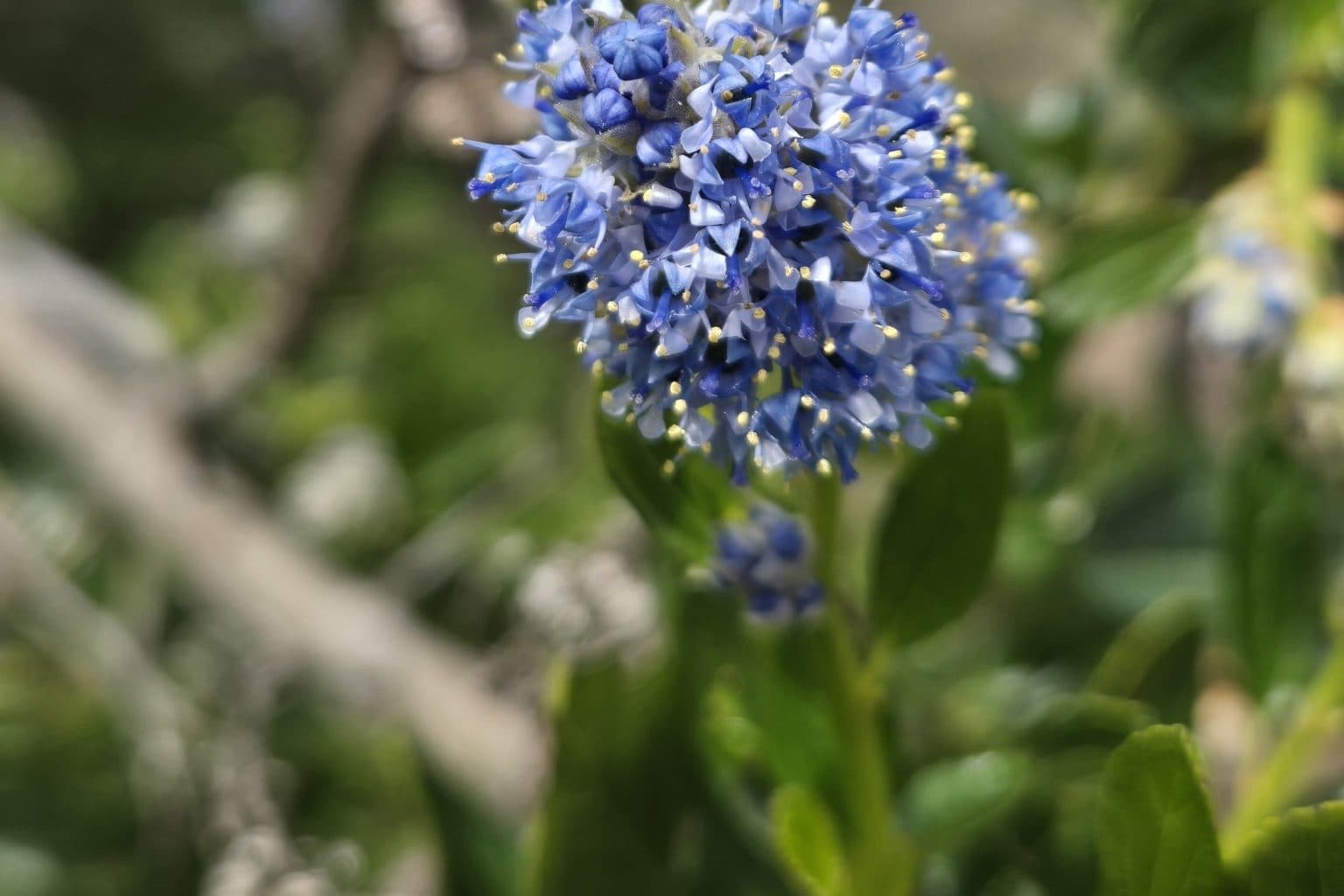
Which blue shrub do you actually have?
"Lilac" covers several plants that have nothing to do with each other, and two blue or purple flowering plants common in California yards are on the ASPCA toxic list. Sorting this out takes a minute.
| Plant | On the ASPCA toxic list? | Notes |
|---|---|---|
| Blueblossom, California lilac (Ceanothus thyrsiflorus) | No | Native along the coast and foothills of the Coast Ranges from Del Norte County to Monterey County (Calscape). Blue clusters late winter into spring. |
| Garden Ceanothus hybrids ('Ray Hartman', 'Dark Star', 'Concha', 'Yankee Point') | No | Same genus. Not on the list under any name. |
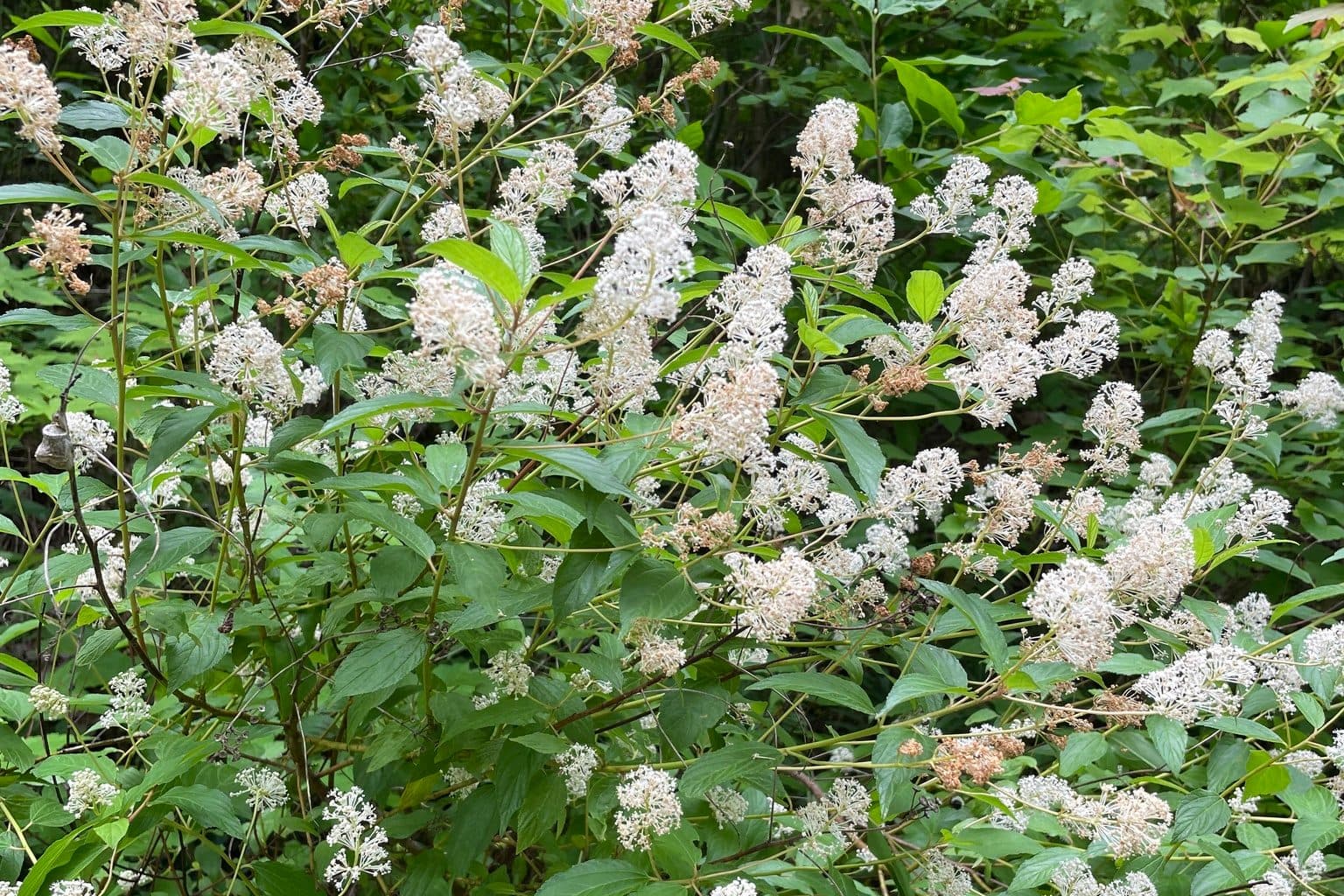
| New Jersey tea (Ceanothus americanus) | No | The eastern Ceanothus, white flowers, native from Quebec to Florida and west to Minnesota, eastern Nebraska, eastern Kansas, and Texas (Lady Bird Johnson Wildflower Center). |
| Common lilac (Syringa vulgaris) | No | The fragrant purple spring shrub most people mean by "lilac". A different family entirely, and not the plant this post is about. |
| Hydrangea (Hydrangea arborescens, and treat the whole genus the same) | Yes | Listed as toxic to dogs, cats, and horses by the ASPCA. The big blue mophead in the shade bed is the one to keep the dog off. |
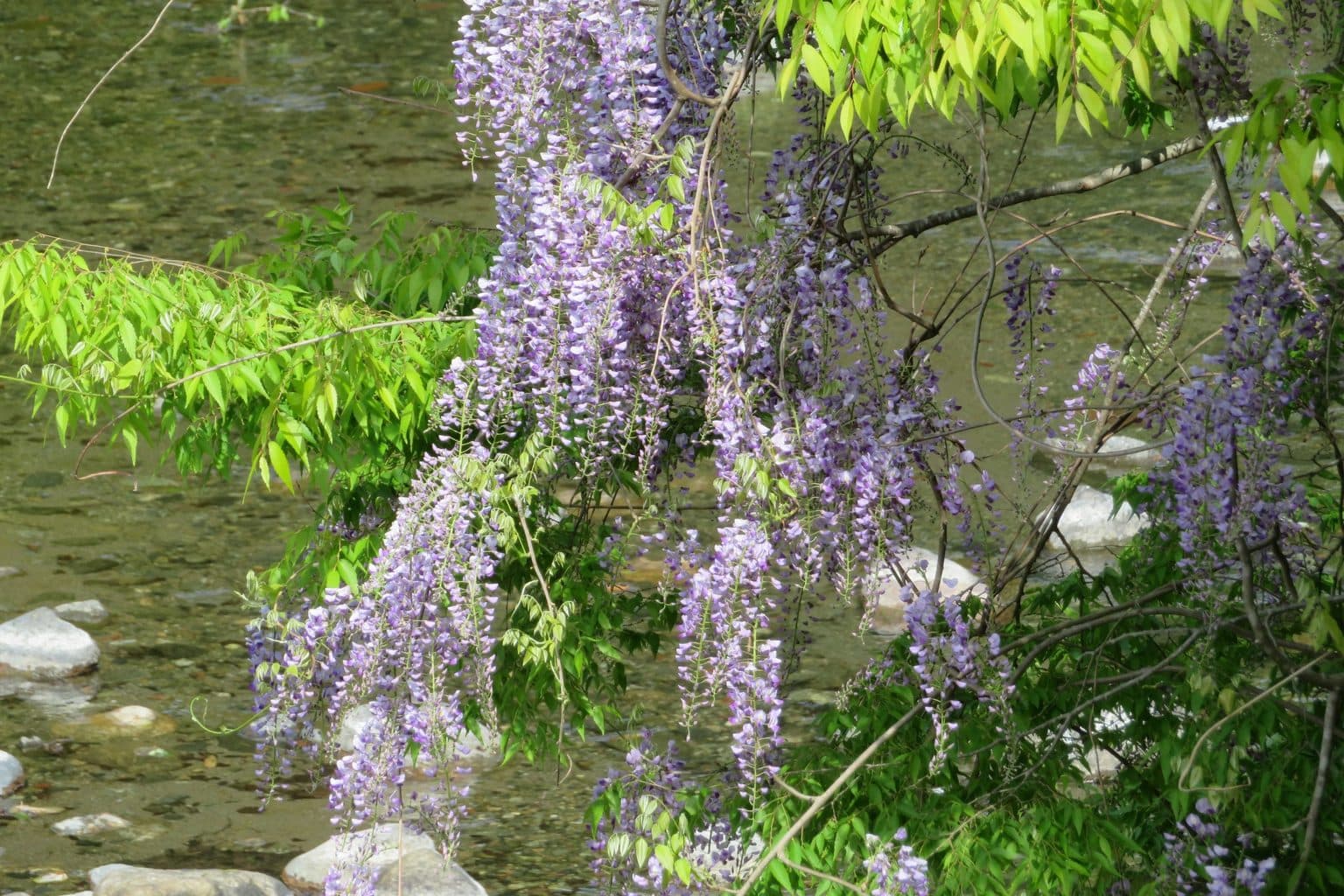
| Wisteria (Wisteria spp.) | Yes | Listed as toxic to dogs, cats, and horses by the ASPCA. Purple hanging clusters on a woody vine in spring. |
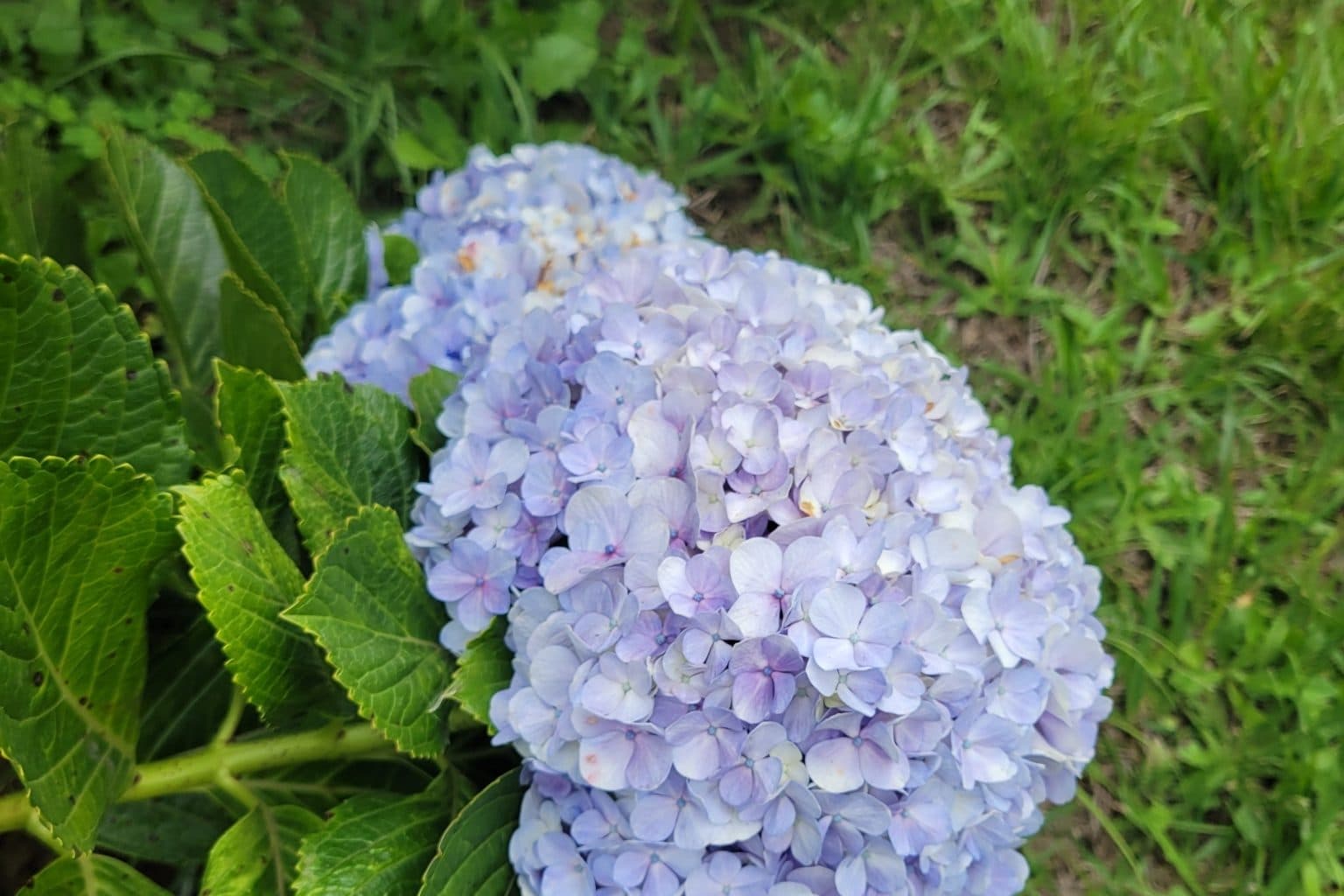
Fast ID for a Ceanothus: the flowers are tiny and packed into dense rounded or cone-shaped clusters, a lilac at a quarter of the scale, in blue, violet, or white. The leaves are small and glossy, evergreen on the common garden species, with three main veins running from the base, which is the quickest tell in the genus. It blooms late winter into spring and holds its leaves all year. A common lilac drops its leaves in fall, has big heart-shaped leaves, and its flowers carry a strong scent. A hydrangea has large soft leaves and fist-sized flower heads in summer. Wisteria is a vine, and its clusters hang.
Why Ceanothus earns its spot in a dog yard
Blueblossom is one of the best pollinator shrubs a California yard can hold. Calscape counts 107 native bee species that visit it, 41 butterfly species, and 128 species of butterfly and moth caterpillars that use it as a host plant. Once established it wants little to no summer water, one deep soak a month at most (Calscape). It reads as a hedge from the sidewalk, holds a tidy evergreen shape, and covers itself in blue for a few weeks when almost nothing else is blooming. That is a lot of plant for a bed the dog is allowed in.
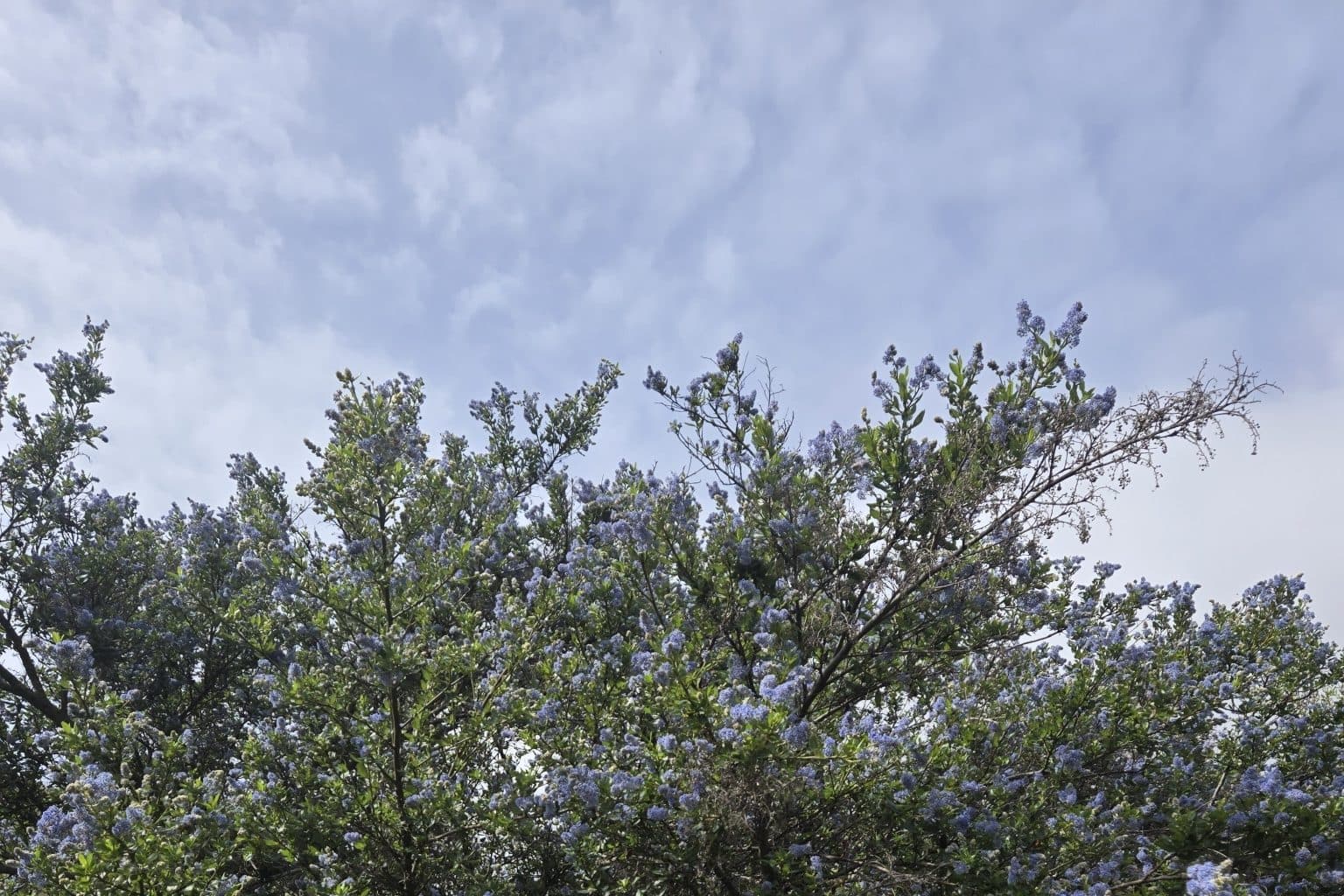
The one thing dog owners notice is the bees. A Ceanothus in full bloom hums, and a curious dog that snaps at bees can get stung on the muzzle. The bees leave when the bloom does.
What to plant next to it
These five are native to the same part of California as blueblossom, the Central California Foothills and Coastal Mountains (EPA Level III ecoregion 6, San Francisco Bay Area), and none of them appears on the ASPCA toxic plant list. Ranges are from Calscape. If you are further south, run the same names through Calscape by zip code before you buy, because ranges shift between the Bay Area and Los Angeles.
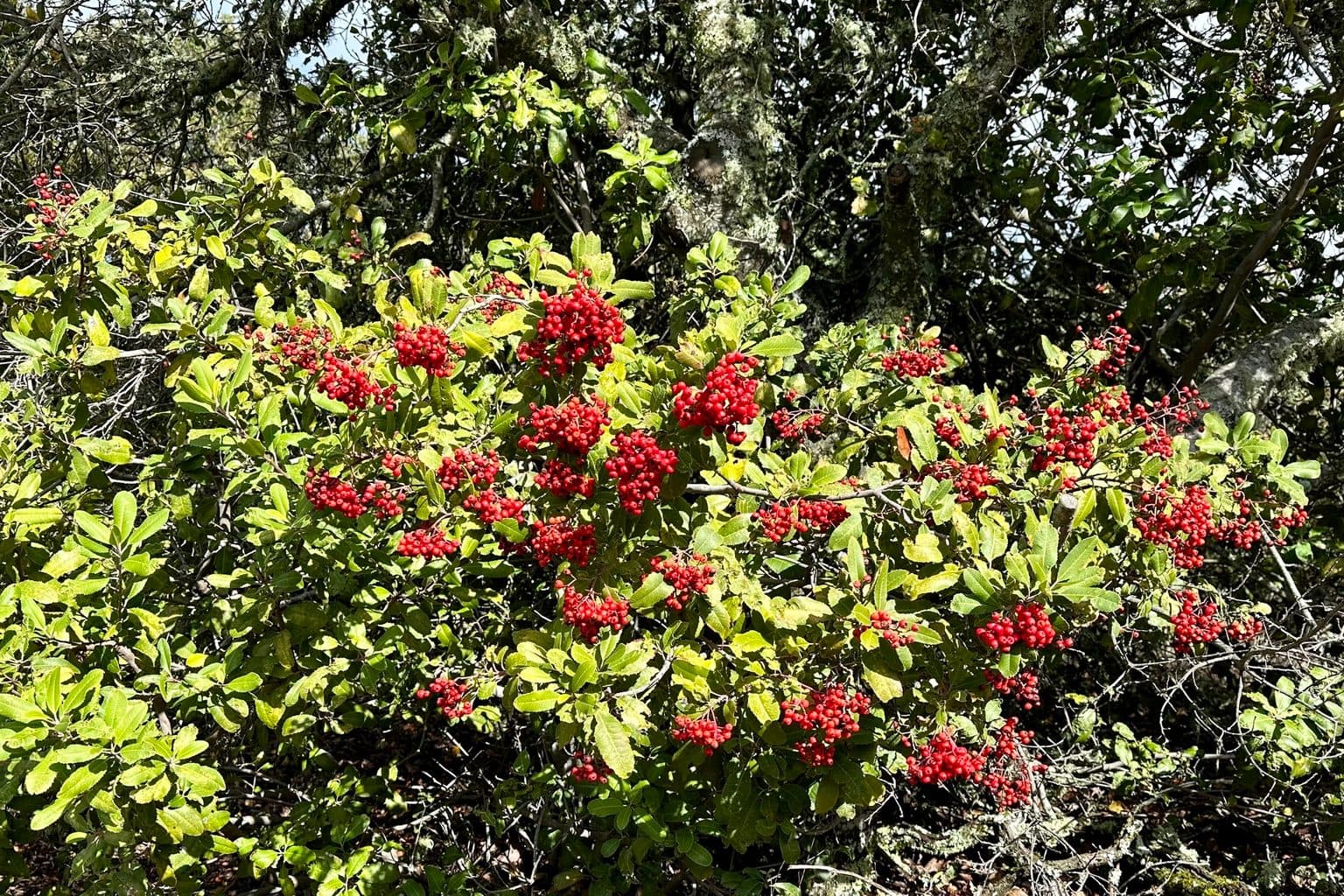
Toyon (Heteromeles arbutifolia)
White flowers in summer, then red berries through winter that robins, mockingbirds, and cedar waxwings strip (Calscape). It grows 6 to 30 feet, so it is a screen rather than a border plant. Not on the ASPCA list.
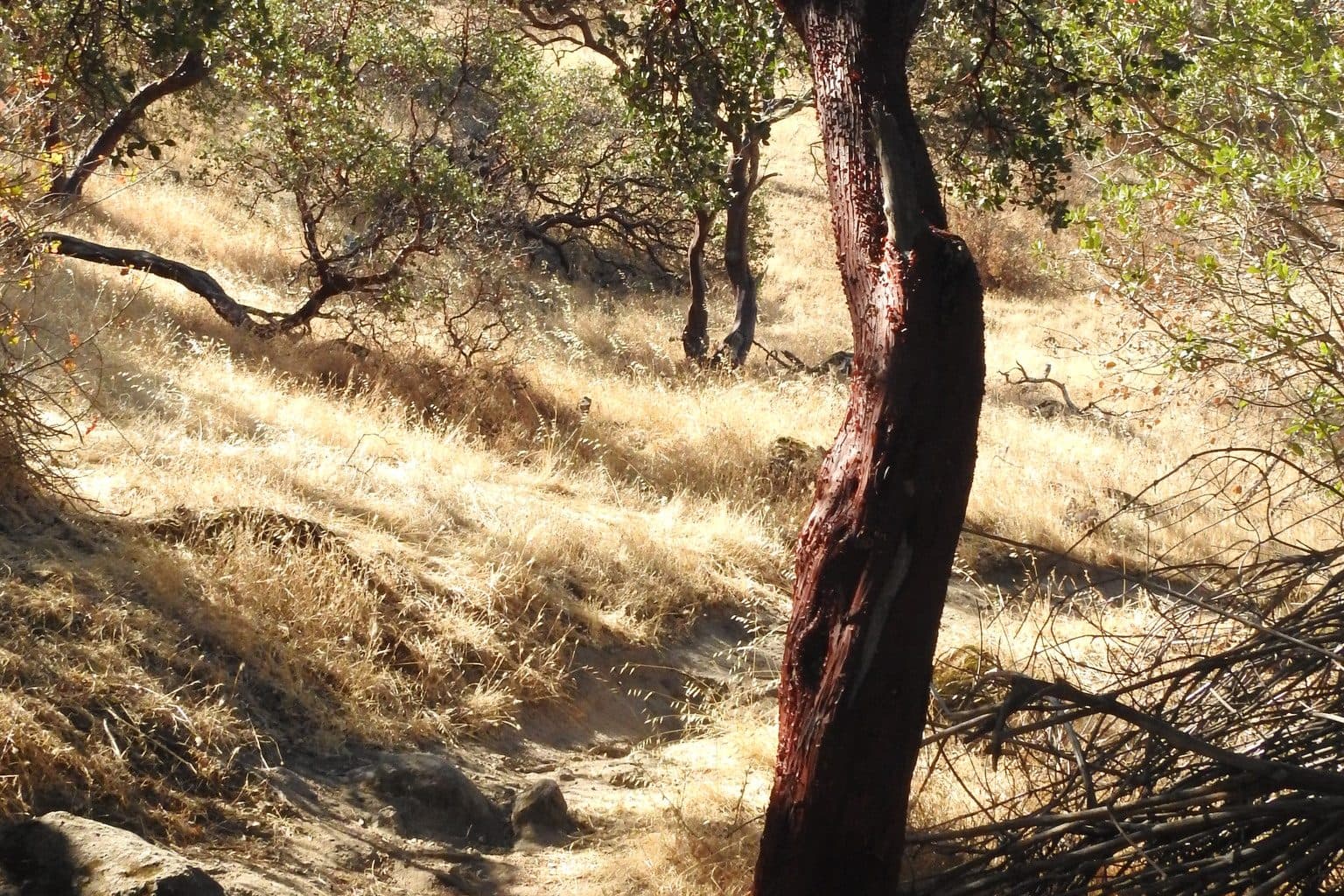
Common manzanita (Arctostaphylos manzanita)
Red branching structure year round, white to green urn-shaped flowers in winter and spring, and 84 native bee species on Calscape's count. Its home is slopes and rocky places below 4,000 feet, primarily in the North Coast Range and Sierra (Calscape). Not on the ASPCA list.
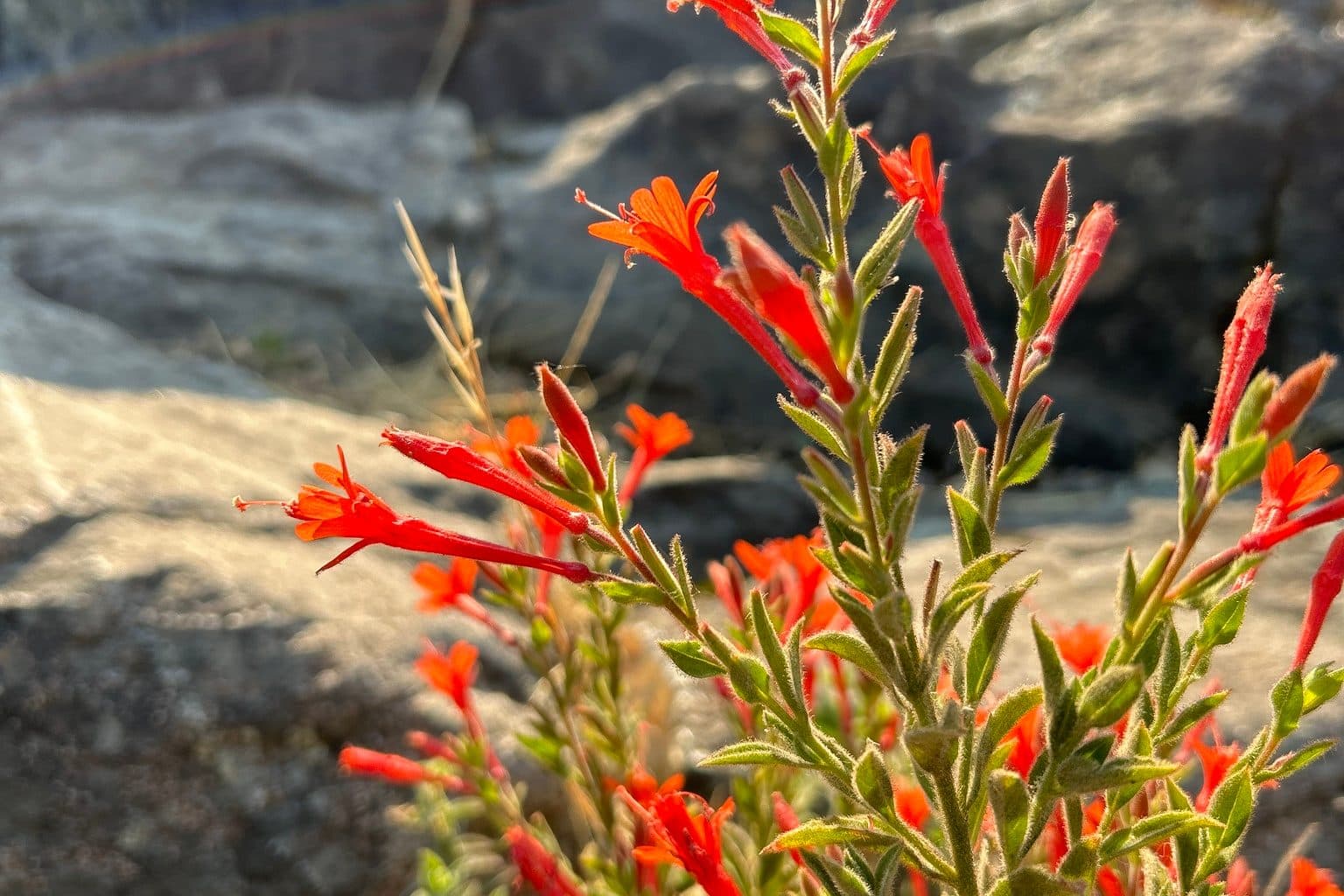
California fuchsia (Epilobium canum)
Scarlet tubular flowers in summer and fall, right when the rest of the bed has gone quiet, and the one hummingbirds keep coming back to until the rain starts. Native to the California foothills and coastal areas (Calscape), low at 3 to 18 inches and spreading 2 to 3 feet. Not on the ASPCA list. Its cousin fireweed (Epilobium angustifolium) is on the ASPCA list as non-toxic, a small extra reassurance about the genus.
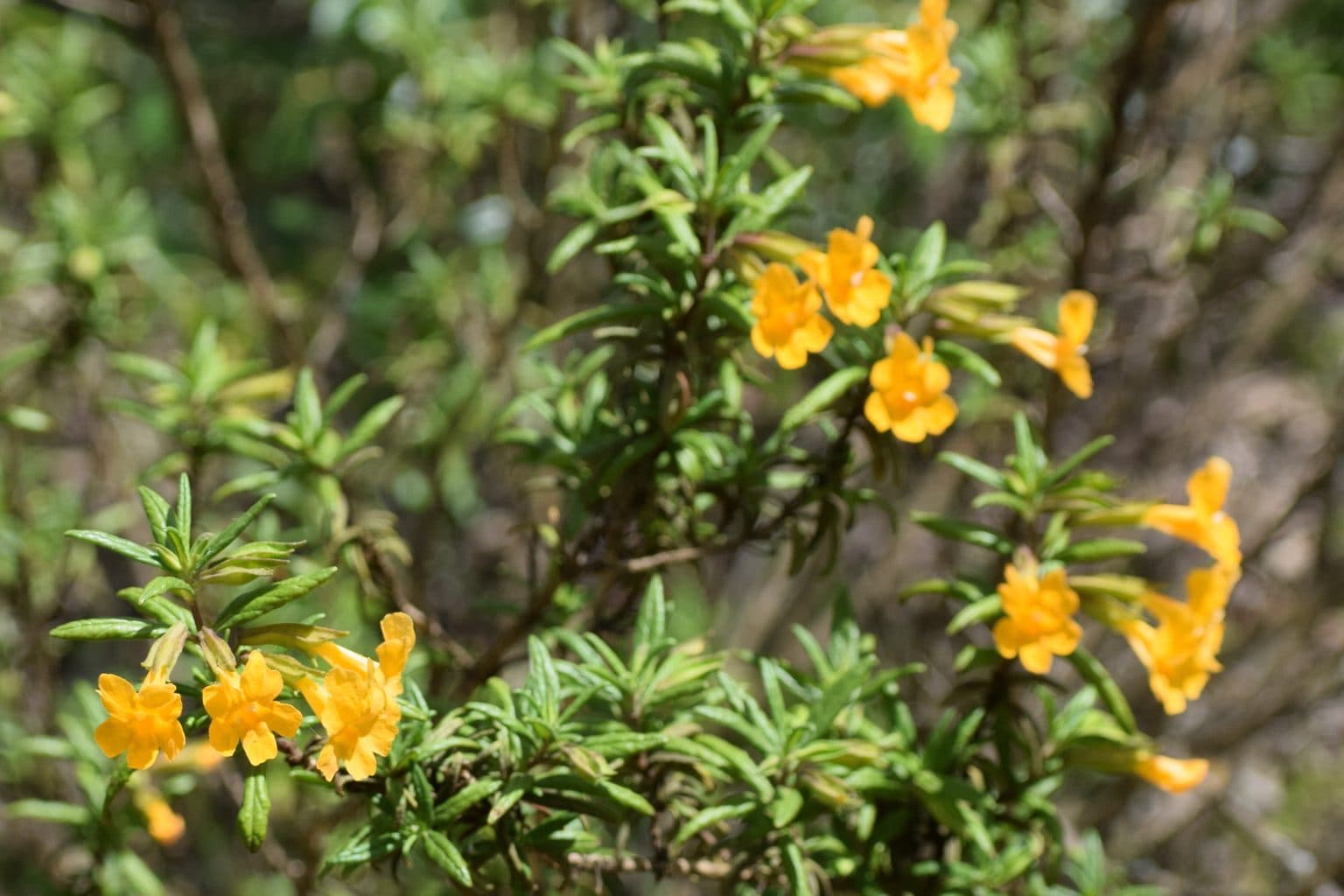
Sticky monkeyflower (Diplacus aurantiacus)
Orange flowers from winter into summer on a 4 to 5 foot mound, visited by 38 native bee species and Anna's hummingbird (Calscape). Not on the ASPCA list.
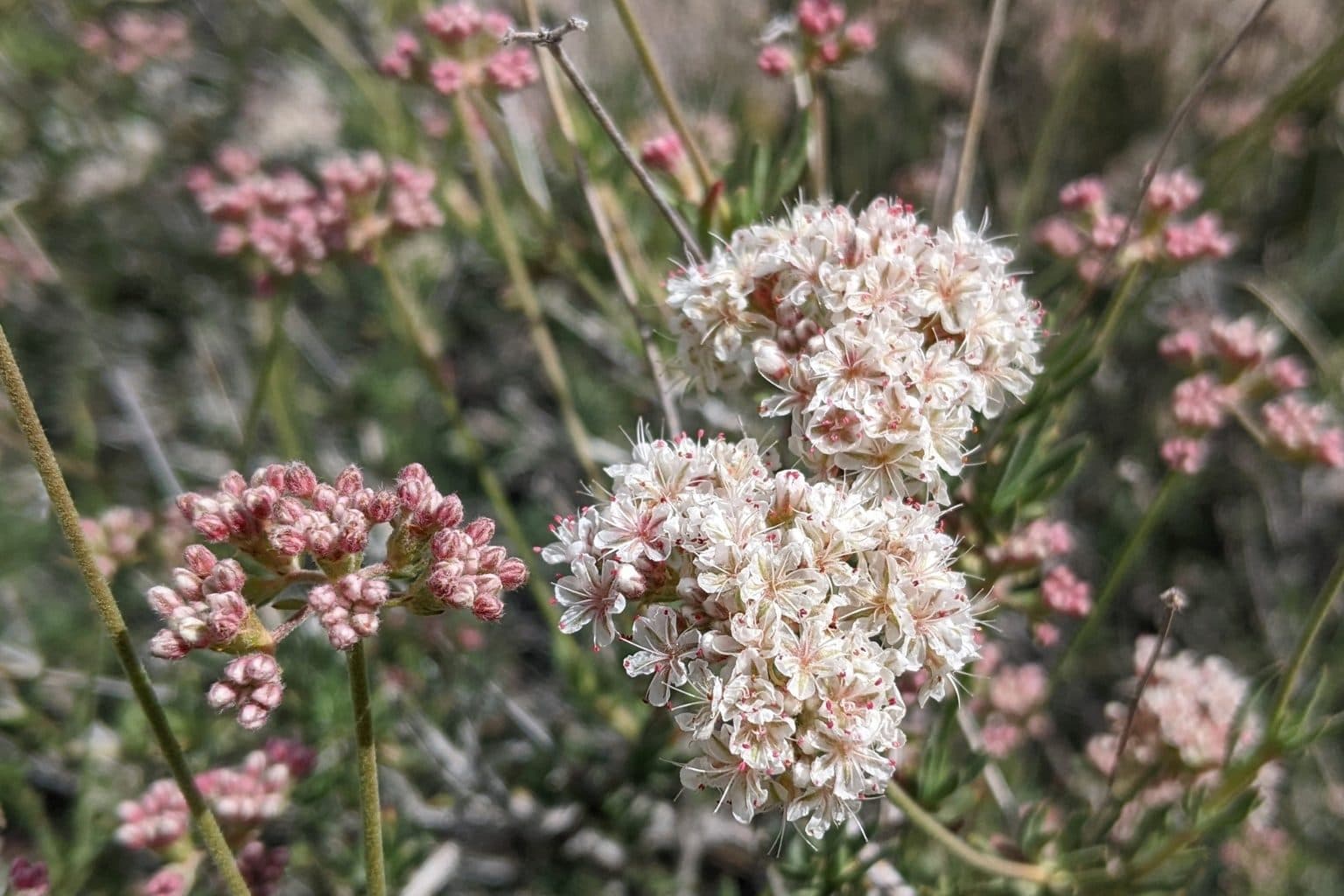
California buckwheat (Eriogonum fasciculatum)
Cream to pink flower heads spring through fall, no irrigation once established, and 260 native bee species on Calscape's count, the most of anything on this list. Not on the ASPCA list. The ASPCA does list a relative, wild buckwheat (Eriogonum umbellatum), as non-toxic to dogs, cats, and horses.
Two Bay Area natives that are on the ASPCA toxic list and often sit on the same nursery bench: yarrow (Achillea millefolium), listed as toxic to dogs, cats, and horses, and Douglas iris, since the ASPCA lists the Iris genus as toxic. Both are fine in a bed the dog cannot reach. That is how we handle the toxic plants in our own yard: they live in the side yard, away from the sidewalk and the backyard, and the beds the dogs use stay clear of them.
If your dog ate Ceanothus
- Most likely nothing happens.
- Watch for vomiting, diarrhea, drooling, or a dog that will not eat.
- Call the ASPCA Animal Poison Control Center at (888) 426-4435 (24/7, a fee may apply) or your vet if any of that shows up, or if a large amount of the shrub is missing.
- Bring the nursery tag or a photo of the plant. "Blue flowering shrub" is not enough for the person on the phone.
- Do not induce vomiting unless a vet tells you to.
If something goes wrong
ASPCA Animal Poison Control Center: (888) 426-4435 (24/7, fee may apply). Have the plant name ready when you call.
People also ask
Is California lilac poisonous to dogs?
No. California lilac is Ceanothus, and no Ceanothus species appears on the ASPCA Animal Poison Control Center toxic plant list for dogs. A dog that eats a large amount of any shrub can get mild stomach upset.
Is Ceanothus toxic to cats?
Ceanothus is not on the ASPCA toxic plant list for cats or horses either. The same volume caveat applies, and the same hotline: (888) 426-4435.
Is New Jersey tea toxic to dogs?
No. New Jersey tea is Ceanothus americanus, the eastern species, and it is not on the ASPCA toxic plant list for dogs, cats, or horses.
Are lilacs toxic to dogs?
Common lilac (Syringa vulgaris) is not on the ASPCA toxic plant list either. The blue and purple flowering yard plants that are on the list are hydrangea and wisteria, both listed as toxic to dogs, cats, and horses.
Checking more than one plant? See the full list of plants toxic to dogs and cats, with native alternatives, covering every plant on the ASPCA list, and the six California yard plants most toxic to dogs.
Planning a bed the dog is allowed in?
Enter your ZIP code and Pollinator Patch shows you which natives grow where you live and flags the ones on the ASPCA toxic list before you buy. Care reminders are free, for every plant you own, native or not.
See a finished plan for a yard like this
Find our guides useful? Add Pollinator Patch as a preferred source on Google and articles like this one will show up higher in your own search results.