Quick answer: Firebush (Hamelia patens) is not on the ASPCA Animal Poison Control Center toxic plant list for dogs, cats, or horses. It is not considered toxic to pets, which is part of why it is one of the best native swaps for Florida yards with dogs. As with any plant, a dog that eats a large amount can get mild stomach upset. If that happens, call the ASPCA Animal Poison Control Center at (888) 426-4435.
Firebush is one of the most useful native shrubs in central and south Florida: it blooms nearly year-round, feeds hummingbirds and butterflies, and shrugs off heat and drought once established. It is also a plant dog owners can relax about, which makes it a natural replacement for toxic favorites like oleander or lantana.
What the ASPCA says
Firebush (Hamelia patens, also called scarletbush) does not appear on the ASPCA Animal Poison Control Center toxic plant list for dogs, cats, or horses. That standard means there is no documented systemic toxin for those species. You can verify at aspca.org/pet-care/animal-poison-control/toxic-and-non-toxic-plants.
The usual caveat applies: a dog that eats a large quantity of any plant material can get mild GI upset. Firebush produces small dark berries that birds eat readily, and while they are not on the toxic list, a dog that gorges on fallen berries could get a temporary upset stomach the same way it might with any fruit.
Make sure it is the native firebush
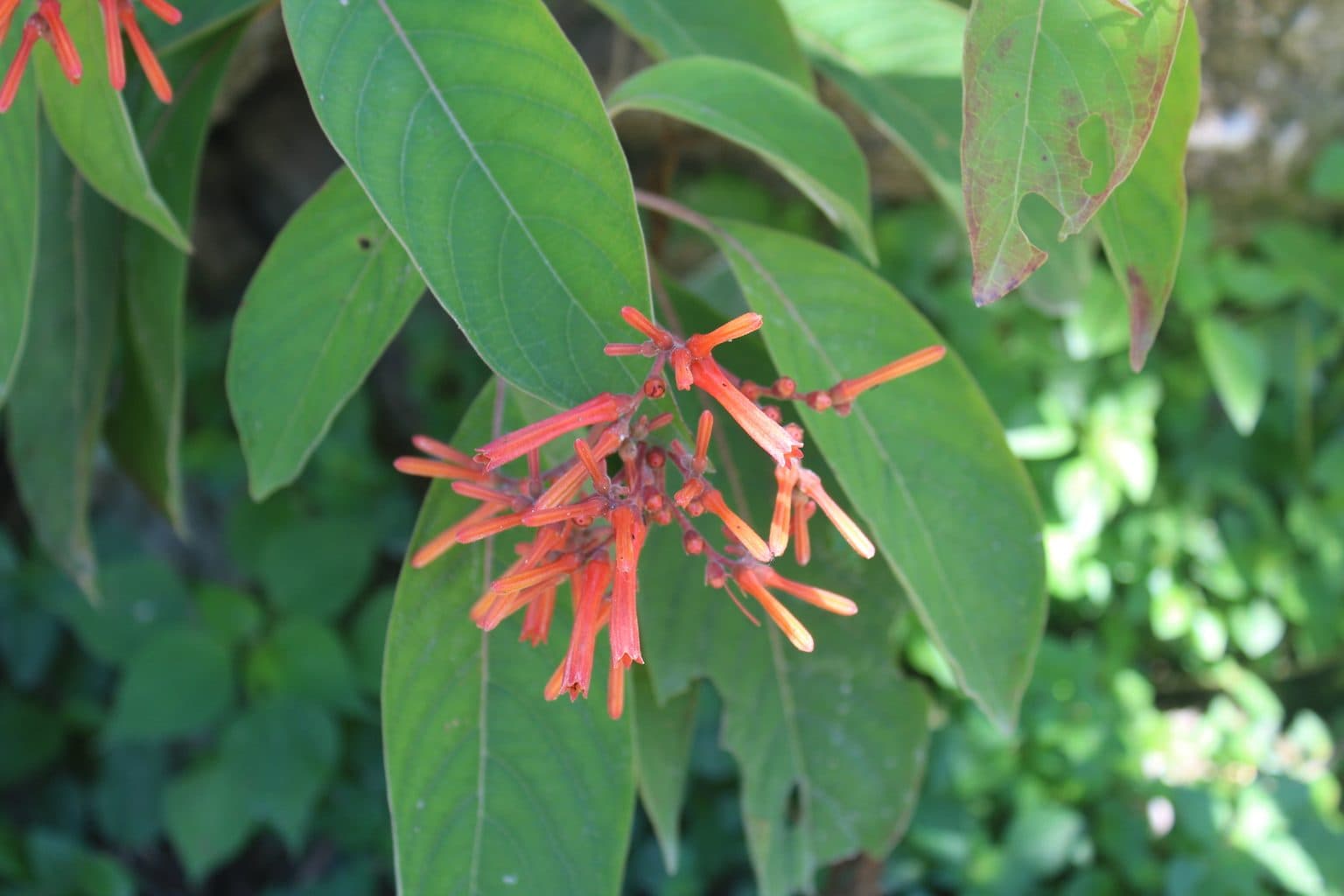
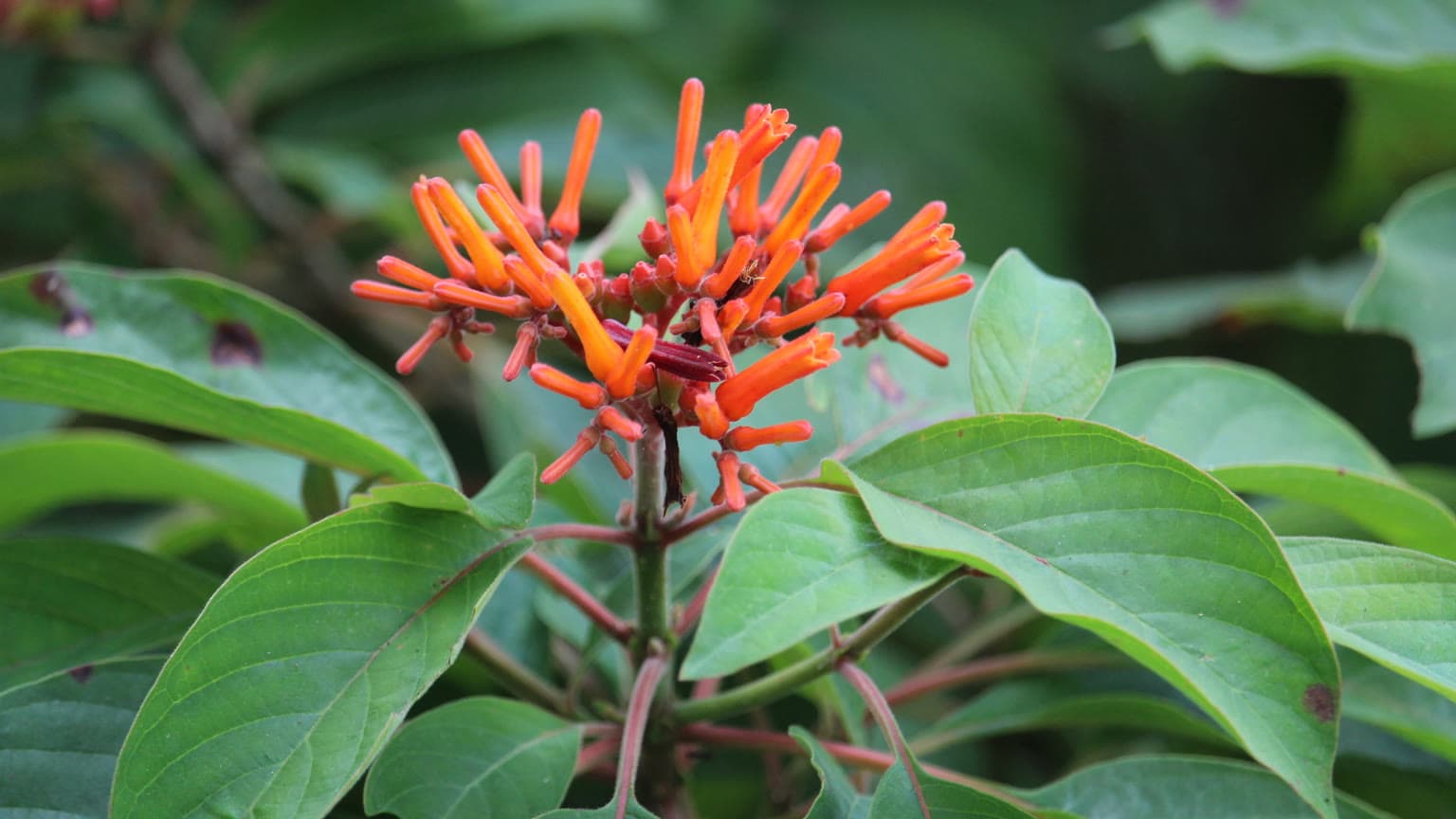
There are two things sold as "firebush" in Florida, and the native one is the plant to ask for. Native firebush (Hamelia patens var. patens) has red-orange tubular flowers, reddish stems, and whorled leaves, and it is the form that supports Florida pollinators. A dwarf or compact "firebush" sold at big-box stores is often the non-native Hamelia patens var. glabra or a related species, which has more yellow-orange flowers and less wildlife value. Neither is on the ASPCA toxic list, but ask for the Florida native variety if you want the pollinator benefit, per the Florida Native Plant Society.
Why firebush earns a spot in a Florida dog yard
Firebush is native to central and south Florida, including the Southern Coastal Plain and Southern Florida Coastal Plain, per the Florida Native Plant Society. It blooms from spring through late fall (and nearly year-round in frost-free south Florida), and its tubular red-orange flowers are a magnet for zebra longwing butterflies, Gulf fritillaries, and ruby-throated hummingbirds. It handles full sun, sandy soil, and drought once established, and it grows fast enough to fill a screening or accent role in a season or two.
For a dog owner, that combination is hard to beat: a fast, showy, drought-tough Florida native that is not on the toxic list and can directly replace a toxic shrub in the same spot.
| Plant | Dog Safe? | Notes |
|---|---|---|
| Firebush (Hamelia patens) | Yes | Not on ASPCA toxic plant list; Florida native, blooms much of the year, pollinator magnet |
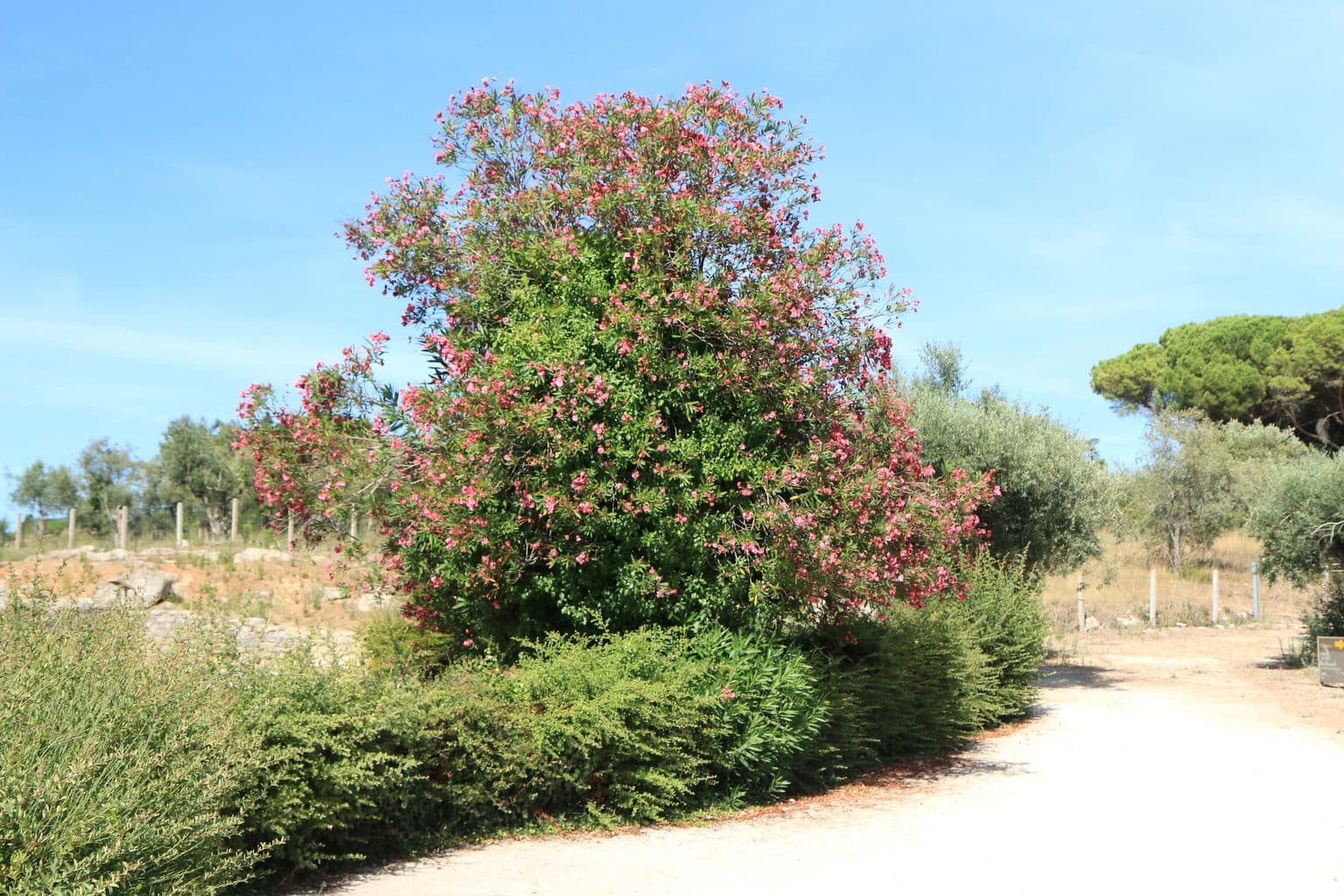
| Toxic shrub it can replace: Oleander | No | Oleander is toxic to dogs per the ASPCA; firebush fills the same sunny screening role |
| Toxic shrub it can replace: Lantana | No | Lantana camara is toxic to dogs per the ASPCA; firebush gives the same long, hot color |
Pairing firebush with the rest of a dog-safe yard? See the best native plants for Florida front yards, and check whether oleander is toxic to dogs before you plant near it.
If something goes wrong
ASPCA Animal Poison Control Center: (888) 426-4435 (24/7, fee may apply). Have the plant name ready when you call.
Checking more than one plant? See the full list of plants toxic to dogs and cats, with native alternatives, covering every plant on the ASPCA list.