Quick answer: For native plants in Amarillo, build around two shortgrass prairie grasses, buffalograss and blue grama, then add four tough flowers: Mexican hat, purple prairie clover, lemon beebalm, and bigfruit evening-primrose. Every plant below is tied to the Texas High Plains by a regional source named in the text, and all six are listed on Wildflower Center pages for sun and dry soil.
Choosing native plants in Amarillo means planting for the High Plains: wind, alkaline ground, and rain that comes in bursts. Grasses carry most of this list, and the flowers are the ones that tolerate the same conditions.
This list is built for the High Plains around Amarillo. Regional ties come from three places: the TxDOT High Plains regional wildflower seed list (opens in new tab), a Texas Panhandle perennial answer from the Lady Bird Johnson Wildflower Center (opens in new tab), and the gardening site High Plains Gardening (opens in new tab). Size, light, and soil figures come from each plant's Wildflower Center page unless another source is named.
What native plants in Amarillo have to handle
High Plains Gardening lists windy conditions throughout the year, alkaline soil, and a semi-arid climate with sudden cloudbursts. Its soil bullet describes sandy, compact clay or caliche, and says hardpan may be present. A separate Wildflower Center answer (opens in new tab) quotes an ecology description of the High Plains in which blue grama, buffalograss, and galleta are the principal plants on clay and clay loam sites.
So the shortgrass prairie is the template. Low grasses make the base, and flowers fill in between them. Nothing here is a plant that wants a daily hose.
| Plant | Light | Soil note | Size |
|---|---|---|---|
| Buffalograss | Sun | Well-drained loam, clay, caliche, limestone. Not sand. | 3 to 12 in. |
| Blue grama | Sun | Well-drained, gravelly soils, sandy loams, clays | Foliage under 4 in., seedheads 1 to 2 ft |
| Mexican hat | Sun | Well-drained, usually calcareous | Up to about 3 ft, often 1.5 ft |
| Purple prairie clover | Full sun | Dry. No soil type given. | Up to about 3 ft |
| Lemon beebalm | Sun to part shade | Sandy to rocky loams, clay loam, clay | Up to about 30 in. |
| Bigfruit evening-primrose | Sun to part shade | Dry. No soil type given. | 4 to 24 in. |
The grasses first: native plants for Amarillo
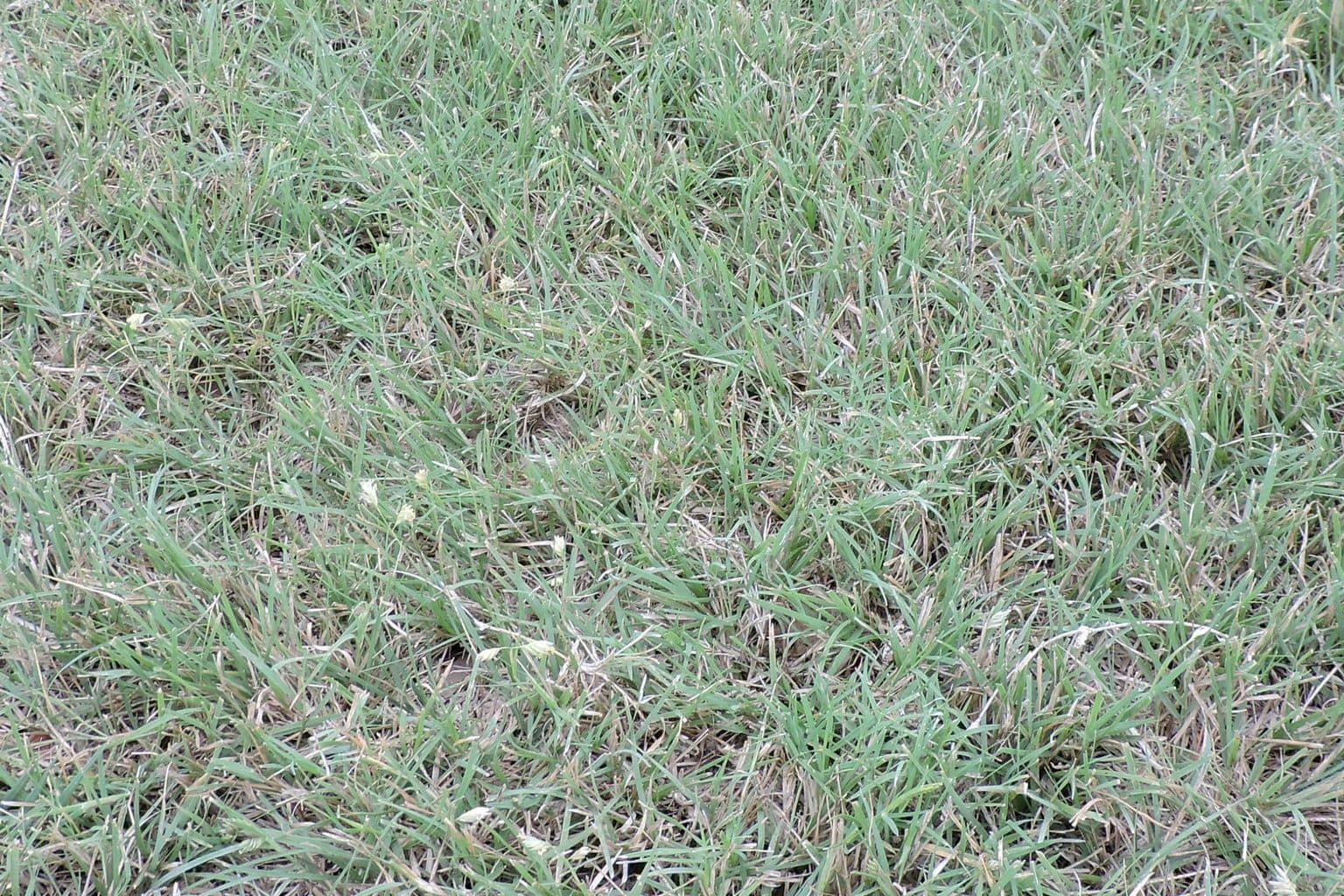
Buffalograss (Bouteloua dactyloides)
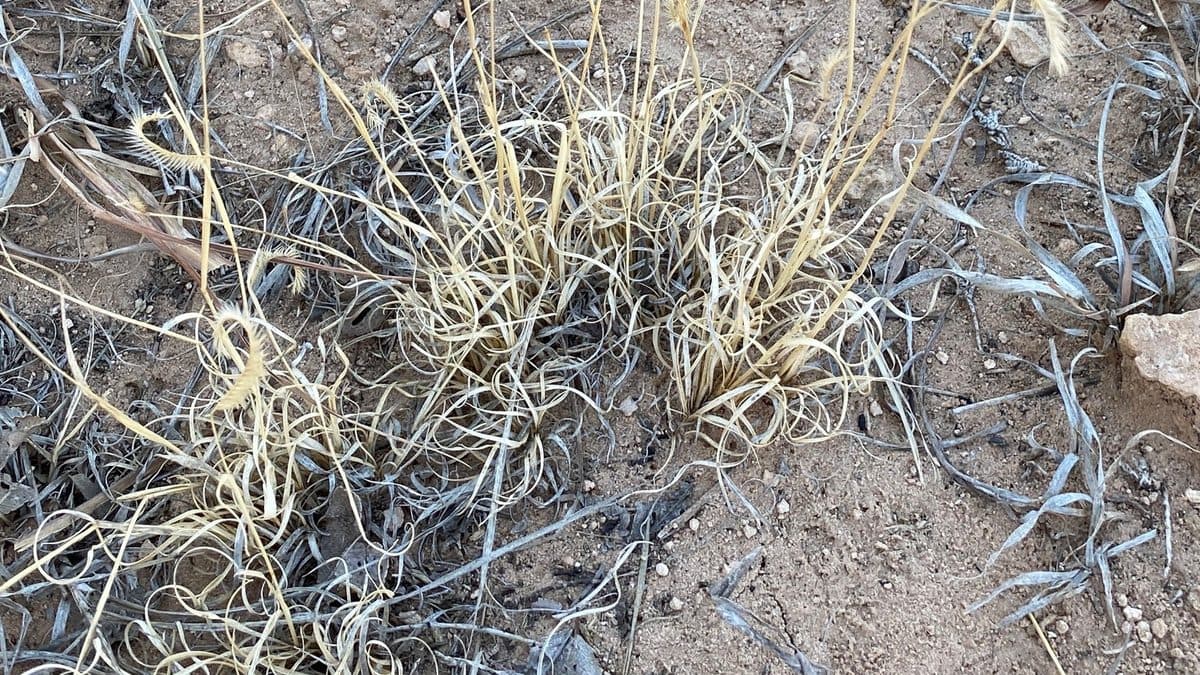
The Wildflower Center (opens in new tab) calls it a dominant grass of the shortgrass prairie and one of very few drought-tolerant North American grasses suitable for lawns. It takes sun, dry soil, and clay or caliche, and it does not tolerate sand. High Plains Gardening says it prefers clay and does well mowed and watered about monthly. It is also a larval host for the green skipper. For a yard comparison, see buffalo grass vs. St. Augustine.
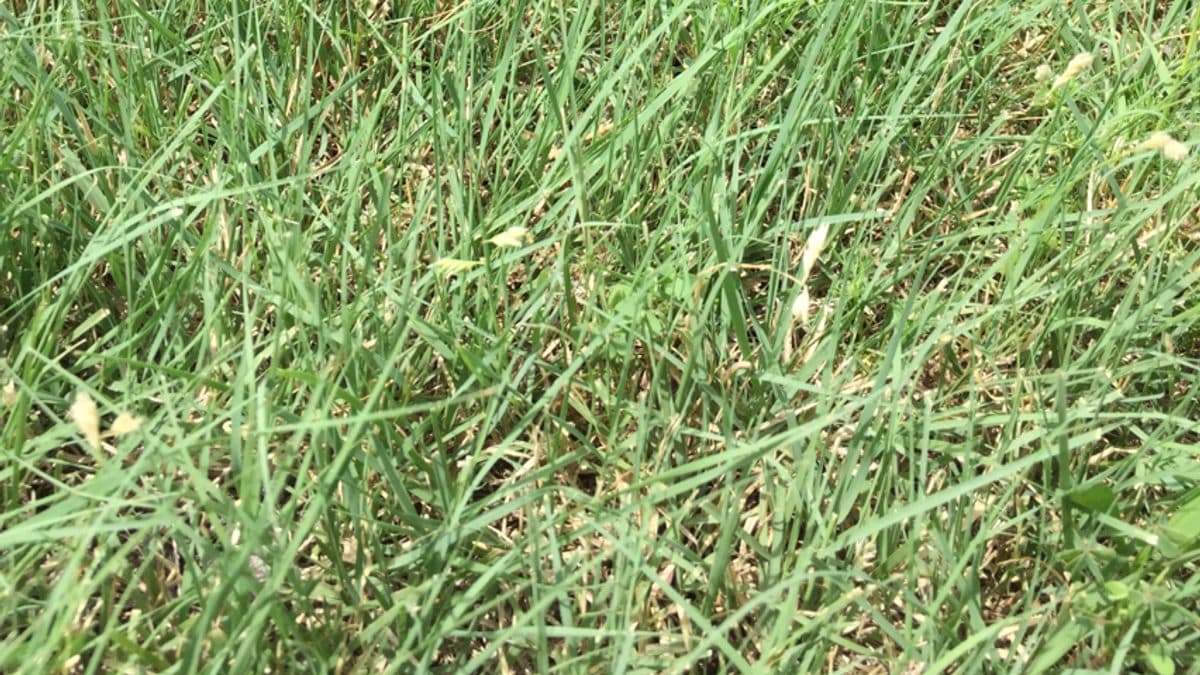
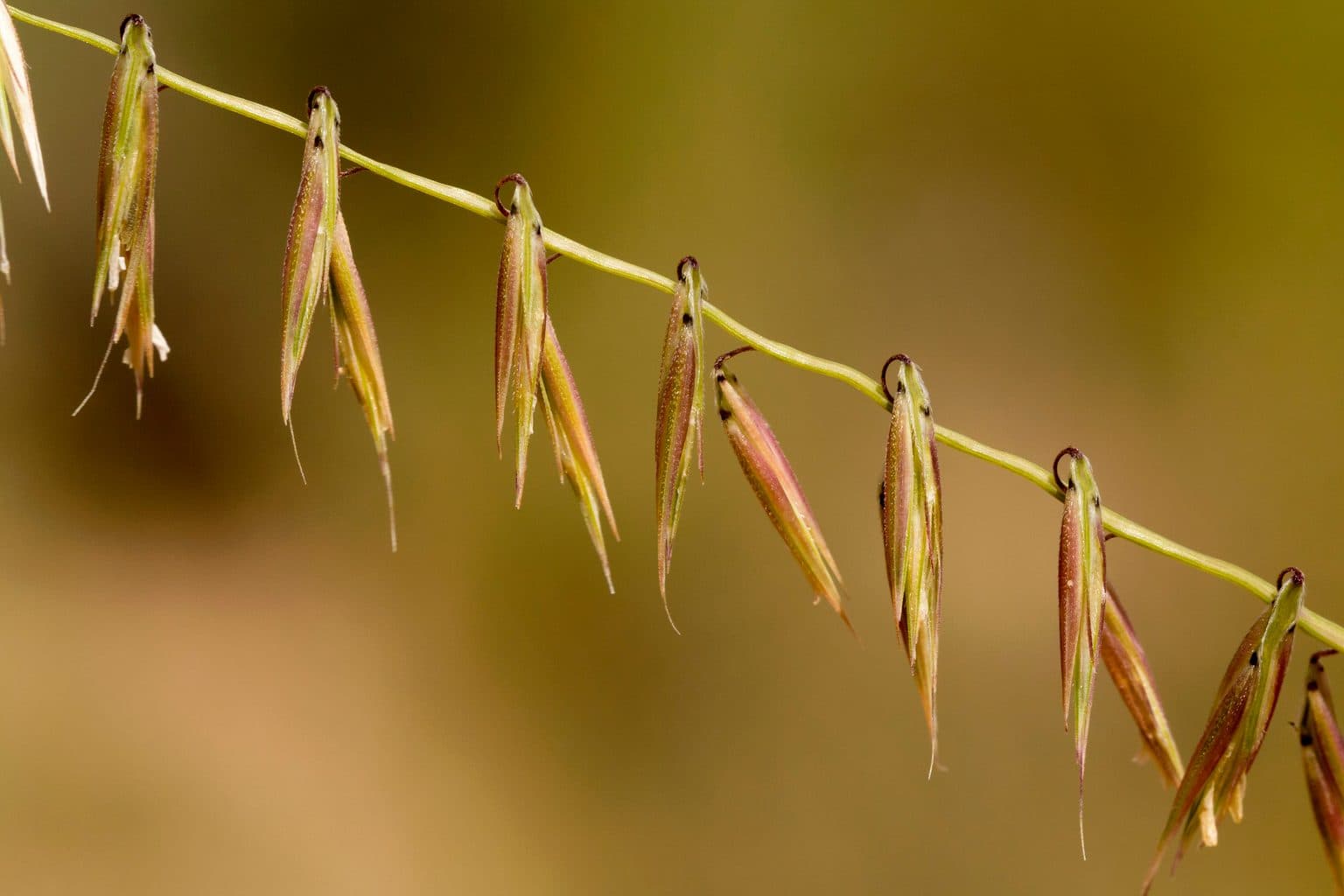
Blue grama (Bouteloua gracilis)
The partner to buffalograss on the High Plains. The Wildflower Center (opens in new tab) says the foliage stays about 4 inches high, with seedheads held at 1 to 2 feet from July through October, and that the grass turns tan when dormant. It rates its drought tolerance high and lists several skippers that use it as a host. High Plains Gardening calls it a short, clumping warm season grass and says the two grasses can be paired for turf.
Tough native wildflowers for the High Plains
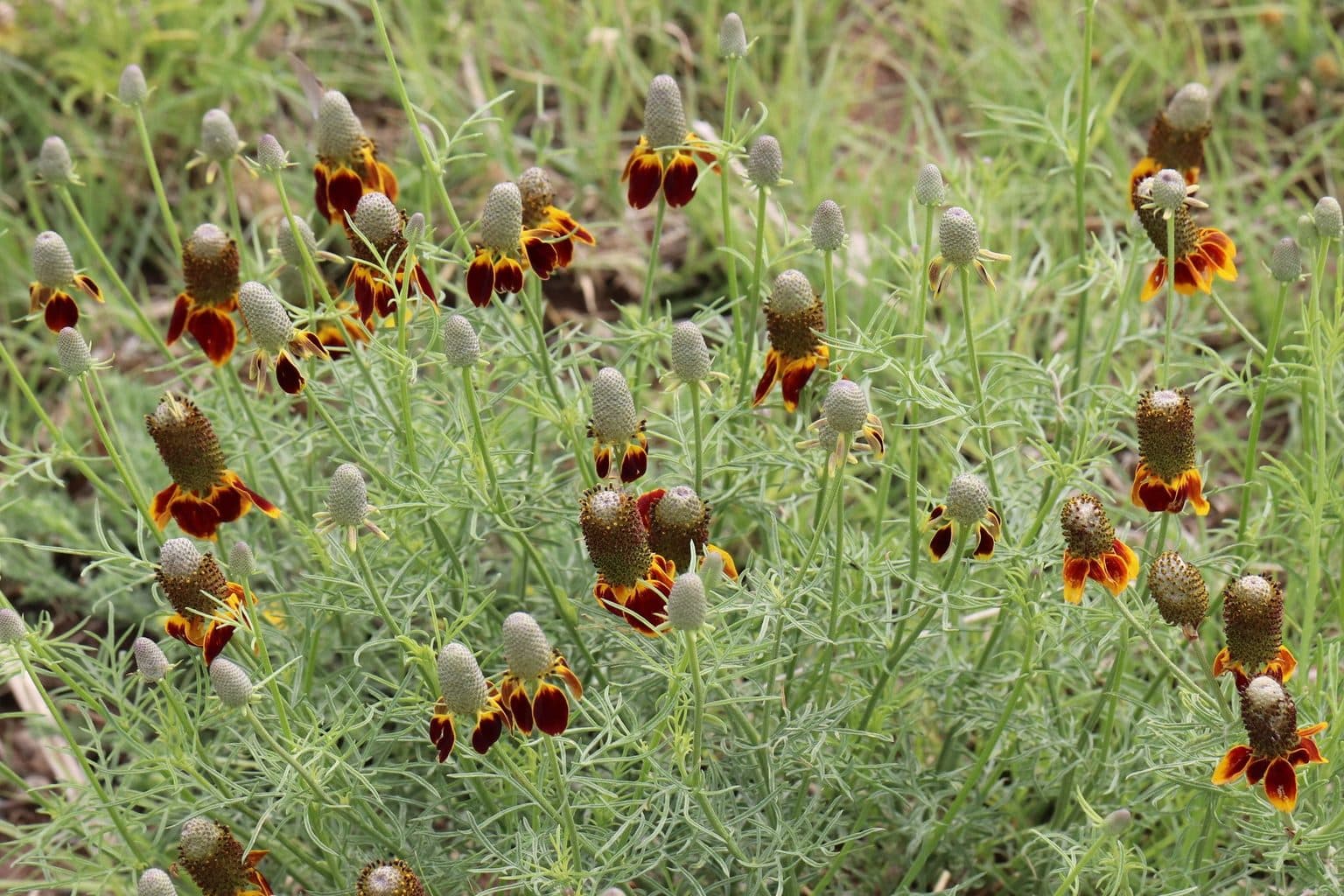
Mexican hat (Ratibida columnifera)
It is on the TxDOT High Plains list at 2 to 3 feet, blooming April through September. The Wildflower Center (opens in new tab) says bees, butterflies, and other insects take its nectar and birds eat the seeds. It adds that the plant grows aggressively and can crowd out weaker neighbors, so give it its own patch among the grasses.
Purple prairie clover (Dalea purpurea)
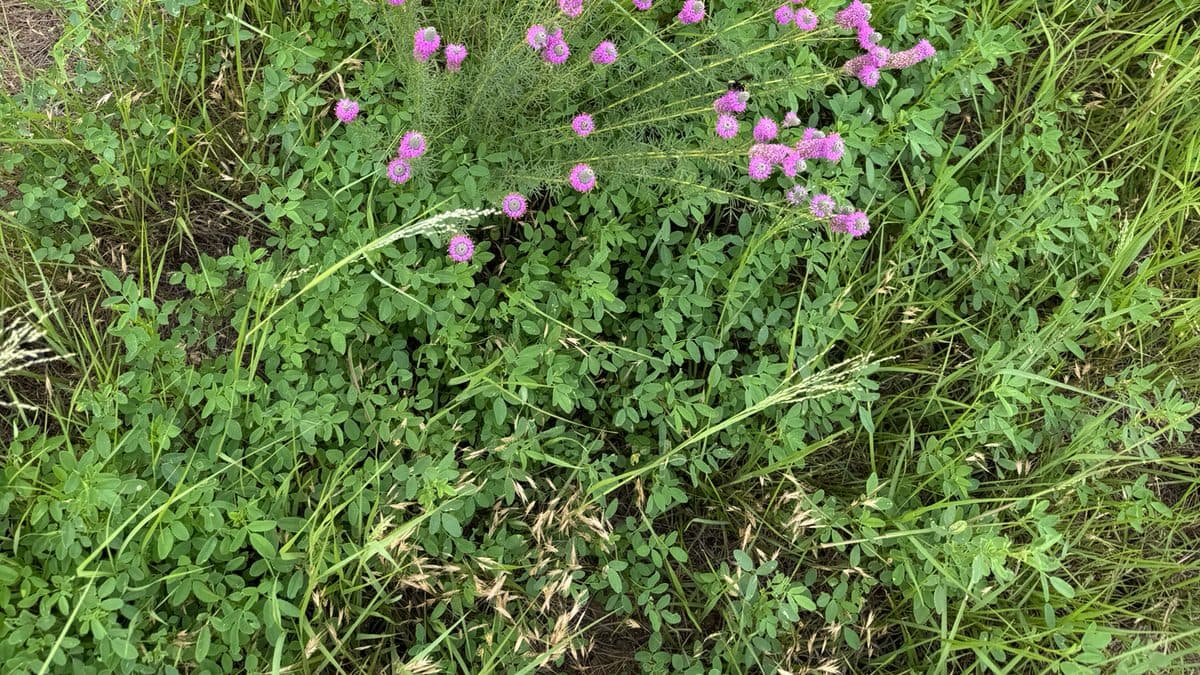
TxDOT puts it on its High Plains seed list as a perennial with purple blooms. The Wildflower Center (opens in new tab) rates it high in drought tolerance, lists it as especially valuable to native bees, with bloom from June through September. Because it is deep-rooted, the page recommends starting it from seed instead of dividing it.
Lemon beebalm (Monarda citriodora)
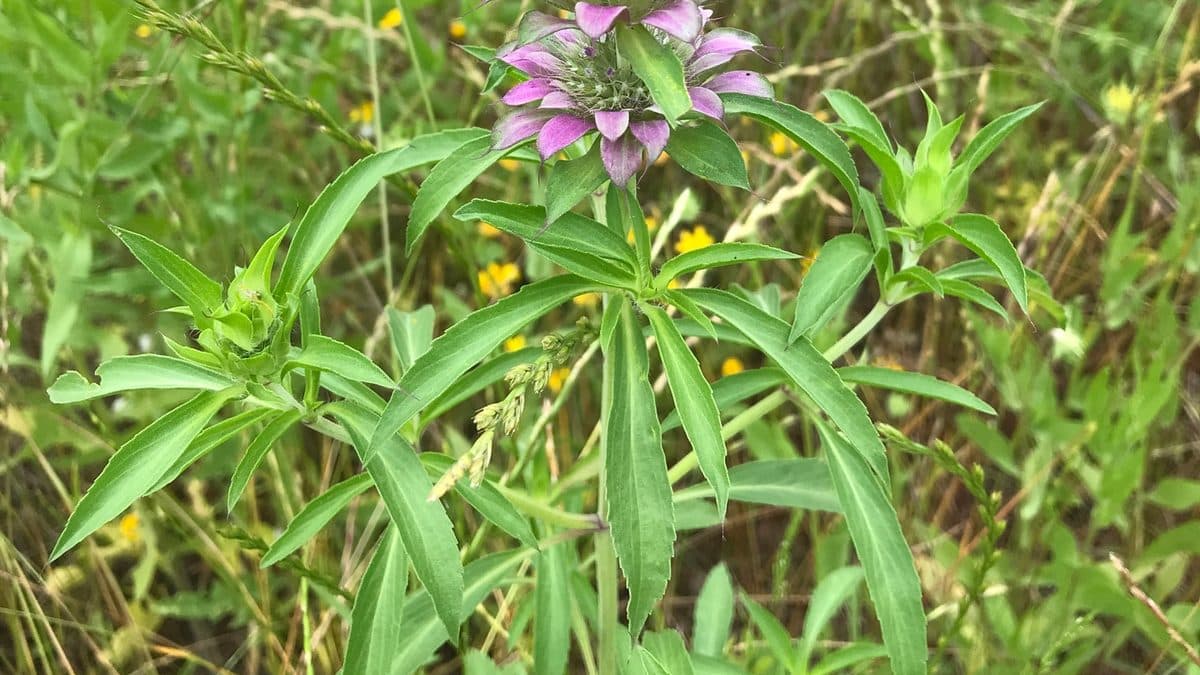
Also called purple horsemint, and listed by TxDOT for the High Plains. The Wildflower Center (opens in new tab) says it is a winter annual that reseeds, grows up to about 30 inches, and blooms May through July. Bees, butterflies, and hummingbirds visit it. It can become aggressive in ideal conditions and is prone to powdery mildew, so it suits the dry, lean spot.
Bigfruit evening-primrose (Oenothera macrocarpa)
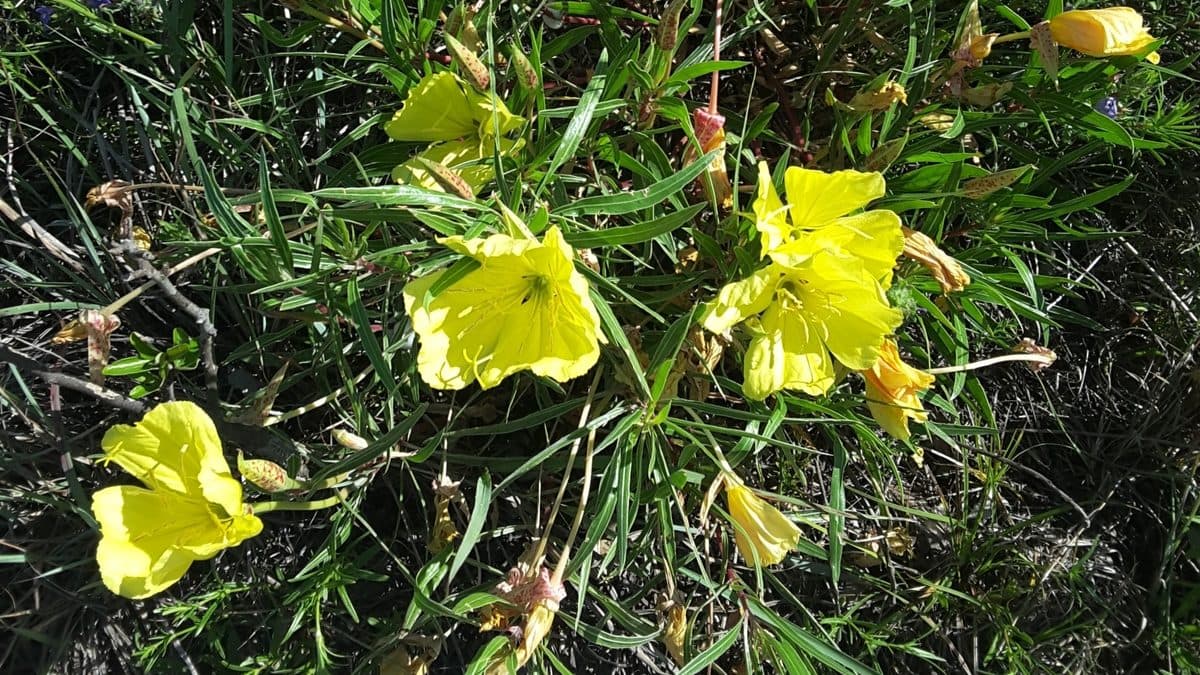
The Wildflower Center names it in a Texas Panhandle perennial answer. Its plant page (opens in new tab) lists sun to part shade, dry soil, and yellow bloom from May through July on plants 4 to 24 inches tall. It credits the Xerces Society with calling it especially valuable to native bees. It stays low, which keeps it out of the way of the taller grasses.
Planting for wind and dry spells
High Plains Gardening notes that the region has no shortage of plants that do well with monthly watering. The Wildflower Center lists all six plants above for dry soil. We have not found a source that sets a precise watering schedule for Amarillo, so we are not giving one.
Wind is a design cue as well. The grasses move with it, and the flowers sit at different heights, with Mexican hat and prairie clover at the back and evening-primrose in front. Repeating two or three plants along the edge reads as intentional, which is HOA-friendly.
Where to go from here
Start with the grass base, then add one flower at a time. If you also want pollinator color from further afield, see best pollinator plants for Texas. Water programs vary by city, and our Texas rebates page lists what we have verified.
People also ask
What are the best native plants for Amarillo?
Buffalograss and blue grama are the shortgrass prairie base. Add Mexican hat, purple prairie clover, lemon beebalm, and bigfruit evening-primrose. TxDOT's High Plains list and a Wildflower Center Panhandle answer tie the flowers to the region.
Can buffalograss and blue grama grow together?
Yes. High Plains Gardening says blue grama can be paired with buffalograss for turf, and the Wildflower Center describes both as dominant shortgrass prairie grasses.
Which native flowers handle dry soil in the Texas Panhandle?
The Wildflower Center lists Mexican hat, purple prairie clover, lemon beebalm, and bigfruit evening-primrose for dry soil in full sun or part shade. Lemon beebalm reseeds and can spread, and Mexican hat can crowd out weaker plants.
Want the list for your own ZIP?
Pollinator Patch matches native plants to your ZIP and ecoregion, then helps you lay them out by sun and height.