Quick answer: For native plants for the Texas Hill Country, start with six: cedar sage, Texas mountain laurel, American beautyberry, Lindheimer muhly, flame acanthus, and fall aster. All six appear on the Hill Country Master Gardeners plant list from Kerrville, and the Wildflower Center rates cedar sage, mountain laurel, Lindheimer muhly, and flame acanthus high for deer resistance. Cedar sage and beautyberry are the shade picks.
Larger Hill Country lots tend to come with a few shared problems: rock close to the surface, slopes that shed water, shade from oaks and Ashe juniper, and deer that visit. Native plants for the Texas Hill Country are the ones already growing in that setting, so this list leans on shade and slope.
This post focuses on the Edwards Plateau around San Antonio. Plants were chosen from the Hill Country Master Gardeners plant list (opens in new tab), which comes from their demonstration garden in Kerrville next to the Kerr County AgriLife Extension office. Size, light, soil, and bloom notes come from the Lady Bird Johnson Wildflower Center (opens in new tab) unless another source is named. Looking for yard-scale picks instead? Our best native plants for Texas guide covers the wider state.
Native plants for the Texas Hill Country start with the rock
Several of these plants are described by the Wildflower Center as growing on limestone. Cedar sage is found in "shaded, rocky, limestone areas," Lindheimer muhly on limestone uplands near streams, and Texas mountain laurel is listed as common in limestone soils. The common thread is drainage. Five of the six want soil that drains fast, and the table shows each plant's soil note.
Beautyberry is the exception. The Wildflower Center lists it for moist soils, so it belongs in your dampest, shadiest corner and not on the dry slope.
| Plant | Light | Soil note | Size |
|---|---|---|---|
| Cedar sage | Part shade | Dry, fast-draining limestone soil | 1 to 2 ft |
| Texas mountain laurel | Sun or part shade | Dry, rocky, well-drained, preferably calcareous | Usually 10 to 15 ft |
| American beautyberry | Part shade | Moist, rich soils | 3 to 6 ft high, 4 to 6 ft wide |
| Lindheimer muhly | Sun | Well-drained, rocky, limestone-based | 2 to 5 ft |
| Flame acanthus | Sun, tolerates light shade | Well-drained, including caliche and limestone | 3 to 5 ft |
| Fall aster | Sun or part shade | Rocky, calcareous or sandy, well drained | Up to about 3 ft |
Six native plants for the Texas Hill Country
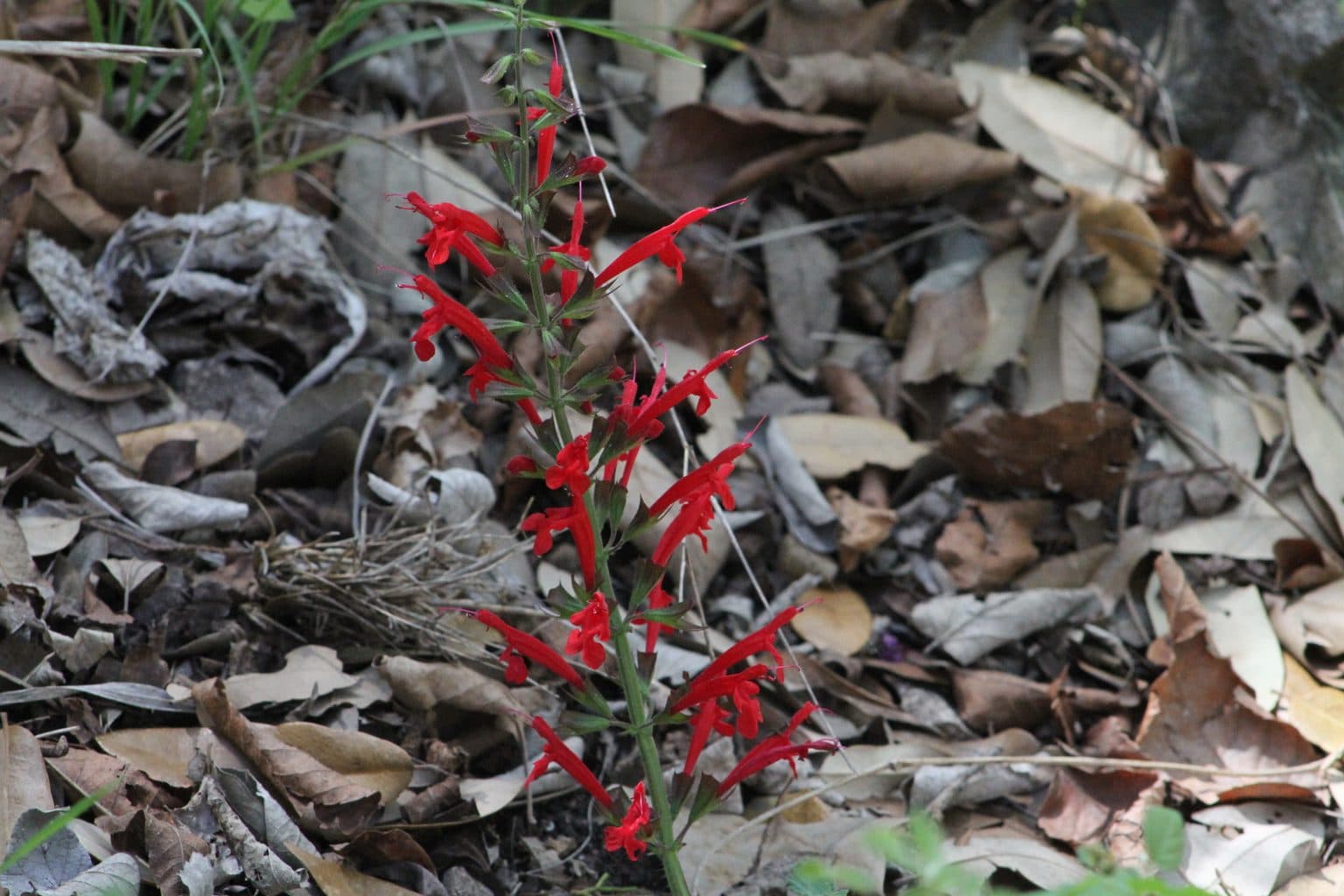
Cedar sage (Salvia roemeriana)
The shade plant of the group. A Native Plant Society of Texas article on cedar sage (opens in new tab) says its native habitat is the shade of cedar brakes and oak woods, mainly in the Edwards Plateau ecoregion. The author notes that full sun will stunt it, and that dappled shade beneath an oak or mountain laurel is about right. The Wildflower Center (opens in new tab) lists red flowers from March through August that attract hummingbirds and butterflies, and rates deer resistance high. The Society article warns that overwatering, too much mulch, or poor drainage can cause crown rot.
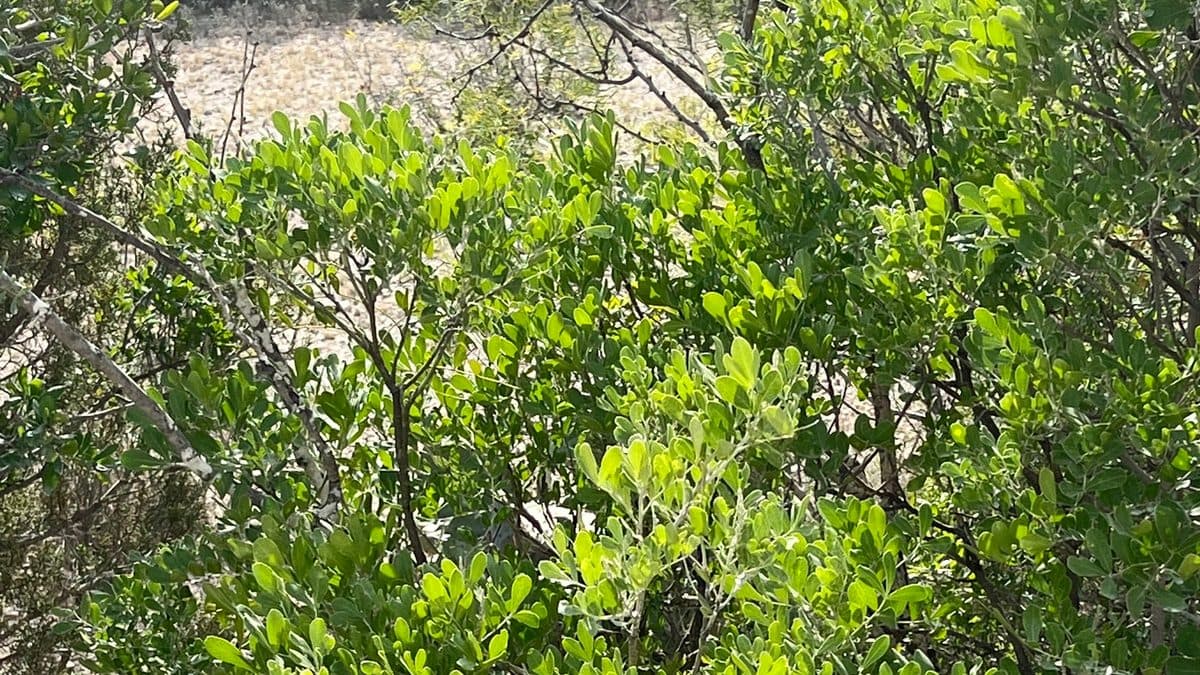
Texas mountain laurel (Dermatophyllum secundiflorum)
A slow evergreen for slopes. The Wildflower Center (opens in new tab) lists "brushy slopes" as habitat, bluish lavender fragrant flowers from February to April, and high deer resistance. It wants good drainage. The same page says the red seeds are highly poisonous, so keep that in mind around children and pets. If a pet swallows any, call the ASPCA Animal Poison Control Center at (888) 426-4435.
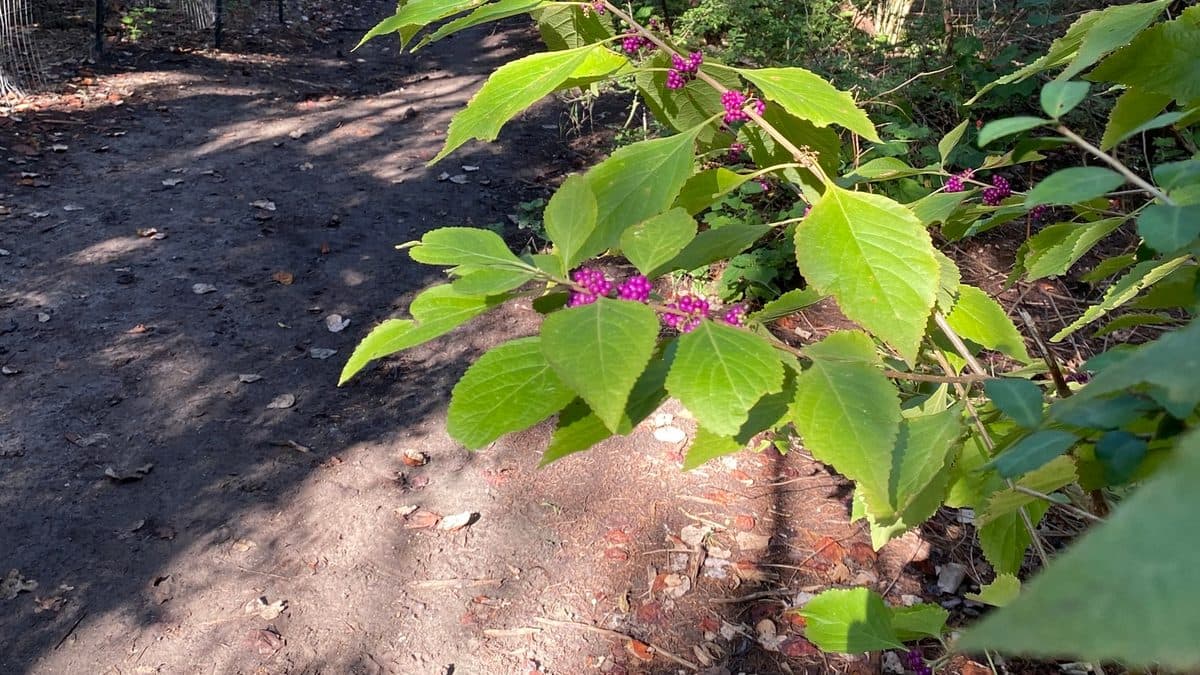
American beautyberry (Callicarpa americana)
The Hill Country Master Gardeners list it for semi-shaded sites. The Wildflower Center (opens in new tab) says the seeds and berries are important foods for many birds, and that the plant may drop leaves and fruit in prolonged summer drought. It also says the foliage is a favorite of white-tailed deer, so this is the plant on the list to protect if deer visit.
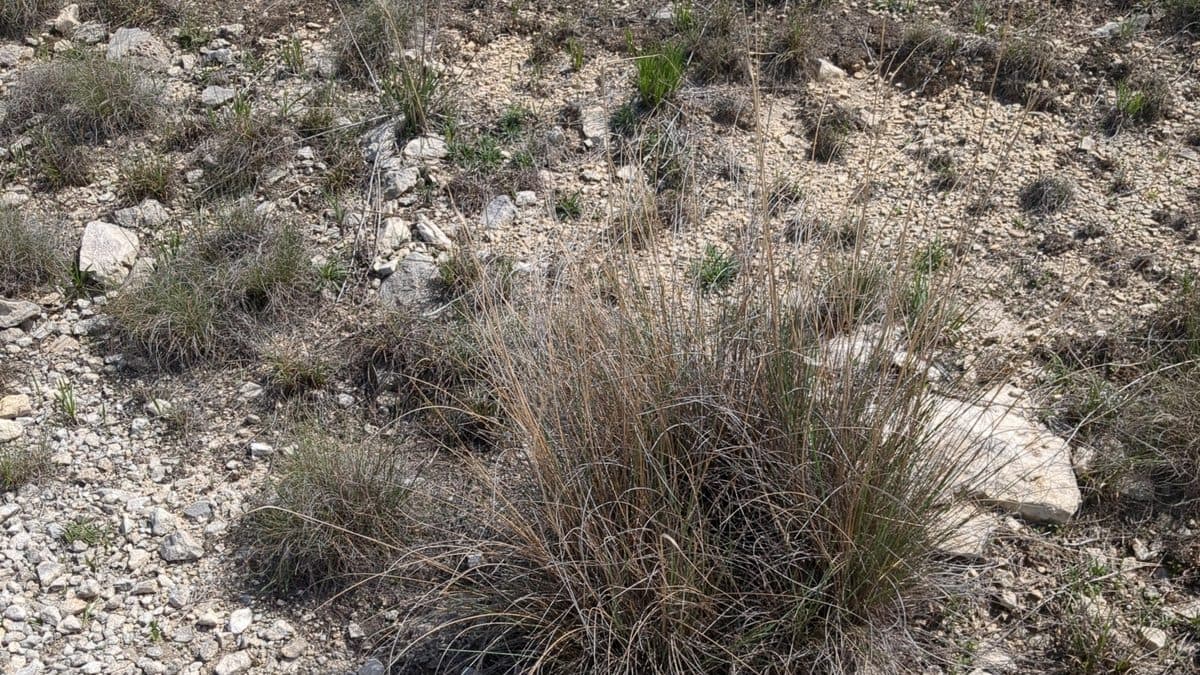
Lindheimer muhly (Muhlenbergia lindheimeri)
A tall clumping grass for sunny slopes. The Wildflower Center (opens in new tab) gives its range as the Edwards Plateau south into northern Mexico, lists white blooms from May through November, and rates deer resistance high. It adds that the foliage persists through winter but is mostly dormant, and that cutting it back in cold months may slow recovery. For height rules on grasses, see our note on native grass height and HOAs in Texas.
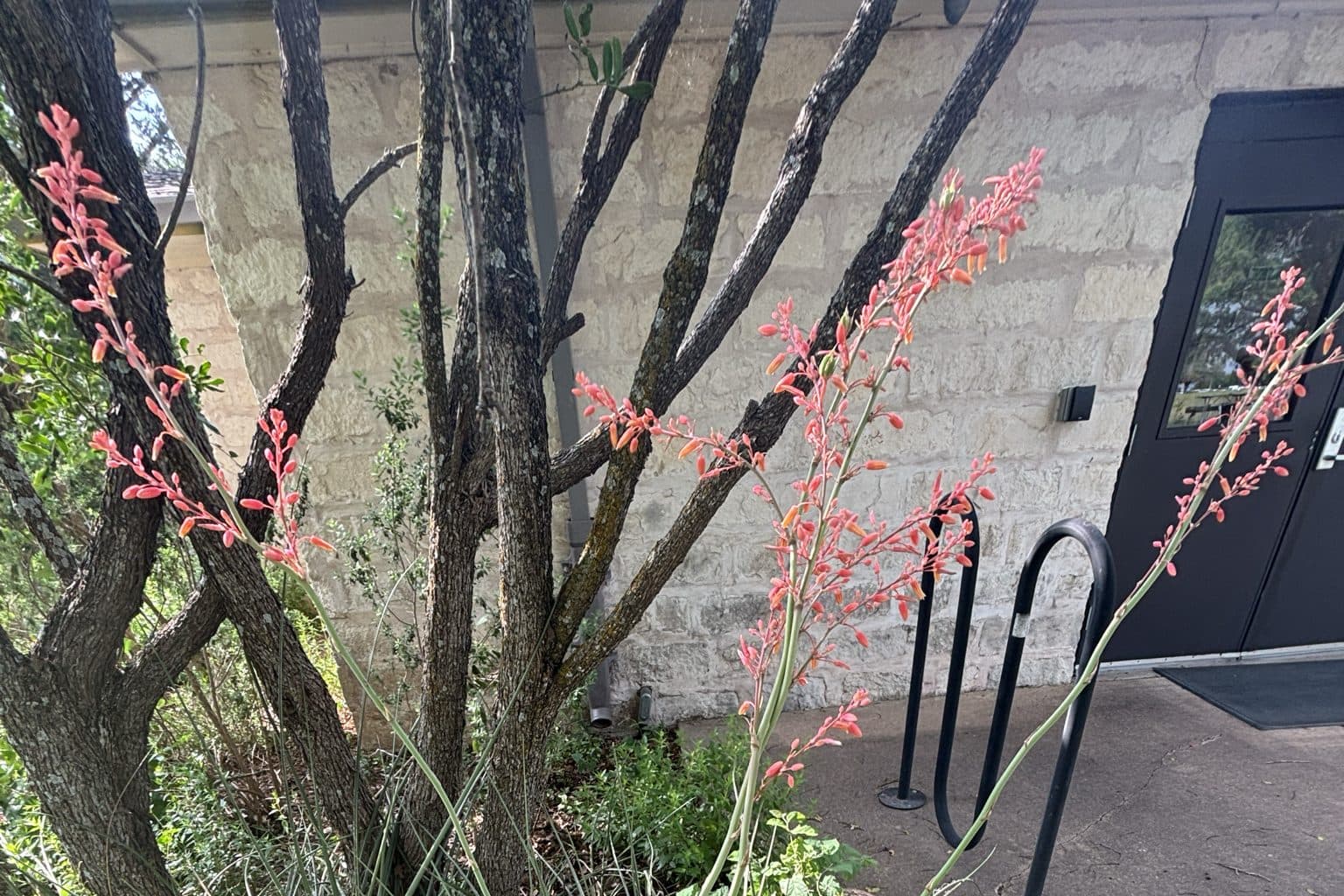
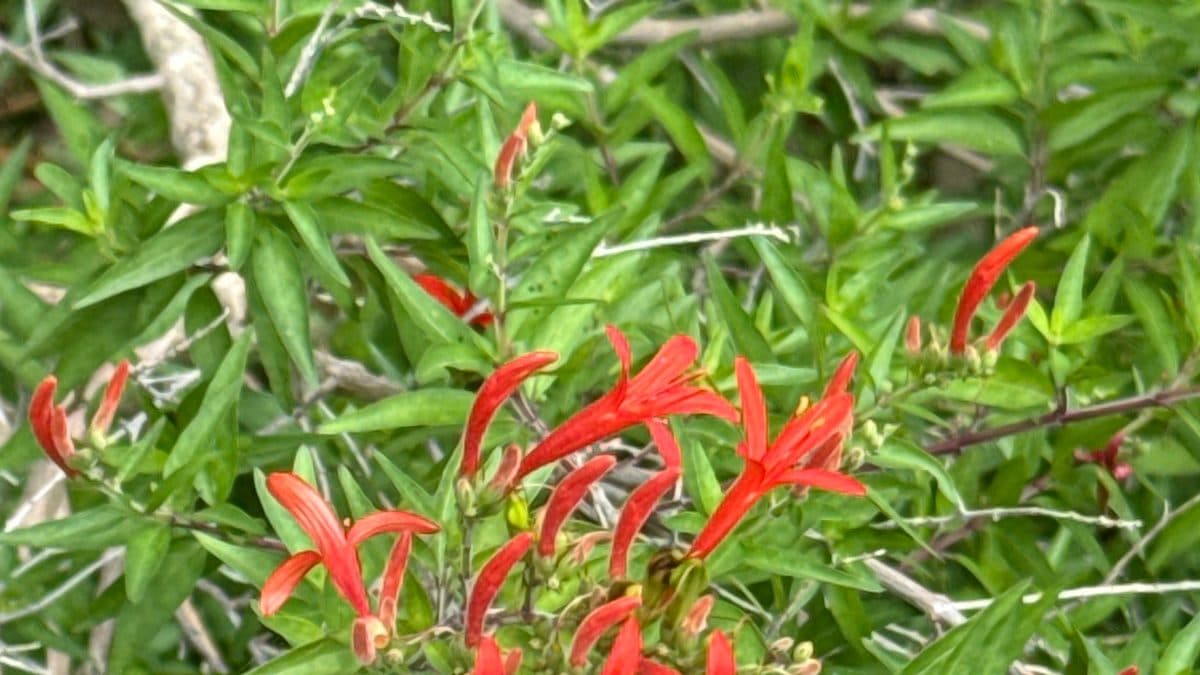
Flame acanthus (Anisacanthus quadrifidus var. wrightii)
The hummingbird shrub. The Wildflower Center (opens in new tab) describes it as native from west and south-central Texas, found on rocky stream banks. It blooms red and orange from June to October, attracts hummingbirds and butterflies, hosts the Texan crescent and Janais patch, and is rated high for deer resistance. It blooms best in full sun, and rain triggers a flush of flowers. Our list of native hummingbird plants in Texas has more.
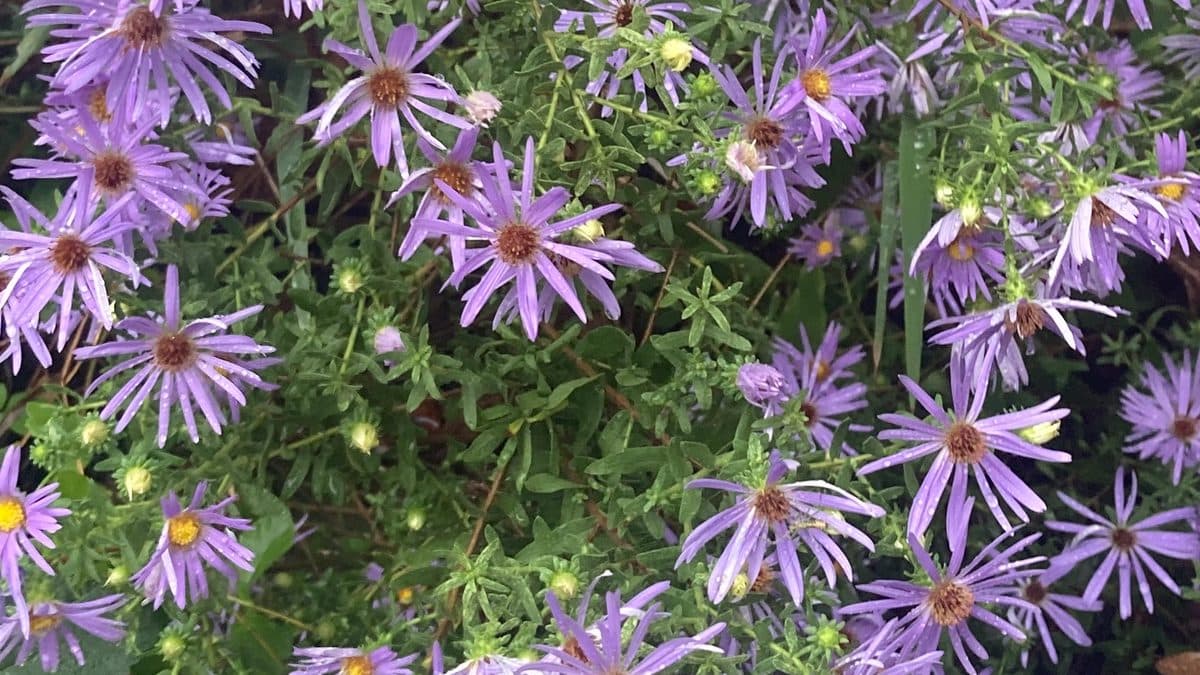
Fall aster (Symphyotrichum oblongifolium)
The Wildflower Center calls it frequent in calcareous prairies of the Edwards Plateau. It blooms purple from September through November (opens in new tab) and is listed as a nectar source with special value to native bees, citing the Xerces Society. It spreads by stolons, so thin it regularly. The Master Gardeners list it as deer resistant, though the Wildflower Center page is silent on deer.
Planting on a slope or under oaks
Match the plant to the spot. Cedar sage goes in dappled shade with fast drainage, ideally with fallen leaves raked off the area where you want it to spread, since the Wildflower Center says large leaves block its seedlings. Mountain laurel, muhly, flame acanthus, and aster take the sunnier, rockier ground. Beautyberry gets the cool, damp pocket.
If deer visit, the Wildflower Center ratings above are a starting point, not a guarantee, and beautyberry is the one it flags as a favorite. Group plants in drifts of one species so the planting reads as intentional from the road. That is also an HOA-friendly habit.
Where to start
Pick two or three of these, repeat them, and check each plant's light before you dig. Our San Antonio page has more local detail, and the Texas rebates page lists current water programs.
People also ask
What are the best native plants for the Texas Hill Country?
Cedar sage, Texas mountain laurel, American beautyberry, Lindheimer muhly, flame acanthus, and fall aster all appear on the Hill Country Master Gardeners plant list from Kerrville. Match each to its light and soil on the Wildflower Center page.
Which Hill Country native plants grow in shade?
Cedar sage grows in the shade of cedar brakes and oak woods and is stunted by continuous full sun. American beautyberry is listed for part shade, and Texas mountain laurel and fall aster take sun or part shade.
Which of these plants are deer resistant?
The Wildflower Center rates cedar sage, Texas mountain laurel, Lindheimer muhly, and flame acanthus high for deer resistance. It says deer favor American beautyberry foliage. The Master Gardeners list fall aster as deer resistant.
Want the list for your own ZIP?
Pollinator Patch matches native plants to your ZIP and ecoregion, then helps you lay them out by sun and height.