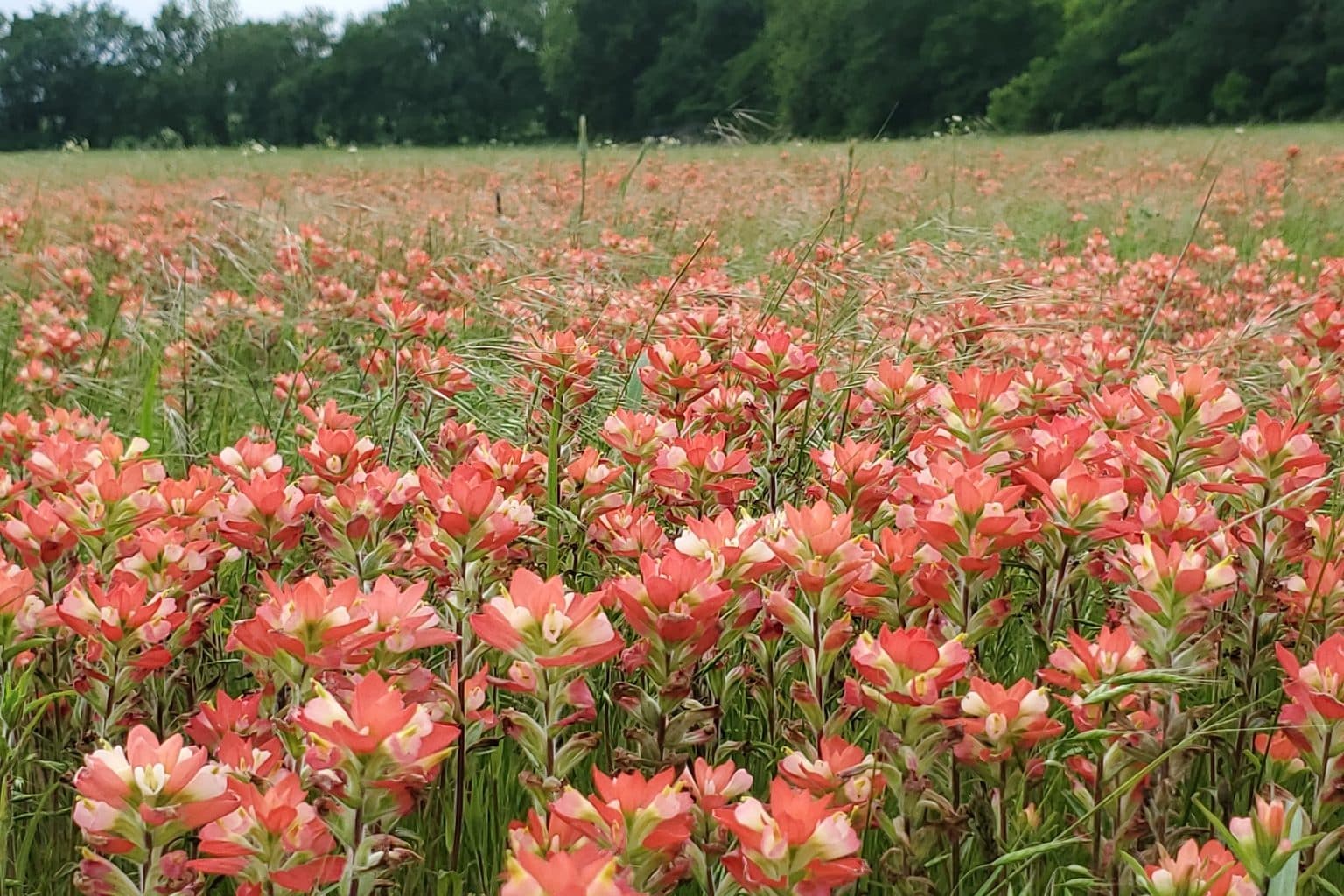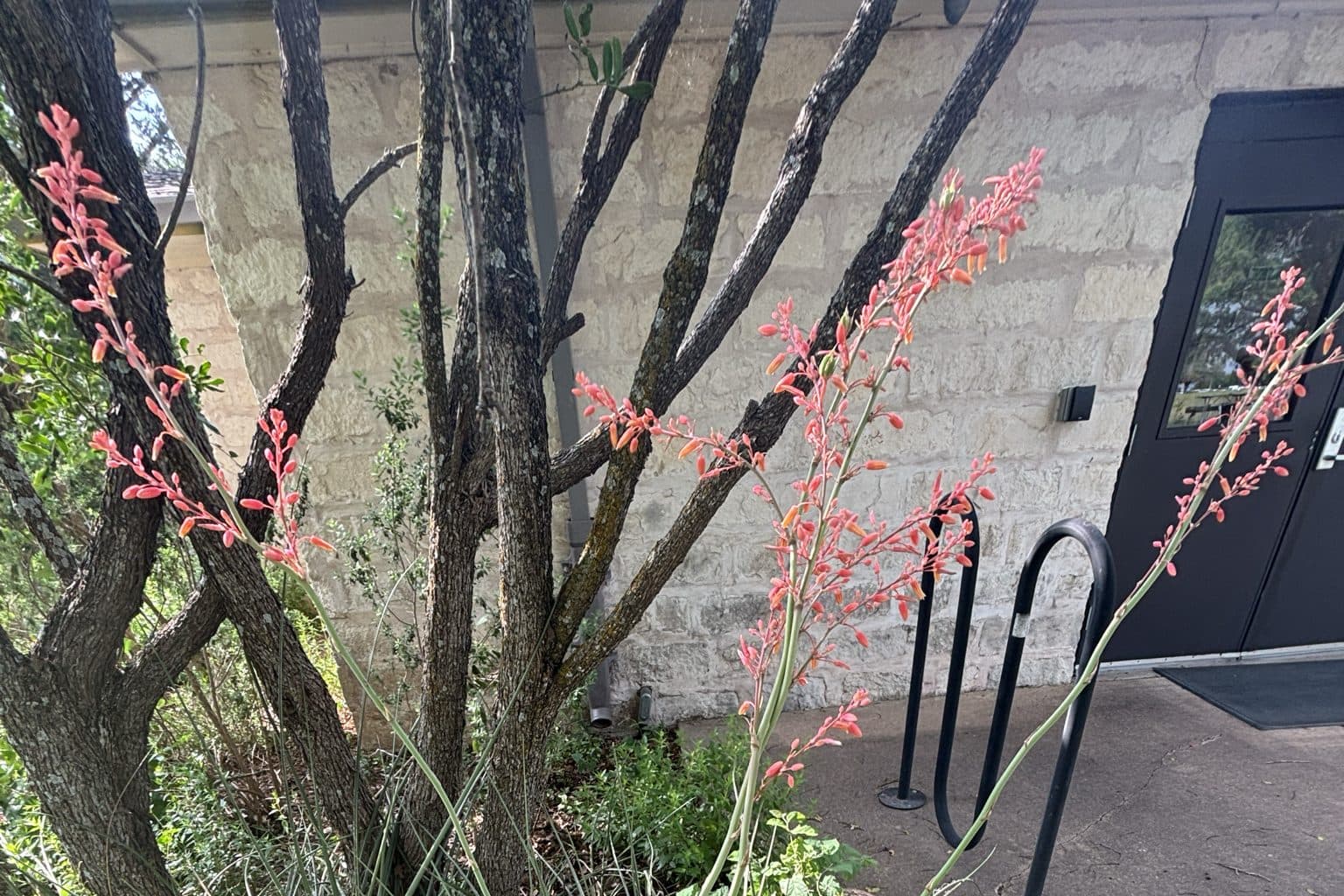
Quick answer: For native wildflowers on the Texas prairie around Dallas, plant by bloom season. Texas bluebonnet, Texas paintbrush, and winecup open in spring. Indian blanket, lemon beebalm, and Mexican hat carry summer. Maximilian sunflower finishes the year. Most of these go in as seed in fall, according to the Wildflower Center.
Wildflowers are the easy way into a native yard, because most start from seed and show color within a season or two. The catch is timing. Several of the best ones are annuals, and an annual sown at the wrong time simply does not come up.
This is a Blackland Prairie list for the Dallas area, not a list for the rest of Texas. Each plant below is tied to the Blackland Prairie by at least one of three sources: the Texas Parks and Wildlife Department's Blackland Prairies page (opens in new tab), the TxDOT Blackland Prairie seed list (opens in new tab), or the Lady Bird Johnson Wildflower Center's Texas Blackland Prairies collection (opens in new tab). Size, light, soil, and sowing notes come from each plant's Wildflower Center page.
Native wildflowers for the Texas prairie, by bloom season
TPWD describes the Blackland Prairies as fertile dark clay soils, gently rolling to nearly level, with average annual rainfall of 30 to 40 inches. The table below runs in bloom order, spring first.
| Plant | Light | Soil note | Size |
|---|---|---|---|
| Texas bluebonnet (March to May) | Sun | Dry, and clay is among the listed soils | Up to about 2 ft |
| Texas paintbrush (March to May) | Sun | Dry, and clay is among the listed soils | Up to about 18 in. |
| Winecup (March to June) | Sun to part shade | Must be well drained, tolerates clay | 8 to 12 in. tall, stems sprawl to 3 ft |
| Indian blanket (May to August) | Sun to part shade | Dry, sandy or calcareous | Up to about 2 ft |
| Lemon beebalm (May to July) | Sun to part shade | Dry, and clay is among the listed soils | Up to about 30 in. |
| Mexican hat (May to October) | Sun | Well drained, usually calcareous | About 1.5 ft, up to 3 ft |
| Maximilian sunflower (August to November) | Sun | Prefers moist, clay-like soil | 3 to 10 ft |
Spring native wildflowers on the Blackland Prairie
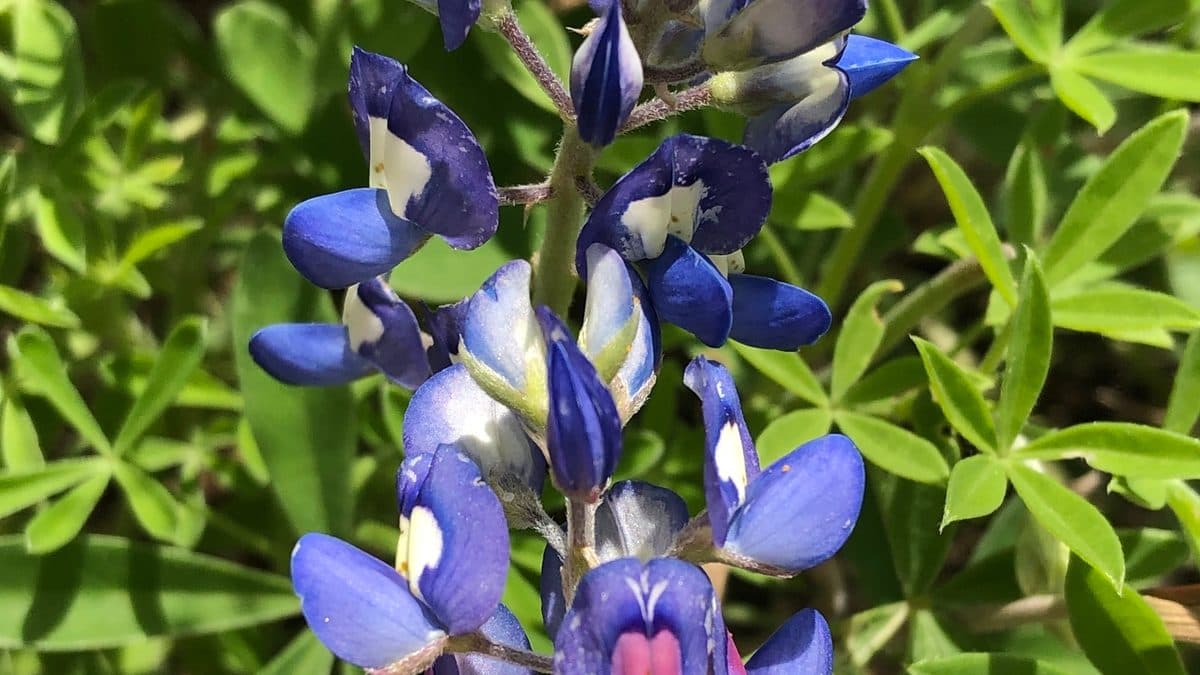
Texas bluebonnet (opens in new tab) (Lupinus texensis) is an annual with blue flowers tipped in white. The Wildflower Center says that in Texas it is found mainly in the Blackland Prairie and the Edwards Plateau, and lists hairstreak and elfin butterflies as larval hosts. It also warns that Lupinus seeds can be toxic to people and animals if eaten, so keep seed packets away from children and pets. If a pet gets into them, ASPCA Animal Poison Control is at (888) 426-4435.
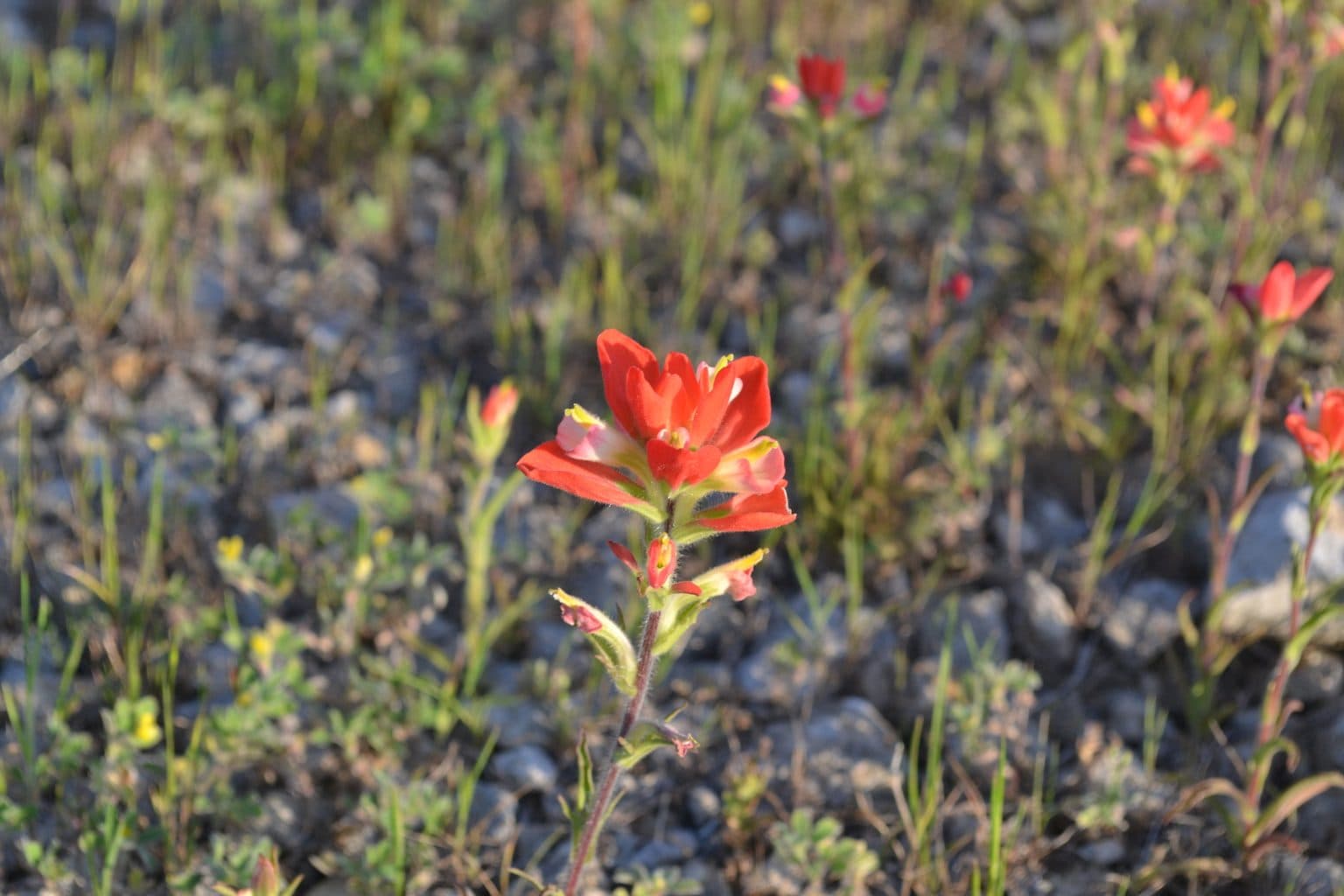
Texas paintbrush (opens in new tab) (Castilleja indivisa) is the red one that shows up beside bluebonnets. TPWD lists Indian paintbrush for the Blackland Prairie, and the Native Plant Society of Texas (opens in new tab) maps this species in both the Northern and Southern Blackland Prairie. The Wildflower Center names the buckeye butterfly as a larval host and says the plant is hemiparasitic, especially on grasses, so it grows best among them. It also warns that transplanting paintbrush may kill it, which is why it goes in as seed.
Winecup (opens in new tab) (Callirhoe involucrata) is the perennial in this group. It forms a low mat of sprawling stems with white, pink, or purple flowers, and the Wildflower Center lists it as a larval host for the gray hairstreak. It insists on drainage, so a raised edge or a slope helps in clay. It often goes dormant in summer, which is worth knowing before you decide it has died.
Summer wildflowers for a Texas prairie yard
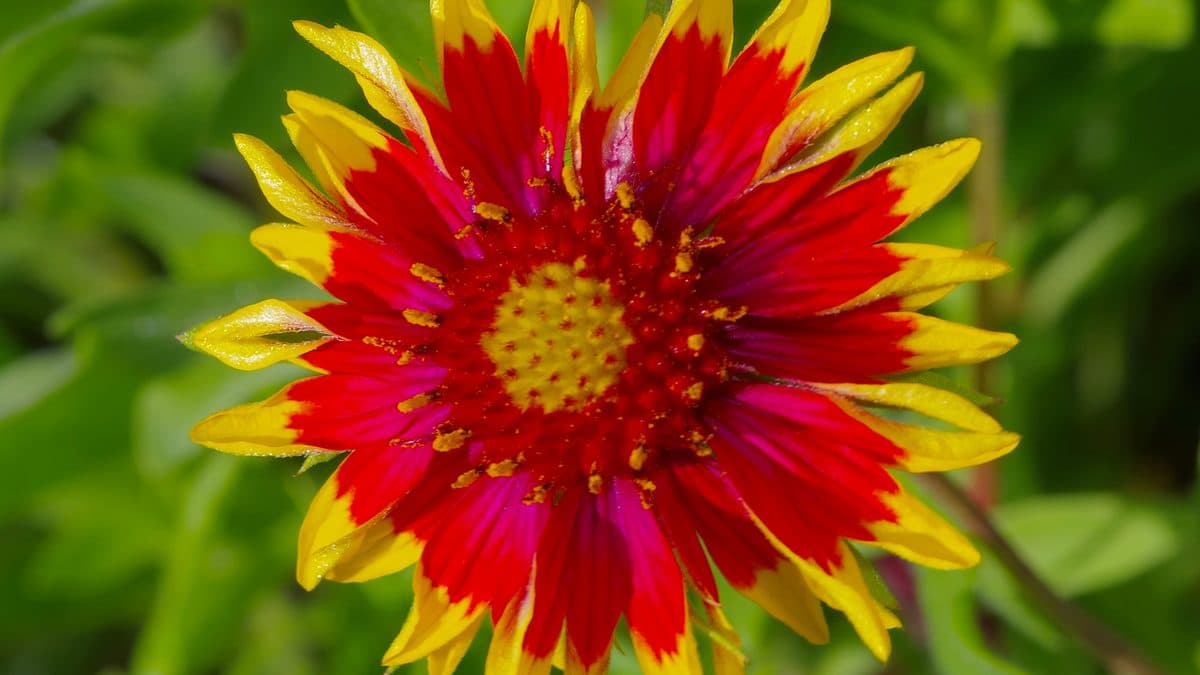
Indian blanket (opens in new tab) (Gaillardia pulchella) is on the TxDOT Blackland seed list, where it makes up 20 percent of the mix. The Wildflower Center says rich soil produces large, floppy plants with few flowers, so skip the compost and fertilizer.
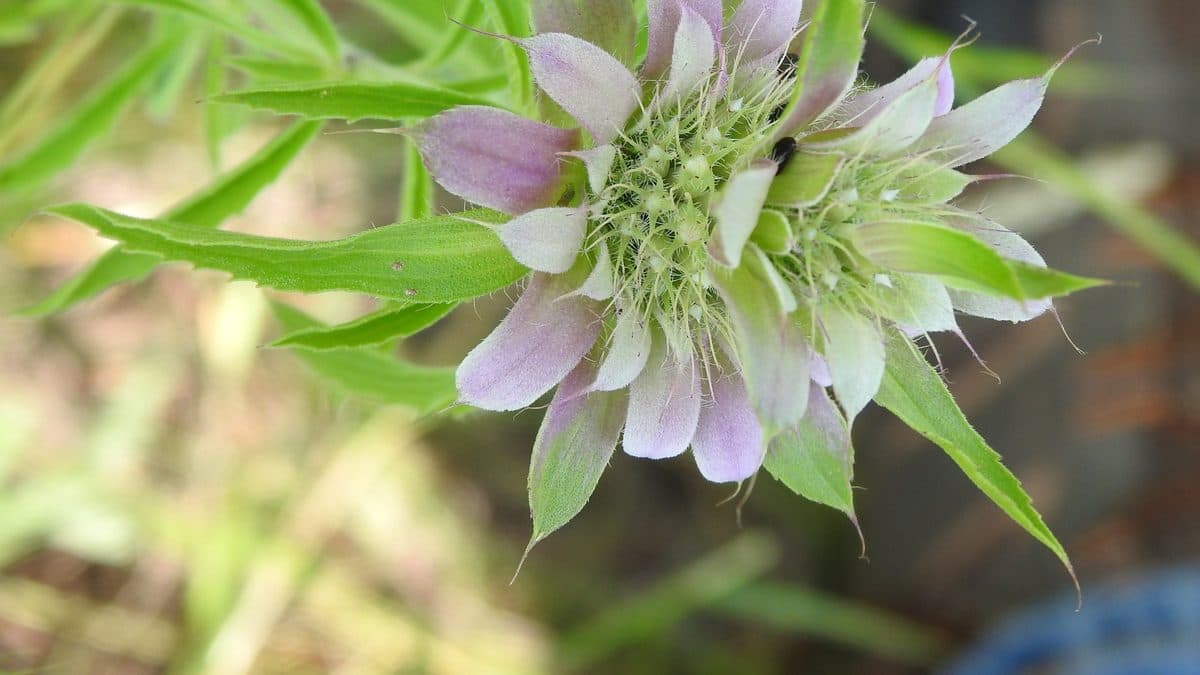
Lemon beebalm (opens in new tab) (Monarda citriodora), also called purple horsemint, is on the same TxDOT list. The Wildflower Center says it attracts bees, butterflies, and hummingbirds and is highly deer resistant. It also notes the plant can turn aggressive in ideal conditions and is susceptible to powdery mildew. Give it room and thin it if it spreads.
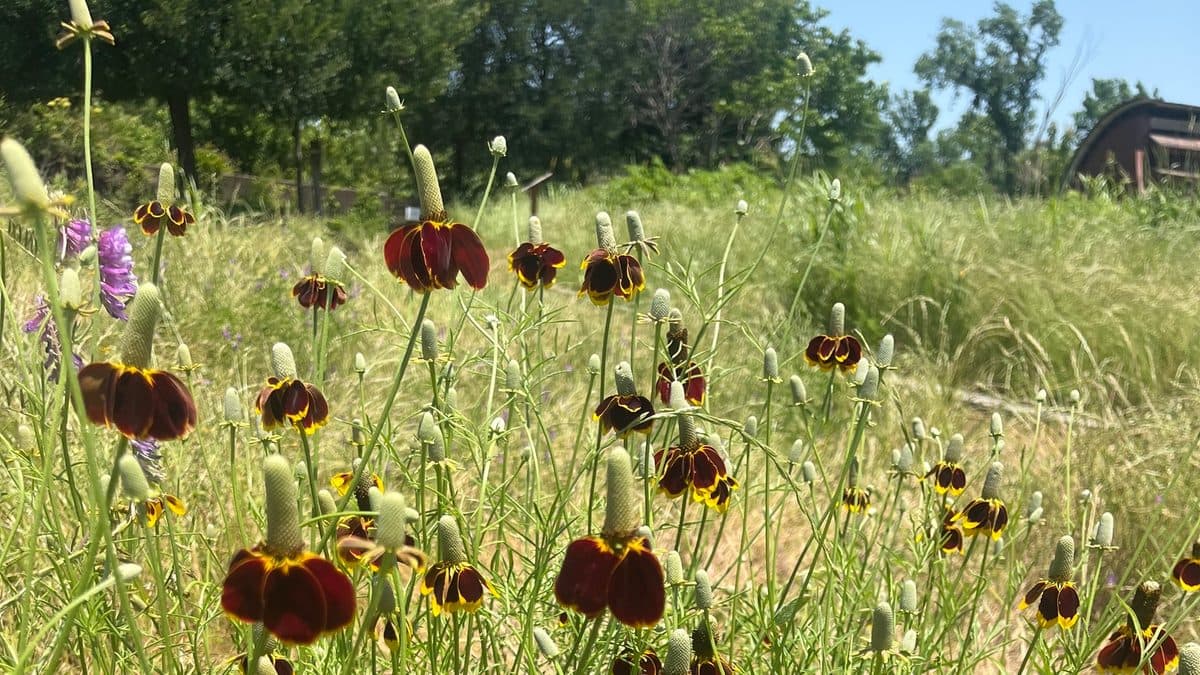
Mexican hat (opens in new tab) is the longest bloomer here, from May to October. The Wildflower Center lists it as Ratibida columnifera, while TxDOT writes the name as Ratibida columnaris. It is a perennial that usually blooms in its second year from seed, and it supplies nectar to bees and butterflies. The Wildflower Center also warns that it grows aggressively and can push out weaker neighbors.
A fall wildflower: Maximilian sunflower
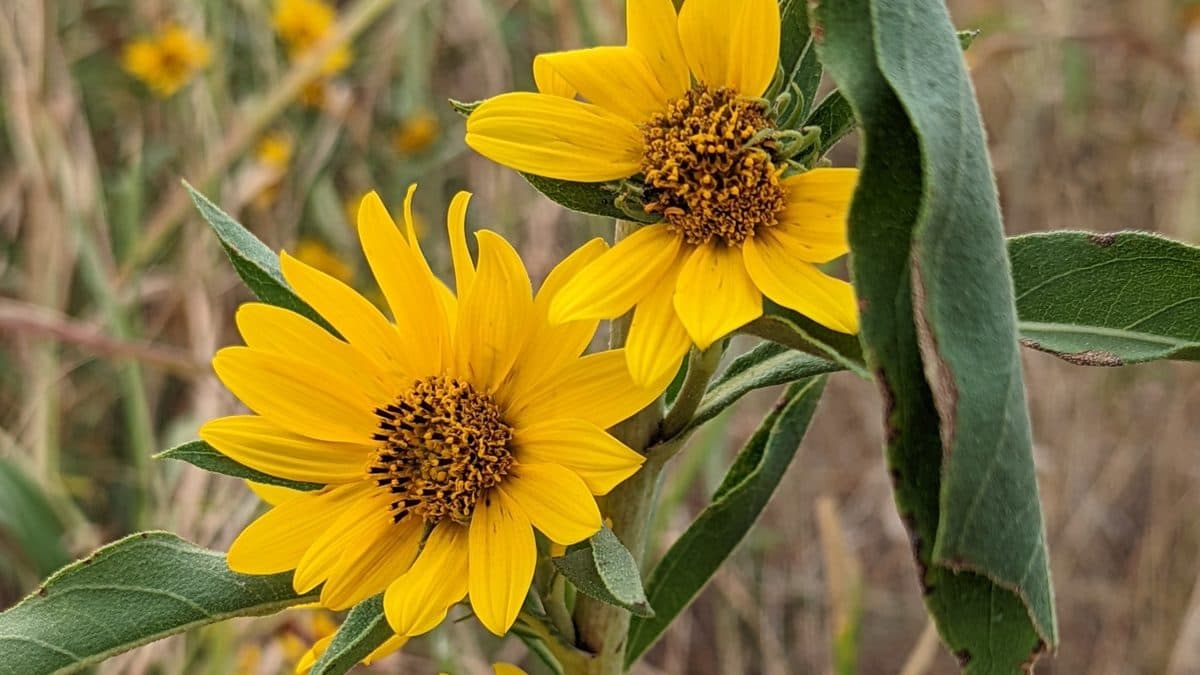
Maximilian sunflower (opens in new tab) (Helianthus maximiliani) is listed in the Wildflower Center's Blackland Prairies collection and blooms yellow from August to November. It grows 3 to 10 feet tall, so it belongs at the back of a bed. The page says its seeds feed birds and its flowers give nectar to bees and butterflies. Fertile soil can make the stems arch and fall over, and the Wildflower Center suggests staking them if that starts before bloom.
When to sow native wildflowers on the Texas prairie
For most of this list the answer is fall. The Wildflower Center advises sowing bluebonnet, paintbrush, winecup, Indian blanket, and Mexican hat in fall (Mexican hat also accepts spring), and raking the seed into loose topsoil so it touches the ground. Lemon beebalm goes in fall or early spring. The Native Plant Society of Texas gives fall or early spring for paintbrush, covered by no more than about 1/8 inch of soil.
Two seeds need extra steps. Bluebonnet seed germinates faster if scarified, and the Wildflower Center says paintbrush seed may need a cold, wet winter period. Winecup and Mexican hat usually flower in their second year, so do not judge the first season. Maximilian sunflower is the exception: the Wildflower Center says the easiest method is dividing a clump in early spring.
Annuals need to drop seed to come back. Bluebonnet, paintbrush, Indian blanket, and lemon beebalm all depend on reseeding, and the Wildflower Center asks you to let the seed heads dry and brown before mowing.
Starting small
Pick one plant for each season and repeat it in a drift, so the bed reads as planned from the street. That is an HOA-friendly habit as well. For plants beyond wildflowers, see our guide to the best native plants for Texas, our note on native hummingbird plants in Texas, and the Plano guide to native plants in clay. The Dallas page has local detail, and Texas rebate programs are listed in one place.
People also ask
What native wildflowers grow best on the Texas prairie?
On the Blackland Prairie around Dallas, the sources above support Texas bluebonnet, Texas paintbrush, winecup, Indian blanket, lemon beebalm, Mexican hat, and Maximilian sunflower. This list is for the Blackland Prairie, not every part of Texas.
When should I plant native wildflower seed in Texas?
The Wildflower Center advises fall for bluebonnet, paintbrush, winecup, Indian blanket, and Mexican hat, and fall or early spring for lemon beebalm. Rake the seed into loose topsoil so it touches the ground.
Can I transplant Texas paintbrush?
The Wildflower Center warns that transplanting paintbrush may kill it. It is hemiparasitic, especially on grasses, so sow seed where grasses already grow.
Want the list for your own ZIP?
Pollinator Patch matches native plants to your ZIP and ecoregion, then helps you lay them out by sun and height.