Quick answer: A pollinator garden for beginners needs only five plants if they bloom in different seasons. For Dallas, in the Blackland Prairie and Cross Timbers, use Texas bluebonnet for spring, black-eyed Susan and butterfly weed for summer, and dotted gayfeather and aromatic aster for fall. Each one is listed for these ecoregions by the Native Plant Society of Texas (NPSOT). To find your own five, look up your ecoregion, then pick one or two natives per season.
The easiest pollinator garden for beginners is a short list of natives, planted in groups, that keeps something in flower from March to November. Bees and butterflies need food across the whole season, and five well-chosen plants can supply it.
The five below are a worked example for Dallas, which sits where the Blackland Prairie meets the Cross Timbers. If you live somewhere else, the plants will differ but the method in the last section carries over.
How to choose five plants for a pollinator garden
Pick by bloom time first. A garden with five plants that all flower in May looks great for a month and leaves pollinators with nothing for the other seven. Aim for one in spring, two in summer, and two in fall, which is the split used here.
Then pick by ecoregion. Every plant in this list is native to the same place, and each claim below points to the source that says so. That matters because a plant sold as "native" at a garden center is often native somewhere else, and the most common first pick for a beginner garden is a case in point for Dallas. More on that next.
The plant that did not make the list: purple coneflower
Purple coneflower (Echinacea purpurea) is the usual first suggestion for a beginner pollinator garden, so it is fair to ask why it is missing. The Lady Bird Johnson Wildflower Center (opens in new tab) gives its range as Georgia to extreme northeast Texas, north to the Carolinas and the Midwest. NPSOT says it is native to "a very tiny area of Northeast Texas" and lists its ecoregions as the Western Gulf Coastal Plain and Tertiary Uplands, not the Blackland Prairie or Cross Timbers (NPSOT (opens in new tab)).
Nurseries sell it across Texas because it is easy to grow, and it does feed bees and butterflies. It just cannot be called a Dallas native on those sources, so this list leaves it out. If you already have some, there is no need to pull it.
Five native plants for Dallas: spring, summer and fall bloom
Worked example: Blackland Prairie and Cross Timbers, Dallas area. Ecoregion listings come from NPSOT. Height, sun, and bloom figures come from NPSOT and the Wildflower Center, and the table at the end of this section puts them side by side.
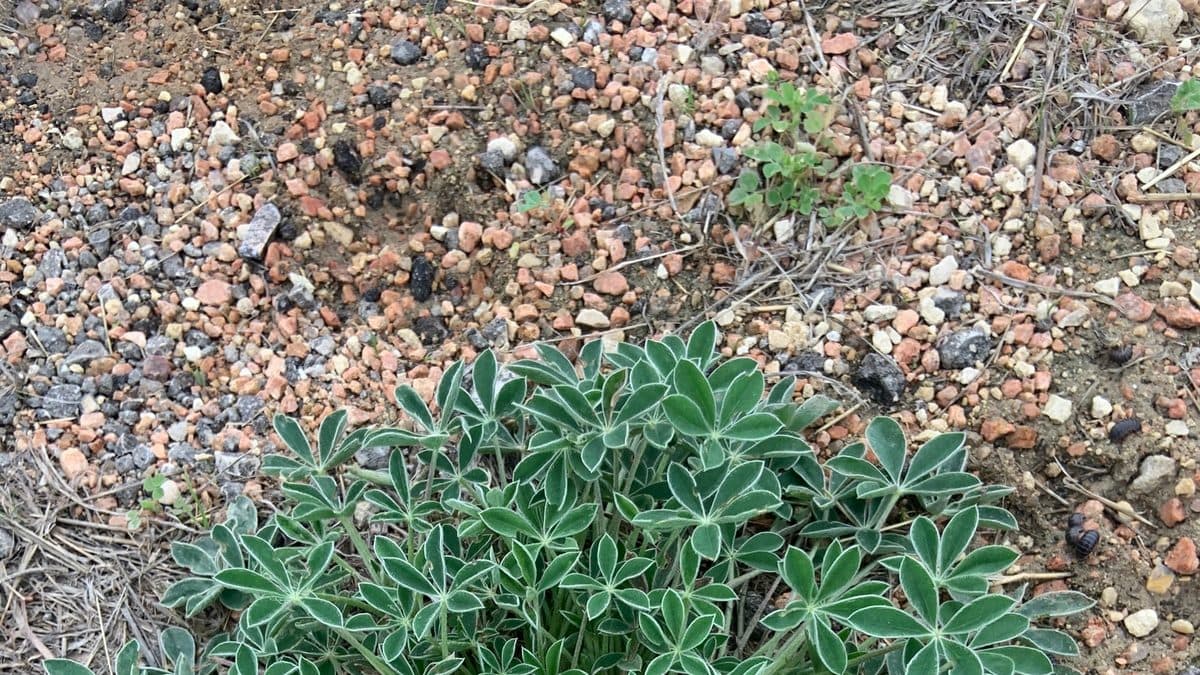
Spring: Texas bluebonnet (Lupinus texensis)
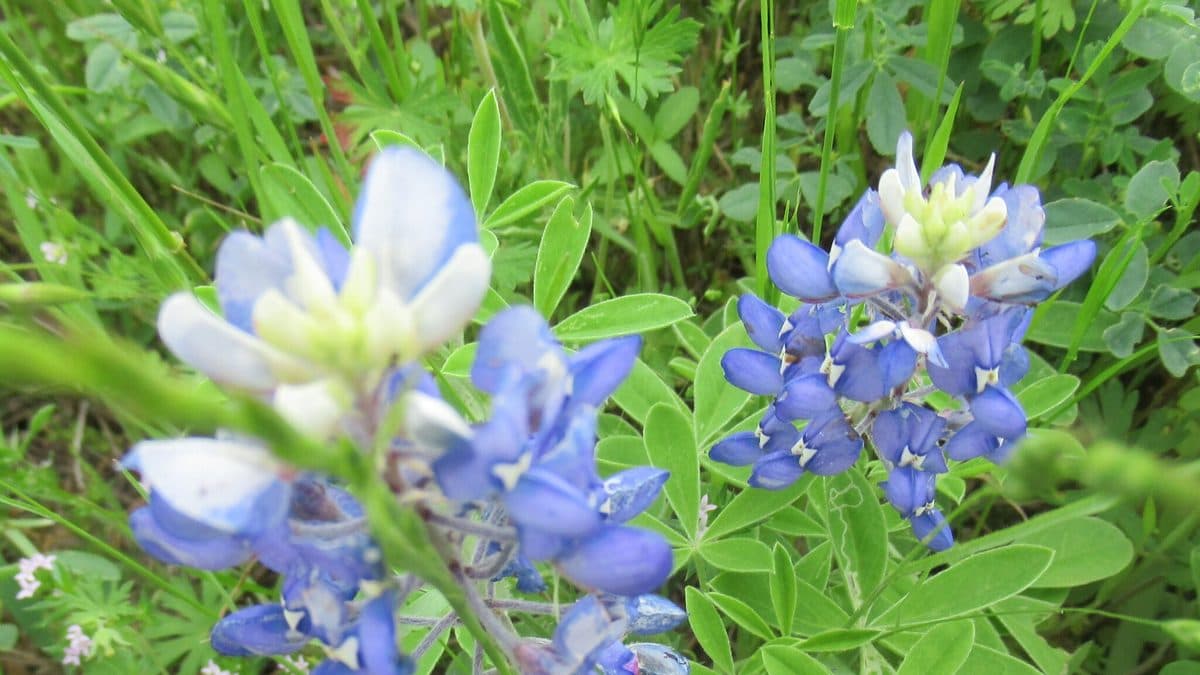
Bluebonnet blooms March to May with blue flower spikes tipped in white, and NPSOT lists it for both the Northern Blackland Prairie and the Eastern Cross Timbers (NPSOT (opens in new tab)). The Wildflower Center says that in Texas it is found mainly in the Blackland Prairie and Edwards Plateau and that the Xerces Society lists it as especially valuable to native bees and bumble bees (Wildflower Center (opens in new tab)).
It is an annual, so it comes back from seed rather than from the root. Sow seed in fall, as the Wildflower Center advises, and keep it uncovered and lightly watered (Texas A&M AgriLife (opens in new tab)). The plants and especially the seeds are toxic if eaten, so keep them away from small children (Wildflower Center and NPSOT).
Summer: black-eyed Susan (Rudbeckia hirta)
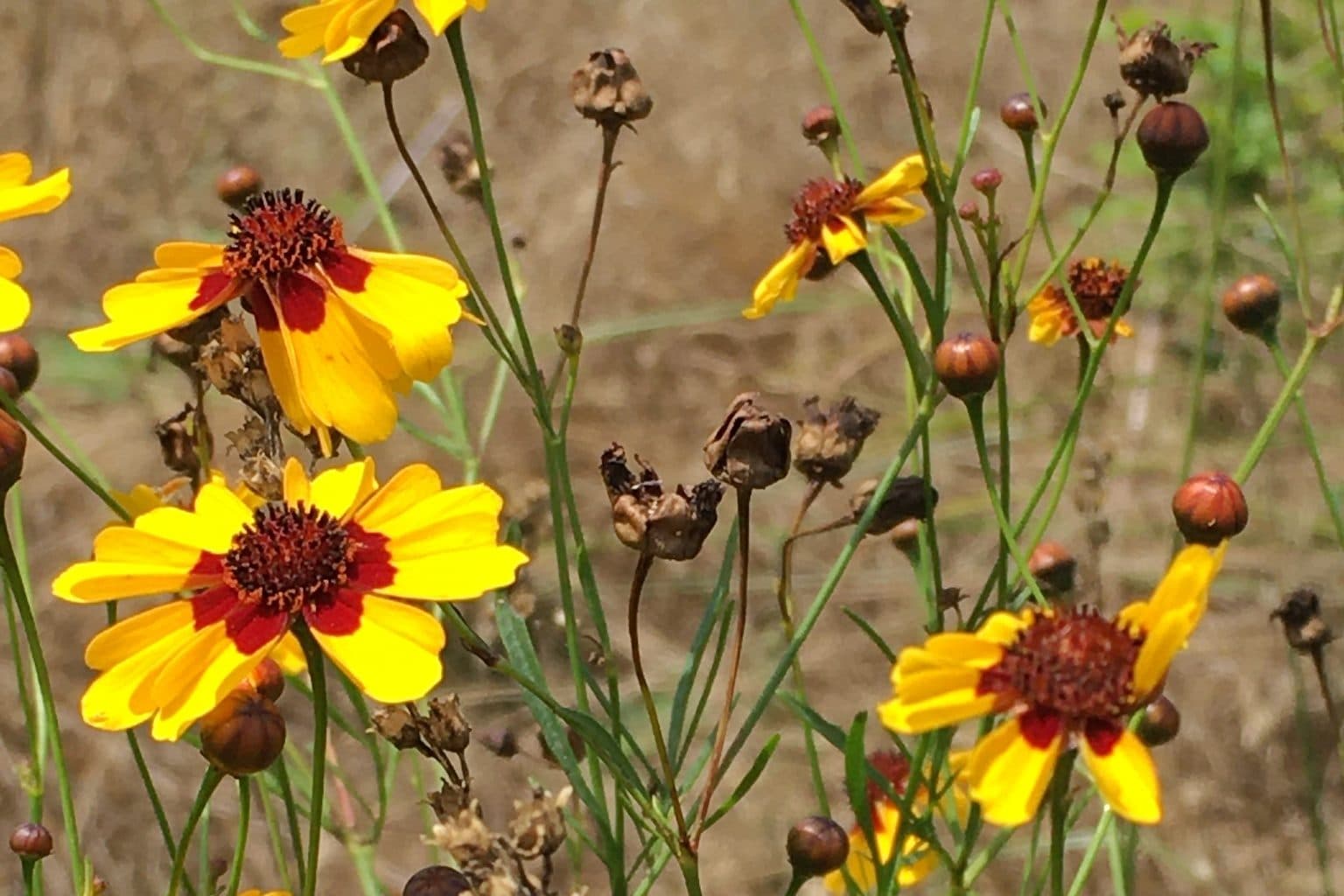
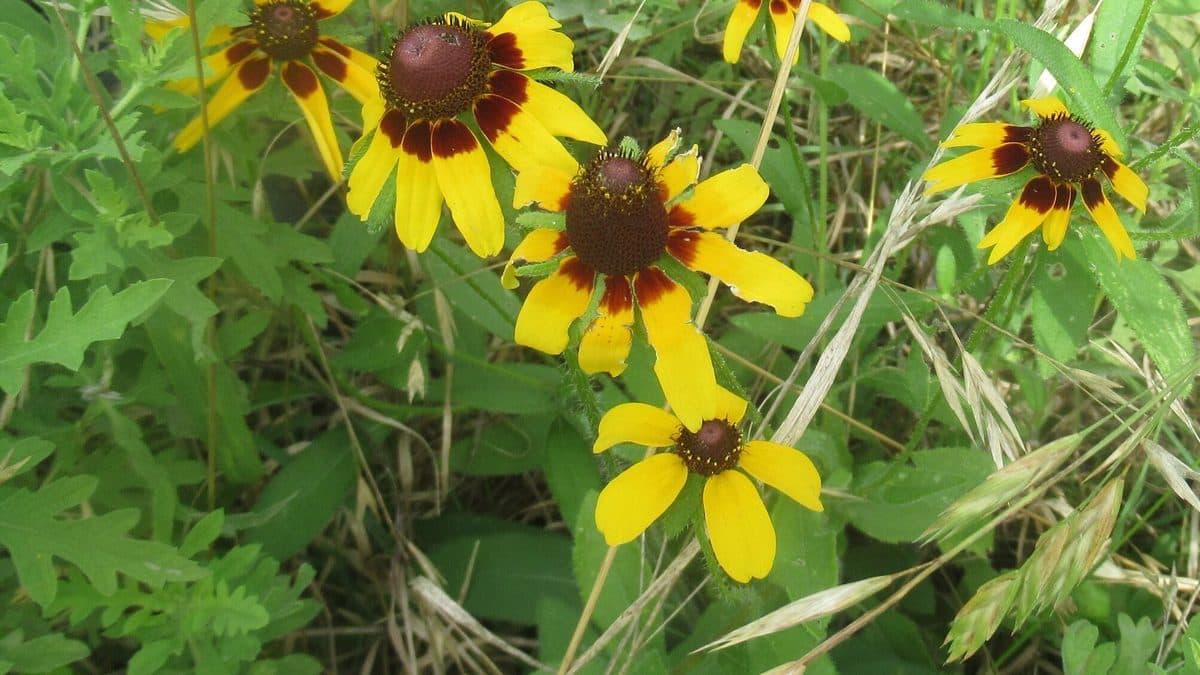
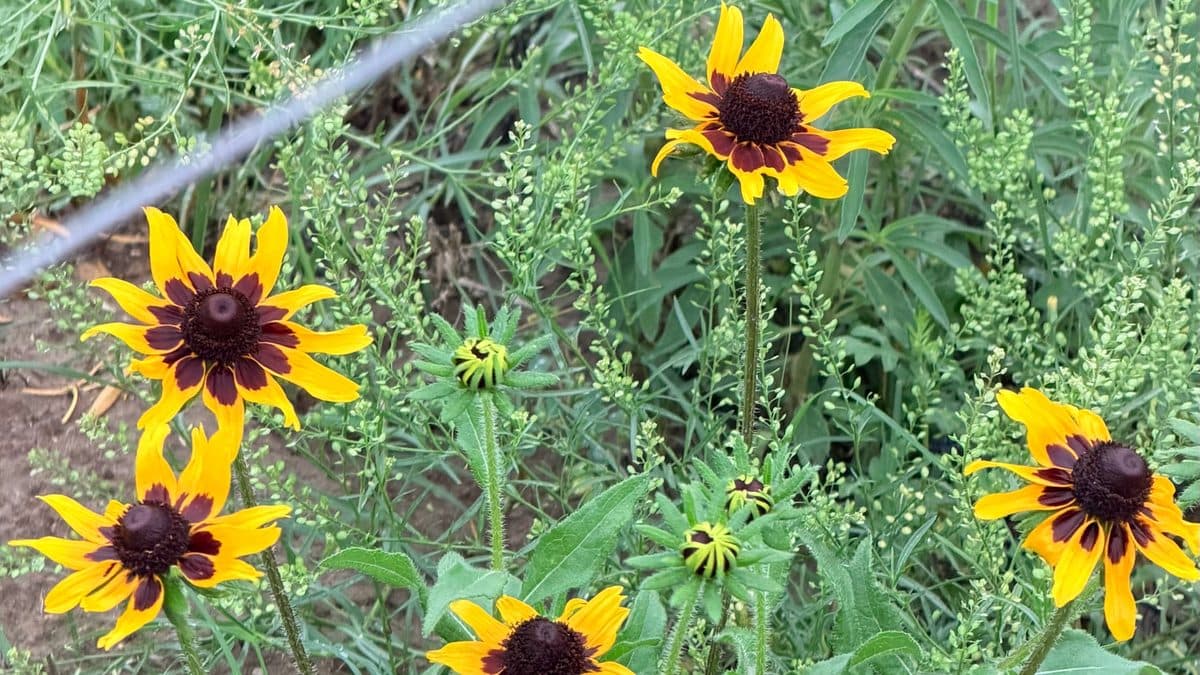
Bright yellow petals around a dark cone, 1 to 2 feet tall, in full sun. NPSOT lists it as blooming spring through fall (March to November) and as very drought tolerant, with medium water use, and it covers the Blackland Prairie and Cross Timbers (NPSOT (opens in new tab)). It is a larval host for the Gorgone Checkerspot and Bordered Patch butterflies (NPSOT, and the Wildflower Center (opens in new tab)), so you may see chewed leaves, which is the point.
Summer: butterfly weed (Asclepias tuberosa)
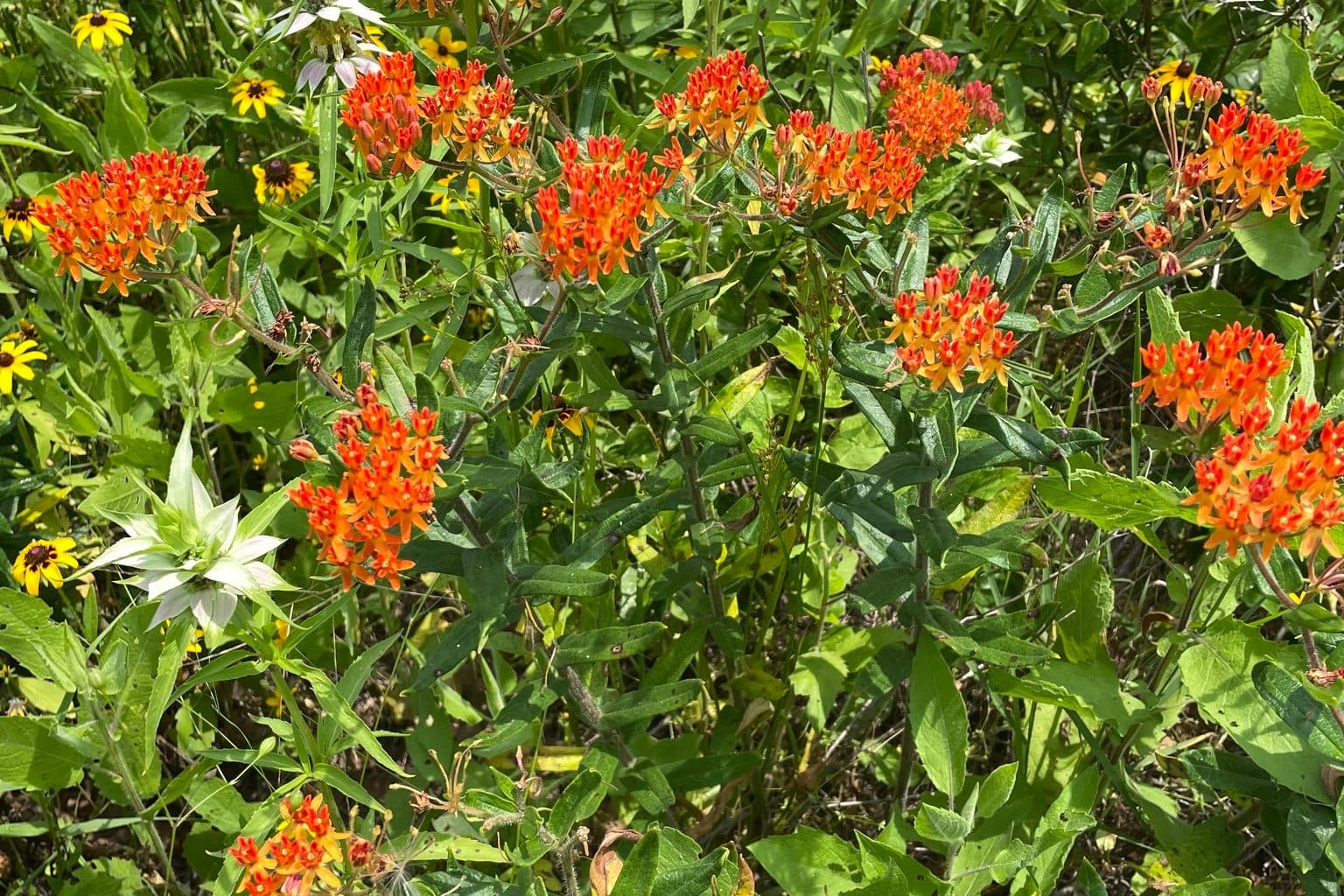
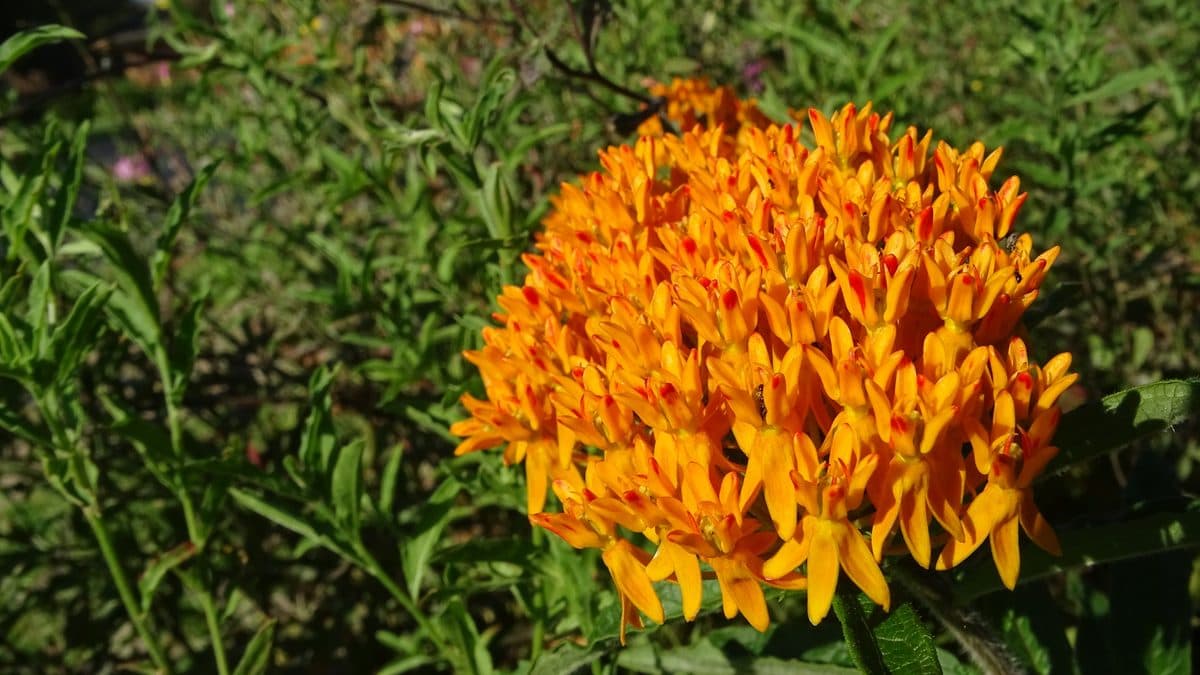
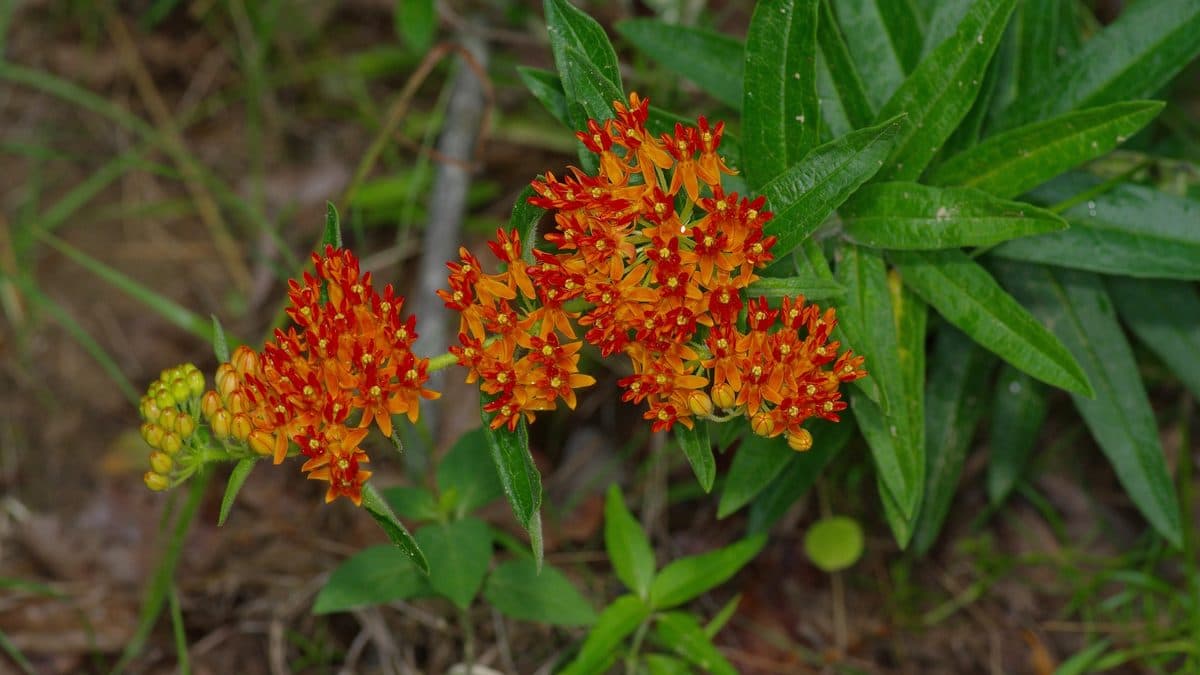
Flat clusters of bright orange flowers, May to September, 1 to 2 feet tall, in sun with low water needs. NPSOT lists it for both the Blackland Prairie and the Cross Timbers (NPSOT (opens in new tab)). The Wildflower Center names it a larval host for monarch and queen butterflies (Wildflower Center (opens in new tab)), and NPSOT calls it a limited monarch host, so treat it as one milkweed among several if monarchs are your goal.
Butterfly weed is a milkweed, and the Wildflower Center says its roots and sap are poisonous, mainly when eaten in large quantity. Our guide to milkweed and dogs covers what that means for a pet owner.
Fall: dotted gayfeather (Liatris punctata)
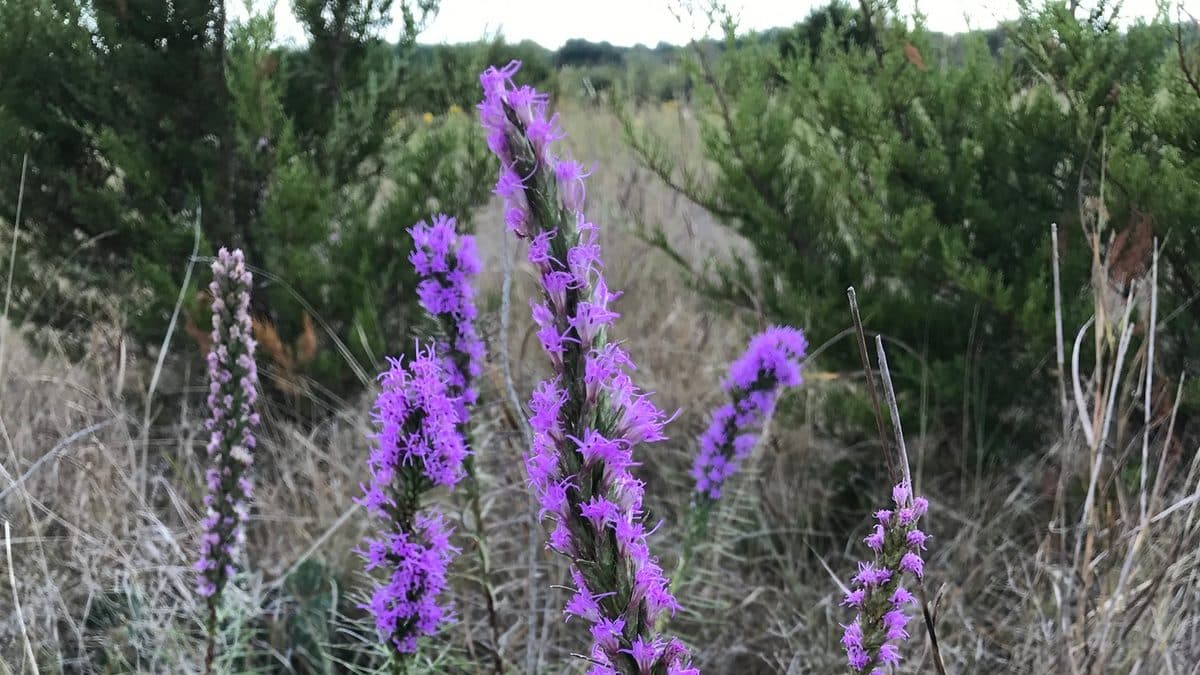
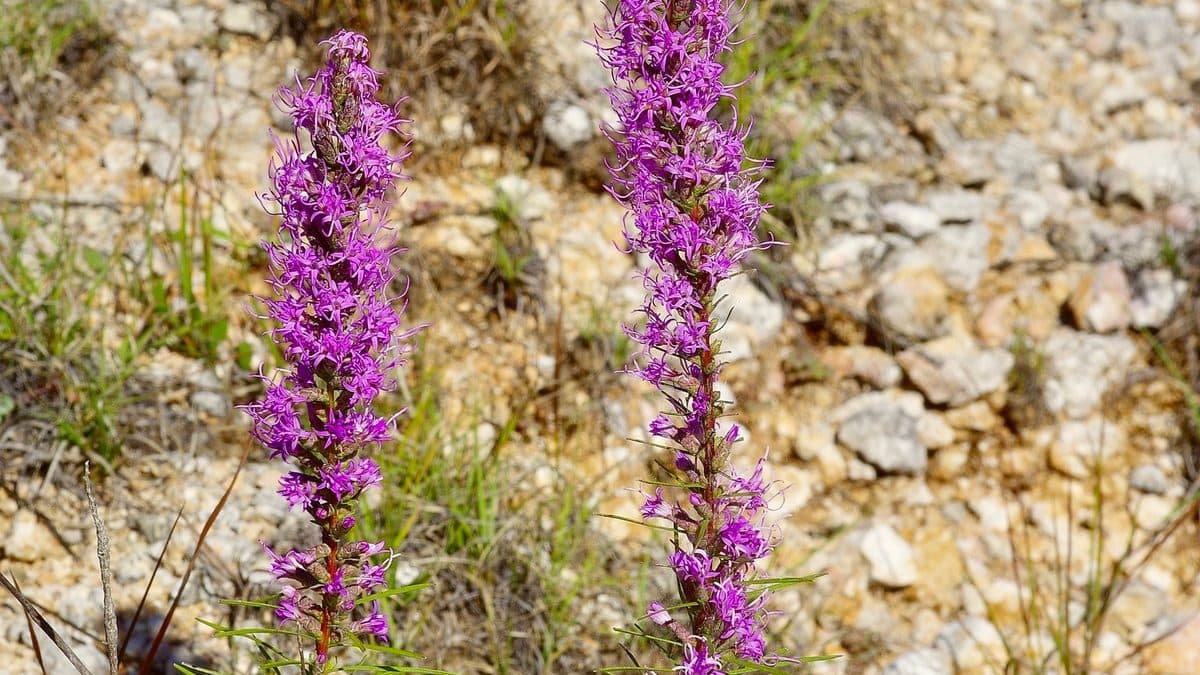
Tall purple flower spikes from August to November on plants 1 to 3 feet tall, in full sun. NPSOT calls it the most drought tolerant of the gayfeathers, with low to medium water needs, and lists it for the Blackland Prairie and the Cross Timbers (NPSOT (opens in new tab)). The Wildflower Center says gayfeathers attract butterflies and lists special value to native bees and bumble bees (Wildflower Center (opens in new tab)).
Fall: aromatic aster (Symphyotrichum oblongifolium)
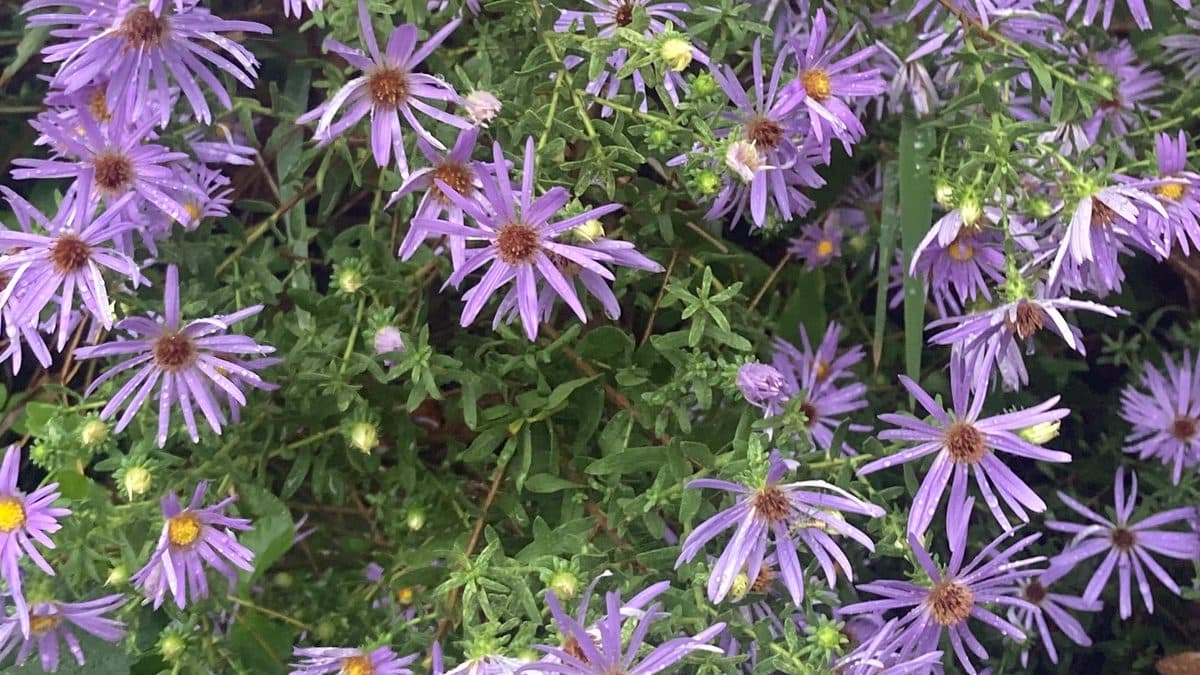
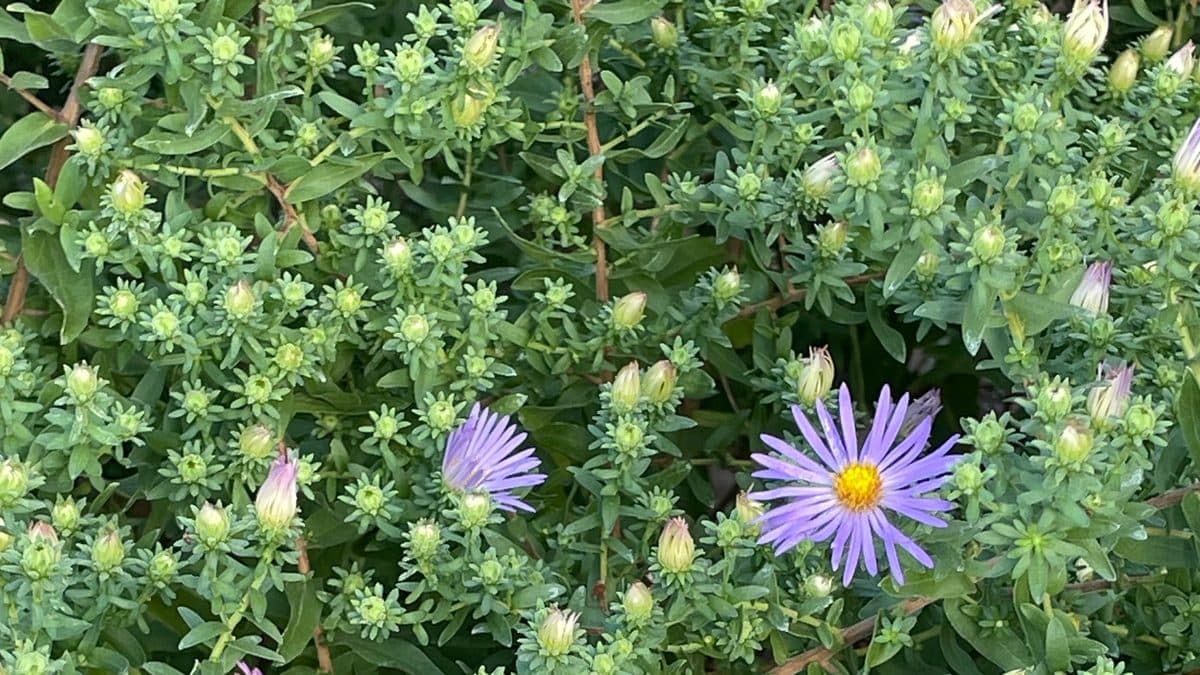
Purple daisy flowers with yellow centers from September to December, 1 to 3 feet tall, in sun to part shade with low water needs (NPSOT (opens in new tab)). One caution on range: NPSOT lists aromatic aster in the Cross Timbers, including the Eastern Cross Timbers, but does not list the Blackland Prairie. Dallas sits across both, so this is the one plant on the list where the Blackland Prairie half of the metro is not confirmed by that source. Treat it as the best fit if you are on the Cross Timbers side. NPSOT names the Silvery Checkerspot as a larval host. Our post on mums versus native asters compares it with the garden-center option.
| Plant | Blooms | Height | Sun | Water |
|---|---|---|---|---|
| Texas bluebonnet | March to May | 1 to 3 ft | Sun | Low |
| Black-eyed Susan | March to November | 1 to 2 ft | Full sun | Medium, very drought tolerant |
| Butterfly weed | May to September | 1 to 2 ft | Sun to part shade | Low |
| Dotted gayfeather | August to November | 1 to 3 ft | Full sun | Low to medium |
| Aromatic aster | September to December | 1 to 3 ft | Sun to part shade | Low |
Source for every row: NPSOT plant pages, read October 31, 2026.
How to find your own five plants for a pollinator garden
Use one rule: find your ecoregion, then pick one or two natives that bloom in each season. Start with your EPA Level III ecoregion, then search a regional native plant society or the Wildflower Center's plant database for plants listed for it. Check each plant's bloom time and keep the ones that cover spring, summer, and fall.
If you live in Texas, our guides to the best pollinator plants in Texas and native pollinators by ecoregion go through the other ecoregions, and the Dallas native plant list adds shrubs and groundcovers to this five.
Putting the five together
Every plant here is 1 to 3 feet tall, so the layout is forgiving. Put black-eyed Susan and butterfly weed, the shortest at 1 to 2 feet, toward the front of the bed, with gayfeather and aster behind them and bluebonnet scattered through the gaps. Plant each in a group of three or five rather than one of each, which reads as a deliberate design from the street.
A clean edge does more for a neighbor's or an HOA board's impression than the plant choice does. Mulch or a low border around the bed, and a path through it, signal that the planting is on purpose.
What to expect in the first year
Bluebonnet is the only one that needs a fall start. The Wildflower Center suggests scarifying the seed to speed germination and adding rhizobium at planting, and AgriLife says not to fertilize wildflower seed. NPSOT lists the other four as low to medium water use, with black-eyed Susan the thirstiest at medium. The bloom handoff follows the table: bluebonnets run March to May, black-eyed Susan and butterfly weed overlap through the summer, and gayfeather and aster open from August and September on.
Start small, then add
Plant these five in groups, with the shorter plants toward the front, and let the first year show you what the site likes. Bluebonnet goes in as seed in fall, and the other four can follow whenever your local nursery stocks them. Next fall, the garden you add to will already be feeding pollinators.
People also ask
What is the easiest pollinator garden for beginners?
Five native perennials and annuals that bloom in different seasons, planted in groups. For Dallas, that can be Texas bluebonnet, black-eyed Susan, butterfly weed, dotted gayfeather, and aromatic aster, all listed for the Blackland Prairie or Cross Timbers by NPSOT.
Is purple coneflower native to Dallas?
Not on the sources we checked. NPSOT says purple coneflower is native to a very small part of northeast Texas and lists the Western Gulf Coastal Plain and Tertiary Uplands, and the Wildflower Center gives its range as extending only to extreme northeast Texas.
When should I plant bluebonnets in Dallas?
In fall. The Wildflower Center advises sowing seed or planting seedlings in fall, and Texas A&M AgriLife recommends sowing wildflower seed in fall before the rainy season, uncovered and lightly watered.
Want the list for your own ZIP?
Pollinator Patch matches native plants to your ZIP and ecoregion and helps you lay out a planting that keeps something blooming from spring through fall.