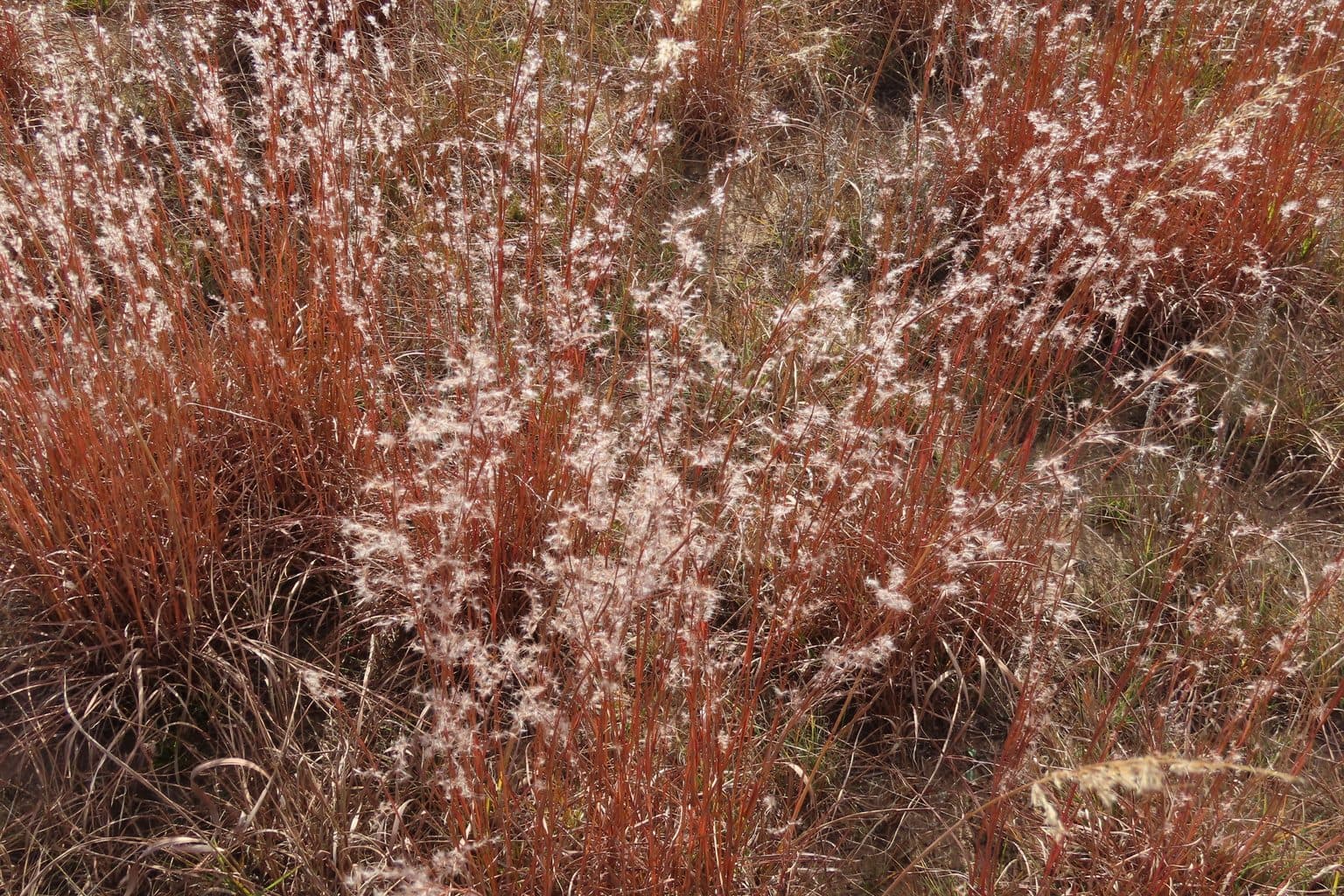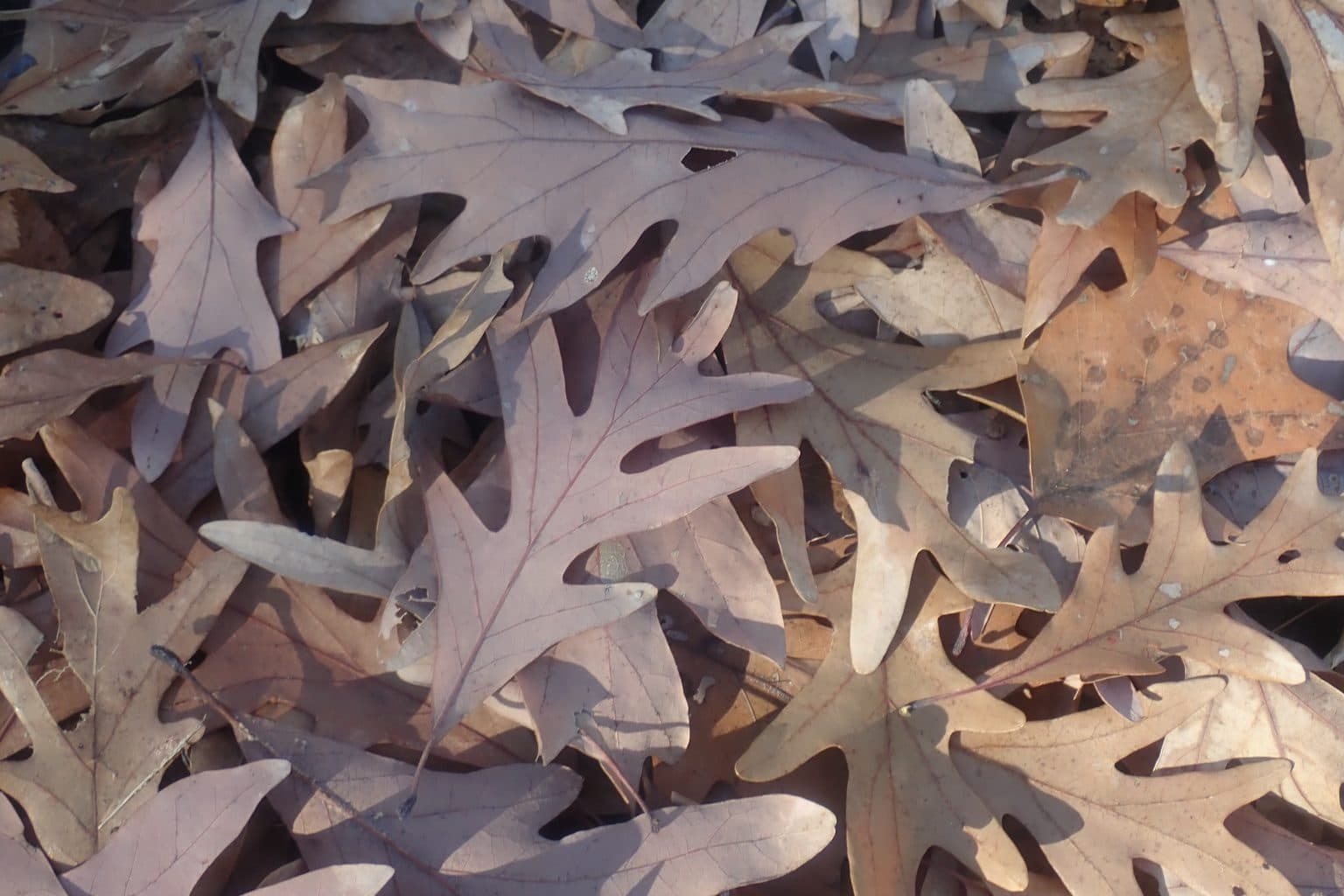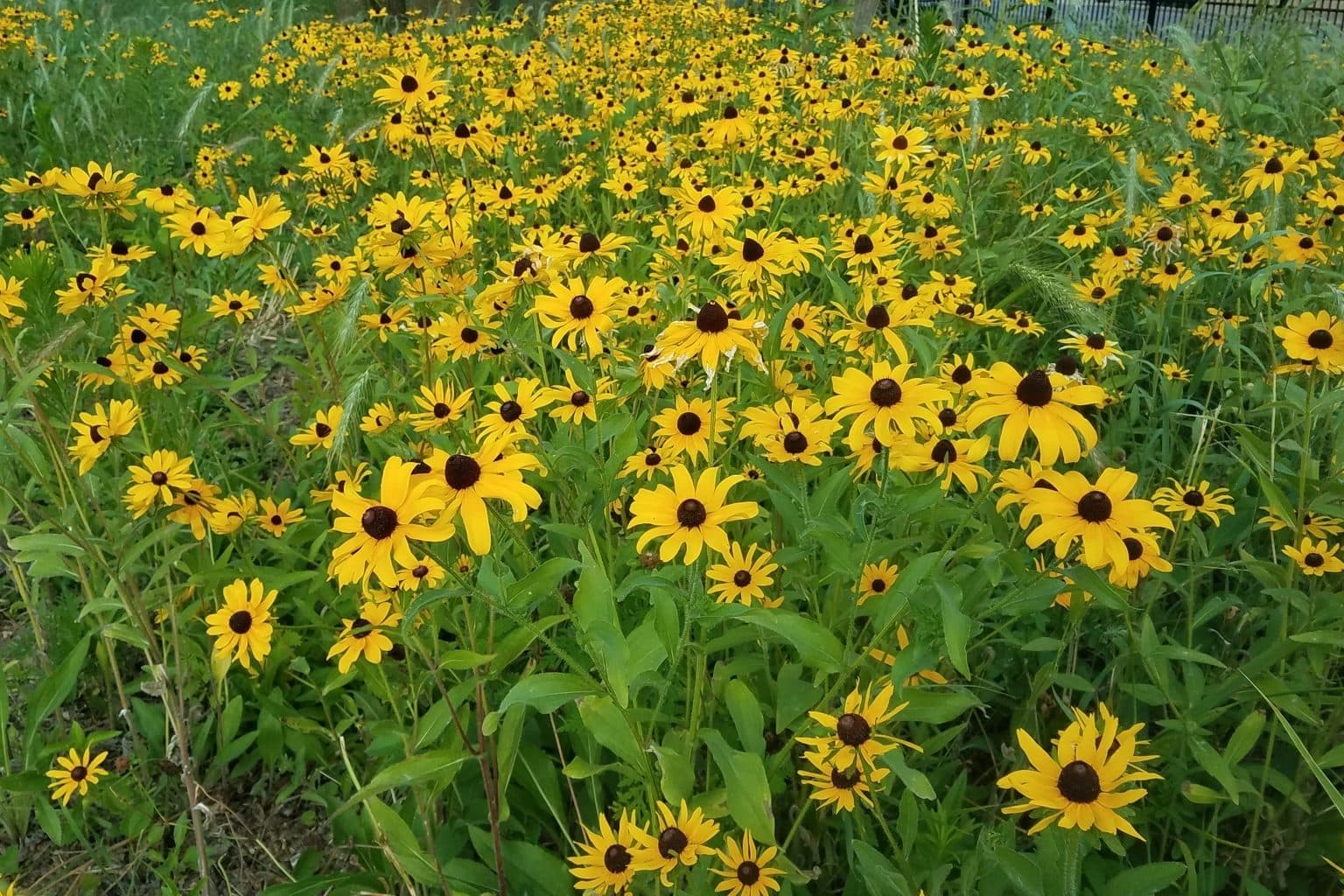
Quick answer: Leave black-eyed Susans standing through winter and cut them back in spring. Penn State Extension says several species of birds feast on the mature seeds and suggests saving the cleanup until spring, and the Xerces Society recommends leaving dead flower stalks intact over winter, then cutting them in spring with 8 to 24 inches of stubble for stem-nesting bees. Cut in fall only when the foliage is blackened by disease, which Purdue Extension names as the exception. In summer, deadheading keeps the flowers coming (Missouri Botanical Garden).
Key takeaways
- Birds eat the ripe seeds, so spent heads left standing are winter food (Penn State Extension, Lady Bird Johnson Wildflower Center).
- Xerces Society guidance is to leave dead flower stalks intact over winter and cut them in spring, leaving stubble of varying height, 8 to 24 inches, for stem-nesting bees (Xerces Society).
- Plants with disease troubles should be pruned back in fall, and Purdue Extension names rudbeckia with blackened foliage as an example (Purdue Extension).
- Deadhead spent flowers in summer to encourage more bloom or to prevent unwanted self-seeding (Missouri Botanical Garden).
- Rudbeckia hirta is an annual, biennial or short-lived perennial that stays in the garden by reseeding, while Rudbeckia fulgida is a perennial that spreads slowly by rhizomes (Missouri Botanical Garden).
When to cut back black-eyed Susans
The brown heads and stems you might want to cut in October do two jobs all winter. They feed birds, and they shelter insects.
Penn State Extension says it plainly: several species of birds will feast on the mature, nutritious seeds, and the cleanup can wait until spring (Penn State Extension). The Lady Bird Johnson Wildflower Center agrees that birds enjoy the ripe seeds of Rudbeckia hirta (Lady Bird Johnson Wildflower Center). So the default is simple. Deadhead in summer if you like, stop in late summer, leave the rest standing, and cut in spring.
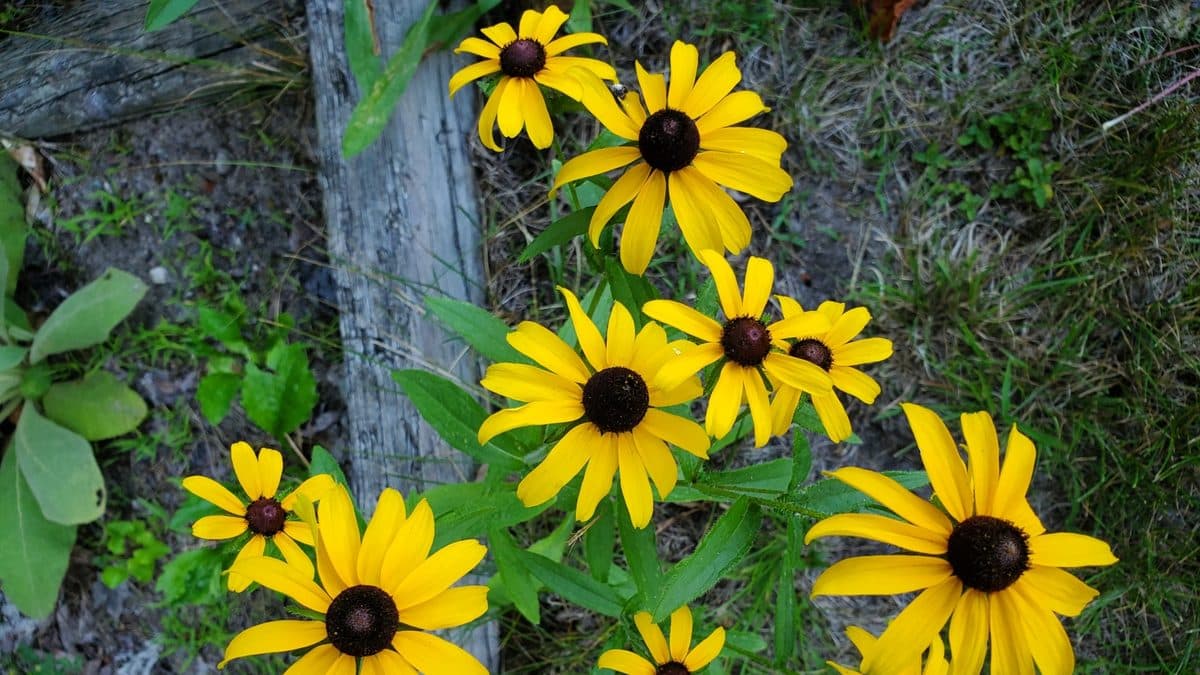
Your own region shifts the details. The regional care guide on our black-eyed Susan page gives a different line for each ecoregion. For the Central Corn Belt Plains (Chicago area) it says to cut only diseased stems in fall and clear the winter stems once new leaves show in spring. For the Driftless Area (Galena, Illinois) it says not to cut in fall at all. For the Edwards Plateau (San Antonio area) it allows cutting after dormancy, anywhere from late fall through early spring.
Deadheading black-eyed Susans in summer
Deadheading is the one cutting job that belongs in the growing season. Missouri Botanical Garden says to deadhead spent flowers on Rudbeckia hirta to encourage additional bloom, to prevent unwanted self-seeding, or both (Missouri Botanical Garden). It gives the same bloom advice for Rudbeckia fulgida (Missouri Botanical Garden).
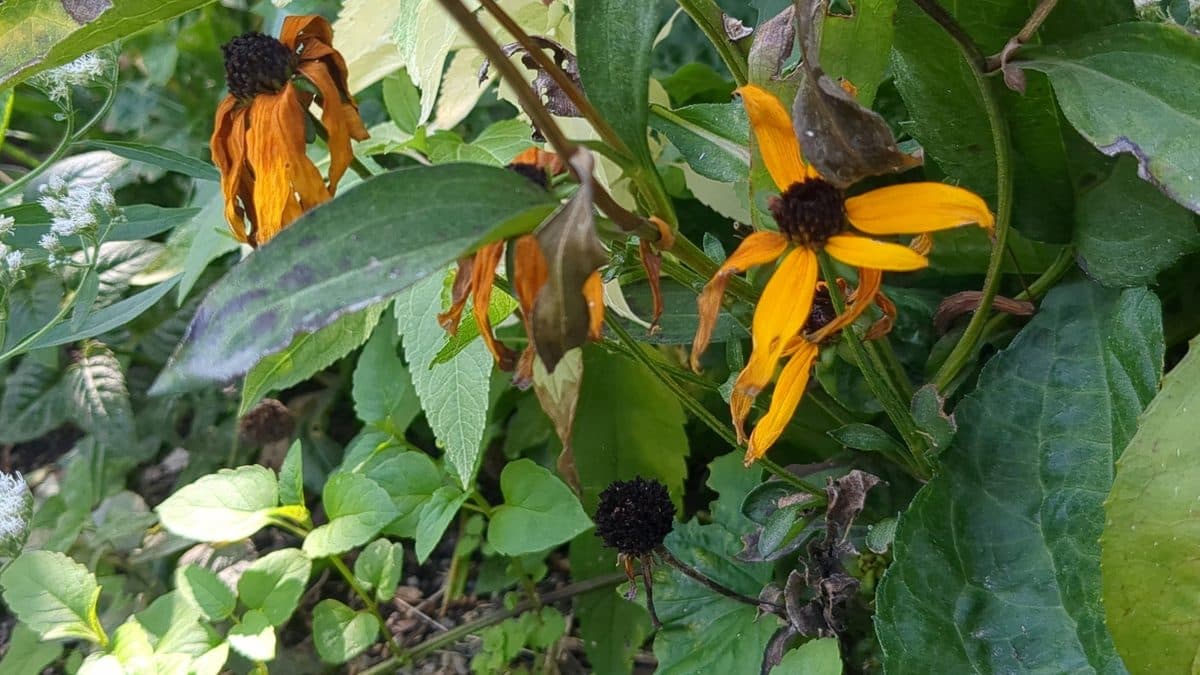
The catch is that deadheading and seed heads pull in opposite directions. Every head you cut in July is a head that will not feed a bird in January. A bed beside the front walk might get the full treatment through August and a back border none. Our regional guide suggests a split in several ecoregions, with regular summer deadheading and then letting the final flowers of the year set seed in fall. For the Edwards Plateau it says to snip spent blooms at the base in summer and leave a few late flowers to self-seed.
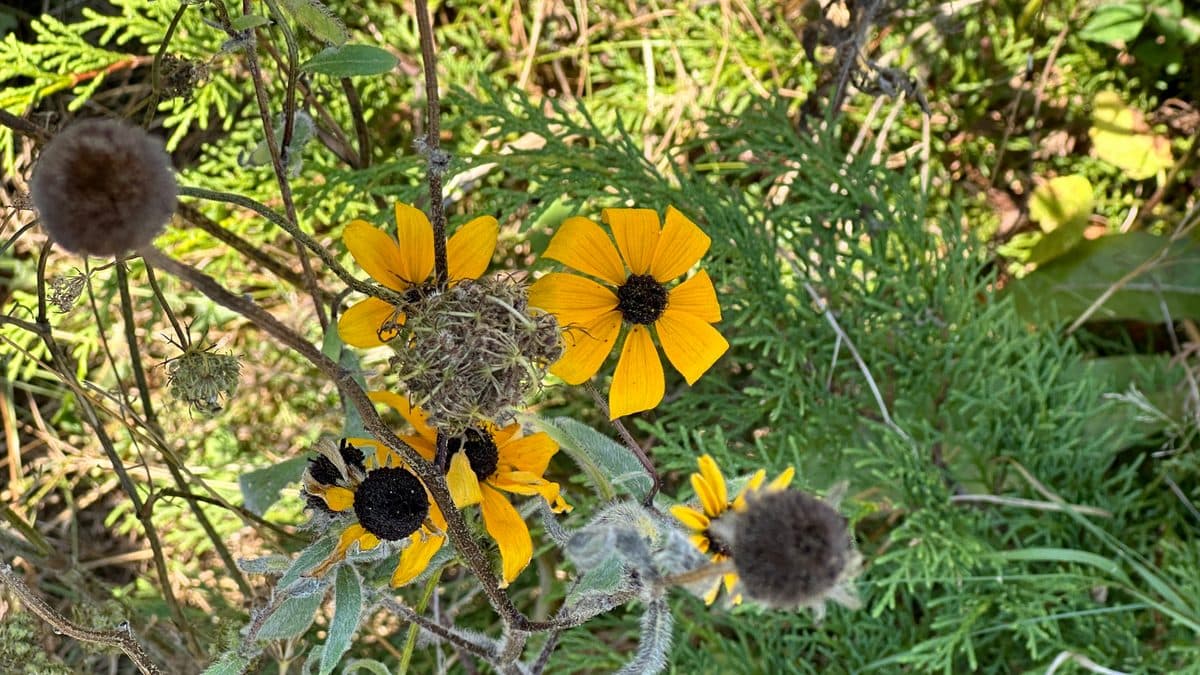
If the plants flop over before you ever get to the seed stage, that is a separate problem with its own causes. We cover it on the page for a plant that is tall, leggy and falling over.
Black-eyed Susan seed heads and the birds
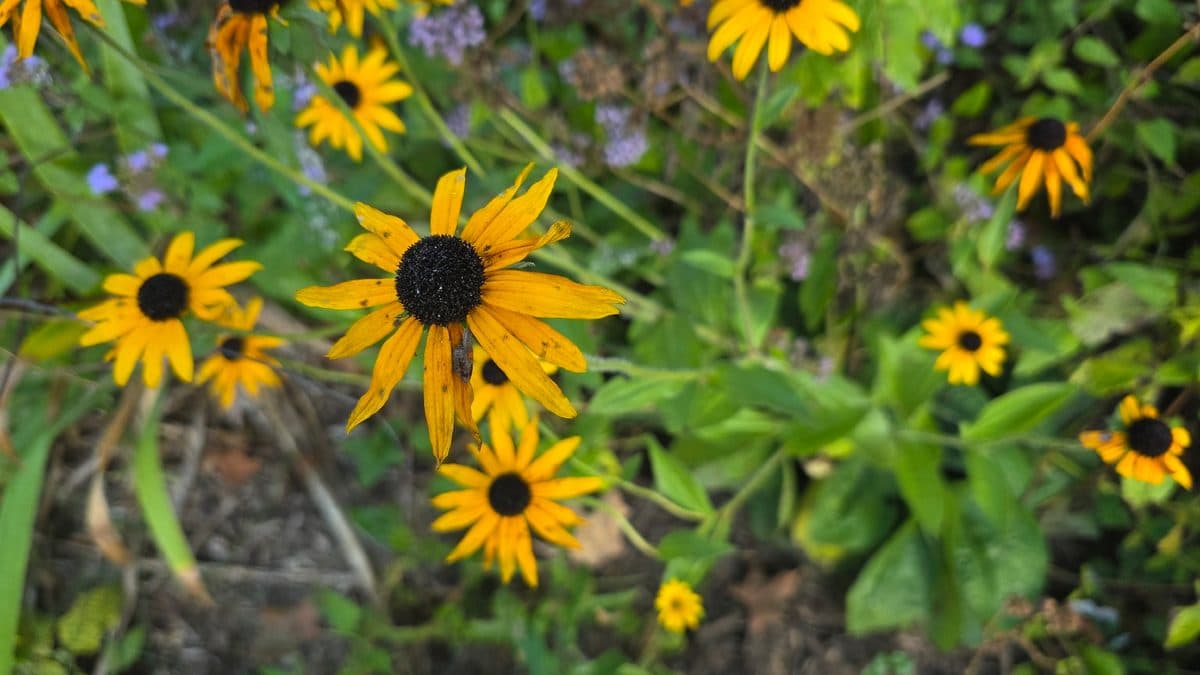
The seed head is the dark cone left after the petals drop. It dries to a brown, ridged knob on a stiff stem, and that is the bird feeder you did not have to buy.
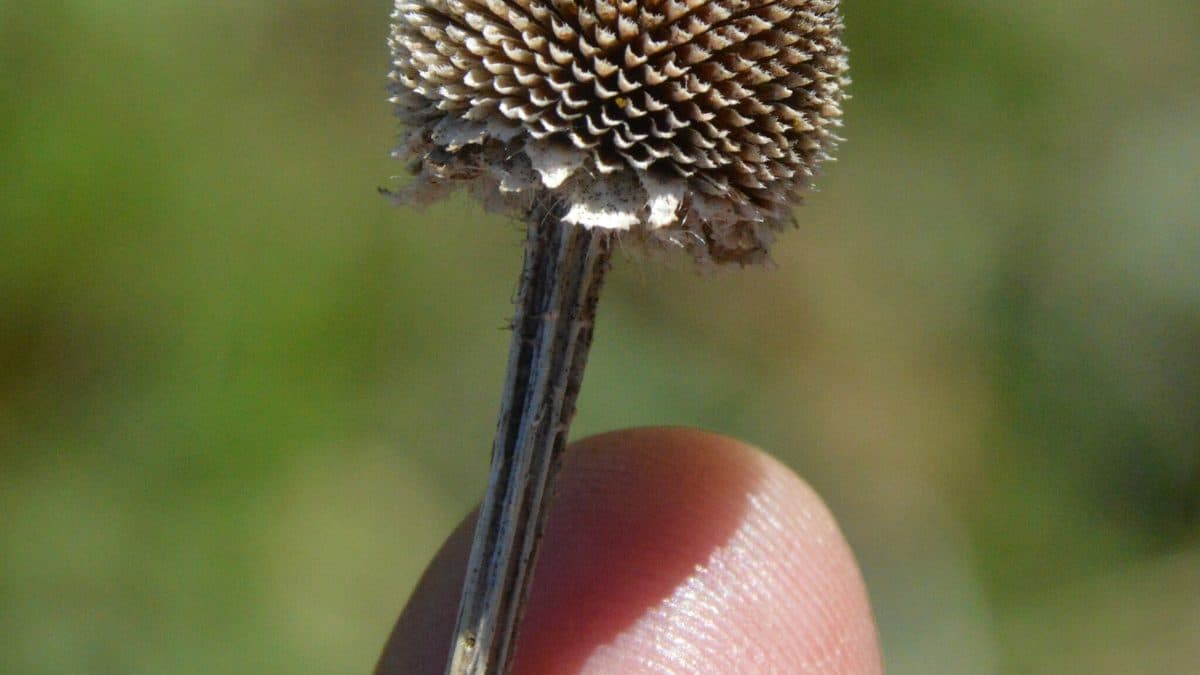
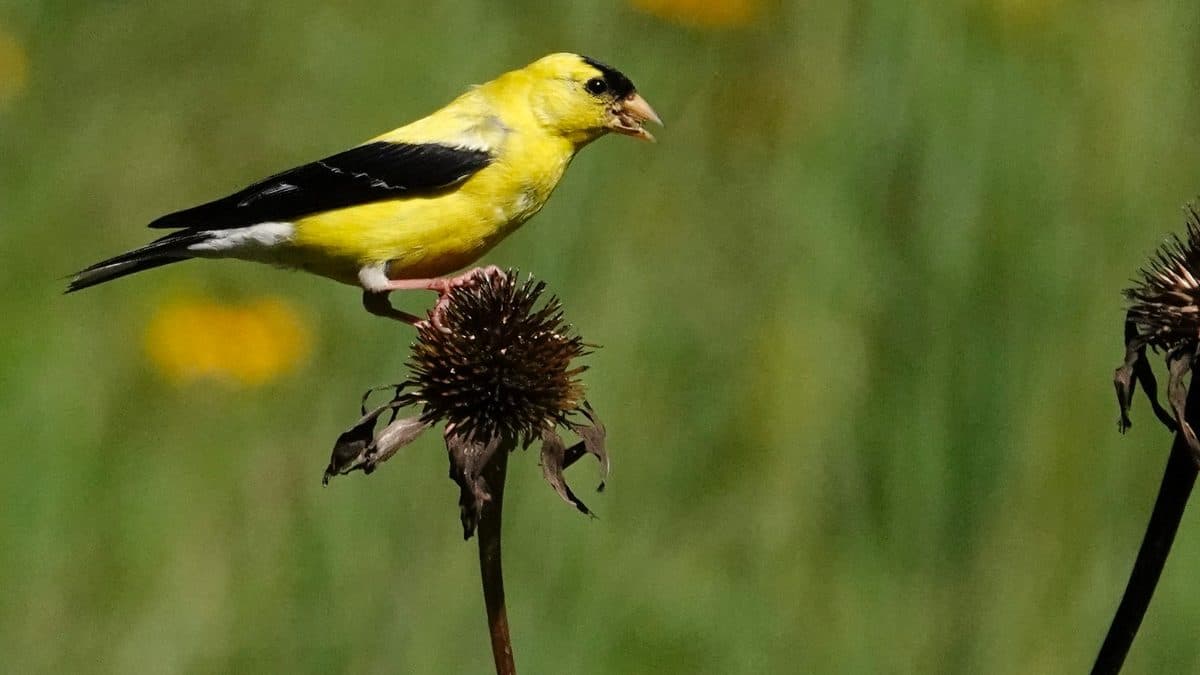
The Missouri Botanical Garden entry for Rudbeckia fulgida says birds eat the seeds (Missouri Botanical Garden), and the Lady Bird Johnson Wildflower Center lists birds as a visitor to both species (Lady Bird Johnson Wildflower Center). Our regional guide names goldfinches for the Boston Mountains (Fayetteville), the Interior River Valleys and Hills (Peoria) and the Lake Agassiz Plain (Fargo).
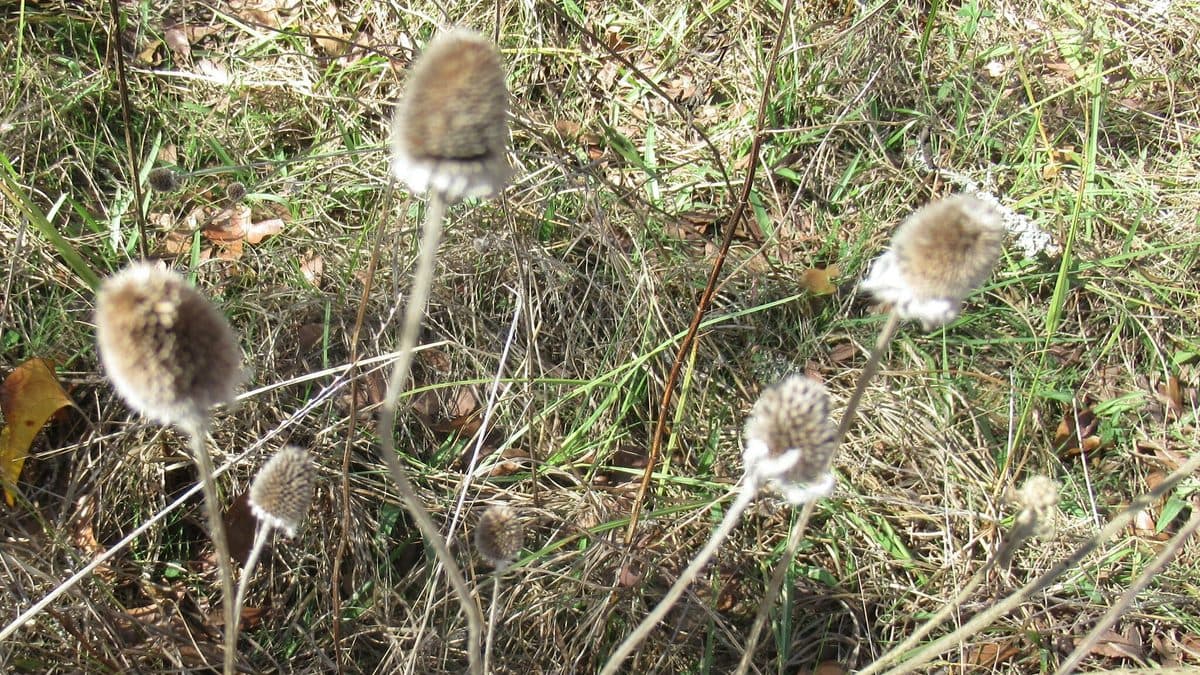
Seed heads also seed the plant itself. Missouri Botanical Garden notes that whether or not individual plants survive from one year to the next, Rudbeckia hirta freely self-seeds and will usually remain in the garden that way. Cut every head and you may find the bed thinner next summer.
Pets and the seed heads
Why spring: the stems matter too
Birds are the obvious reason to wait. The less obvious one is under the bark of last year's stems. The Xerces Society leaflet on stem-nesting bees describes a cycle that runs on dead flower stalks. Female bees find cut or naturally open stems, start a nest, and lay eggs on pollen balls. The larvae develop inside the stems through the growing season, the adults hibernate in them over winter, and they emerge in spring. Xerces says to leave dead flower stalks intact over the winter for this reason (Xerces Society).
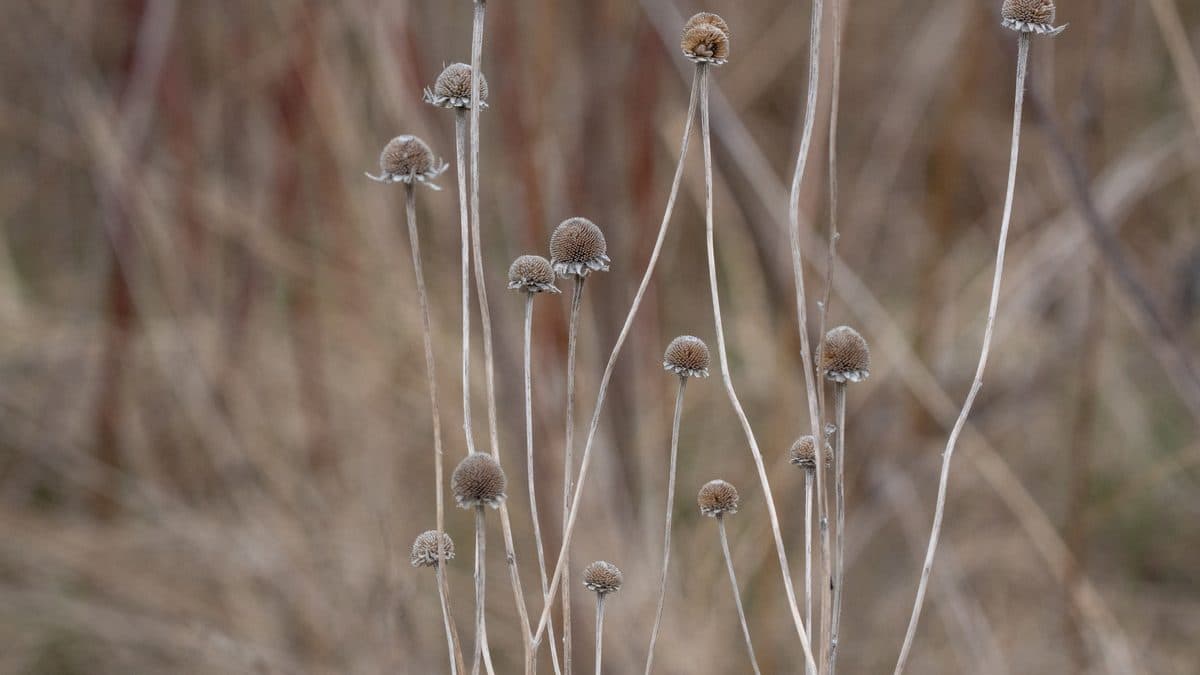
Purdue Extension makes the same case for perennials in general. Standing tops give winter food to birds, and many butterflies overwinter in plant debris (Purdue Extension). The same logic is why we send readers to leave the leaves in the bed instead of at the curb.
How to cut them back in spring
- Wait for new growth. Our regional guide for the Chicago area says to clear the winter stems once new leaves show in spring.
- Cut the dead stalks, not the new leaves. Keep the fresh basal foliage intact.
- Leave stubble of varying height. Xerces says to cut dead flower stalks leaving stem stubble of varying height, 8 to 24 inches, to provide nest cavities (Xerces Society). Cut some at 8 inches, some at 15, some at 24.
- Let the stubble disappear on its own. Xerces notes that new growth of the perennial hides the stubble and that old stubble naturally decomposes.
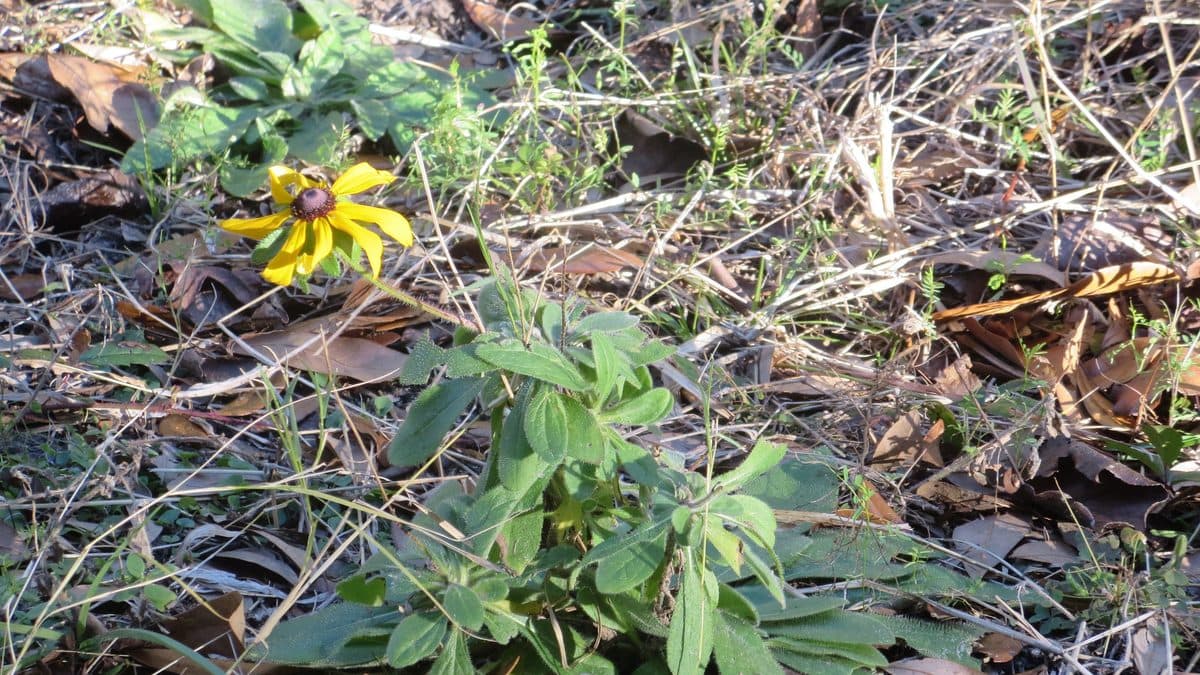
The 8 to 24 inch figure comes from a leaflet written for stem-nesting bees in general, not for rudbeckia alone, so treat it as a range rather than a rule. A black-eyed Susan that grew to 3 feet leaves a lot of stem to work with.
When to cut back in fall anyway
There are two good reasons to pick up the shears early. The first is disease. Purdue Extension says plants with disease or insect trouble should be pruned back in fall, and it names rudbeckia with blackened foliage as an example (Purdue Extension).
A common culprit is Septoria leaf spot. University of Illinois Extension describes dark brown spots that start about 1/8 inch across and merge into large brown areas, beginning on the lower leaves and moving up the plant. When conditions are dry, it says to remove fallen or badly infected foliage to reduce the fungus that carries over, to water the soil rather than the leaves, and to avoid overcrowding (University of Illinois Extension). The same page says these leaf spots are unsightly but do not kill plants, and it dates from 2005, so read it as background rather than the latest word. Penn State also says thinning plants and avoiding overhead watering may help, and that 'American Gold Rush' stands out for resisting Septoria (Penn State Extension). Missouri Botanical Garden lists powdery mildew as a possible problem on both species.
In practice, cut the blackened stems and leaves, bag them, and leave the healthy ones standing. Our regional guide says the same thing for the Eastern Corn Belt Plains (Columbus, Ohio) and the Interior Plateau (Cincinnati area). Cut only diseased stems in fall and clear the rest in spring.
The second reason is the street. For the Central Great Plains (Oklahoma City) our regional guide says to trim only the outer edge if HOA rules apply and to leave the rest of the stand up. That is an HOA-conscious way to keep a neat curb view and still keep seed for the birds.
Rudbeckia hirta or Rudbeckia fulgida
Two species share the name black-eyed Susan, and they do not behave the same way. Penn State notes that the flowers of both Rudbeckia fulgida and Rudbeckia hirta are commonly called black-eyed Susans (Penn State Extension).
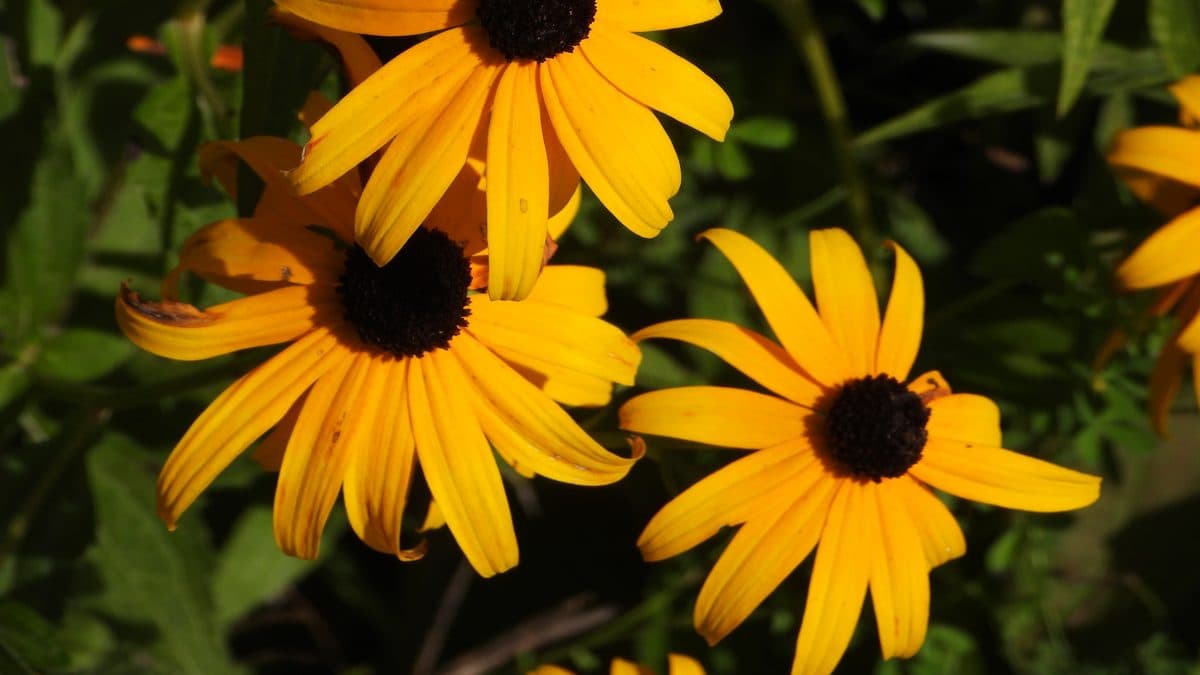
Rudbeckia hirta is the short-lived one. Missouri Botanical Garden calls it an annual, biennial or short-lived perennial, 1 to 3 feet tall, that blooms the first year from seed (Missouri Botanical Garden). The Lady Bird Johnson Wildflower Center puts its native range from western Massachusetts to Manitoba and Wyoming, south to Florida and New Mexico (Lady Bird Johnson Wildflower Center). Because it may not last, seed is its insurance, and you cut it back with that in mind.
Rudbeckia fulgida is the perennial. Missouri Botanical Garden describes it as rhizomatous and clump-forming, up to about 3 feet tall, slowly spreading by rhizomes (Missouri Botanical Garden). The Lady Bird Johnson Wildflower Center lists it as native from New Jersey to Indiana, south to Florida and eastern Texas (Lady Bird Johnson Wildflower Center). It comes back from the same crown each year, so you are not depending on seed for next summer. That gives you more room to cut it back harder in fall or deadhead freely, though the bird and bee reasons for waiting apply to it equally.
Where the app fits
Pollinator Patch has a black-eyed Susan page with a regional care guide for your ecoregion, so you can see whether your area cuts in late winter or waits for new leaves.
People also ask
Should I cut back black-eyed Susans in the fall?
Usually not. Penn State Extension says birds eat the mature seeds and suggests saving cleanup until spring, and the Xerces Society recommends leaving dead flower stalks intact over winter. Cut in fall only for stems and leaves blackened by disease (Purdue Extension).
Do black-eyed Susans need to be cut back?
Yes, once a year, in spring. Cut the dead stalks and leave the new basal leaves, and in summer deadhead spent flowers if you want more bloom or less self-seeding (Missouri Botanical Garden).
How far down do I cut black-eyed Susans in spring?
The Xerces Society says to leave stem stubble of varying height, 8 to 24 inches, to provide nest cavities for stem-nesting bees. New growth hides the stubble, and the old stems break down on their own.
Do black-eyed Susans come back every year?
It depends on the species. Rudbeckia fulgida is a perennial that spreads by rhizomes, while Rudbeckia hirta is an annual, biennial or short-lived perennial that freely self-seeds and usually stays in the garden that way (Missouri Botanical Garden).
Get freeze alerts for your own address
Enter your ZIP code and Pollinator Patch sends freeze alerts when your yard needs them, and shows regional care for the black-eyed Susans you already own. Care is free for every plant you own, native or not.