Pearl Crescent
Phyciodes tharos
Last reviewed: September 2026
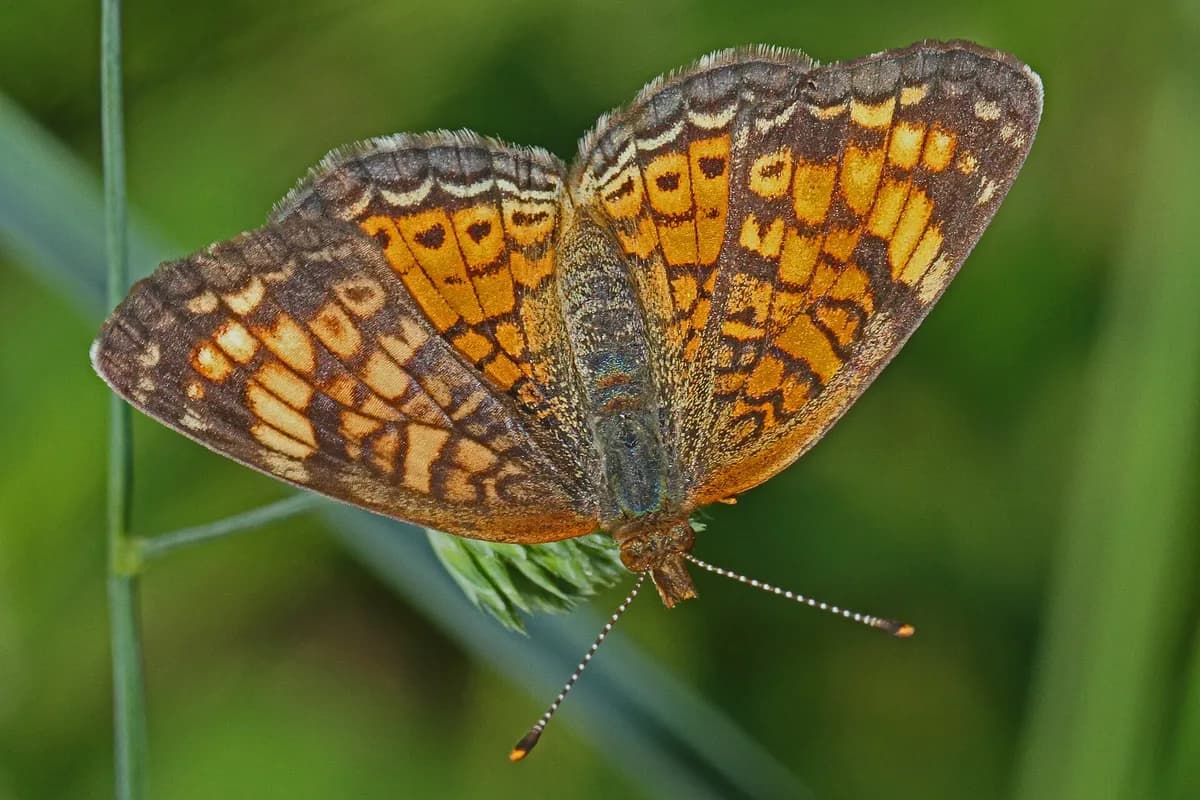
Pearl Crescent is known for its intricate black network pattern on bright orange wings.
Host plants
Pearl Crescent caterpillars can only develop on their larval host plants. Plant one of these natives and you can host the full life cycle in your own yard (host plant associations per the Xerces Society (opens in new tab)).
- Symphyotrichum — see Alkali Aster (same genus)
- Aster
- Aromatic Aster (Symphyotrichum oblongifolium)
- White Heath Aster (Symphyotrichum ericoides)
- Texas Aster (Symphyotrichum drummondii var. texanum)
- Michaelmas Daisy (Symphyotrichum lanceolatum)
- Calico Aster (Symphyotrichum lateriflorum)
- Late Purple Aster (Symphyotrichum patens)
- Tall Aster (Symphyotrichum praealtum)
- Barrens Silky Aster (Symphyotrichum pratense)
- Small White Aster (Symphyotrichum racemosum)
Want Pearl Crescent in your yard? Open Aromatic Aster in Pollinator Patch and plan an HOA-friendly garden around it for your region.
Family
Nymphalidae
Wingspan
25–35 mm
Active
April through September
Range
TX, AL, AR, CT and 38 more states
How to identify it
Look for small orange butterflies with distinctive black network patterns across their wings, especially near flowering asters.
Good to know
- Males perch on low vegetation to watch for females during mating season
- Caterpillars are black with white or yellow spines
- Highly adaptable butterfly found across many North American habitats
Common questions
- What do Pearl Crescent caterpillars eat?
- Pearl Crescent caterpillars feed on Symphyotrichum, Aster, Symphyotrichum oblongifolium, Symphyotrichum ericoides, Symphyotrichum drummondii var. texanum, Symphyotrichum lanceolatum, Symphyotrichum lateriflorum, Symphyotrichum patens, Symphyotrichum praealtum, Symphyotrichum pratense, and Symphyotrichum racemosum. These are the larval host plants the caterpillars must have to develop, per the Xerces Society and host plant records compiled from GBIF and iNaturalist.
- Where do Pearl Crescent live?
- Pearl Crescent is found across TX, AL, AR, CT and 38 more states.
- When are Pearl Crescent active?
- Adult Pearl Crescent are typically on the wing from April through September.
Range and life-history data compiled from iNaturalist, GBIF, and the Xerces Society. Photo licensed cc-by.