Calico Aster
Symphyotrichum lateriflorum
Last reviewed: August 2026
Calico aster is a fall-blooming forb that produces small white flowers with reddish centers from September through November. It grows well in full sun with medium moisture in fields, meadows, and woodland edges across the eastern and central United States.
Toxicity unknown
Calico Aster (Symphyotrichum lateriflorum) is not listed by the ASPCA Animal Poison Control Center (opens in new tab) or the other sources we check, so we have no verdict for it either way. Absence from those lists is not a clearance. If your pet shows symptoms after eating any plant, call the ASPCA at (888) 426-4435.
The USDA PLANTS Database (opens in new tab) does not flag Calico Aster as toxic to livestock.
Light
full sun
Water
medium
Size
48"–60" H × 48"–48" W
Bloom
Sep, Oct, Nov
Native to
AL, AR, CT, DE and 32 more states
Pollinators
butterflies, bees
Before you buy
Your city may pay you to plant this
Cities and water utilities offer rebates for replacing lawn with native and water-wise plants. We track 452 programs across 44 states, each with a link to the provider and the date we last checked it.
Find rebates in your areaBrowse plants for this ecoregion
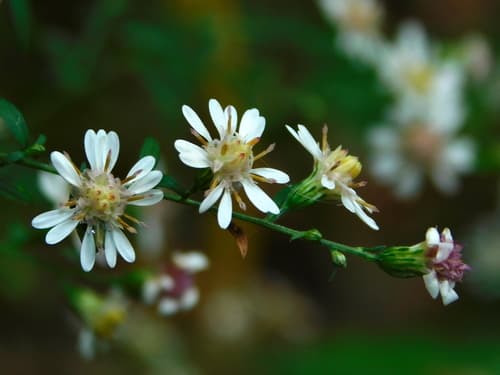
Calico Aster is a tall native perennial that produces masses of small white flowers with yellow centers from September through November. The flowers age to pink or purple, creating a charming multicolored display that gives this plant its common name.
Growing Calico Aster
Grow Calico Aster in full sun and medium water. Mature plants reach 48 to 60 inches tall and spread 48 to 48 inches wide. Expect low maintenance to keep it looking intentional in a front yard.
How to care for Calico Aster, by region
How to care for Calico Aster where it is actually grown: year-round basics plus what to do each season, region by region, with the sources for each.
Care guidance last updated: July 2026
Cross Timbers (includes Fort Worth, TX)
Year-round
Calico aster is a native Texas wildflower that grows into a tall, airy clump covered in tiny white daisy-like flowers in fall. It is easy to grow and mostly hands off once it is established.
- Give it full sun and space plants about 18 to 24 inches apart; it grows 4 to 5 feet tall and roughly as wide by bloom time.
- Water deeply once or twice a week through the first growing season while roots are getting established.
- Once established, it only needs supplemental water during extended dry stretches.
- The stems can lean or flop under their own weight by late summer, so plan for staking, a peony ring, or nearby plants to lean on.
- It spreads slowly by both seed and shallow rhizomes, so give it room or plan to divide the clump every few years if it starts crowding neighbors.
Fall
Fall is calico aster's show. From September through November the plant is covered in hundreds of small white flowers with reddish purple centers, drawing bees and butterflies right before frost.
- Peak bloom runs September into November; flowers age from white to a pinkish purple as they mature, so the plant can look two toned on a single stem.
- No deadheading needed. Spent flowers dry in place and feed birds through winter.
- If stems are leaning into a walkway or sidewalk, tie or stake them rather than cutting them back this late in the season, since cutting now removes the bloom.
- This is one of the last nectar sources of the year for bees and migrating butterflies in North Texas, so it is doing real pollinator work right when most other flowers are done.
- Watch for a flush of new seedlings around the base in late fall if the clump has been blooming for a couple of years; thin them out in late winter if you do not want the patch to expand.
A blooming clump can look wild from a distance because of the sheer number of tiny flowers. Keeping a mowed edge or low border around the base signals the planting is intentional rather than an unmanaged weed patch.
Winter
North Texas winters are mild enough that calico aster does not need protection, but the dead stems from last season's bloom need to come down before spring growth starts.
- Leave the dried stems and seed heads standing through December and January. They hold seed for birds and give overwintering beneficial insects a place to shelter.
- Cut the whole clump back to 4 to 6 inches sometime in mid to late February, before new growth starts.
- A short hard freeze will not hurt an established plant; if a severe Arctic outbreak is forecast, a layer of mulch over the crown offers extra insurance for a plant in its first winter.
- This is a good window to divide an overgrown clump: dig it up while dormant and split it into 2 or 3 sections before replanting.
A cut-back, tidy stub of a clump reads as deliberate winter maintenance rather than a dead or neglected plant, worth doing before it draws a complaint.
Spring
Spring is the best time to get calico aster in the ground so it has a full season to root in before summer heat arrives.
- Plant any time from mid March through May once the last frost has passed.
- In heavy black clay soil, plant a little high, on a slight mound, or work in compost first so the roots do not sit in standing water; in the sandier soils west of the metro, water more often through the first summer since it drains faster.
- New growth stays low and leafy in spring, just a mounded clump of green leaves with no flowers yet.
- Water two to three times a week for the first month after planting to help roots establish, then taper off as growth picks up.
- Skip fertilizer. A 2 inch layer of mulch around the base holds moisture and keeps weeds down.
A young spring clump reads as a tidy, deliberate perennial planting, not an overgrown patch, especially if it is mulched and edged.
Summer
Summer is the hard season for a newly planted calico aster. The plant itself handles heat fine once rooted in, but the June through August stretch of 100 degree afternoons is when an unestablished plant is most likely to die.
- Pinch or cut the stems back by about half in late May to early June. This keeps the plant shorter and bushier and cuts down on late summer flopping.
- Water deeply once a week if there has been no rain for more than 7 to 10 days, especially for anything planted within the last year.
- Watch for powdery mildew, a gray white coating on the leaves, during humid stretches; thin crowded stems or increase airflow around the plant if it shows up.
- Do not fertilize. Extra nitrogen in the heat pushes weak, floppy growth.
- By late August you should start seeing flower buds forming at the branch tips ahead of the fall bloom.
Sources: Lady Bird Johnson Wildflower Center - Symphyotrichum lateriflorum, Missouri Botanical Garden Plant Finder - Symphyotrichum lateriflorum
Texas Blackland Prairies (includes Dallas, TX)
Year-round
Calico aster is a native Texas wildflower that grows into a tall, airy clump covered in tiny white daisy-like flowers in fall. It is easy to grow and mostly hands off once it is established.
- Give it full sun and space plants about 18 to 24 inches apart; it grows 4 to 5 feet tall and roughly as wide by bloom time.
- Water deeply once or twice a week through the first growing season while roots are getting established.
- Once established, it only needs supplemental water during extended dry stretches.
- The stems can lean or flop under their own weight by late summer, so plan for staking, a peony ring, or nearby plants to lean on.
- It spreads slowly by both seed and shallow rhizomes, so give it room or plan to divide the clump every few years if it starts crowding neighbors.
Fall
Fall is calico aster's show. From September through November the plant is covered in hundreds of small white flowers with reddish purple centers, drawing bees and butterflies right before frost.
- Peak bloom runs September into November; flowers age from white to a pinkish purple as they mature, so the plant can look two toned on a single stem.
- No deadheading needed. Spent flowers dry in place and feed birds through winter.
- If stems are leaning into a walkway or sidewalk, tie or stake them rather than cutting them back this late in the season, since cutting now removes the bloom.
- This is one of the last nectar sources of the year for bees and migrating butterflies in North Texas, so it is doing real pollinator work right when most other flowers are done.
- Watch for a flush of new seedlings around the base in late fall if the clump has been blooming for a couple of years; thin them out in late winter if you do not want the patch to expand.
A blooming clump can look wild from a distance because of the sheer number of tiny flowers. Keeping a mowed edge or low border around the base signals the planting is intentional rather than an unmanaged weed patch.
Winter
North Texas winters are mild enough that calico aster does not need protection, but the dead stems from last season's bloom need to come down before spring growth starts.
- Leave the dried stems and seed heads standing through December and January. They hold seed for birds and give overwintering beneficial insects a place to shelter.
- Cut the whole clump back to 4 to 6 inches sometime in mid to late February, before new growth starts.
- A short hard freeze will not hurt an established plant; if a severe Arctic outbreak is forecast, a layer of mulch over the crown offers extra insurance for a plant in its first winter.
- This is a good window to divide an overgrown clump: dig it up while dormant and split it into 2 or 3 sections before replanting.
A cut-back, tidy stub of a clump reads as deliberate winter maintenance rather than a dead or neglected plant, worth doing before it draws a complaint.
Spring
Spring is the best time to get calico aster in the ground so it has a full season to root in before summer heat arrives.
- Plant any time from mid March through May once the last frost has passed.
- In heavy black clay soil, plant a little high, on a slight mound, or work in compost first so the roots do not sit in standing water; in the sandier soils west of the metro, water more often through the first summer since it drains faster.
- New growth stays low and leafy in spring, just a mounded clump of green leaves with no flowers yet.
- Water two to three times a week for the first month after planting to help roots establish, then taper off as growth picks up.
- Skip fertilizer. A 2 inch layer of mulch around the base holds moisture and keeps weeds down.
A young spring clump reads as a tidy, deliberate perennial planting, not an overgrown patch, especially if it is mulched and edged.
Summer
Summer is the hard season for a newly planted calico aster. The plant itself handles heat fine once rooted in, but the June through August stretch of 100 degree afternoons is when an unestablished plant is most likely to die.
- Pinch or cut the stems back by about half in late May to early June. This keeps the plant shorter and bushier and cuts down on late summer flopping.
- Water deeply once a week if there has been no rain for more than 7 to 10 days, especially for anything planted within the last year.
- Watch for powdery mildew, a gray white coating on the leaves, during humid stretches; thin crowded stems or increase airflow around the plant if it shows up.
- Do not fertilize. Extra nitrogen in the heat pushes weak, floppy growth.
- By late August you should start seeing flower buds forming at the branch tips ahead of the fall bloom.
Sources: Lady Bird Johnson Wildflower Center - Symphyotrichum lateriflorum, Missouri Botanical Garden Plant Finder - Symphyotrichum lateriflorum
Want these tasks as reminders timed to your yard? Pollinator Patch turns this guidance into a season-by-season care plan for the plants you actually grow.
In an HOA neighborhood
Calico Aster is an HOA-friendly choice. Maintenance level: low. Tidiness: 2 out of 5.
Works well in: mid zone, backyard only.
- May flop without support
- Best in less formal zones
Wildlife value
Host plant for pearl crescent butterfly.
This aster is exceptional for late-season pollinators, providing crucial nectar for butterflies and bees when few other flowers are blooming. It also produces seeds that feed birds and serves as a host plant for several butterfly species.
Common questions
- When does calico aster bloom?
- Calico aster blooms in late summer into fall, typically from September through November, with small white ray flowers that often have reddish or purplish centers.
- What light and water conditions does calico aster need?
- It grows best in full sun to part shade and prefers medium soil moisture, though it can tolerate somewhat wetter or drier spots once established.
- Is calico aster good for pollinators?
- Yes. Its late-season flowers provide nectar and pollen for butterflies and bees when many other plants have already finished blooming.
- What kind of plant is calico aster?
- It is a deciduous herbaceous forb, or wildflower, that dies back to the ground each year and regrows from its base in spring.
- Where does calico aster typically grow in the landscape?
- It is commonly found in open woods, thickets, meadows, and along roadsides or streambanks, often in partial shade to full sun conditions.
- Is Calico Aster toxic to livestock?
- The USDA PLANTS Database does not flag Calico Aster as toxic to livestock.
- Is Calico Aster HOA-friendly?
- Calico Aster is generally an HOA-friendly choice in the right placement, with low maintenance.
These answers were drafted with an AI model from this plant's data. Verify care details with a local expert.
Native range data from vouchered herbarium specimen records and regional native plant society lists. Pollinator and host plant associations compiled from GBIF, iNaturalist, and published ecological literature.
If something looks wrong
Common plant problems, and what to check first
These come up on almost any plant. Each guide lists the likely causes in the order they are worth ruling out, with one thing to check before you act on any of them, and links to the source it came from.
- It is dying right after planting
- Leaves turning yellow
- Wilting even though I watered it
- Brown crispy leaf tips
- Bugs on the plant
Ready to grow Calico Aster? Add it to your garden in Pollinator Patch to track it and get season-by-season care guidance.
Planning a bed around it? Start a free plan with this plant
Not sure where to start? Take the 2-minute yard quiz