Black Sage
Salvia mellifera
Last reviewed: September 2026
Salvia mellifera is an aromatic evergreen shrub common in California coastal sage scrub and chaparral, blooming from April through July with pale lavender to white flowers. It thrives in full sun with low water once established.
Black Sage (Salvia mellifera) is not flagged as toxic to dogs or cats by Plants For A Future (PFAF) (opens in new tab) (last reviewed 2026-05-21). This verdict does not come from the ASPCA. If your pet shows symptoms after eating any plant, call the ASPCA at (888) 426-4435.
Light
full sun
Water
low
Size
24"–60" H × 36"–72" W
Bloom
Apr, May, Jun, Jul
Native to
CA
Pollinators
bees, hummingbirds, butterflies
Before you buy
Your city may pay you to plant this
Cities and water utilities offer rebates for replacing lawn with native and water-wise plants. We track 459 programs across 44 states, each with a link to the provider and the date we last checked it.
Find rebates in your areaPicture natives in your own yard
Upload a photo of your yard and Patch Vision shows a rendering of it planted with natives for your region, like Black Sage.


Browse plants for this ecoregion
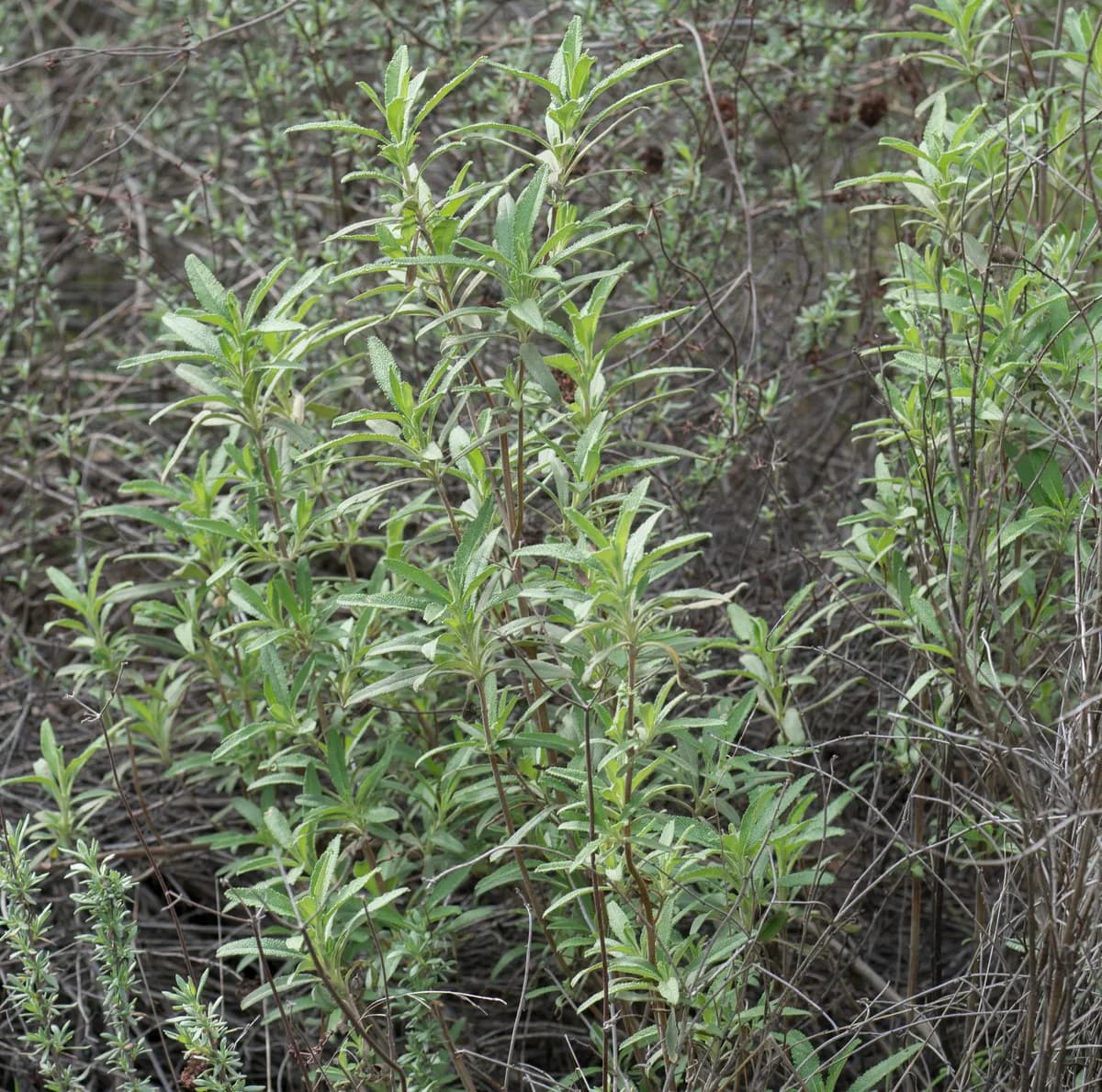
Black sage is an aromatic native shrub with dark green, wrinkled leaves and whorls of small white to pale lavender flowers on tall stalks. It grows in a rounded form, becoming woodier with age, and offers excellent drought tolerance once established.
Growing Black Sage
Grow Black Sage in full sun and low water. Mature plants reach 24 to 60 inches tall and spread 36 to 72 inches wide. Expect moderate maintenance to keep it looking intentional in a front yard.
How to care for Black Sage, by region
How to care for Black Sage where it is actually grown: year-round basics plus what to do each season, region by region, with the sources for each.
Care guidance last updated: August 2026
Southern California/Northern Baja Coast (includes Los Angeles, CA)
Year-round
Black sage is an easy, low water evergreen shrub for Los Angeles yards. It wants full sun, fast draining soil, and very little irrigation once established, and it is not on the ASPCA toxic plant list for dogs or cats.
- Give it full sun and well drained soil. Black sage is native to the coastal sage scrub and chaparral hills around Los Angeles, including the Santa Monica and San Gabriel foothills.
- Water deeply through the first year to establish roots, then taper off. Established plants need little to no supplemental water, and curled leaves in a dry summer are a normal response, not a sign of trouble.
- Expect a rounded, mounding shrub 3 to 6 feet tall and up to 10 feet wide at maturity, usually reached within about 5 years.
- The ASPCA's sage entry names the related culinary sage, Salvia officinalis, not Salvia mellifera specifically, and lists it as not on the ASPCA toxic plant list for dogs, cats, or horses. There is no ASPCA page naming black sage by species.
Fall
Fall is prime planting and shaping season for black sage in Los Angeles, once the worst heat breaks and rain is on its way back.
- This is a good time to plant new black sage, giving roots the cool, damp winter ahead to establish before next summer's heat.
- Do a light structural prune now. Remove dead or leggy stems and shape the mound. Black sage resprouts readily from its base after cutting, so a moderate cutback is well tolerated.
- Watch for dry Santa Ana wind spells. Even a drought tough plant like this one benefits from one deep watering if a long dry, windy stretch hits before the rains return.
A fall shape up keeps the mound rounded and tidy heading into winter, which reads as deliberate landscaping rather than an overgrown corner.
Winter
Winter is the rainy season in Los Angeles, and black sage's evergreen form holds structure in the garden while the plant mostly needs to be left alone.
- Let winter rain supply the water. Skip supplemental irrigation unless the season runs unusually dry, heavy soil can hold water long enough to rot roots on top of rainfall.
- Los Angeles's mild coastal and valley climate rarely brings hard frost, so winter protection is not typically needed. Cooler inland pockets that do see occasional light frost can leave any frost nipped tips in place until spring growth resumes.
- The dark green foliage stays through winter, so this is a light maintenance season, mainly a quick check for storm damaged branches after heavy rain.
Spring
Spring is black sage's bloom season in Los Angeles. Whorls of pale lavender flowers appear on tall stalks as the rainy season tapers off, drawing bees and hummingbirds.
- Let late season rain do the watering. Skip extra irrigation while spring rain is still falling, this plant does poorly in soggy soil.
- Skip fertilizer. Black sage is adapted to lean soil, and rich feeding can make it leggy and shorten its life.
- Once bloom fades, trim off the spent flower stalks to keep the plant tidy and encourage a fuller shape next season.
Trimming the tall spent flower stalks after bloom reads as intentional upkeep and keeps the front bed looking tended instead of gone to seed.
Summer
Summer in the Los Angeles basin is hot and dry, and that is exactly the stress black sage evolved for. The main job this season is restraint, not intervention.
- Water sparingly if at all. Established plants are built for little or no summer moisture, and overwatering in heat is the fastest way to lose one to root rot.
- Curled, dull looking leaves in July and August are a normal drought response, not a sign the plant needs water.
- Hold off on any hard pruning during the hottest stretch of the year. Cutting into stressed summer growth slows recovery more than pruning at a cooler time would.
Sources: Calscape (CNPS): Salvia mellifera (Black Sage), ASPCA Toxic and Non-Toxic Plants: Sage, USDA Forest Service FEIS Species Review: Salvia mellifera
In an HOA neighborhood
Black Sage is an HOA-friendly choice in the right placement. Maintenance level: moderate. Tidiness: 3 out of 5.
Works well in: mid zone, street edge.
- Can look somewhat rangy or untidy if not occasionally pruned
- May appear dormant/stressed during extreme drought
- Woody structure becomes more visible with age
Wildlife value
Black sage is highly attractive to native bees, honeybees, butterflies, and hummingbirds. Its nectar is an important food source for pollinators from spring through summer.
Common questions
- When does black sage bloom?
- Black sage typically flowers from April through July, with clusters of small pale lavender to white blossoms held above the foliage.
- How much water does black sage need?
- Once established, black sage needs very little supplemental water and does best in well drained soil that dries out between waterings. Overwatering in summer can cause root problems.
- What pollinators visit black sage flowers?
- Black sage is a strong nectar source for bees, hummingbirds, and butterflies, and it is often included in habitat gardens planted to support pollinator activity.
- What kind of light does black sage prefer?
- This shrub grows best in full sun but can tolerate part sun locations, especially in hotter inland climates where some afternoon shade reduces stress.
- Is black sage evergreen?
- Yes, black sage keeps its gray green, strongly scented leaves year round, though older leaves may drop during extended dry periods.
- Is Black Sage toxic to dogs?
- Black Sage is not flagged as toxic to dogs by Plants For A Future (PFAF). This verdict does not come from the ASPCA.
- Is Black Sage toxic to cats?
- Black Sage is not flagged as toxic to cats by Plants For A Future (PFAF). This verdict does not come from the ASPCA.
- Is Black Sage HOA-friendly?
- Black Sage is generally an HOA-friendly choice in the right placement, with moderate maintenance.
These answers were drafted with an AI model from this plant's data. Verify care details with a local expert.
Native range data from vouchered herbarium specimen records and regional native plant society lists. Pollinator and host plant associations compiled from GBIF, iNaturalist, and published ecological literature.
If something looks wrong
Common plant problems, and what to check first
These come up on almost any plant. Each guide lists the likely causes in the order they are worth ruling out, with one thing to check before you act on any of them, and links to the source it came from.
- It is dying right after planting
- Leaves turning yellow
- Wilting even though I watered it
- Brown crispy leaf tips
- Bugs on the plant
Ready to grow Black Sage? Add it to your garden in Pollinator Patch to track it and get season-by-season care guidance.