Blue Dicks
Dichelostemma capitatum
Last reviewed: September 2026
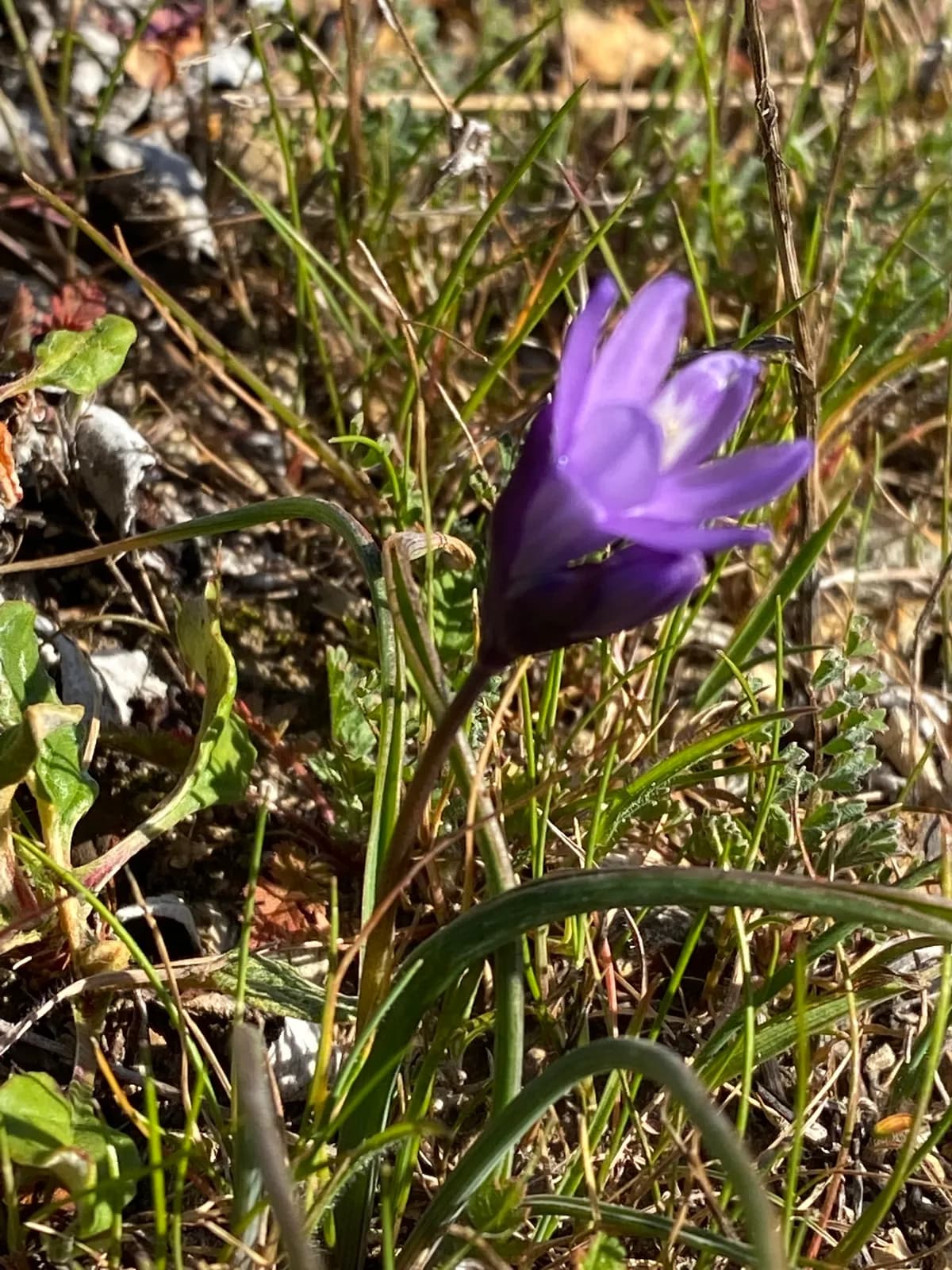
Blue Dicks (Dichelostemma capitatum) is not on the ASPCA Animal Poison Control Center toxic plant list for dogs or cats (aspca.org (opens in new tab), last reviewed 2026-05-21). If your pet shows symptoms after eating any plant, call the ASPCA at (888) 426-4435.
Light
full sun
Water
low
Size
6"–24" H × 4"–12" W
Bloom
Apr, May, Jun
Native to
AZ, CA, NM, NV and 2 more states
Pollinators
bees, butterflies
Before you buy
Your city may pay you to plant this
Cities and water utilities offer rebates for replacing lawn with native and water-wise plants. We track 459 programs across 44 states, each with a link to the provider and the date we last checked it.
Find rebates in your areaPicture natives in your own yard
Upload a photo of your yard and Patch Vision shows a rendering of it planted with natives for your region, like Blue Dicks.


Browse plants for this ecoregion
Dichelostemma capitatum, commonly known as Blue Dicks or Wild Hyacinth, produces clusters of purple-blue flowers atop slender stems in spring. This native bulb grows 6-24 inches tall and goes dormant in summer after blooming.
How to care for Blue Dicks, by region
How to care for Blue Dicks where it is actually grown: year-round basics plus what to do each season, region by region, with the sources for each.
Care guidance last updated: July 2026
Southern California/Northern Baja Coast (includes Los Angeles, CA)
Year-round
Blue Dicks is an easy, low-water native corm for the Los Angeles coast that greens up with the winter rains, blooms in spring, and then rests dry underground all summer.
- Give it full sun and fast-draining soil, and keep it on low water
- Do not water it in summer, the corm rests dry and summer water rots it
- Plant it in groups among plants that stay interesting in summer so the bare gaps do not show
- Leave the dormant corms alone, do not dig, till, or overplant the spot once the leaves die back
- It is a nectar source for bees and butterflies in spring
Fall
Fall after the first rains is the prime time to plant new corms so they root over the cool wet winter.
- Plant corms in October or November, a few inches deep in full sun and fast-draining soil
- Set them in groups for a fuller spring show
- Give one gentle watering after planting if the rains have not started, then let nature take over
- Do not overwater, the corms just need the soil to stay lightly moist from the rains
- Skip fertilizer, they do not need it
Winter
Winter is the growing season on the LA coast, so the green leaves come up with the rains and mostly take care of themselves.
- Expect fresh grassy leaves to appear as the winter rains arrive
- Let the rain do the watering, only add water in a rare dry stretch
- Pull any weeds crowding the new shoots by hand so you do not disturb the corm
- Do not fertilize or mulch heavily over the crowns
- Watch for the flower stalks to start forming toward late winter
Spring
Spring is bloom time, so enjoy the flowers and hold back on extra water since the winter rains have usually done the job.
- Let it flower April through June, this is its show
- Water only if the winter and spring rains were unusually light, otherwise leave it dry
- Do not fertilize, these natives bloom fine in lean soil
- Leave the flower stalks up if you want it to self-sow more corms
- Enjoy the bees and butterflies that come for the spring nectar
Summer
After the spring flowers fade the leaves yellow and die back, and the corm goes fully dormant, so the main summer job is to leave it dry and undisturbed.
- Do not water it, summer water is the number one way to rot the corm
- Let the foliage brown and die back on its own, that is normal, not a sick plant
- Do not dig, till, or plant on top of the resting corms
- Mark the spot so you remember it is there while it is invisible
- Lean on the neighboring plants to carry the summer look
So the bare summer patch reads as intentional and not as a dead or neglected spot that could draw a violation letter, tuck Blue Dicks in among plants that stay green and full through summer rather than out along a front edge on its own.
Sources: Calscape (California Native Plant Society): Blue Dicks, ASPCA Animal Poison Control: Dichelostemma (Non-Toxic to Dogs and Cats), USDA PLANTS Database Plant Guide: Blue Dicks (Dichelostemma capitatum)
In an HOA neighborhood
Blue Dicks is an HOA-friendly choice in the right placement. Maintenance level: low. Tidiness: 3 out of 5.
Works well in: front yard, foundation, mid zone.
- Plant goes dormant in summer and disappears
- Best planted in groups among other plants that provide summer interest
- Can self-seed if not deadheaded
Wildlife value
The vibrant flowers provide valuable nectar for native bees and butterflies during spring blooming period.
Common questions
- How much sun does Blue Dicks need?
- Blue Dicks grows best in full sun conditions.
- When does Blue Dicks bloom?
- Blue Dicks blooms in April, May, and June.
- Where is Blue Dicks native?
- Blue Dicks (Dichelostemma capitatum) is native to AZ, CA, NM, NV and 2 more states, per the World Checklist of Vascular Plants (Kew).
- Is Blue Dicks toxic to dogs?
- Blue Dicks is not on the ASPCA Animal Poison Control Center toxic plant list for dogs (aspca.org).
- Is Blue Dicks toxic to cats?
- Blue Dicks is not on the ASPCA Animal Poison Control Center toxic plant list for cats (aspca.org).
- What pollinators does Blue Dicks attract?
- Blue Dicks draws bees and butterflies.
- Is Blue Dicks HOA-friendly?
- Blue Dicks is generally an HOA-friendly choice in the right placement, with low maintenance.
Native range data from the World Checklist of Vascular Plants (Kew). Pollinator and host plant associations compiled from GBIF, iNaturalist, and published ecological literature.
If something looks wrong
Common plant problems, and what to check first
These come up on almost any plant. Each guide lists the likely causes in the order they are worth ruling out, with one thing to check before you act on any of them, and links to the source it came from.
- It is dying right after planting
- Leaves turning yellow
- Wilting even though I watered it
- Brown crispy leaf tips
- Bugs on the plant
Ready to grow Blue Dicks? Add it to your garden in Pollinator Patch to track it and get season-by-season care guidance.