Buckley's Yucca
Yucca constricta
Last reviewed: September 2026
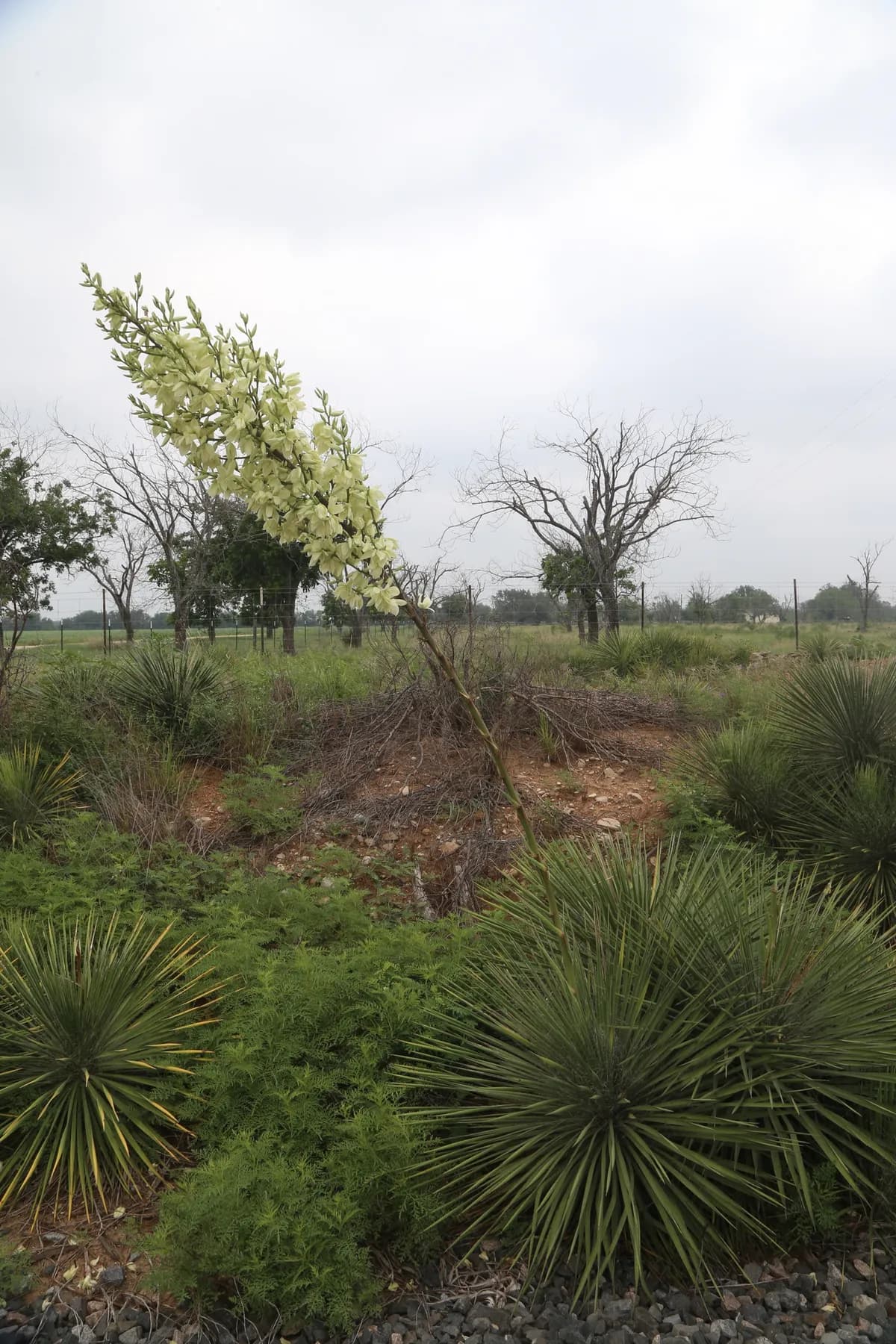
Yucca constricta, or Buckley's yucca, is a drought tolerant evergreen succulent with narrow blue green leaves and tall spikes of white bell shaped flowers from March through August. It thrives in full sun on dry, rocky or caliche soils typical of the Texas Hill Country and Edwards Plateau.
Toxicity unknown
Buckley's Yucca (Yucca constricta) is not listed by the ASPCA Animal Poison Control Center (opens in new tab) or the other sources we check, so we have no verdict for it either way. Absence from those lists is not a clearance. If your pet shows symptoms after eating any plant, call the ASPCA at (888) 426-4435.
Light
full sun
Water
low
Size
36"–60" H × 36"–60" W
Bloom
Mar, Apr, May, Jun, Jul, Aug
Native to
TX
Pollinators
butterflies, moths, hummingbirds, nectar insects
Before you buy
Your city may pay you to plant this
Cities and water utilities offer rebates for replacing lawn with native and water-wise plants. We track 452 programs across 44 states, each with a link to the provider and the date we last checked it.
Find rebates in your areaBrowse plants for this ecoregion
Buckley's Yucca is a compact, architectural succulent that forms neat rosettes of sword-like blue-green leaves. It produces tall spikes of creamy white bell-shaped flowers from spring through summer, creating dramatic vertical interest in the landscape.
Growing Buckley's Yucca
Grow Buckley's Yucca in full sun and low water. Mature plants reach 36 to 60 inches tall and spread 36 to 60 inches wide. Expect low maintenance to keep it looking intentional in a front yard.
How to care for Buckley's Yucca, by region
How to care for Buckley's Yucca where it is actually grown: year-round basics plus what to do each season, region by region, with the sources for each.
Care guidance last updated: July 2026
Cross Timbers (includes Fort Worth, TX)
Year-round
Buckley's yucca is a low, spiny leaved evergreen native to North Texas that forms a tight clump and sends up a tall flower stalk in late spring. It needs almost no water once established, but its stiff, sharp leaf tips make placement matter.
- Plant in full sun; it tolerates only light, part day shade.
- In the heavy black clay of the Blackland Prairies, set the crown slightly high on a mound or amend with coarse sand for drainage; in the sandier soils of the Cross Timbers to the west it drains faster on its own but will need water more often through its first summer.
- Keep the clump at least 18 to 24 inches back from a sidewalk, driveway, or play area; the leaf tips are stiff and sharp enough to break skin.
- Water deeply but rarely, roughly once every 3 to 4 weeks during the growing season, letting the soil dry out fully between waterings.
- It is a larval host plant for yucca moths and supports other pollinators when it flowers; leave the spent flower stalk standing through fall if you want seed pods to form.
A single, well placed clump with a clean mulch ring reads as an intentional structural accent rather than a stray weed, but keep it off the edge of a walkway; a bed corner keeps the sharp tips away from passersby.
Fall
Fall is a quiet season for Buckley's yucca: little new growth, but a good time for cleanup and dividing offsets.
- Cut the dried flower stalk down to the base once the seed pods have browned and split, typically by October or November.
- If the clump has produced offsets at its base, September through November is the best window to separate and transplant them, since cooler weather lets roots establish before winter.
- This is also a better window than spring for moving an established, larger clump, since it avoids summer heat stress.
- Skip fertilizing and heavy watering; let growth naturally slow as temperatures drop.
Removing the browned flower stalk before it collapses on its own keeps the clump looking tended, with the leaves as the visible year round feature.
Winter
Buckley's yucca stays evergreen and holds its shape through North Texas winters with essentially no care.
- It is reliably hardy through USDA zone 8a to 8b and tolerates the region's short hard freezes without protection.
- During a severe Arctic outbreak, leaf tips may brown or curl; leave damaged leaves in place until new spring growth starts rather than pruning while more cold weather is still likely.
- No watering is needed in winter; the clump goes essentially dormant, and rot is a bigger risk than drought.
- Because it stays green and upright all winter, it is one of the few structural anchors left in a front bed once perennials have died back.
As one of the only plants still holding shape and color in a winter front bed, a tidy clump reads as a deliberate structural choice rather than dead season neglect.
Spring
Spring is the main growing and blooming window: new offsets root fastest now, and mature clumps send up a tall flower stalk.
- Plant new yuccas in March or April, ahead of the summer heat, so roots establish before the hard season.
- Expect a flower stalk 3 to 5 feet tall with greenish white bell shaped blooms from April into early summer.
- Water a newly planted yucca every 7 to 10 days through spring until you see new leaf growth from the center.
- Do not fertilize; Buckley's yucca is adapted to lean native soil, and heavy feeding causes weak, floppy growth.
The upright bloom stalk is the plant's showiest, most obviously planted moment, a good season to let it stand at the front of a bed rather than tucking it behind other plants.
Summer
Summer is the plant's toughest test for new plantings, but established clumps need no attention through the heat.
- Once established for a full growing season, stop supplemental watering entirely; the plant handles 100 degree F afternoons and multi week dry spells on rainfall alone.
- A yucca planted this spring still needs a slow, deep soak every 10 to 14 days through July and August, its first hard summer.
- Watch for soft, mushy, or yellowing leaf bases; that signals standing water or poor drainage, not heat stress, and means the crown needs to sit higher or the bed needs better drainage.
- Keep mulch a few inches back from the crown so the base stays dry.
Sources: ASPCA: Yucca (toxic to dogs, cats, horses), Lady Bird Johnson Wildflower Center: Yucca constricta
Texas Blackland Prairies (includes Dallas, TX)
Year-round
Buckley's yucca is a low, spiny leaved evergreen native to North Texas that forms a tight clump and sends up a tall flower stalk in late spring. It needs almost no water once established, but its stiff, sharp leaf tips make placement matter.
- Plant in full sun; it tolerates only light, part day shade.
- In the heavy black clay of the Blackland Prairies, set the crown slightly high on a mound or amend with coarse sand for drainage; in the sandier soils of the Cross Timbers to the west it drains faster on its own but will need water more often through its first summer.
- Keep the clump at least 18 to 24 inches back from a sidewalk, driveway, or play area; the leaf tips are stiff and sharp enough to break skin.
- Water deeply but rarely, roughly once every 3 to 4 weeks during the growing season, letting the soil dry out fully between waterings.
- It is a larval host plant for yucca moths and supports other pollinators when it flowers; leave the spent flower stalk standing through fall if you want seed pods to form.
A single, well placed clump with a clean mulch ring reads as an intentional structural accent rather than a stray weed, but keep it off the edge of a walkway; a bed corner keeps the sharp tips away from passersby.
Fall
Fall is a quiet season for Buckley's yucca: little new growth, but a good time for cleanup and dividing offsets.
- Cut the dried flower stalk down to the base once the seed pods have browned and split, typically by October or November.
- If the clump has produced offsets at its base, September through November is the best window to separate and transplant them, since cooler weather lets roots establish before winter.
- This is also a better window than spring for moving an established, larger clump, since it avoids summer heat stress.
- Skip fertilizing and heavy watering; let growth naturally slow as temperatures drop.
Removing the browned flower stalk before it collapses on its own keeps the clump looking tended, with the leaves as the visible year round feature.
Winter
Buckley's yucca stays evergreen and holds its shape through North Texas winters with essentially no care.
- It is reliably hardy through USDA zone 8a to 8b and tolerates the region's short hard freezes without protection.
- During a severe Arctic outbreak, leaf tips may brown or curl; leave damaged leaves in place until new spring growth starts rather than pruning while more cold weather is still likely.
- No watering is needed in winter; the clump goes essentially dormant, and rot is a bigger risk than drought.
- Because it stays green and upright all winter, it is one of the few structural anchors left in a front bed once perennials have died back.
As one of the only plants still holding shape and color in a winter front bed, a tidy clump reads as a deliberate structural choice rather than dead season neglect.
Spring
Spring is the main growing and blooming window: new offsets root fastest now, and mature clumps send up a tall flower stalk.
- Plant new yuccas in March or April, ahead of the summer heat, so roots establish before the hard season.
- Expect a flower stalk 3 to 5 feet tall with greenish white bell shaped blooms from April into early summer.
- Water a newly planted yucca every 7 to 10 days through spring until you see new leaf growth from the center.
- Do not fertilize; Buckley's yucca is adapted to lean native soil, and heavy feeding causes weak, floppy growth.
The upright bloom stalk is the plant's showiest, most obviously planted moment, a good season to let it stand at the front of a bed rather than tucking it behind other plants.
Summer
Summer is the plant's toughest test for new plantings, but established clumps need no attention through the heat.
- Once established for a full growing season, stop supplemental watering entirely; the plant handles 100 degree F afternoons and multi week dry spells on rainfall alone.
- A yucca planted this spring still needs a slow, deep soak every 10 to 14 days through July and August, its first hard summer.
- Watch for soft, mushy, or yellowing leaf bases; that signals standing water or poor drainage, not heat stress, and means the crown needs to sit higher or the bed needs better drainage.
- Keep mulch a few inches back from the crown so the base stays dry.
Sources: ASPCA: Yucca (toxic to dogs, cats, horses), Lady Bird Johnson Wildflower Center: Yucca constricta
Want these tasks as reminders timed to your yard? Pollinator Patch turns this guidance into a season-by-season care plan for the plants you actually grow.
In an HOA neighborhood
Buckley's Yucca takes more care to keep looking intentional in a front yard. Maintenance level: low. Consider it for backyard or mid-zone beds rather than the street edge.
Works well in: backyard only, mid zone.
- Spread too large for structured beds
Wildlife value
The long blooming period attracts butterflies, moths, hummingbirds, and various nectar-feeding insects. Night-blooming flowers are particularly valuable for nocturnal pollinators like yucca moths.
Common questions
- How much water does Buckley's yucca need?
- Very little once established. This yucca handles long dry spells and prefers well drained, rocky or gravelly soil over consistently moist ground.
- What light conditions suit Buckley's yucca best?
- Full sun is ideal. It can tolerate some light afternoon shade but flowers and forms its tightest rosette in open, sunny sites.
- When does Buckley's yucca bloom?
- It typically sends up flower stalks from March through August, with a tall spike of creamy white, bell shaped flowers rising above the leaves.
- What pollinates Buckley's yucca?
- Yucca moths are its main pollinator, in a close relationship where the moth lays eggs in the flower while pollinating it. Butterflies, other moths, hummingbirds and nectar seeking insects also visit the blooms.
- Does Buckley's yucca lose its leaves in winter?
- No. It is evergreen, keeping its stiff, narrow leaves year round rather than dropping them seasonally.
- Is Buckley's Yucca HOA-friendly?
- Buckley's Yucca takes more care to look intentional in a front yard. Consider it for backyard or mid-zone beds rather than the street edge.
These answers were drafted with an AI model from this plant's data. Verify care details with a local expert.
Native range data from vouchered herbarium specimen records and regional native plant society lists. Pollinator and host plant associations compiled from GBIF, iNaturalist, and published ecological literature.
If something looks wrong
Common plant problems, and what to check first
These come up on almost any plant. Each guide lists the likely causes in the order they are worth ruling out, with one thing to check before you act on any of them, and links to the source it came from.
- It is dying right after planting
- Leaves turning yellow
- Wilting even though I watered it
- Brown crispy leaf tips
- Bugs on the plant
Ready to grow Buckley's Yucca? Add it to your garden in Pollinator Patch to track it and get season-by-season care guidance.
Planning a bed around it? Start a free plan with this plant
Not sure where to start? Take the 2-minute yard quiz